Arthritis And Heart Disease: 5 Ways To Protect Your Heart
Understand the strong link between arthritis and heart disease, risk factors, and strategies to protect your cardiovascular health.
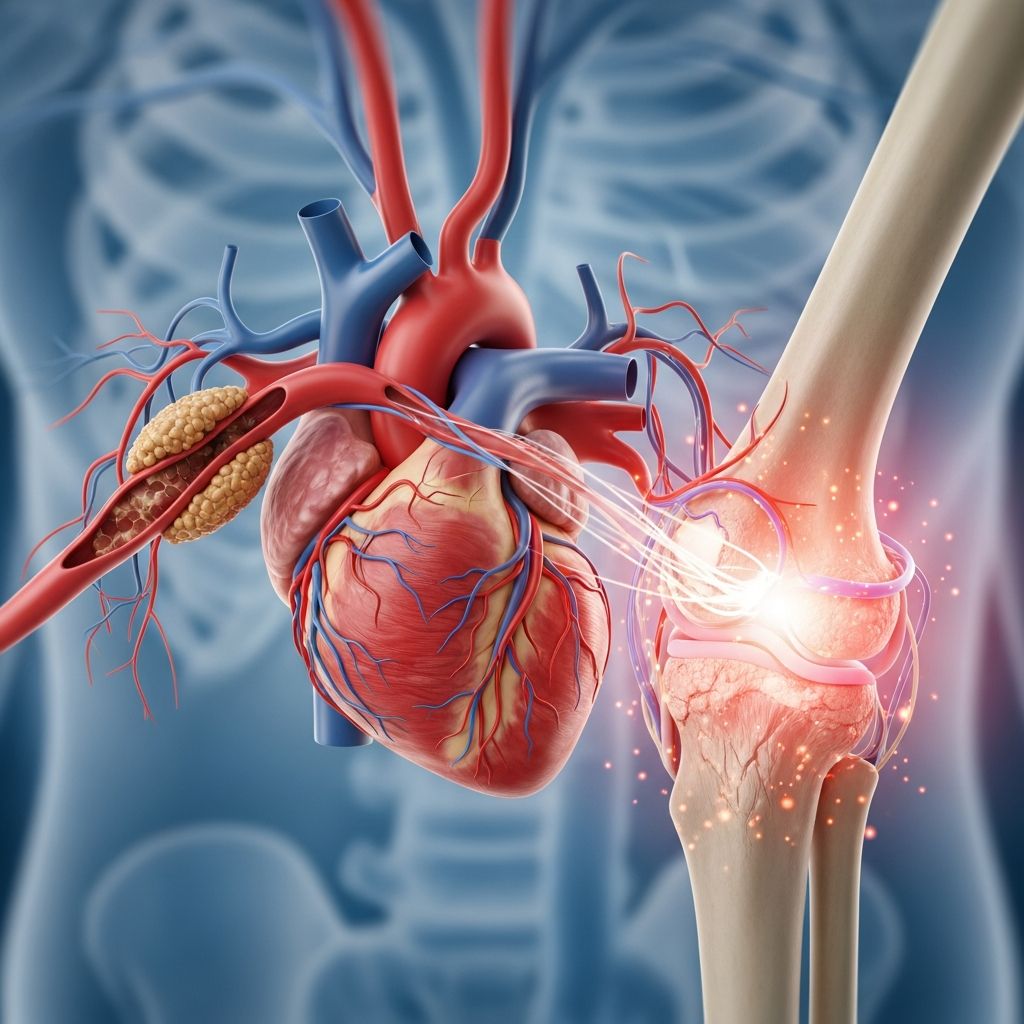
Arthritis and heart disease are more closely linked than many realize. People with rheumatoid arthritis (RA) have a 50% to 70% higher risk of cardiovascular disease (CVD) compared to the general population, while those with osteoarthritis (OA) face a 24% increased risk. Nearly half of adults with heart disease also have arthritis. This connection stems from chronic inflammation, shared risk factors, and lifestyle challenges, making it essential for those with arthritis to prioritize heart health.
Why People with Arthritis Are at Risk for Heart Disease
The interplay between arthritis and heart disease is driven primarily by chronic inflammation. In RA, an autoimmune condition, the immune system attacks joints and produces inflammatory cytokines like TNF-α and IL-6. These same cytokines damage blood vessel walls, promoting atherosclerosis—the buildup of plaques that narrow arteries and lead to heart attacks or strokes. Studies show RA patients are 1.5 to 2 times more likely to develop coronary artery disease.
For OA, the most common arthritis type, the link is partly inflammatory but also tied to indirect factors. OA patients are nearly three times more likely to have coronary heart disease or heart failure, often due to obesity, inactivity, and metabolic issues that strain the heart. Systemic inflammation in both conditions accelerates endothelial dysfunction, where artery linings become permeable to LDL cholesterol, forming foam cells and plaques.
Shared mechanisms include the “lipid paradox” in RA, where low HDL and LDL levels still predict higher CVD risk due to dysfunctional cholesterol transport. Additional factors like elevated lipoprotein(a) and oxidative stress further amplify dangers.
Types of Heart Disease Linked to Arthritis
- Atherosclerosis: Inflammation causes plaque buildup, with RA doubling the risk.
- Coronary Artery Disease (CAD): RA patients have 1.5-2x higher chance.
- Heart Failure: OA triples the likelihood; RA inflammation stiffens heart tissue.
- Hypertension: Less-elastic arteries and medications like NSAIDs elevate blood pressure in RA.
- Pericarditis and Myocarditis: Rare but direct RA effects on heart lining and muscle.
Risk Factors for Heart Disease in People with Arthritis
Beyond inflammation, several modifiable and non-modifiable factors heighten risks:
| Risk Factor | Impact on Arthritis Patients | Source |
|---|---|---|
| Age | Older age increases both arthritis prevalence and CVD. | |
| Obesity | Triples OA-heart disease link; worsens inflammation. | |
| Inactivity | Joint pain reduces exercise, raising CVD risk. | |
| Smoking | Exacerbates RA inflammation and atherosclerosis. | |
| Medications (NSAIDs, Steroids) | Increase blood pressure and cholesterol. | |
| Genetics/Sex | Women with RA at higher CVD risk post-menopause. |
Heart disease accounts for 39.6% of excess deaths in RA, per a meta-analysis of 91,618 patients.
Signs of Heart Disease
Arthritis symptoms like fatigue can mask heart issues. Watch for:
- Chest pain or pressure
- Shortness of breath
- Unexplained fatigue or swelling in legs
- Irregular heartbeat
- Jaw, neck, or arm pain during activity
RA patients often experience “silent” heart events without classic symptoms due to neuropathy or medication effects.
Diagnosis and Tests
Screening is crucial. Rheumatologists and cardiologists use:
- Blood tests: CRP, ESR for inflammation; lipid panel, HbA1c.
- EKG/ECG: Detects arrhythmias.
- Echocardiogram: Assesses heart function.
- Stress test or coronary calcium scan: Checks artery blockages.
- Carotid intima-media thickness: Measures atherosclerosis.
Related Stories



RA treatments reducing joint inflammation also lower arterial inflammation, serving as a heart risk proxy.
Treatment: Easing Arthritis Helps Your Heart
Treating arthritis directly benefits the heart. A Columbia University study found both methotrexate and TNF inhibitors reduced arterial inflammation by similar amounts after six months. Key approaches:
- DMARDs (e.g., Methotrexate): Suppress systemic inflammation.
- Biologics (TNF inhibitors, JAK inhibitors): Target cytokines like IL-6 fueling plaques.
- Statins: Lower cholesterol and stabilize plaques.
- Blood pressure meds: Counter NSAID effects.
Improved RA control correlates with declining CVD risk.
Lifestyle Changes to Protect Your Heart
Lifestyle modifications are powerful, especially for OA where pain limits activity.
- Exercise: 150 minutes/week of moderate activity like swimming or walking. Reduces inflammation and weight.
- Diet: Mediterranean style—fruits, veggies, fish, nuts. Lowers CVD markers.
- Quit Smoking: Halts vascular damage acceleration.
- Weight Management: 5-10% loss cuts heart strain.
- Sleep and Stress Management: 7-9 hours/night; yoga or meditation.
Medications: Benefits and Risks
Arthritis drugs have dual edges:
- NSAIDs: Relieve pain but raise heart attack risk with long-term use.
- Steroids: Effective short-term but increase hypertension, diabetes.
- DMARDs/Biologics: Heart-protective by curbing inflammation.
Discuss risks with your doctor; lowest effective doses preferred.
Prevention Tips
- Get annual CVD risk assessment.
- Monitor blood pressure, cholesterol, blood sugar.
- Prioritize low-impact exercise.
- Aim for healthy weight.
- Limit alcohol, avoid smoking.
Frequently Asked Questions
Does arthritis directly cause heart disease?
Indirectly through inflammation (RA) or factors like obesity/inactivity (OA). RA doubles atherosclerosis risk.
Can treating arthritis lower heart risk?
Yes, RA drugs like methotrexate reduce arterial inflammation and CVD risk.
Is OA linked to heart problems?
Yes, 24% higher CVD risk; nearly 3x CHD/heart failure likelihood due to shared risks.
How much exercise for arthritis heart health?
150 min/week moderate activity, tailored to joints.
Should I worry about NSAIDs and heart?
Use sparingly; they elevate blood pressure and CVD risk.
References
- How Does Arthritis Affect Heart Health? — Towson Orthopaedic Associates. 2023. https://www.towsonortho.com/how-does-arthritis-affect-heart-health/
- Interplay of rheumatoid arthritis and cardiovascular disease — PMC (PubMed Central). 2024-10-15. https://pmc.ncbi.nlm.nih.gov/articles/PMC12290359/
- Rheumatoid Arthritis Drugs Lower Risk of Heart Disease — Columbia University Irving Medical Center. 2023-06-12. https://www.cuimc.columbia.edu/news/rheumatoid-arthritis-drugs-lower-risk-heart-disease
- Arthritis and heart health: What you need to know — Arthritis UK. 2024-04. https://www.arthritis-uk.org/news/2024/april/arthritis-and-heart-health-what-you-need-to-know/
- Rheumatoid Arthritis and Heart Disease — Arthritis Foundation. 2024. https://www.arthritis.org/health-wellness/about-arthritis/related-conditions/other-diseases/rheumatoid-arthritis-heart-disease
- Arthritis and heart disease: The surprisingly strong link — Baylor Scott & White Health. 2023. https://www.bswhealth.com/blog/arthritis-and-heart-disease-the-surprisingly-strong-link
Similar Articles








Read full bio of Sneha Tete