Arthropod Bites and Stings: Recognition, Treatment, and Prevention
Comprehensive guide to understanding, treating, and preventing arthropod bites and stings effectively.
Understanding Arthropod Bites and Stings
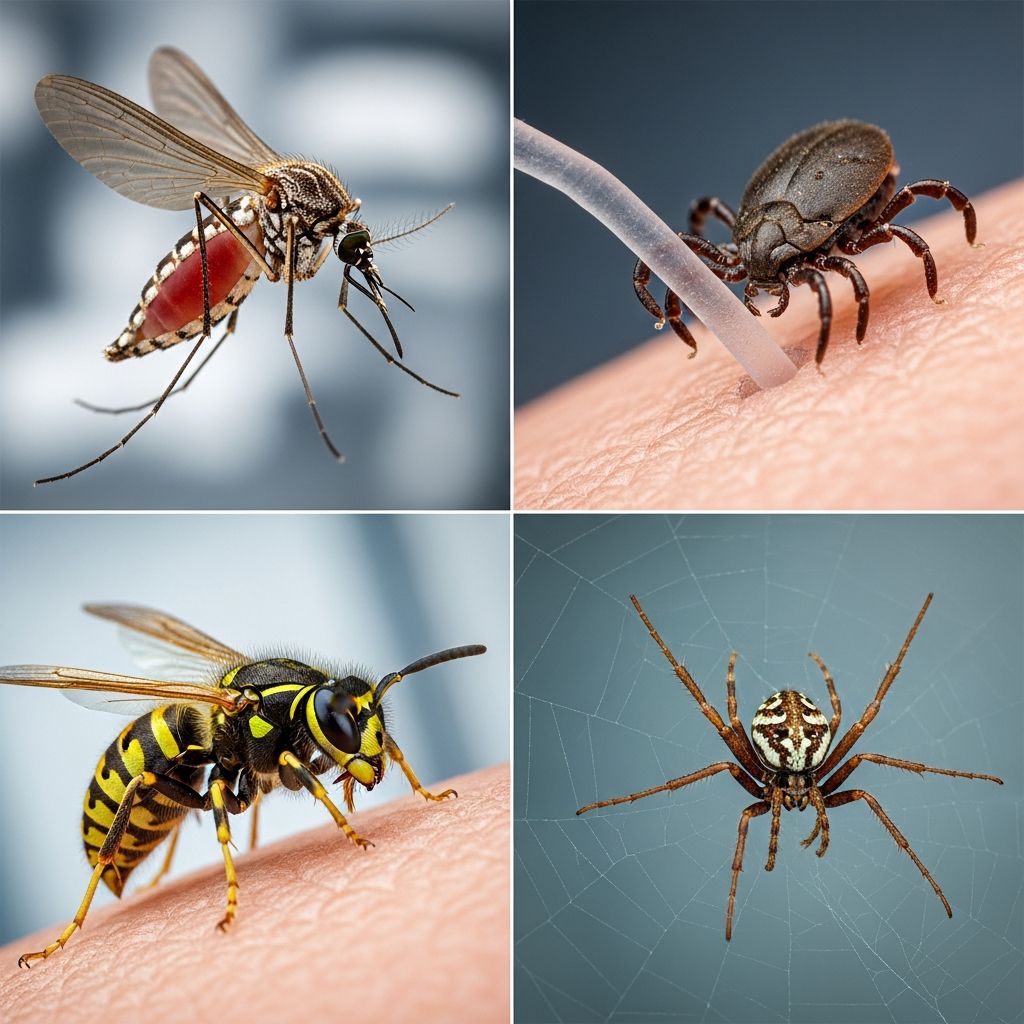
Arthropod bites and stings are common dermatological conditions affecting individuals across all geographic regions and age groups. The reaction to an encounter with an arthropod depends on several critical factors, including the species involved, whether it carries disease, and individual host factors such as immunity and prior sensitization. Anyone exposed to arthropods can be bitten or stung, with individual risks largely dependent on geographic and climatic factors. These reactions range from minor localized irritation to severe systemic responses requiring immediate medical intervention.
Arthropod habitats are highly variable, spanning forests, gardens, domestic environments, and urban areas. Understanding the nature of arthropod encounters and appropriate responses is essential for both prevention and management of these conditions.
Causes and Etiology of Arthropod Reactions
The consequences of arthropod bites and stings stem from multiple mechanisms. Most reactions result from traumatic injury or local inflammation and hypersensitivity reactions to arthropod saliva and venom. While some arthropods bite without injecting venom, others possess specialized stingers connected to venom glands that deliver potent chemical compounds.
Notable arthropods with stinging capabilities include bees, wasps, hornets, fire ants, and scorpions. The venom composition varies by species but often contains alkaloids and proteins that trigger immediate pain and inflammation. Both bites and stings create tissue injury that can serve as a portal of entry for secondary bacterial infection, potentially complicating the clinical presentation.
Hymenoptera Stings
Hymenoptera stings, from species such as bees and wasps, typically cause immediate pain and burning sensations. The reaction begins with a localized edematous wheal and can progress to pruritus or tenderness lasting minutes to hours. In sensitized individuals, reactions may be more pronounced and prolonged.
Fire Ant Stings
Fire ants produce distinctive lesions characterized by two central hemorrhagic puncta surrounded by a ring of erythematous papules. Their venom contains alkaloids and causes intense, burning-like pain. Fire ant venom may produce anaphylaxis and has potential cross-reactivity with other Hymenoptera venoms.
Scorpion Stings
Scorpion stings present differently depending on species and severity. Most stings manifest similarly to Hymenoptera stings and respond to supportive care including stinger removal when applicable, cleaning, ice application, and pain management with acetaminophen. Severe systemic toxicity may require specialized antivenom therapy.
Pathophysiology and Reaction Mechanisms
Four general mechanisms are responsible for the pathophysiologic impacts of arthropod bites and stings:
- Mechanical injury: Direct tissue damage from the bite or sting causes pain, swelling, and creates potential bacterial entry points
- Allergic responses: Hypersensitivity reactions to arthropod salivary antigens and venom proteins trigger localized and systemic rashes and cutaneous pruritus
- Inflammatory reactions: Local inflammation at the bite or sting site produces characteristic skin lesions
- Vector-borne disease transmission: Some arthropods transmit infectious pathogens requiring specific antimicrobial therapy
Clinical Presentation and Diagnosis
Arthropod bites and stings most commonly present as erythematous, sometimes edematous papules that may be solitary, grouped, or generalized depending on the arthropod species and exposure duration. Patients typically experience intensely itchy papules at sites exposed to the insect.
Related Stories



Local Reactions
Most arthropod reactions manifest as localized dermatologic findings including:
- Red papules or wheals at the bite or sting site
- Local erythema and edema
- Urticaria (hives) surrounding the lesion
- Pruritus or tenderness lasting minutes to days
- Possible secondary bacterial infection from scratching
Large Local Reactions
Large local reactions begin similarly to standard insect stings but, by definition, exceed 10 centimeters in diameter and can persist for several days. These reactions represent an exaggerated local response but do not appear to be risk factors for subsequent anaphylactic reactions.
Systemic Reactions and Anaphylaxis
Some arthropod stings can induce systemic symptoms culminating in anaphylaxis. Systemic reactions typically begin within 30 minutes of envenomation and may produce urticaria, wheezing, shortness of breath, nausea and vomiting, edema of the oropharynx, confusion or anxiety, hypotension, and respiratory arrest. These reactions constitute medical emergencies requiring immediate treatment.
Diagnostic Methods
Diagnosis of arthropod bites is typically clinical based on history and appearance. Skin biopsy can be suggestive if it shows a central punctum, eosinophilic spongiosis, and a wedge-shaped mixed dermal infiltrate distributed around sweat ducts and glands. For suspected systemic reactions, skin testing and venom-specific immunoglobulin E tests for various Hymenoptera species are available.
Treatment Options for Arthropod Bites and Stings
Treatment approaches depend on reaction severity and individual patient factors. Most arthropod bites and stings are manageable with simple supportive care measures.
First-Line Treatment
Basic supportive care includes:
- Local wound care by cleaning the area with soap and water
- Updating tetanus status as needed
- Applying ice compresses for 15-minute intervals with a cloth between ice and skin
- Elevating the area if edema is present
- Treating pain with acetaminophen or nonsteroidal anti-inflammatory drugs (NSAIDs)
Stinger Removal
For insect stings, immediate removal of the stinger if still present is advised. The stinger continues to pump venom from its sack until it is empty or removed, so prompt removal minimizes venom injection.
Topical Treatments
Pruritus management is a primary treatment goal for insect bites. Effective topical options include:
- Topical antipruritics and anesthetics: Camphor and menthol (0.5%) or pramoxine (1%) applied several times daily provide rapid relief and are available over-the-counter
- Topical steroids: Intermediate potency topical corticosteroids reduce inflammation and itching
- Calamine lotion: A soothing option for mild reactions
Systemic Treatments
For more bothersome reactions, oral medications prove beneficial:
- Oral antihistamines: Reduce allergic responses and itching
- Oral corticosteroids: For large local reactions, especially those involving distal limbs or face/lips, systemic corticosteroids may be recommended
- Oral analgesics: NSAIDs and acetaminophen manage pain, with severe cases potentially requiring short-term narcotic analgesia
Intralesional Steroid Injections
Intradermal injection of corticosteroids may provide optimal treatment for exaggerated bite reactions. Triamcinolone at concentrations of 2.5-10 mg/mL can be injected directly into particularly bothersome lesions at doses of 0.1 mL or more, depending on lesion size. Sufficient steroid should be injected to blanch the lesion.
Severe Reactions and Anaphylaxis
If an insect sting causes severe reaction or anaphylaxis, urgent medical attention must be sought immediately. Patients with known allergies to insect stings should carry allergy kits containing adrenaline (epinephrine). Patients with a history of anaphylaxis should be offered auto-injectable epinephrine for emergency use.
Venom Immunotherapy
Venom-specific immunotherapy is indicated for patients with a history of systemic reactions to insect stings combined with positive skin testing or positive venom-specific IgE testing. Immunotherapy should be administered by qualified medical providers with access to resuscitation equipment. Venom-specific immunotherapy is 75-95% protective in preventing further systemic reactions, though sublingual immunotherapy has not proven effective for systemic reactions to arthropod stings.
Prevention Strategies
The most important step toward reducing clinical impacts of arthropod bites and stings is prevention. The best approach to arthropod bites and stings is avoidance, beginning with proper diagnosis and patient education about exposure modes.
Environmental Modifications
Practical prevention measures include:
- Minimizing outdoor activity in areas where biting or stinging insects may be found
- Wearing protective clothing, including long sleeves, pants, hats with mosquito nets, and gloves for extended outdoor activity
- Using prompt evaluation by a reputable exterminator if indoor arthropod assault is suspected
- Maintaining vigilant home inspection and appropriate pest management protocols
Insect Repellents
DEET (N,N-diethyl-meta-toluamide) is the most well-studied and most effective broad-spectrum repellent against biting arthropods. The World Health Organization and the Centers for Disease Control and Prevention recognize DEET as the gold standard insect repellent and the agent against which other repellents are measured. DEET is considered first-line insect repellent, especially in areas with heavy mosquito activity.
DEET works effectively against mosquitoes, biting flies, chiggers, fleas, ticks, and other arthropods. Products with higher DEET concentrations last longer, with 10-35% concentration usually effective for 4-6 hours of protection. For sensitized individuals, even brief outdoor activity such as neighborhood walks may provide opportunity for bites, making appropriate repellent use essential.
Disease Prevention
An important consideration in managing arthropod bites and stings is evaluating for vector-borne diseases and administering appropriate antimicrobial therapy when indicated. Bites from insects carrying disease require specific treatment beyond basic wound care to address the underlying infection.
Special Considerations for Specific Populations
Children may experience more severe reactions to certain arthropod stings, particularly scorpion stings, requiring tailored management approaches. Scorpion sting management in children may involve benzodiazepines for agitation and muscle spasms, while tachyarrhythmias and hypertension receive treatment with intravenous beta-blockers. FDA-approved centruroides-specific antivenom is available for cases of severe systemic toxicity in pediatric populations.
When to Seek Medical Attention
Medical treatment is not necessary when the diagnosis is obvious and symptoms are not bothersome. However, many patients experience significant distress from itchy lesions. Seek immediate medical attention if:
- Signs of anaphylaxis appear (difficulty breathing, swelling of face/throat, dizziness)
- Large local reactions develop involving the face, lips, or airway
- Signs of secondary bacterial infection occur
- Symptoms persist beyond expected timeframes
- You have a history of severe allergic reactions to insect stings
Frequently Asked Questions
Q: How long do arthropod bite reactions typically last?
A: Most local reactions last from minutes to a few days, depending on individual sensitivity and the arthropod species. Large local reactions can persist for several days, while standard reactions typically resolve within 24-48 hours with appropriate treatment.
Q: Can arthropod bites and stings cause permanent scarring?
A: Mild to moderate reactions rarely cause permanent scarring. However, severe reactions with secondary bacterial infection from scratching may potentially result in scarring if not properly treated.
Q: Is it safe to use DEET on children?
A: DEET-containing repellents at recommended concentrations are considered safe for children when applied appropriately. Consult with a healthcare provider regarding specific formulations and application for young children.
Q: What is the difference between a large local reaction and anaphylaxis?
A: Large local reactions are exaggerated localized swelling exceeding 10 centimeters that last several days but remain confined to the sting area. Anaphylaxis involves systemic symptoms including respiratory distress, cardiovascular changes, and potentially life-threatening complications occurring within 30 minutes of envenomation.
Q: How effective is venom immunotherapy?
A: Venom-specific immunotherapy is 75-95% protective in preventing further systemic reactions in patients with documented insect sting allergies and positive testing. It should be administered by qualified medical providers with emergency resuscitation capabilities.
Q: Can I prevent all arthropod bites and stings?
A: While complete prevention is impossible, combining protective clothing, DEET-based repellents, environmental modifications, and avoiding high-risk areas significantly reduces exposure risk.
References
- Arthropod Bites and Stings — DermNet New Zealand. 2024. https://dermnetnz.org/topics/arthropod-bites-and-stings
- Insect Bites — StatPearls, National Center for Biotechnology Information, U.S. National Library of Medicine. 2025. https://www.ncbi.nlm.nih.gov/books/NBK537235/
- Arthropod Bite Reaction (Bug Bite, Insect Bite, Insect Sting) — Dermatology Advisor. 2024. https://www.dermatologyadvisor.com/home/decision-support-in-medicine/dermatology/arthropod-bite-reaction-bug-bite-insect-bite-insect-sting/
- Arthropod Bites — American Academy of Family Physicians. 2013. https://www.aafp.org/pubs/afp/issues/2013/1215/p841.html
- DEET as a First-Line Insect Repellent — Centers for Disease Control and Prevention. 2024. https://www.cdc.gov/
Similar Articles








Read full bio of medha deb