Artificial Sweeteners: Sugar-Free But At What Cost?
Exploring the hidden health impacts of artificial sweeteners beyond calorie reduction.
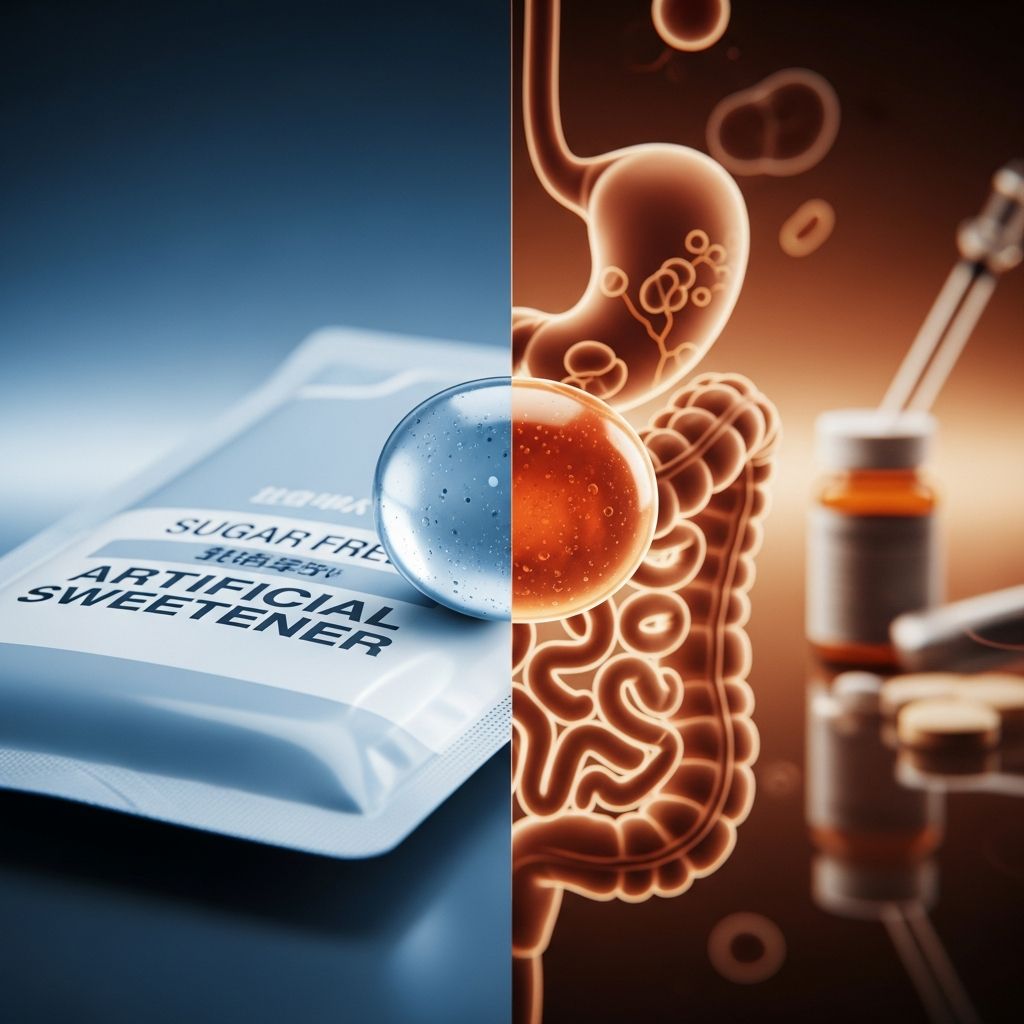
For decades, artificial sweeteners have been promoted as a guilt-free alternative to sugar, allowing consumers to enjoy sweet foods and beverages without the caloric burden. Diet sodas, sugar-free candies, and low-calorie desserts have become staples in the American diet, with millions of people relying on these products to manage their weight and reduce their sugar intake. However, emerging research suggests that the story of artificial sweeteners may be far more complex than marketing claims suggest. While these substances do eliminate calories from our diet, substantial evidence indicates they may carry unexpected health consequences that warrant careful consideration.
Understanding Artificial Sweeteners
Artificial sweeteners, also known as low-calorie sweeteners (LCS) or non-sugar sweeteners (NSS), are synthetic compounds designed to provide sweetness without the caloric content of sugar. The U.S. Food and Drug Administration has approved six types of artificial sweeteners as food additives, each offering distinct properties and applications in food manufacturing. These sweeteners are many times sweeter than table sugar, allowing food manufacturers to use smaller quantities to achieve the desired level of sweetness while significantly reducing caloric content.
Common types of artificial sweeteners include aspartame, saccharin, sucralose, acesulfame K, and stevia. The appeal of these substances is straightforward: they enable consumers to satisfy their sweet cravings while managing calorie intake and blood sugar levels, making them particularly attractive to individuals with diabetes or prediabetes. However, the mechanism by which our bodies respond to these sweeteners reveals potential complications that go beyond simple calorie counting.
The Weight Gain Paradox
One of the most perplexing findings in artificial sweetener research is that despite their zero-calorie profile, several studies have linked their consumption to weight gain rather than weight loss. A comprehensive analysis of data from three large prospective cohort studies of U.S. men and women revealed that intake of sugar-sweetened beverages was associated with an average three-pound weight gain within each four-year period. Interestingly, substituting the same amount of sugar-sweetened beverages with artificially sweetened alternatives was associated with less weight gain of approximately one pound within each four-year timespan, though still representing a gain rather than a loss.
This paradox has prompted researchers to investigate the mechanisms behind artificial sweetener consumption and weight management. The human brain responds to sweetness with signals to eat more, but artificial sweeteners provide sweet taste without calories. This disconnect between expected and actual caloric intake may create metabolic confusion, potentially leading to increased consumption of other foods to compensate for the anticipated caloric influx that never materializes.
Metabolic and Appetite Effects
Research has proposed several mechanisms through which artificial sweeteners might contribute to weight gain and metabolic dysfunction. The sweet taste of artificial sweeteners, which can be 100 to 700 times sweeter than regular sugar, sends strong signals to our taste receptors and brain. This extreme sweetness level may trigger biological responses similar to those activated by actual sugar consumption, despite the absence of calories.
Three primary hypotheses have emerged from scientific investigation:
Sweet Taste Conditioning: Repeated exposure to the intense sweetness of artificial sweeteners may promote a stronger preference for sweet foods throughout the diet, potentially leading to overconsumption of sugary products in other contexts. This conditioning could create a counterproductive cycle where artificial sweetener use actually increases overall sugar consumption.
Insulin Response Confusion: Some research suggests that the sweet taste of artificial sweeteners may stimulate an insulin response even though blood glucose does not significantly change. This inappropriate insulin secretion could increase appetite and food intake, undermining the calorie-reduction goals that motivated artificial sweetener use in the first place.
Related Stories



Satiety Signal Disruption: Unlike sugar-sweetened beverages, which trigger stomach hormones that signal satisfaction, artificial sweeteners may fail to activate these satiety mechanisms. This could lead to increased hunger and food consumption as the body continues to seek the caloric satisfaction it expects from the sweet taste.
Gut Microbiota and Metabolic Consequences
An emerging area of research focuses on how artificial sweeteners affect the human microbiome—the trillions of beneficial bacteria residing in our digestive tract. Animal studies have demonstrated that certain artificial sweeteners, particularly sucralose, aspartame, and saccharin, can alter the composition of gut microbiota. These microbiome changes may disrupt how cells recognize and respond to insulin, potentially leading to elevated blood sugar levels when normal carbohydrate-containing foods are consumed.
The implications of this microbiota alteration are substantial. A healthy gut microbiome plays crucial roles in nutrient absorption, immune function, and metabolic regulation. When artificial sweeteners disrupt this delicate bacterial ecosystem, the consequences could extend far beyond simple weight management to affect overall metabolic health and disease risk. However, researchers acknowledge that while these effects have been demonstrated in animal models, further human studies are necessary to fully understand the extent and mechanisms of these effects.
Type 2 Diabetes Risk
Multiple large-scale studies have examined the relationship between artificial sweetener consumption and type 2 diabetes development. A large observational study of French women showed that both sugar-sweetened beverages and artificially sweetened beverages were linked with an increased risk of developing type 2 diabetes. Similarly, a meta-analysis of 17 cohort studies revealed a 25% higher incidence of type 2 diabetes with artificial sweetener beverages compared with no intake of these drinks.
However, interpreting these findings requires careful consideration of reverse causation—the possibility that individuals who are already overweight or have prediabetes begin consuming artificial sweeteners specifically to improve their blood sugar control, creating a false association between higher artificial sweetener intake and future diabetes risk. Detailed analysis of data from the Health Professionals Follow-up Study supported this explanation, revealing that the positive association between artificial sweetener beverage intake and type 2 diabetes incidence was largely explained by higher baseline body mass index and metabolic conditions, which likely motivated increased artificial sweetener use in the first place.
Cardiovascular Health Concerns
Recent research has raised concerns about the cardiovascular implications of artificial sweetener consumption. When observational cohort studies examined long-term use of artificial sweetener-containing beverages, researchers found associations with increased risk of cardiovascular disease and early death in adults. Additionally, higher intake of artificial sweeteners, either in beverages or added to foods, has been associated with increased risk of developing type 2 diabetes, a major cardiovascular risk factor.
The World Health Organization, after conducting a comprehensive research review, advised against using artificial sweeteners to control body weight or reduce the risk of noncommunicable diseases, specifically citing concerns about cardiovascular health and metabolic effects. However, some Harvard Chan School experts noted that while the WHO analysis found these associations, certain large studies were excluded from the meta-analysis. Studies involving more than 100,000 people found that increasing consumption of artificially sweetened beverages at the expense of sugar-sweetened beverages was associated with less weight gain over time. Statistical modeling suggested that replacing one serving of a sugar-sweetened beverage with an artificially sweetened beverage was associated with a 4% lower risk of total mortality, 5% lower risk of cardiovascular disease-related mortality, and 4% lower risk of cancer-related mortality.
Cancer Risk: Separating Fact from Fiction
Concerns about artificial sweeteners and cancer risk have persisted for decades, often generating media alarm and public anxiety. The earliest concerns focused on saccharin, which led to regulatory action based on studies finding a cancer connection in specific laboratory rat models. However, subsequent research has substantially addressed these concerns.
Out of 20 studies in laboratory rats given high dosages of saccharin for more than one year, only one found an increased incidence of bladder cancer, and this study used a particular breed of male rat susceptible to bladder infections. Additional research in humans using retrospective records of artificial sweetener use and rates of bladder cancer has found no association. Saccharin remains the oldest and most thoroughly researched artificial sweetener, with decades of safety monitoring supporting its acceptable use profile.
Similarly, concerns about aspartame and brain tumors arose in 1996 when a scientific study suggested that the rate of increasing brain tumors since 1980 could be caused by aspartame, which was introduced in 1981. While popular media messages advocated avoiding aspartame products, the scientific community criticized the study for lacking evidence, as it demonstrated only a correlation between two events occurring simultaneously without establishing whether people with brain tumors had actually consumed aspartame. A comprehensive review of large epidemiological and case-control studies did not find an association between aspartame intake and various cancers. The World Health Organization’s recent analysis also found no association between artificial sweetener intake and cancer or cancer-related deaths.
Natural Sweeteners: A Better Alternative?
Many consumers, concerned about artificial sweeteners, turn to natural alternatives such as agave, honey, and maple syrup. However, a common misconception suggests that these natural sweeteners are inherently “better” than refined sugar or artificial options. The reality is more nuanced.
Natural sweeteners including agave, honey, and maple syrup are all broken down by the body into individual sugar molecules, contributing calories and raising blood sugar in the same manner as table sugar. Agave and honey are primarily broken down into fructose and some glucose, while maple syrup is composed mostly of sucrose along with smaller amounts of glucose and fructose. From a metabolic perspective, these natural sweeteners offer no advantage over refined sugar in terms of caloric content or blood sugar impact, despite their “natural” label appeal.
Sugar Alcohols and Alternative Options
Sugar alcohols, including maltitol, xylitol, and sorbitol, represent another category of sweetening agents increasingly found in sugar-free products. These compounds offer a middle ground between artificial sweeteners and sugar, providing fewer calories than sugar while maintaining a sweetening effect. However, sugar alcohols can have digestive side effects for some individuals, including bloating, gas, and diarrhea, particularly when consumed in large quantities.
Stevia, derived from the stevia plant, has gained popularity as a natural low-calorie sweetener and has received FDA approval. However, like other artificial sweeteners, stevia’s long-term effects on human metabolism and health require further investigation through rigorous clinical trials and observational studies.
FDA Safety Standards and Daily Limits
The U.S. Food and Drug Administration establishes acceptable daily intake limits for approved artificial sweeteners based on safety research. For aspartame, a commonly used artificial sweetener, the FDA has established a limit of 2,727 mg daily for a 150-pound woman, equivalent to approximately eleven 12-ounce cans of diet soda, with each can containing about 250 mg of aspartame. These limits are designed to ensure safety even with regular consumption, though the FDA notes that more research, specifically longer-term studies with follow-up and randomized controlled trials, are needed to fully establish the health profile of artificial sweeteners.
Recommendations for Consumers
Given the mixed evidence regarding artificial sweeteners, health professionals and organizations like the World Health Organization recommend that individuals work to lower the overall sweetness in their diet starting early in life. This approach addresses both artificial and natural sweeteners, recognizing that while artificial sweeteners may provide short-term calorie reduction, they do not provide nutritional value and may contribute to sustained sweet preferences that undermine long-term health goals.
Rather than simply substituting artificial sweeteners for sugar, a more comprehensive dietary strategy involves:
Gradual Taste Adjustment: Progressively reducing sweetness in beverages and foods allows taste receptors to recalibrate, eventually reducing cravings for intensely sweet products.
Water and Unsweetened Beverages: Replacing sweet drinks—whether sugar-sweetened or artificially sweetened—with water, unsweetened tea, or black coffee eliminates the problematic disconnect between sweet taste and caloric content.
Whole Food Focus: Emphasizing whole, unprocessed foods naturally limits exposure to both sugar and artificial sweeteners while providing greater nutritional value.
Mindful Consumption: When sweet foods are consumed, doing so consciously and in appropriate portions, rather than as a guilt-free indulgence, promotes healthier eating patterns.
Frequently Asked Questions
Q: Are artificial sweeteners completely safe?
A: Current evidence suggests that artificial sweeteners approved by the FDA are safe for most people at typical consumption levels. However, research is ongoing regarding long-term metabolic and health effects, particularly concerning weight management, gut health, and cardiovascular outcomes.
Q: Do artificial sweeteners help with weight loss?
A: While short-term studies show that artificial sweeteners can reduce calorie intake when replacing sugar-sweetened beverages, long-term observational studies show mixed results, with some suggesting associations with weight gain rather than loss, possibly due to altered appetite regulation or gut microbiota changes.
Q: Are natural sweeteners better than artificial ones?
A: Natural sweeteners like honey, agave, and maple syrup break down into sugar molecules just like table sugar and provide similar calories and blood sugar effects. They offer no metabolic advantage despite their “natural” label.
Q: Can artificial sweeteners cause cancer?
A: Extensive research has not established a credible link between approved artificial sweeteners and cancer in humans. Early concerns about saccharin were based on studies in specific rat strains and have not been replicated in human studies.
Q: Should people with diabetes avoid artificial sweeteners?
A: While artificial sweeteners do not directly raise blood sugar, some research suggests they may affect gut bacteria and insulin response. People with diabetes should discuss artificial sweetener use with their healthcare provider as part of comprehensive diabetes management.
Q: What is the safest sweetening option?
A: Water remains the safest and healthiest beverage choice. For those seeking sweetness, the World Health Organization recommends gradually reducing overall dietary sweetness rather than substituting one sweetener for another.
References
- Low-Calorie Sweeteners — Harvard T.H. Chan School of Public Health, The Nutrition Source. Accessed 2025. https://nutritionsource.hsph.harvard.edu/healthy-drinks/artificial-sweeteners/
- Sugar Substitutes: What You Should Know — Massachusetts General Hospital. April 13, 2023. https://www.massgeneral.org/news/article/artificial-sweeteners
- Unpacking WHO Guidelines on Non-Sugar Sweeteners — Harvard T.H. Chan School of Public Health, The Nutrition Source. June 6, 2023. https://nutritionsource.hsph.harvard.edu/2023/06/06/who-guidelines-non-sugar-sweeteners/
- Federal Food, Drug, and Cosmetic Act — U.S. Food and Drug Administration. 2025. https://www.fda.gov/food/food-additives-petitions/revised-list-colors-approved-use-food-united-states
- Obesity and Overweight — Centers for Disease Control and Prevention. 2024. https://www.cdc.gov/obesity/basics/metabolic-health/health-effects.html
Similar Articles








Read full bio of medha deb