Ashwagandha: Evidence-Based Benefits, Dosage, Safety
Explore the traditional herb ashwagandha: its ancient origins, potential health benefits, and what research reveals about its safety and effectiveness.
What Is Ashwagandha?
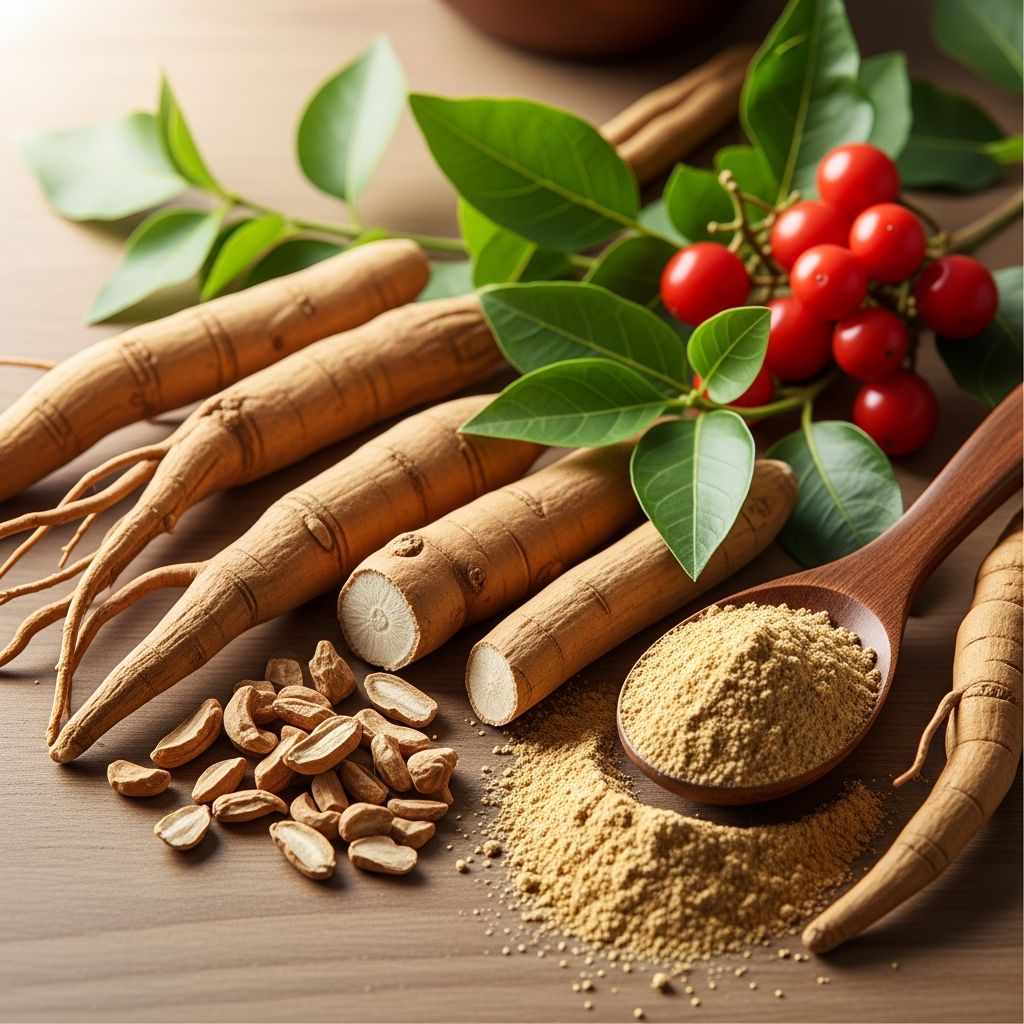
Ashwagandha, scientifically known as Withania somnifera, is a small shrub native to the Indian subcontinent and parts of the Middle East and North Africa. The name derives from Sanskrit, meaning “smell of the horse,” reflecting the traditional belief that consuming the herb imparts the strength and vitality of a stallion. Also commonly referred to as winter cherry or Indian ginseng, ashwagandha has occupied a central place in traditional medicine systems for thousands of years.
The herb is most commonly available in commercial supplements derived from its roots, which are processed into various formulations including powders, capsules, and liquid extracts. Ashwagandha thrives in dry, arid climates and demonstrates remarkable drought resistance, making it well-suited to cultivation in harsh environmental conditions across multiple continents.
Traditional Use and Historical Significance
Ashwagandha holds profound historical and cultural importance in traditional medicine systems, particularly within Ayurveda, the ancient Indian healing tradition. For more than 3,000 years, practitioners of Ayurvedic medicine have recognized ashwagandha as a powerful rasayana, or restorative herb, believed to promote longevity and support holistic well-being across physical, mental, and spiritual dimensions. The herb has also found mention in Middle Eastern and African folk medicine traditions, where it was utilized to address various health concerns including stress, inflammation, and immune system support.
In Ayurvedic philosophy, ashwagandha is categorized as an adaptogen—a substance believed to enhance the body’s natural ability to resist, adapt to, and recover from physical, biological, or chemical stressors. This foundational concept continues to guide modern research into the herb’s potential therapeutic applications.
Active Compounds and Mechanisms of Action
The therapeutic properties of ashwagandha are attributed to its rich array of bioactive phytochemicals. The most extensively studied compounds are withanolides, which are naturally occurring steroidal lactones. Among these, withaferin A and withanolide D are considered the primary constituents responsible for many of ashwagandha’s reported health benefits.
Beyond withanolides, ashwagandha contains various alkaloids, saponins, and amino acids that contribute to its overall biological activity. Scientific research suggests that while withanolides appear to be the primary active components, other phytochemical constituents may also play important roles in the herb’s mechanisms of action within the human body.
These compounds work through multiple physiological pathways, modulating systems related to stress response, immune function, neurological health, and inflammatory processes. Understanding how withanolides and other active constituents interact with the body’s complex systems continues to be an active area of scientific investigation.
Potential Health Benefits
Stress and Anxiety Reduction
One of the most well-documented uses of ashwagandha is for stress and anxiety management. As an adaptogen, ashwagandha is theorized to function by reducing cortisol levels—the primary hormone your body releases during stress responses. By lowering circulating cortisol, the herb may help reduce both the mental perception of stress and the physical manifestations of chronic stress, such as headaches, elevated blood pressure, and metabolic dysfunction.
Related Stories



Clinical evidence supports this application. Multiple randomized, placebo-controlled trials have demonstrated that ashwagandha may effectively reduce perceived stress and anxiety in participants. In one notable study, individuals taking ashwagandha showed significantly lower stress and anxiety scores on validated rating scales at day 60 compared to placebo controls, with additional improvements noted in multitasking and concentration.
Sleep Quality and Insomnia
Ashwagandha has been traditionally used to promote restful sleep and address insomnia. The National Center for Complementary and Integrative Health (NCCIH) acknowledges that some ashwagandha preparations may be effective for improving sleep quality and addressing insomnia symptoms. Several small clinical trials have found that ashwagandha may improve both the quality and duration of sleep in participants experiencing sleep disturbances.
Cognitive and Neurological Health
Emerging evidence suggests that ashwagandha may support brain health and cognitive function through multiple mechanisms. Studies indicate that the herb may not only halt age-related cognitive decline but may potentially reverse some aspects of it. This neuroprotective capacity is attributed to ashwagandha’s ability to modulate neural pathways, promote neuronal growth, and provide protective effects to brain tissue.
Research has explored ashwagandha’s potential role in age-related neurodegenerative diseases including Alzheimer’s disease and Parkinson’s disease. A 2020 review indicated that ashwagandha possesses neuroprotective properties and could help protect against multiple neurodegenerative conditions, though researchers emphasize that further investigation remains necessary. The herb’s antioxidant and anti-inflammatory effects are believed to contribute to these neuroprotective mechanisms.
Immune System Support
Ashwagandha appears to enhance immune system function through multiple pathways. The herb can stimulate the production of lymphocytes and white blood cells, which are fundamental components of the immune response. Notably, this immune-enhancing effect does not appear to be temporary; rather, ashwagandha seems to support the body’s natural defense systems in a sustained manner.
Additionally, ashwagandha demonstrates anti-inflammatory properties, likely through its ability to block pro-inflammatory signaling pathways. This dual action—enhancing immune response while reducing inappropriate inflammation—suggests potential applications for conditions involving immune dysregulation.
Male Fertility and Reproductive Health
Limited evidence suggests that ashwagandha may support male reproductive health. The NCCIH notes that there is some limited evidence indicating that taking ashwagandha for 2 to 4 months may increase testosterone levels and improve sperm quality, though researchers characterize these findings as promising while emphasizing the need for additional studies. A 2017 literature review supported these conclusions but called for more rigorous investigation before definitive recommendations can be made.
Athletic Performance and Physical Endurance
Some research has explored ashwagandha’s potential to enhance athletic performance and physical capabilities. Reports, both anecdotal and from clinical studies, suggest improved strength, stamina, and overall physical health with ashwagandha use. However, comprehensive clinical evidence remains limited, and more robust studies are needed to establish clear recommendations for athletic populations.
Cardiovascular Health
Emerging research has investigated ashwagandha’s potential cardiovascular benefits, including effects on blood pressure, cholesterol levels, and overall heart health. While some animal studies suggest potential cardioprotective properties, there is currently little human research to support these applications. A 2023 review highlighted multiple rat studies suggesting ashwagandha’s potential in this area, but human clinical trials remain insufficient to make definitive recommendations.
Current Research Status and Evidence Limitations
While ashwagandha has demonstrated promise in multiple areas, important limitations in the current research base must be acknowledged. The NCCIH emphasizes that many studies examining ashwagandha have involved only small numbers of participants and have utilized a variety of different ashwagandha preparations, making standardization and direct comparison challenging.
For most health conditions beyond stress, anxiety, and sleep, the NCCIH states that there is insufficient evidence to determine whether ashwagandha is truly helpful. Researchers note that we do not yet fully understand how ashwagandha interacts within the human body at a mechanistic level. Future research utilizing larger sample sizes, standardized preparations, and longer duration studies will be essential for clarifying ashwagandha’s true efficacy and appropriate applications.
Dosage and Forms
Ashwagandha supplements are commercially available in multiple formulations, typically derived from the root of the plant. Common forms include:
– Powdered root preparations
– Capsule and tablet formulations
– Liquid extracts and tinctures
– Standardized extracts with specified withanolide content
Appropriate dosing varies depending on the preparation used, the specific health application, and individual factors. Most clinical studies examining ashwagandha for stress and anxiety have employed doses taken for 2 to 4 months duration. However, standardized dosing recommendations have not been firmly established, and individuals should consult with healthcare providers regarding appropriate doses for their specific situations.
Safety and Side Effects
Ashwagandha appears to be well tolerated during short-term use in most individuals. However, the long-term safety profile of ashwagandha supplementation remains insufficiently studied. Additionally, ashwagandha may not be safe for certain populations, including:
– Pregnant and breastfeeding women
– Individuals with autoimmune conditions (due to its immune-stimulating effects)
– People taking medications that suppress the immune system
– Individuals with thyroid disorders
– Those scheduled for surgery
As with any supplement, ashwagandha may interact with certain medications. Individuals taking prescription medications or managing chronic health conditions should consult with qualified healthcare professionals before initiating ashwagandha supplementation.
What Does the Evidence Show?
The current scientific evidence for ashwagandha presents a nuanced picture. Strong evidence exists for ashwagandha’s potential benefits in reducing stress and anxiety, with multiple well-designed studies supporting these applications. Evidence for improved sleep quality is also reasonably strong, though additional research would strengthen these conclusions.
For other purported benefits—including cognitive enhancement, male fertility improvement, cardiovascular support, and cancer prevention—the evidence remains preliminary or insufficient to support definitive clinical recommendations. Most of these applications require additional high-quality human clinical trials before researchers can confidently recommend ashwagandha as a first-line or adjunctive treatment.
Frequently Asked Questions
Q: Is ashwagandha safe for long-term use?
A: While ashwagandha appears well-tolerated during short-term use, the long-term safety profile has not been thoroughly studied. Individuals considering long-term use should consult healthcare providers.
Q: Can ashwagandha interact with medications?
A: Yes, ashwagandha may interact with certain medications, particularly immunosuppressants and thyroid medications. Consult with your healthcare provider before starting supplementation.
Q: How long does it take for ashwagandha to work?
A: Clinical studies examining stress and anxiety typically assessed effects after 60 days of consistent use. Individual responses may vary, and longer periods may be needed for certain applications.
Q: Is ashwagandha safe during pregnancy?
A: Ashwagandha is not recommended during pregnancy or breastfeeding due to insufficient safety data. Pregnant women should avoid this supplement.
Q: Can ashwagandha treat serious medical conditions?
A: Ashwagandha should be viewed as a complementary approach, not a replacement for conventional medical treatment. Consult healthcare providers regarding appropriate treatment for serious conditions.
Key Takeaways
Ashwagandha represents an important medicinal plant with thousands of years of traditional use and a growing body of scientific evidence. The most compelling research supports its potential benefits for stress reduction, anxiety management, and sleep improvement. While preliminary evidence suggests potential applications for cognitive health, immune support, and male reproductive function, additional rigorous research is needed before definitive clinical recommendations can be established for these uses.
The herb appears to be well tolerated for short-term use in most individuals, though certain populations should avoid it. As with any supplement, quality varies among commercial products, and individuals should choose preparations from reputable manufacturers and consult with healthcare professionals before beginning ashwagandha supplementation, particularly if they take medications or have existing health conditions.
References
- Ashwagandha: Benefits, Uses, and Side Effects — Lifespan.io. 2024. https://www.lifespan.io/topic/ashwagandha-benefits-uses-and-side-effects/
- Ashwagandha: Uses and Side Effects — Cleveland Clinic. 2024. https://health.clevelandclinic.org/what-is-ashwagandha
- Ashwagandha: Why do people take it and is it safe? — Medical News Today. 2024. https://www.medicalnewstoday.com/articles/318407
- Ashwagandha: Is it helpful for stress, anxiety, or sleep? — Office of Dietary Supplements, National Institutes of Health. 2024. https://ods.od.nih.gov/factsheets/Ashwagandha-HealthProfessional/
- New Fact Sheet on Ashwagandha — National Center for Complementary and Integrative Health (NCCIH). 2024. https://content.govdelivery.com/accounts/USNIHNCCIH/bulletins/355834e
- Clinical Evidence for the Use of Ashwagandha, Withania somnifera — Integrative and Complementary Therapies, SAGE Publishing. 2025. https://journals.sagepub.com/doi/10.1089/ict.2025.28106.kl
Similar Articles








Read full bio of Sneha Tete