Asian Ginseng: Benefits, Risks, Evidence-Based Guide
Comprehensive guide to Asian ginseng benefits, research evidence, and safety considerations.
Understanding Asian Ginseng
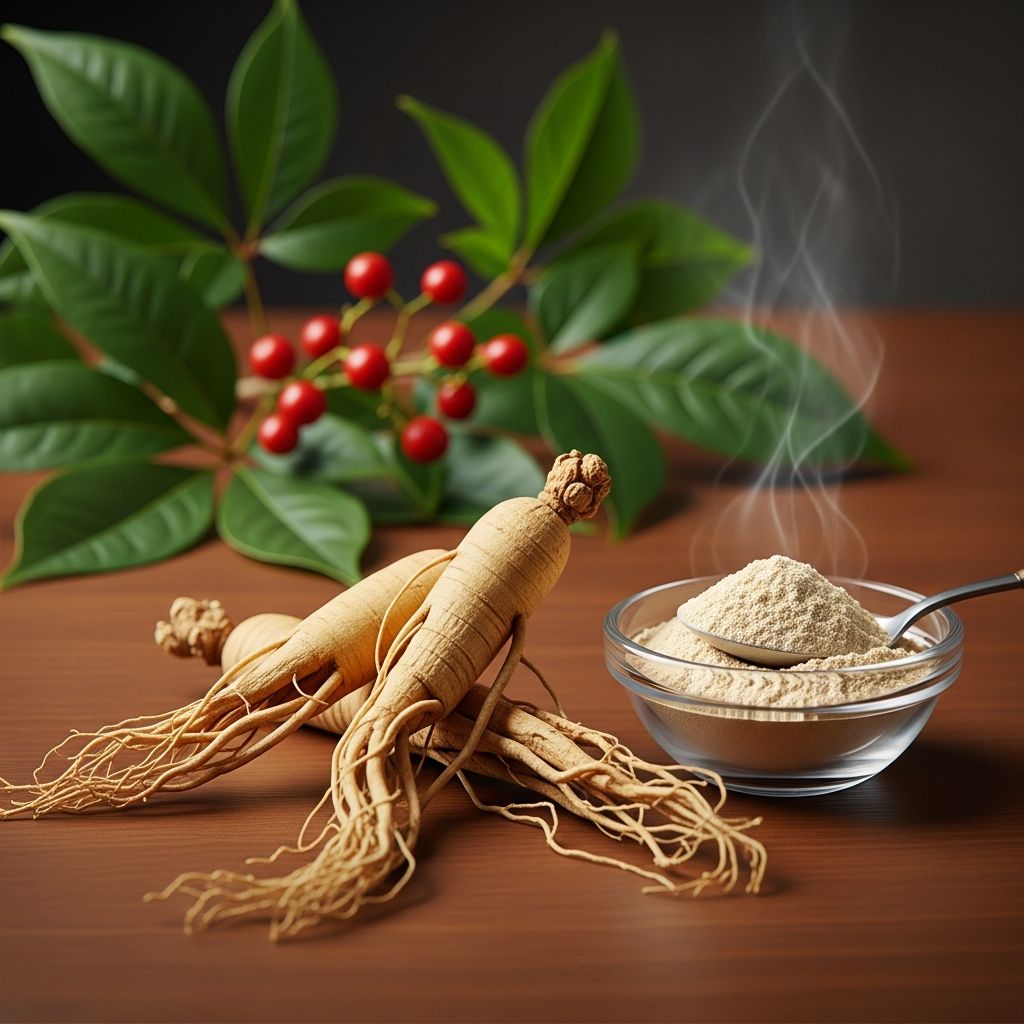
Asian ginseng, scientifically known as Panax ginseng, is a plant native to the Far East, with significant populations found in Korea, northeastern China, and far-eastern Siberia. For centuries, this remarkable herb has played a central role in traditional Chinese medicine, where it has been utilized as a calming agent and adaptogenic substance. Adaptogenic herbs are believed to help the body resist both physiological and psychological stress, making them valuable tools in maintaining overall wellness and resilience.
The root of the Asian ginseng plant is the most frequently used part for health purposes. Asian ginseng exists in two primary forms: red ginseng and white ginseng, which differ based on how the plant material is prepared and processed. These different preparations may have varying concentrations of active compounds and potentially different effects on the body.
Active Compounds and Mechanisms
The therapeutic properties of Asian ginseng are attributed to numerous bioactive substances within the plant. The compounds considered most important are called ginsenosides (also known as panaxosides). These complex molecules are responsible for many of the herb’s reported health benefits. Additionally, ginseng contains gintonin, which complements ginsenosides to provide potential health advantages. The combination of these active compounds gives Asian ginseng its diverse range of applications in traditional and contemporary health practices.
Promoted Health Uses
Asian ginseng has been promoted for a wide variety of health conditions and concerns. These include:
– Stress and anxiety management- Cognitive function and mental clarity- Flu prevention and immunity- Fatigue and low energy levels- Athletic performance enhancement- Diabetes and blood sugar management- Anti-aging effects- Asthma symptom relief- General wellness and vitality
While traditional medicine has long endorsed these uses, modern scientific research has begun investigating the validity of these claims, with varying degrees of success and evidence strength.
Current Research Evidence
Research Scope and Limitations
The amount of research on Asian ginseng for various conditions has gradually increased over recent years. However, significant limitations exist in the current body of evidence. Most clinical trials conducted to date have been relatively small, typically involving fewer than 200 participants, and most have lasted shorter than three months. To substantially improve the clinical evidence for Asian ginseng’s effectiveness across different conditions, larger multicenter studies that extend beyond three months are needed.
Fatigue and Energy
Research on Asian ginseng’s effects on fatigue has produced mixed but somewhat promising results. A 2023 review analyzing 19 studies involving 2,413 participants suggested two notable findings: Asian ginseng alone may have a small beneficial effect on general fatigue that is not related to specific diseases. Additionally, certain ginseng herbal formulas containing other ingredients may be beneficial for patients with chronic fatigue, though ginseng alone shows limited effectiveness. However, it is important to note that not all research agrees on Asian ginseng’s possible benefits for fatigue, indicating that more investigation is necessary.
Cognitive Function
A small amount of research has suggested that Asian ginseng may improve cognitive function, particularly in middle-aged adults. Potential improvements include enhanced abstract thinking, better attention span, improved arithmetic skills, and faster reaction time. However, these benefits do not appear to extend to young adults. Furthermore, any beneficial effects of Asian ginseng on memory appear to depend on combining it with ginkgo, another popular herbal supplement.
Related Stories



Cardiometabolic Health and Diabetes
Research on Asian ginseng’s effects on metabolic health has shown more consistent promise. A 2022 review examining 20 studies with 1,295 participants found that Asian ginseng improved many cardiometabolic factors in people with prediabetes and diabetes. These improvements included lower fasting blood glucose levels, reduced total cholesterol, and decreased certain inflammatory markers. Despite these positive findings, research on using Asian ginseng specifically for improving blood sugar control in people with diabetes remains overall inconclusive and conflicting, suggesting the need for more rigorous investigation.
Immune Function
Research indicates that ginseng possesses potent antibacterial, antifungal, and antiviral properties that may enhance immune system function. A 2020 study of 100 people showed that taking 2 grams of Korean red ginseng per day for eight weeks significantly increased levels of immune cells compared with placebo. Additionally, animal studies have demonstrated that black red ginseng extract increased the number of immune cells and enhanced antioxidant levels in the liver.
Flu Prevention
Very preliminary research suggests that Asian ginseng extract may help reduce the risk of developing the flu, though it does not appear to affect the severity or duration of symptoms once infection occurs.
Safety Profile and Considerations
Short-Term Safety
Short-term oral use of Asian ginseng in recommended amounts—up to six months—appears to be safe for most people. This safety profile has made it a popular dietary supplement choice for individuals seeking natural health support. However, important caveats exist regarding specific populations and long-term use.
Long-Term Safety Concerns
Questions have been raised about the long-term safety of Asian ginseng, and some health experts recommend against its use for certain populations, including:
– Infants and young children
– Pregnant women
– Women who are breastfeeding
Little is known about whether it is safe to use Asian ginseng while breastfeeding, making caution advisable for nursing mothers.
Common and Uncommon Side Effects
Insomnia, or trouble sleeping, is the most commonly reported side effect of Asian ginseng use. This effect may be particularly problematic for individuals already struggling with sleep disorders. Uncommon side effects that have been reported include severe rash, liver damage, and severe allergic reactions. These more serious adverse effects, while rare, underscore the importance of monitoring one’s response to the supplement.
Topical Use Safety
There isn’t enough reliable information to determine if Asian ginseng used topically on the skin is safe. When applied to the skin, it might cause side effects such as irritation and burning. For this reason, topical applications should be approached with caution, and patch testing is advisable before widespread use.
Effects on Blood Clotting and Autoimmune Disorders
Asian ginseng may worsen autoimmune disorders and interfere with blood clotting. Individuals with bleeding disorders or those taking blood-thinning medications should be particularly cautious. Similarly, those with autoimmune conditions should consult healthcare providers before beginning Asian ginseng supplementation.
Pregnancy Concerns
Some studies of Asian ginseng suggest it may be unsafe when taken orally during pregnancy. One of the chemicals in Asian ginseng has been found to cause birth defects in animals. For this reason, pregnant individuals should consult with their healthcare provider before considering Asian ginseng use, and many experts recommend avoiding it during pregnancy altogether.
Important Health Considerations
Blood Sugar Effects
Some evidence suggests that Asian ginseng might lower blood sugar levels. For individuals with diabetes, this could potentially be beneficial, but it also requires careful monitoring. If you have diabetes and are considering using Asian ginseng, it is essential to consult your healthcare provider before beginning supplementation. Close monitoring of blood sugar levels may be necessary to prevent hypoglycemia.
Medication Interactions
Asian ginseng might interact with certain medications. If you take any type of medicine, talk with your healthcare provider before using Asian ginseng or other herbal products. Some herbs and medications interact in ways that can be harmful, potentially reducing the effectiveness of medications or increasing side effect risk. A healthcare provider can evaluate your specific medications and determine whether Asian ginseng use is appropriate for you.
Frequently Asked Questions
Q: What is the difference between Asian ginseng, American ginseng, and other types?
A: There are several types of ginseng, each with different properties. Asian ginseng (Panax ginseng) and American ginseng (Panax quinquefolius) vary in their concentration of active compounds and effects on the body. The terms “red ginseng” and “white ginseng” specifically refer to Asian ginseng that has been prepared in different ways.
Q: How long does it take to see benefits from Asian ginseng?
A: The timeframe for experiencing benefits varies depending on the condition being addressed and individual factors. Most clinical trials have lasted shorter than three months, making it difficult to establish exact timelines. Some people may notice effects within weeks, while others may require longer periods of consistent use.
Q: Can Asian ginseng be used long-term?
A: While short-term use up to six months appears safe for most people, questions have been raised about long-term safety. More research is needed to determine the safety profile of extended use. It is advisable to consult with a healthcare provider about long-term supplementation plans.
Q: Is Asian ginseng safe for children?
A: Experts recommend against the use of Asian ginseng for infants and children due to limited safety data in these populations. Parents considering ginseng for children should first consult with a pediatrician.
Q: What is the recommended dosage for Asian ginseng?
A: Dosages can vary depending on the product formulation and intended use. It is important to follow product label instructions and consult with a healthcare provider to determine the appropriate dosage for your individual needs.
Q: Can Asian ginseng interact with my medications?
A: Yes, Asian ginseng might interact with certain medications. Before starting Asian ginseng supplementation, discuss it with your healthcare provider, especially if you take blood thinners, diabetes medications, or other medications.
Q: Why does Asian ginseng sometimes cause insomnia?
A: As an adaptogenic herb and stimulant, Asian ginseng can have energizing effects that may interfere with sleep, particularly if taken too close to bedtime or in excessive amounts. Taking it earlier in the day may help mitigate this side effect.
Resources for Additional Information
NCCIH Clearinghouse
The National Center for Complementary and Integrative Health (NCCIH) Clearinghouse provides information on complementary and integrative health approaches, including publications and searches of Federal databases of scientific and medical literature. Contact them at:
Toll-free: 1-888-644-6226
Telecommunications relay service (TRS): 7-1-1
Website: https://www.nccih.nih.gov
Email: info@nccih.nih.gov
PubMed
PubMed is a service of the National Library of Medicine containing publication information and brief summaries of articles from scientific and medical journals. This resource allows you to search for peer-reviewed research on Asian ginseng and related topics.
Website: https://pubmed.ncbi.nlm.nih.gov/
Office of Dietary Supplements (ODS)
The Office of Dietary Supplements at the National Institutes of Health seeks to strengthen knowledge and understanding of dietary supplements. ODS provides fact sheets on various supplement ingredients and products.
Website: https://ods.od.nih.gov
Email: ods@nih.gov
Conclusion
Asian ginseng represents a traditional herbal remedy with potential applications in modern health and wellness. While research has demonstrated some promising effects, particularly regarding fatigue and cardiometabolic health, the evidence remains preliminary in many areas. Short-term use appears relatively safe for most adults, though specific populations should avoid it. Before beginning Asian ginseng supplementation, individuals should consult with healthcare providers, particularly those with existing health conditions, those taking medications, pregnant or breastfeeding women, and parents considering it for children. As research continues to evolve, a clearer picture of Asian ginseng’s true benefits and risks will emerge.
References
- Asian Ginseng: Usefulness and Safety — National Center for Complementary and Integrative Health (NCCIH), National Institutes of Health. 2024. https://www.nccih.nih.gov/health/asian-ginseng
- Herb-Drug Interactions: What the Science Says — National Center for Complementary and Integrative Health (NCCIH), National Institutes of Health. 2024. https://www.nccih.nih.gov/health/providers/digest/herb-drug-interactions-science
- Possible Ginseng Benefits and Research — Healthline Media. 2024. https://www.healthline.com/nutrition/ginseng-benefits
- Ginseng — Merck Manual Professional Edition. 2024. https://www.merckmanuals.com/en-ca/professional/special-subjects/dietary-supplements/ginseng
Similar Articles








Read full bio of medha deb