Assistive Tech for Parkinson’s Daily Life
Discover innovative tools and devices that enhance independence and safety for those living with Parkinson's disease.
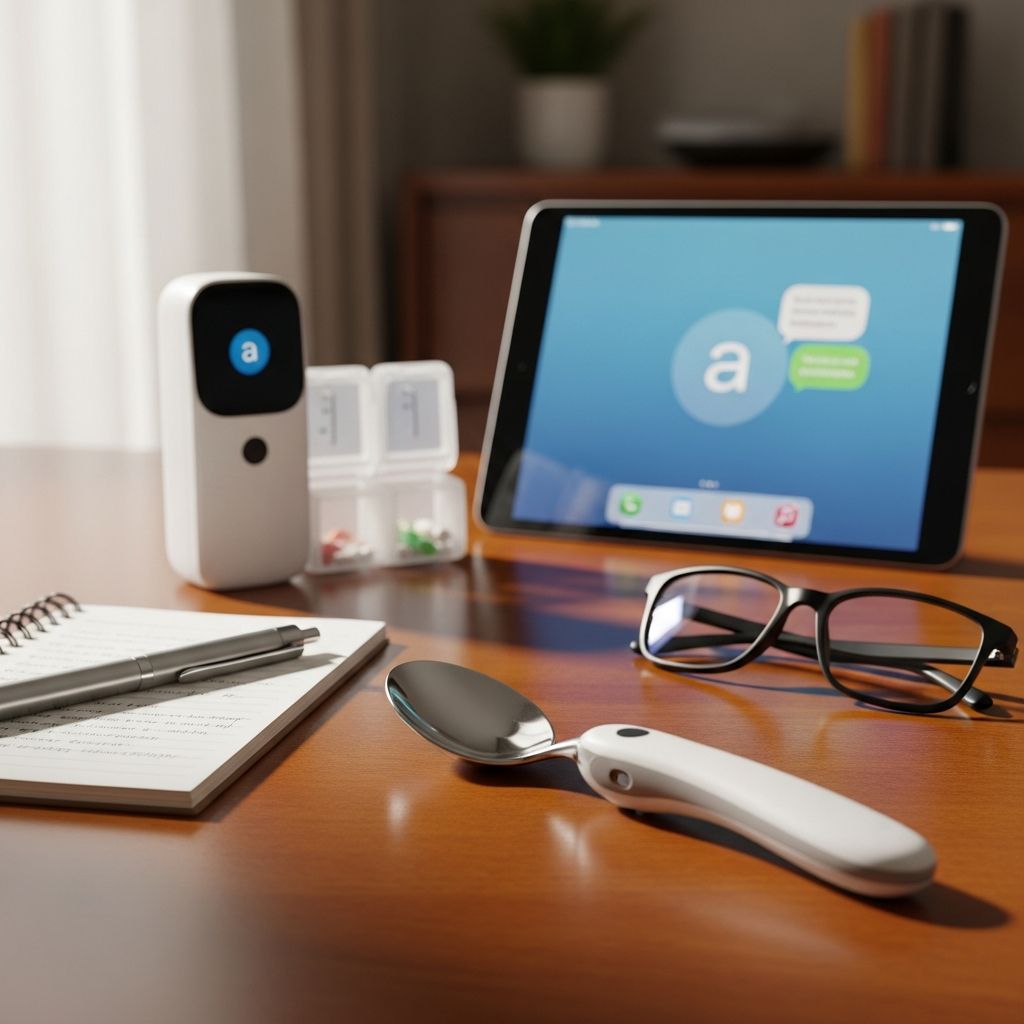
Parkinson’s disease often brings challenges to everyday routines, but assistive technologies offer practical solutions to maintain independence and safety. These tools range from simple mobility supports to advanced wearable sensors, helping manage symptoms like tremors, balance issues, and motor difficulties.
Enhancing Mobility and Balance
Mobility is a primary concern for many with Parkinson’s, as gait disturbances, freezing of gait (FOG), and balance problems increase fall risks. Assistive devices provide stability and encourage better movement patterns.
- Canes and Laser Attachments: Straight canes with rubber tips offer basic support, while laser-equipped versions project a line to break FOG episodes and promote longer strides.
- Rollators and Walkers: Multi-wheeled walkers with seats and baskets enhance stability for longer distances, suitable for indoor and outdoor use.
- Walking Poles: These promote upright posture and larger steps, countering shuffling gait.
Advanced options include power wheelchairs and scooters for severe mobility limitations, requiring professional assessment for prescription.
| Device Type | Key Benefits | Suitable For |
|---|---|---|
| Single-Point Cane | Light balance support, visual step cue | Mild instability |
| Laser Cane | FOG interruption, stride improvement | Freezing episodes |
| Four-Wheel Walker | High stability, rest option | Moderate balance loss |
| Power Scooter | Long-distance mobility | Advanced symptoms |
Tools for Personal Care and Hygiene
Tasks like bathing and grooming become arduous due to tremors and reduced dexterity. Specialized aids simplify these routines, reducing frustration and injury risk.
- Shower Chairs and Grab Bars: Stable seating and handles prevent slips in wet environments.
- Electric Toothbrushes and Razors: Vibration-minimizing designs make oral and facial care easier.
- Long-Handled Brushes: Reach difficult areas without straining balance.
These devices foster confidence in self-care, essential for dignity and routine maintenance.
Adaptive Solutions for Dressing
Dressing challenges arise from stiffness and fine motor deficits. Innovative clothing and tools address these effectively.
- Magnetic Closures and Velcro: Easy-open fasteners replace buttons and zippers.
- Shoehorns and Elastic Laces: Slip-on designs eliminate bending and tying.
- Adaptive Apparel: Clothing with side openings or magnets for seated dressing.
Occupational therapists often recommend these after evaluating individual needs, ensuring seamless integration into wardrobes.
Kitchen and Eating Aids
Tremors complicate meal preparation and eating, but adaptive utensils and gadgets promote nutrition independence.
- Weighted Utensils: Stabilize hands during feeding.
- Jar Openers and Kettle Tippers: Mechanical aids for gripping and pouring.
- Non-Slip Mats: Secure plates and bowls on tables.
- Adaptive Cutlery: Built-up handles for better grasp.
These tools minimize spills and effort, encouraging balanced diets vital for managing Parkinson’s.
Smart Home and Safety Features
Home modifications and tech enhance security against falls and disorientation.
- Motion Sensors and Alarms: Alert to unusual movements or inactivity.
- Voice-Activated Lights: Hands-free illumination for nighttime navigation.
- Medication Dispensers: Timed reminders and auto-dispensing.
Related Stories



Combining these with smart home systems creates a responsive environment tailored to progressing symptoms.
Advanced Wearables and Sensors
Modern technology leverages sensors for gait analysis and rehabilitation. Wearable devices monitor stride length, velocity, and FOG in real-time. Inertial sensors in shoes or attached to limbs provide data for remote clinician review, enabling personalized interventions.
Real-time cueing via auditory metronomes or visual feedback improves cadence and balance. Devices like the Cala kIQ deliver targeted stimulation for tremor relief.
Communication and Cognitive Supports
Speech softening and cognitive fog necessitate aids for interaction and memory.
- Amplified Phones and Speech Apps: Boost volume and clarify output.
- Picture Calendars and Alarms: Visual and audible reminders for schedules.
- Adaptive Keyboards: Larger keys for typing with tremors.
Speech-language pathologists customize these for effective communication.
Leisure and Exercise Enhancers
Staying active combats rigidity. Tech supports recreation:
- Adaptive Gaming Controllers: Tremor-resistant designs.
- Audiobooks and Holders: Hands-free reading.
- Pedometers: Motivate daily steps.
Exercise remains crucial; wearables track progress accurately.
Role of Healthcare Professionals
Therapists are pivotal: Occupational therapists match devices to activities, physical therapists focus on mobility training, and speech pathologists address swallowing and voice. They guide funding and insurance navigation.
Future Innovations in Assistive Tech
Emerging soft robotics and VR promise gait restoration. Exergames and robot-assisted treadmills offer immersive rehab, reducing falls and enhancing outcomes.
Frequently Asked Questions
What are the best mobility aids for early Parkinson’s?
Single-point canes or walking poles suit mild balance issues, progressing to rollators as needed.
Do insurance plans cover these devices?
Often yes, with therapist prescriptions; check Medicare or private policies for specifics.
How do wearable sensors help with gait?
They detect FOG, provide cues, and share data for tailored therapy.
Can adaptive clothing be stylish?
Modern designs blend functionality with fashion, using discreet magnets and elastics.
Where to trial assistive devices?
Consult therapists or Parkinson’s foundations for demos and loans.
References
- Assisted technology in Parkinson’s disease gait: what’s up? — PMC/NCBI. 2024. https://pmc.ncbi.nlm.nih.gov/articles/PMC10890908/
- Assistive Devices, Therapies & Techniques — Essential Tremor Foundation. 2023. https://essentialtremor.org/resource/assistive-devices/
- Assistive Technology & Devices — Parkinson’s Foundation. 2025. https://www.parkinson.org/living-with-parkinsons/management/activities-daily-living/assistive-tech-devices
- Assistive Devices for those Living with Parkinson’s Disease — Senior Helpers. 2024. https://www.seniorhelpers.com/resources/blogs/assistive-devices-for-those-living-with-parkinsons-disease/
- Assistive Devices for People with Parkinson’s Disease — Michael J. Fox Foundation. 2023. https://www.michaeljfox.org/news/community-assistive-devices-people-parkinsons-disease
Similar Articles








Read full bio of medha deb