Asthma Vs COPD: Key Differences, Symptoms, And Treatment
Key differences between asthma and COPD: symptoms, causes, diagnosis, treatment, and when to seek help.
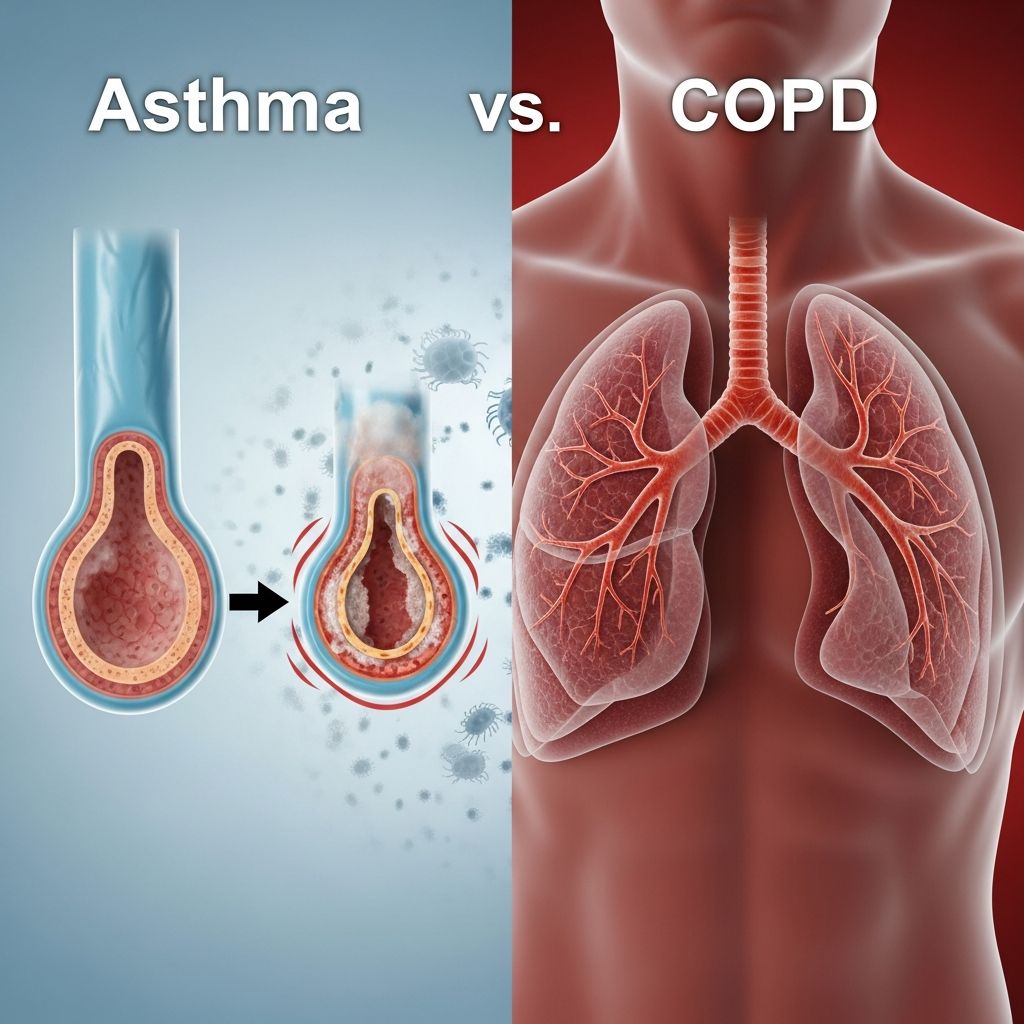
Asthma and chronic obstructive pulmonary disease (COPD) are both chronic lung conditions that cause airway inflammation and breathing difficulties, but they differ significantly in causes, symptom patterns, progression, and treatment approaches. Asthma often presents as reversible episodes triggered by allergens or irritants, while COPD involves irreversible lung damage, primarily from smoking, leading to progressive symptoms.
What Is Asthma?
Asthma is a chronic inflammatory disorder of the airways characterized by hyperresponsiveness, resulting in recurrent episodes of wheezing, breathlessness, chest tightness, and coughing, especially at night or early morning. These episodes involve variable airflow obstruction that is often reversible spontaneously or with treatment.
The inflammation in asthma is typically driven by allergens like pollen, mold, or dust, as well as irritants, exercise, or cold air. Airways narrow due to muscle spasms (bronchoconstriction), swelling, and excess mucus production during attacks, which can range from mild to life-threatening. Between attacks, lung function often returns to normal, making asthma potentially fully reversible with proper management.
Asthma commonly begins in childhood or young adulthood and affects people of all ages. It is associated with other allergic conditions like hay fever or eczema.
What Is COPD?
Chronic obstructive pulmonary disease (COPD) encompasses progressive lung diseases, primarily emphysema and chronic bronchitis, that obstruct airflow and are largely irreversible. Emphysema damages the alveoli (tiny air sacs), reducing oxygen exchange, while chronic bronchitis involves persistent bronchial tube inflammation and mucus production.
Unlike asthma, COPD symptoms are constant and worsen over time, even with treatment. Smoking is the leading cause, accounting for most cases, though long-term exposure to air pollution, chemical fumes, or dust also contributes. Symptoms typically emerge after age 40 and include chronic cough with phlegm, shortness of breath, wheezing, and fatigue during daily activities.
COPD leads to permanent changes like less elastic air sacs and narrowed airways, causing cyanosis (bluish lips or nails) in advanced stages due to poor oxygenation.
Symptoms of Asthma vs. COPD
Both conditions share core symptoms—shortness of breath, wheezing, coughing, and chest tightness—but their presentation differs markedly.
- Shared symptoms: Shortness of breath (dyspnea), chest tightness, wheezing (whistling sound during breathing), cough, exercise intolerance, and anxiety from breathing difficulty.
Asthma symptoms occur in episodic attacks triggered by specific factors, resolving between episodes. COPD symptoms persist daily, progressively intensifying, with frequent mucus-producing coughs and exacerbations lasting days.
| Symptom | Asthma | COPD |
|---|---|---|
| Shortness of breath | Episodic, during attacks | Constant, worsens over time |
| Cough | Dry or minimal mucus, intermittent | Chronic, productive with phlegm |
| Wheezing | During attacks | Persistent |
| Chest tightness | Attack-related | Ongoing |
| Other | May resolve fully | Cyanosis, fatigue, barrel chest |
Asthma attacks can be sudden and severe, while COPD flare-ups often follow infections and cause lasting damage.
Causes and Risk Factors
Asthma arises from a combination of genetic predisposition and environmental triggers. Key risk factors include family history of asthma or allergies, exposure to allergens (pollen, pet dander, mold), respiratory infections in early life, and irritants like tobacco smoke or pollution. Obesity and certain medications (e.g., aspirin) can exacerbate it.
COPD is predominantly caused by long-term cigarette smoking (80-90% of cases), with alpha-1 antitrypsin deficiency as a rare genetic factor. Occupational exposures to dust, chemicals, and fumes, plus indoor air pollution (e.g., biomass fuel), heighten risk. Unlike asthma, it rarely starts before mid-life.
Related Stories



- Asthma triggers: Allergens, exercise, cold air, stress, infections.
- COPD triggers: Smoking, infections, pollution; no strong allergic component.
Asthma-COPD Overlap (ACO)
Asthma-COPD overlap syndrome (ACO) occurs when features of both conditions coexist, leading to more severe symptoms, frequent exacerbations, and higher hospitalization rates than either alone. Patients may experience persistent airflow limitation with bronchodilator responsiveness and elevated eosinophils or neutrophils in sputum.
ACO is common in smokers with a history of asthma or those with longstanding untreated asthma developing fixed obstruction. Management combines asthma and COPD strategies, often yielding better prognosis than pure COPD.
Diagnosis: How to Tell the Difference
Distinguishing asthma from COPD requires clinical history, physical exams, and tests. Spirometry is key: asthma shows reversible obstruction (FEV1 improves >12% post-bronchodilator), while COPD demonstrates persistent limitation.
- History: Childhood onset, allergies suggest asthma; smoking history, age >40 suggest COPD.
- Lung function tests: Spirometry, peak flow variability (high in asthma).
- Imaging: Chest X-ray/CT for emphysema in COPD.
- Allergy tests: Positive in asthma.
- Blood gas: Hypoxemia in advanced COPD.
Differentiation can be challenging in ACO or fixed asthma; guidelines like GINA/GOLD aid classification.
Treatment and Management
Treatment targets symptom relief, exacerbation prevention, and lung function preservation.
Asthma: Inhaled corticosteroids (ICS) for inflammation, short-acting beta-agonists (SABA) for rescue, long-acting beta-agonists (LABA) for control. Avoid triggers, use action plans. Biologics for severe allergic asthma.
COPD: Bronchodilators (LABA/LAMA), ICS for frequent exacerbators, oxygen therapy, pulmonary rehab. Smoking cessation is critical; no cure, but progression slows.
| Treatment | Asthma | COPD |
|---|---|---|
| Primary meds | ICS + SABA/LABA | LABA/LAMA ± ICS |
| Lifestyle | Trigger avoidance | Quit smoking, rehab |
| Prognosis | Reversible, good control | Progressive, manage symptoms |
ACO uses triple therapy (ICS/LABA/LAMA).
Prevention and Lifestyle Tips
- Quit smoking: Essential for COPD prevention and slowing progression.
- Avoid triggers: Use air purifiers, flu vaccines for both.
- Exercise: Pulmonary rehab improves endurance.
- Diet: Anti-inflammatory foods, maintain healthy weight.
- Monitoring: Peak flow meters for asthma; regular spirometry for COPD.
When to See a Doctor
Seek immediate care for severe shortness of breath, blue lips, confusion, or peak flow <50% personal best. Routine check-ups prevent exacerbations.
Frequently Asked Questions (FAQs)
Can you have asthma and COPD at the same time?
Yes, asthma-COPD overlap (ACO) combines features of both, causing more severe symptoms and requiring combined treatments.
Is asthma or COPD worse?
COPD is generally more progressive and irreversible, with higher mortality; well-controlled asthma has better outcomes.
Does COPD show up on X-ray?
Advanced COPD may show hyperinflation or emphysema; early stages often normal.
Can asthma turn into COPD?
Untreated severe asthma can lead to fixed obstruction resembling COPD, especially in smokers.
How is asthma diagnosed in adults?
Via spirometry showing reversibility, history of episodic symptoms, and exclusion of other causes.
References
- Asthma or COPD? How to Tell the Difference — WebMD. 2023. https://www.webmd.com/lung/copd/asthma-vs-copd
- Asthma vs. COPD: What’s the Difference? — PAM Health. 2024. https://pamhealth.com/resources/asthma-vs-copd-whats-the-difference/
- Understanding the Difference Between Asthma and COPD — Cleveland Clinic. 2024. https://health.clevelandclinic.org/asthma-vs-copd
- Asthma vs. COPD: What Are the Differences? — Baptist Health. 2023. https://www.baptisthealth.com/blog/family-health/asthma-vs-copd-what-are-the-differences
- Asthma or COPD? — University of Maryland Medical System. 2024. https://www.umms.org/bwmc/health-services/pulmonary-disease/copd/about-copd/asthma-or-copd
- Asthma vs. COPD: Key differences you should know — NDD Medical. 2025-01-01. https://nddmed.com/blog/2025/asthma-copd-key-differences/
- Asthma and Chronic Obstructive Pulmonary Disease (COPD): A Comparison of Causes and Treatment Principles — National Institutes of Health (PMC). 2013-04-01. https://pmc.ncbi.nlm.nih.gov/articles/PMC3633485/
Similar Articles








Read full bio of Sneha Tete