Astigmatism: 4 Effective Vision Correction Options
Discover the essentials of astigmatism: from irregular eye shapes to effective treatments for sharp, clear vision every day.
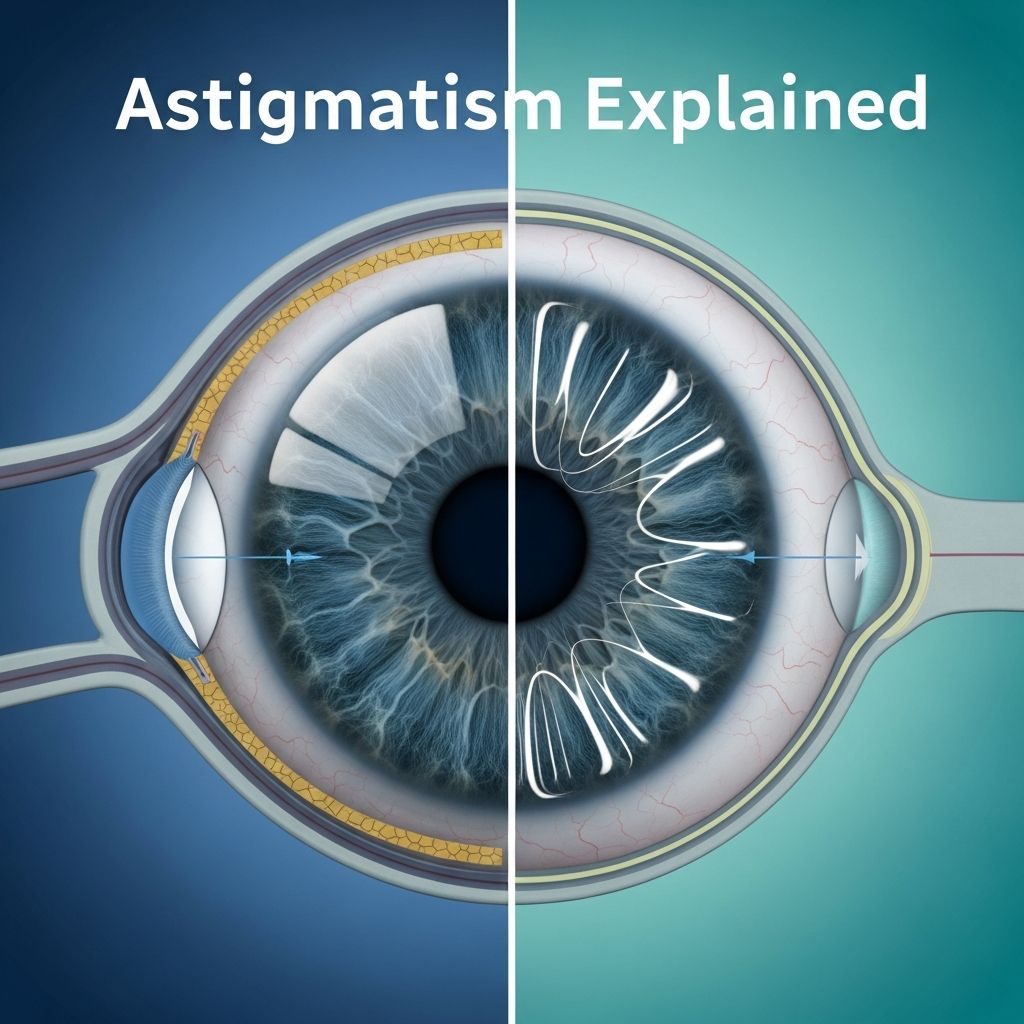
Astigmatism represents a prevalent refractive error affecting millions worldwide, characterized by an uneven curvature of the cornea or lens that distorts light focus on the retina.This condition leads to blurred or fuzzy vision at all distances, often accompanied by discomfort during visual tasks.
The Science Behind Astigmatism
In a healthy eye, the cornea—the transparent front layer—and the lens inside the eye maintain a smooth, spherical shape akin to a basketball. This uniformity allows incoming light rays to bend evenly and converge precisely on the retina, creating sharp images. With astigmatism, however, the cornea or lens adopts a football-like shape, steeper in one meridian than another. Consequently, light scatters into multiple focal points rather than a single one, resulting in optical aberrations.
Astigmatism manifests in various forms. Regular astigmatism features consistent curvature differences between principal meridians, typically correctable with standard lenses. Irregular astigmatism, less common, involves uneven surface irregularities, often linked to corneal scars or diseases, complicating correction.
Classification further divides it into simple (one meridian focused on the retina), compound (both meridians similarly myopic or hyperopic), and mixed types (opposing refractive errors in meridians).
Primary Causes and Risk Factors
Astigmatism frequently stems from genetic predisposition, emerging at birth or early childhood. Hereditary factors play a dominant role, with family history increasing likelihood.
- Corneal irregularities: The most common origin, where the cornea’s front surface warps unevenly.
- Lenticular astigmatism: Arising from an asymmetrically shaped internal lens.
- Trauma or surgery: Eye injuries, incisions from procedures like cataracts, or post-operative changes can induce or exacerbate the condition.
- Progressive disorders: Conditions such as keratoconus, where the cornea thins and bulges into a cone, provoke severe irregular astigmatism.
Over time, astigmatism may intensify or diminish, particularly in adulthood, sometimes preceding cataracts as lens curvature shifts. Unlike infectious diseases, it poses no contagion risk but demands monitoring, especially in children to avert developmental vision loss.
Recognizing the Signs: Symptoms of Astigmatism
Symptoms vary by severity; mild cases might evade notice, while pronounced ones disrupt daily life. Common indicators include: persistent blurred or distorted vision across distances, compelling squinting for clarity.
| Symptom | Description | Common Triggers |
|---|---|---|
| Blurred Vision | Fuzzy images at near or far ranges | Reading, driving, screen time |
| Eye Strain | Fatigue, heaviness, or ache in eyes | Prolonged focus |
| Headaches | Frequent frontal or orbital pain | Visual tasks without correction |
| Night Vision Issues | Glare, halos, difficulty in low light | Driving after dark |
| Distortions | Elongated or tilted objects | Severe cases |
Untreated, these foster asthenopia (eye fatigue), partial lid closure, head tilting, or accommodative spasms. In children, it risks amblyopia—permanent acuity reduction if uncorrected during visual maturation.
Comprehensive Diagnosis Process
Eye care professionals diagnose astigmatism via thorough exams measuring light refraction and curvature. Key tests encompass:
- Visual Acuity Assessment: Reading charts to quantify sharpness deficits.
- Retinoscopy: Shining light to observe reflex patterns, estimating refractive needs.
- Keratometry: Devices gauging corneal curvature radii precisely.
- Slit-Lamp Examination: Microscopic corneal surface inspection for irregularities.
- Scheimpflug Imaging: Advanced corneal mapping for detailed topography.
- Astigmatism-Specific Tests: Fan patterns or Jackson cross-cylinders to pinpoint axis and power.
Differential diagnosis distinguishes it from myopia (nearsightedness), hyperopia (farsightedness), or presbyopia (age-related focus loss). Early detection proves crucial, particularly in pediatrics.
Related Stories



Effective Correction and Management Options
Fortunate for patients, astigmatism responds well to multiple interventions, often fully restoring clarity. Choices span non-invasive to surgical:
1. Eyeglasses
Sphero-cylindrical lenses compensate for curvature variances, with the cylindrical component addressing astigmatic power and axis. Ideal starter for all ages.
2. Contact Lenses
Toric lenses, weighted for stability, correct moderate to high astigmatism effectively. Rigid gas-permeable options excel for irregular types.
3. Refractive Surgery
LASIK, PRK, or SMILE reshape the cornea using lasers for permanent correction. Suitable post-stabilization, typically after age 18.
4. Specialized Interventions
For keratoconus-linked cases, corneal cross-linking halts progression, or intrastromal rings reshape gently.
Prognosis shines with timely treatment; most achieve excellent acuity. Regular follow-ups track changes, as prescriptions evolve.
Prevention, Lifestyle Tips, and Long-Term Outlook
While genetic astigmatism defies prevention, protective eyewear averts trauma-induced forms. Routine exams—annually for adults, biannually for at-risk children—facilitate early management.
- Follow the 20-20-20 rule: Every 20 minutes, view 20 feet away for 20 seconds.
- Ensure ample lighting for tasks.
- Limit screen exposure; use blue-light filters.
- Stay hydrated to combat dry eyes exacerbating strain.
Children merit special vigilance; uncorrected astigmatism heightens myopia risk and amblyopia odds. Adults note potential progression with age or comorbidities.
Frequently Asked Questions (FAQs)
Can astigmatism be cured completely?
Non-surgical methods correct vision optimally, while surgeries like LASIK offer lasting reshaping for many, though age-related shifts may necessitate updates.
Does astigmatism worsen with age?
It can fluctuate, especially with lens changes or cataracts, but stabilization often occurs post-childhood.
Is astigmatism dangerous if untreated?
In adults, it mainly impairs comfort; in kids, it risks permanent vision loss via amblyopia.
Can children outgrow astigmatism?
Degrees may lessen, but monitoring ensures proper development.
How does astigmatism differ from nearsightedness?
Myopia blurs distance due to elongated eyes; astigmatism distorts all ranges via shape issues, often coexisting.
References
- Astigmatism – StatPearls — NCBI Bookshelf, National Center for Biotechnology Information. 2023-07-17. https://www.ncbi.nlm.nih.gov/books/NBK582142/
- Astigmatism — American Optometric Association. Accessed 2026. https://www.aoa.org/healthy-eyes/eye-and-vision-conditions/astigmatism
- Understanding Astigmatism: Causes, Symptoms, and Treatments — Blake Bush Family Eye Care. 2023. https://www.blakebushfamilyeyecare.com/blog/understanding-astigmatism-causes-symptoms-and-treatments
- What Is Astigmatism and How Can It Be Corrected? — Dean McGee Eye Institute. Accessed 2026. https://www.dmei.org/blog/what-is-astigmatism-and-how-can-it-be-corrected/
- Your Guide to Understanding and Managing Astigmatism — Nova Eye Docs. Accessed 2026. https://novaeyedocs.com/your-guide-to-understanding-and-managing-astigmatism/
- Understanding Myopia and Astigmatism — Vision Source Victoria. 2023-07-13. https://visionsource-victoria.com/2023/07/13/understanding-myopia-and-astigmatism-a-comprehensive-guide-for-mothers/
- A Definitive Guide to Astigmatism — Milan Eye Center. Accessed 2026. https://www.milaneyecenter.com/resources/a-definitive-guide-to-astigmatism/
Similar Articles








Read full bio of medha deb