At-Home Sleep Tests: What You Need to Know
Complete guide to understanding at-home sleep tests, their benefits, and what to expect during the process.
Understanding At-Home Sleep Tests: A Comprehensive Guide
Sleep disorders affect millions of people worldwide, yet many go undiagnosed due to inconvenience, scheduling conflicts, or discomfort with traditional overnight laboratory studies. At-home sleep tests have revolutionized the way healthcare providers diagnose sleep-related conditions, offering patients a convenient, comfortable alternative to traditional sleep laboratory testing. This comprehensive guide explores everything you need to know about at-home sleep tests, including how they work, their benefits, preparation requirements, and what to expect during the process.
What Is an At-Home Sleep Test?
An at-home sleep test, also known as portable sleep monitoring or ambulatory sleep study, is a diagnostic tool that allows patients to undergo sleep evaluation in the comfort of their own home rather than in a hospital or sleep laboratory setting. During this test, patients wear specialized monitoring devices that track various physiological parameters while they sleep, including breathing patterns, oxygen levels, heart rate, and sleep stages. The collected data is then analyzed by sleep specialists to identify potential sleep disorders and recommend appropriate treatment options.
Unlike traditional in-laboratory sleep studies that require patients to spend a night in a medical facility with multiple sensors and electrodes attached to their body, at-home sleep tests provide a more naturalistic sleep environment. This often results in better quality sleep data, as patients are sleeping in their familiar surroundings with their regular sleep schedules and bedding.
Types of Sleep Disorders Diagnosed with At-Home Tests
At-home sleep tests are primarily effective for diagnosing obstructive sleep apnea (OSA), one of the most common sleep disorders. However, healthcare providers may also use portable monitoring to evaluate other sleep-related conditions, though with varying degrees of effectiveness.
- Obstructive Sleep Apnea (OSA): The most common indication for at-home sleep testing, OSA occurs when the airway collapses repeatedly during sleep, causing breathing interruptions.
- Sleep-Related Hypoventilation: Current clinical guidelines recommend caution when using portable monitoring for this condition, as it may not capture all diagnostic nuances.
- Central Sleep Apnea: Like sleep hypoventilation, central sleep apnea diagnosis may require additional evaluation beyond portable monitoring.
- Circadian Rhythm Disorders: Some at-home devices include actigraphy technology that monitors activity patterns and sleep-wake cycles.
- Insomnia: Certain portable monitoring systems can track sleep patterns and help identify factors contributing to sleep difficulties.
How At-Home Sleep Tests Work
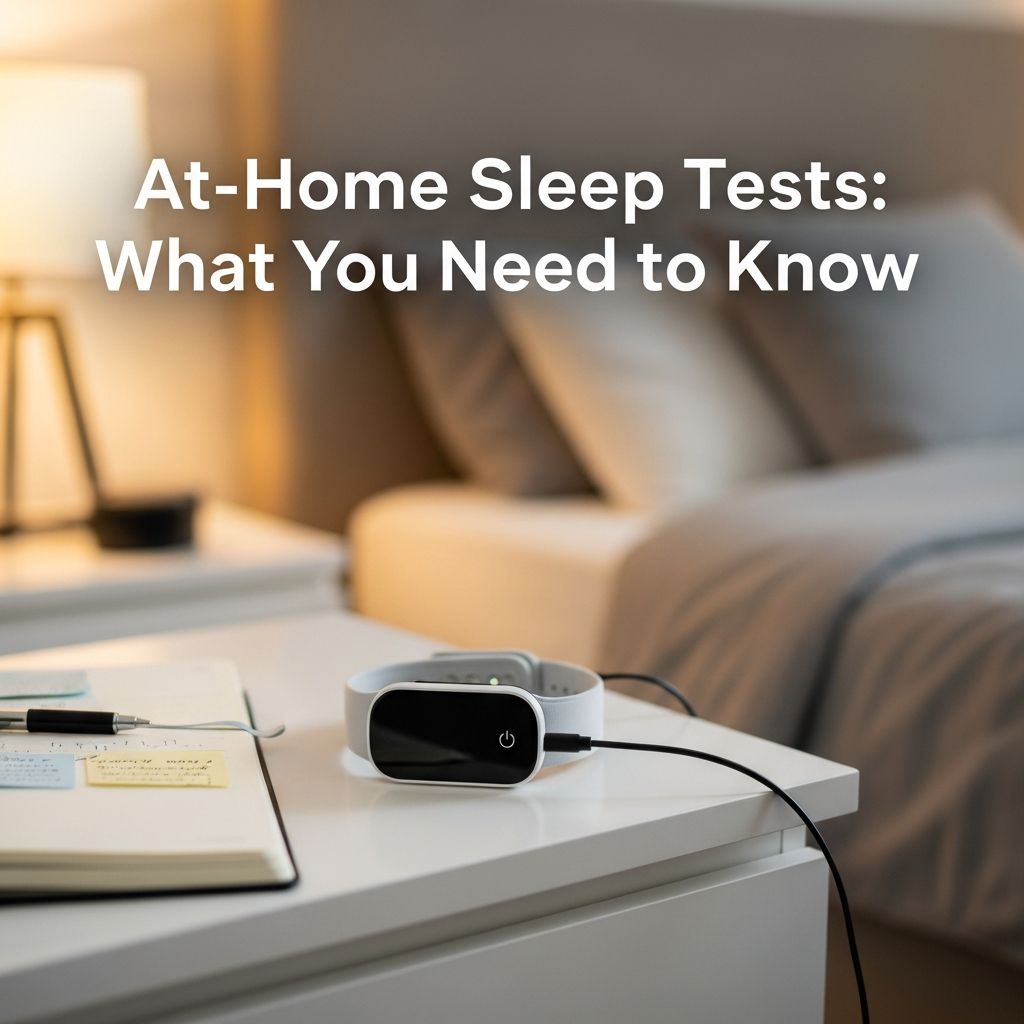
At-home sleep testing devices vary in complexity and the number of parameters they measure. Most portable sleep monitors are relatively simple to use and wear, typically resembling small, lightweight devices that can be worn on the wrist, chest, or finger.
Common Components Include:
- Nasal cannula to measure airflow and breathing effort
- Chest and abdominal bands to detect breathing movements
- Pulse oximetry sensor (usually on the finger) to measure oxygen saturation levels
- ECG electrodes to monitor heart rhythm
- Optional EEG sensors in some advanced devices to track sleep stages
These devices record data throughout the night, capturing information about breathing patterns, oxygen levels, heart rate variability, and sometimes sleep stage information. The data is stored on the device and later downloaded and analyzed by sleep medicine specialists who interpret the results and provide recommendations.
Related Stories



Advantages of At-Home Sleep Testing
At-home sleep tests offer numerous advantages over traditional laboratory-based sleep studies, making them an attractive option for patients and healthcare providers alike.
- Convenience: Patients sleep in their own beds and follow their normal sleep routines, eliminating the need for overnight hospital stays.
- Comfort: The familiar sleep environment often results in better quality sleep and more representative data.
- Cost-Effective: At-home testing is generally less expensive than laboratory sleep studies, making sleep evaluation more accessible.
- Reduced Wait Times: Many facilities can provide at-home test kits with faster turnaround times than laboratory testing.
- Better Patient Compliance: The simplified setup and home-based nature often lead to higher patient acceptance and completion rates.
- Privacy: Patients maintain complete privacy during their sleep, which some individuals prefer over laboratory settings.
Limitations and When Laboratory Testing May Be Necessary
While at-home sleep tests are valuable diagnostic tools, they do have limitations. Current clinical guidelines recommend that certain conditions may require full polysomnography (laboratory sleep study) for accurate diagnosis.
Laboratory testing may be recommended for:
- Diagnosis of central sleep apnea or complex sleep apnea syndromes
- Evaluation of sleep hypoventilation disorders
- Suspected narcolepsy or other hypersomnias requiring multiple sleep latency testing
- Evaluation of periodic leg movements and restless legs syndrome
- Complex medical or neurological conditions affecting sleep
- Failed at-home testing or inconclusive results
Additionally, not all portable devices are equivalent in their diagnostic capability. Some advanced home sleep testing systems include EEG capabilities and can provide more comprehensive sleep stage information, while basic systems focus primarily on respiratory events and oxygen saturation.
Preparation for Your At-Home Sleep Test
Proper preparation is essential to ensure accurate results from your at-home sleep test. Following these guidelines will help optimize the quality of data collected during your study.
- Maintain Normal Sleep Schedule: Sleep at your usual bedtime and wake at your typical time. Avoid napping during the day before your test.
- Avoid Alcohol and Sedatives: Alcohol and sleep medications can affect breathing patterns and study results. Avoid these substances the night of your test unless specifically instructed by your sleep specialist.
- Limit Caffeine: Reduce caffeine intake in the afternoon and evening to avoid sleep disruption.
- Exercise Appropriately: Maintain your normal exercise routine, but avoid vigorous exercise immediately before bedtime.
- Review Device Instructions: Carefully read and understand all device instructions provided by your healthcare provider.
- Test Device Setup: If possible, practice putting on the sensors during the day to become comfortable with the process.
- Prepare Your Sleep Environment: Ensure your bedroom is comfortable, dark, cool, and quiet, just as it would be for any normal night of sleep.
What to Expect During the Test
On the night of your at-home sleep test, you will apply the portable monitoring sensors according to your provider’s instructions. Most devices are designed to be user-friendly and can be applied without assistance, though some patients may require help from a family member or caregiver.
After applying the sensors, you’ll proceed with your normal nighttime routine. Most portable devices are lightweight and unobtrusive, allowing you to move freely and adjust your sleep position as needed. The devices operate silently throughout the night, recording data without causing discomfort or requiring any active participation from you beyond normal sleep.
Upon waking, you’ll remove the sensors and store the device as instructed. Some devices require you to return them to your healthcare provider’s office, while others use wireless technology to transmit data automatically. Most tests require at least one night of data collection, though some conditions may require multiple nights for comprehensive evaluation.
After Your At-Home Sleep Test
Following your at-home sleep test, the device is returned to your healthcare provider’s office or the results are transmitted electronically. Sleep medicine specialists analyze the collected data, comparing your results against established diagnostic criteria for sleep disorders.
Your provider will schedule a follow-up appointment to discuss your results. If a sleep disorder is identified, your provider will discuss treatment options, which may include lifestyle modifications, continuous positive airway pressure (CPAP) therapy, oral appliances, positional therapy, or other interventions depending on your specific condition and severity.
Even if your at-home test results are normal, your sleep specialist may recommend additional evaluation if your symptoms persist or if clinical suspicion for a sleep disorder remains high based on your medical history and presentation.
Frequently Asked Questions About At-Home Sleep Tests
Q: Is an at-home sleep test as accurate as a laboratory sleep study?
A: For obstructive sleep apnea diagnosis, at-home tests are generally quite accurate when appropriate patient selection criteria are met. However, laboratory studies provide more comprehensive information about sleep stages and may be necessary for certain conditions. Your sleep specialist will determine which test is most appropriate for your situation.
Q: How long does it take to get results from an at-home sleep test?
A: Results are typically available within one to two weeks following the test. Your sleep specialist will review the data and schedule a follow-up appointment to discuss findings and treatment recommendations.
Q: Can I use my at-home sleep test device to monitor my sleep regularly?
A: The portable monitors used for diagnostic sleep studies are designed specifically for medical testing and should only be used under the guidance of a healthcare provider. Using them without professional interpretation could lead to inaccurate conclusions.
Q: What should I do if I don’t sleep well the night of my at-home test?
A: Don’t be overly concerned. One night of reduced sleep still typically provides sufficient data for diagnosis. However, if your results are inconclusive, your provider may recommend repeating the test or proceeding with laboratory-based testing.
Q: Are at-home sleep tests covered by insurance?
A: Most insurance plans cover at-home sleep testing when ordered by a physician for appropriate medical indications. Coverage varies by plan and provider, so contact your insurance company to confirm your benefits before your test.
Q: Can children use at-home sleep tests?
A: At-home testing can be used for children, though patient selection and device sizing are important considerations. Your pediatric sleep specialist will determine if at-home testing is appropriate for your child.
The Future of Sleep Diagnostics
At-home sleep testing continues to evolve with advancing technology. Newer devices increasingly incorporate additional sensors and artificial intelligence algorithms to provide more comprehensive sleep assessment. Wearable technology integration and remote monitoring capabilities are expanding the accessibility and convenience of sleep diagnostics, making it easier for patients to participate in sleep studies.
As technology improves and clinical evidence accumulates, at-home sleep testing will likely play an increasingly important role in the initial evaluation of suspected sleep disorders. However, traditional laboratory sleep studies will remain essential for complex cases and conditions requiring comprehensive sleep stage analysis.
Conclusion
At-home sleep tests represent a significant advancement in sleep medicine, offering patients a convenient, comfortable, and cost-effective way to screen for common sleep disorders, particularly obstructive sleep apnea. By understanding how these tests work, what to expect, and how to prepare, you can approach your study with confidence. If you suspect you have a sleep disorder, discuss at-home sleep testing options with your healthcare provider to determine if this diagnostic tool is appropriate for your situation. Early diagnosis and treatment of sleep disorders can significantly improve your overall health, quality of life, and daytime functioning.
References
- New Techniques and at Home Sleep Studies — Johns Hopkins Medicine. 2013-10-15. https://www.youtube.com/watch?v=C7TTkzuEhhU
- What to Expect | Home Sleep Apnea Testing — Johns Hopkins Medicine. 2021-03-24. https://www.youtube.com/watch?v=0IGLLiNwVFg
- Site of Service Sleep Studies: Current Guidelines — Johns Hopkins Hospital. 2022. https://hpo-docs.jh.edu/2AbL6NmG
- Sleep Services – Home Sleep Study Instructions — Spartanburg Regional Healthcare System. 2025-02-10. https://www.youtube.com/watch?v=yQ6i5GWqyRs
- Sleep Apnea in Type 2 Diabetes — Johns Hopkins Diabetes Guide, Aurora, R. N., & Punjabi, N. 2015-02-26. https://www.hopkinsguides.com/hopkins/view/Johns_Hopkins_Diabetes_Guide/547135/all/Sleep_Apnea
Similar Articles








Read full bio of Sneha Tete