Athlete’s Foot Symptoms: 4 Types, Signs, And Treatments
Recognize the signs of athlete's foot early to prevent spread and complications like infections.
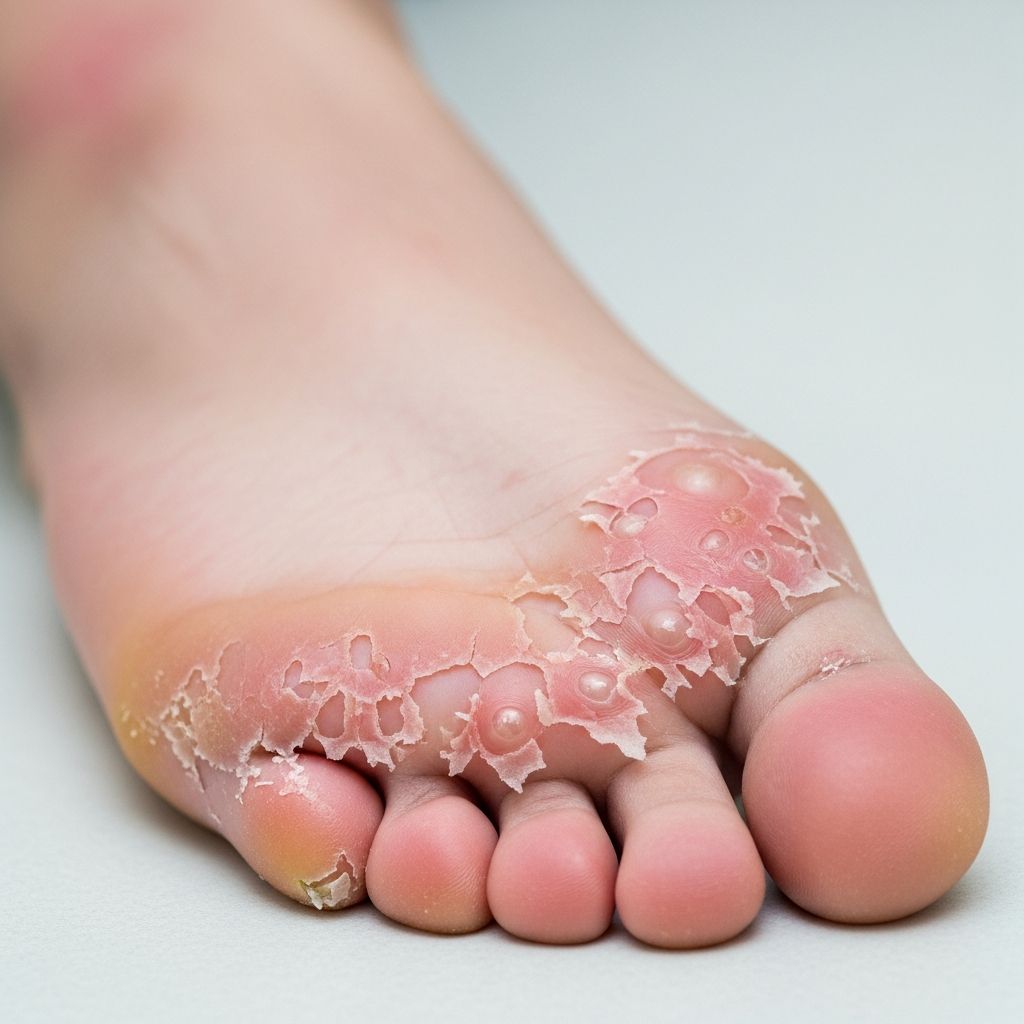
Athlete’s foot, medically known as
tinea pedis
, is a common fungal infection affecting the skin of the feet, particularly between the toes. It causes itching, scaling, and discomfort, thriving in warm, moist environments like shoes and locker rooms.What Is Athlete’s Foot?
Athlete’s foot is a contagious skin infection caused by dermatophyte fungi that invade the upper layers of foot skin. It most often begins between the toes but can spread to soles, heels, and sides of the feet. The condition is highly prevalent, affecting 3% to 15% of people at any time, with up to 70% experiencing it sometime in life. Despite its name, it impacts anyone, not just athletes, especially those with sweaty feet or frequent exposure to damp public areas.
Athlete’s Foot Symptoms
Symptoms vary by type but commonly include an
itchy, scaly rash
that’s worse after removing shoes and socks. Key signs are:- **Scaly, peeling, or cracked skin** between toes or on foot sides/bottoms.
- **Redness** (appearing purple/gray on darker skin tones), itching, burning, or stinging.
- **Blisters** that may ooze, crust, or cause pain, often on insteps or soles.
- **Dry, thickened skin** on heels/soles, sometimes malodorous.
- **Swollen, inflamed areas** with possible white, macerated skin between toes.
If untreated, symptoms can worsen, leading to raw, painful cracks or spread to nails, causing thickening/discoloration.
Types of Athlete’s Foot
Athlete’s foot presents in four main forms, each with distinct symptoms:
- Interdigital (Toe Web): Most common; affects skin between toes (usually 4th/5th), causing redness, itching, cracking, and white, soggy skin.
- Moccasin (Moccasin-Type): Dry, scaly, thickened skin on soles, heels, and edges; mimics eczema, less itchy but chronic.
- Vesicular (Inflammatory): Sudden itchy blisters/pustules on soles/insteps, risking bacterial infection if burst.
- Ulcerative: Rare, severe; painful cracks/sores between toes, common in diabetics/immunocompromised.
| Type | Primary Location | Key Symptoms |
|---|---|---|
| Interdigital | Between toes | Itching, scaling, cracking, maceration |
| Moccasin | Soles, heels, edges | Dry, scaly, thickened skin |
| Vesicular | Soles, insteps | Blisters, redness, itching |
| Ulcerative | Between toes | Painful ulcers, erosion |
Causes of Athlete’s Foot
Dermatophytes like *Trichophyton* species cause tinea pedis by penetrating skin through tiny cracks. Risk factors include:
- Warm, sweaty feet in occlusive shoes.
- Walking barefoot in communal showers/pools.
- Sharing towels, shoes, or socks.
- Weakened immunity, diabetes, or circulatory issues.
- Genetic predisposition or hyperhidrosis (excessive sweating).
Fungi survive on floors, towels, and footwear, spreading easily via direct contact or shed skin flakes.
Athlete’s Foot vs. Other Foot Conditions
Tinea pedis can mimic other issues; differential diagnosis is key:
- Eczema/Dermatitis: Dry, inflamed skin without fungal elements; no scaling between toes.
- Contact Dermatitis: From irritants/shoes; localized reaction.
- Psoriasis: Thick, silvery scales on soles; family history.
- Bacterial Infections: Pus, fever; secondary to cracks.
- Nail Fungus (Onychomycosis): Thick, brittle nails alongside skin changes.
A healthcare provider may use KOH microscopy or culture for confirmation.
When to See a Doctor for Athlete’s Foot
Seek medical care if:
- Symptoms persist >2 weeks despite OTC antifungals.
- Diabetes, immunosuppression, or circulation problems present.
- Signs of bacterial infection: increased swelling, pus, fever, lymph node swelling.
- Painful blisters/ulcers or spread to nails/hands.
- Recurrent or severe cases needing oral meds.
Related Stories



Professionals may prescribe stronger topicals/orals like terbinafine.
Treatment for Athlete’s Foot
Most cases resolve with OTC antifungals (clotrimazole, miconazole, terbinafine) applied 2x daily for 1-4 weeks. Finish full course to prevent recurrence.
- Topicals: Creams/gels for mild cases; powders for prevention.
- Oral Antifungals: For severe/chronic; e.g., fluconazole (monitor liver).
- Home Care: Keep feet dry/clean; use antifungal powder in shoes; wear breathable socks/shoes.
Treatment time: 1-8 weeks; early intervention key.
Prevention Tips for Athlete’s Foot
Avoid reinfection with these strategies:
- Dry feet thoroughly, especially between toes, after bathing.
- Wear flip-flops in public showers/lockers.
- Rotate shoes; use antifungal spray inside.
- Choose moisture-wicking socks (cotton/nylon blends); change daily.
- Avoid sharing personal items.
Complications of Untreated Athlete’s Foot
Unchecked tinea pedis risks:
- Secondary bacterial infections (cellulitis), especially in diabetics.
- Spread to groin (jock itch), nails, or hands.
- Chronic moccasin-type leading to cracked heels.
Frequently Asked Questions (FAQs)
Is athlete’s foot contagious?
Yes, via direct contact or contaminated surfaces; practice hygiene to avoid spread.
Can athlete’s foot go away on its own?
Mild cases may, but treatment speeds recovery and prevents complications.
Does athlete’s foot smell?
Yes, severe cases produce odor from trapped moisture and bacteria.
How long does athlete’s foot last?
1-8 weeks with treatment; longer untreated.
Can children get athlete’s foot?
Yes, though less common; causes redness/flaking.
References
- Athlete’s foot – Symptoms and causes — Mayo Clinic. 2023-10-12. https://www.mayoclinic.org/diseases-conditions/athletes-foot/symptoms-causes/syc-20353841
- Athlete’s foot — MedlinePlus. 2024-05-01. https://medlineplus.gov/ency/article/000875.htm
- Overview: Athlete’s foot — InformedHealth.org – NCBI Bookshelf. 2023-08-15. https://www.ncbi.nlm.nih.gov/books/NBK279549/
- What Is Athlete’s Foot & How Do You Treat It? — Cleveland Clinic. 2024-02-22. https://my.clevelandclinic.org/health/diseases/22139-athletes-foot-tinea-pedis
- Athlete’s Foot — Children’s Minnesota. 2023-11-05. https://www.childrensmn.org/educationmaterials/kids/article/8058/athletes-foot/
Similar Articles








Read full bio of Sneha Tete