Athlete’s Foot: 4 Common Types, Symptoms, And Treatments
Comprehensive guide to causes, symptoms, diagnosis, and effective treatments for tinea pedis fungal infection.
What is athlete’s foot?
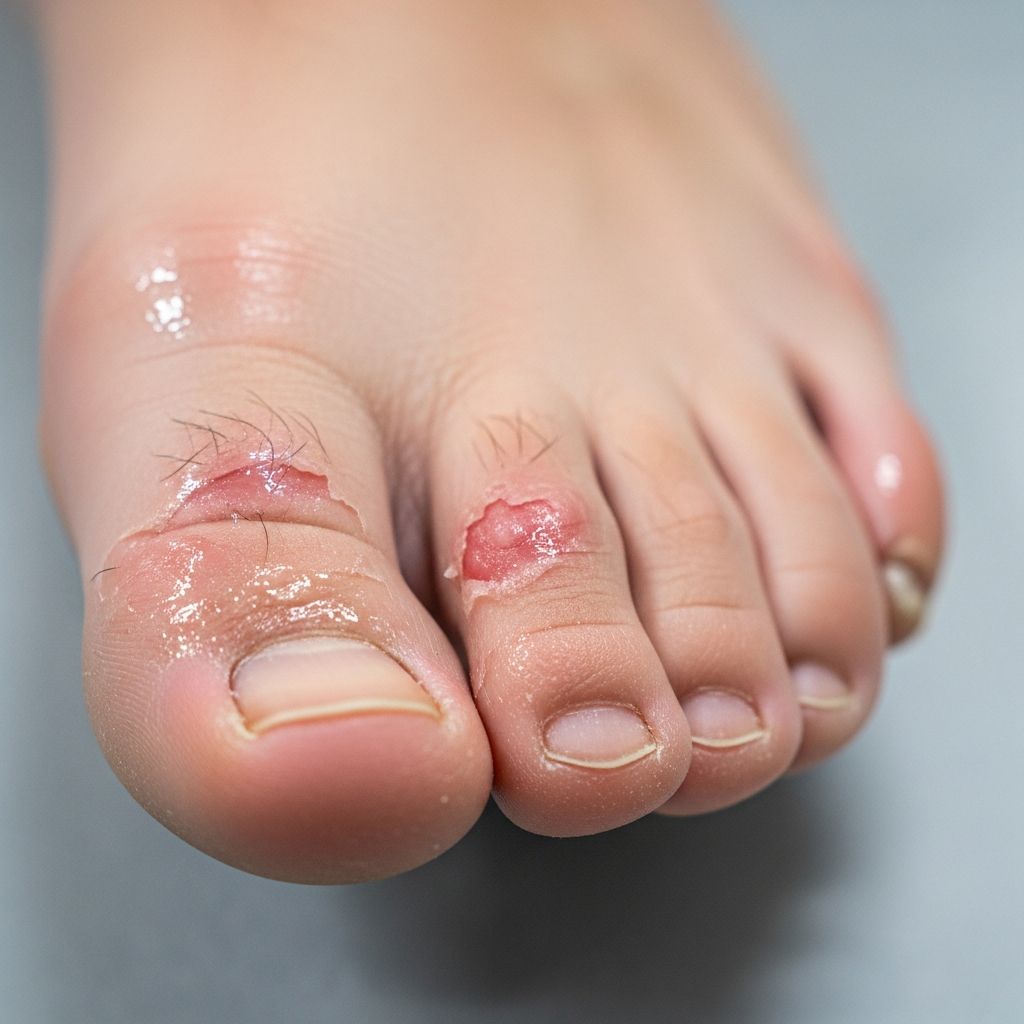
Athlete’s foot, medically known as tinea pedis, is a prevalent fungal infection affecting the skin of the feet. It primarily manifests as a dermatophytosis caused by fungi that thrive in warm, moist environments. Despite its name, it affects people of all activity levels, not just athletes. The infection most commonly impacts the interdigital spaces between the toes, leading to discomfort and potential complications if untreated. Tinea pedis results from dermatophytes invading the keratinized layers of the skin, exploiting conditions like excessive moisture and occlusion.
This condition is one of the most frequent superficial fungal infections worldwide, with prevalence estimates reaching up to 70% in some populations, particularly in urban, tropical settings. It spreads easily in communal areas such as locker rooms, pools, and showers where bare skin contacts contaminated surfaces. Individuals with diabetes, immunosuppression, or those wearing occlusive footwear are at higher risk due to impaired skin barriers and increased sweating.
Who gets athlete’s foot?
Athlete’s foot can affect anyone, but certain groups are more susceptible. Sports participants face elevated risk due to frequent exposure to damp environments and occlusive footwear that traps sweat, creating ideal fungal growth conditions. Men are affected more often than women, possibly linked to footwear choices and hygiene practices. People in hot, humid climates or those with hyperhidrosis (excessive sweating) are also prone.
Key risk factors include:
- Wearing tight, non-breathable shoes or damp socks.
- Walking barefoot in public showers, pools, or gyms.
- Conditions like diabetes or weakened immunity.
- Age over 40, as skin barrier function declines.
- Previous history of tinea infections elsewhere on the body.
Transmission occurs via direct contact with infected skin flakes or contaminated surfaces like floors, towels, or mats. Animals can rarely transmit it, but human-to-human spread dominates.
Causes
The primary culprits are dermatophyte fungi: Trichophyton rubrum, Trichophyton interdigitale (formerly T. mentagrophytes), and Epidermophyton floccosum. These organisms invade the stratum corneum, the outermost skin layer rich in keratin, which they metabolize for growth. Moisture from sweat macerates the skin, facilitating entry.
Non-fungal causes can mimic athlete’s foot, such as bacterial infections, contact dermatitis, or psoriasis, but true tinea pedis requires dermatophytes. Proliferation is favored by:
- Occlusive footwear (e.g., rubber boots, sneakers).
- Poor ventilation and hygiene.
- Compromised skin integrity from cracks or abrasions.
Clinical features
Symptoms vary by subtype but commonly include itching, burning, and stinging, especially between toes. The interdigital type, most frequent, affects toe clefts (particularly 4th-5th), showing moist, peeling, white macerated skin that fissures painfully.
| Type | Features | Location |
|---|---|---|
| Interdigital | Peeling, fissuring, white/yellow discoloration, itching | Between toes |
| Moccasin | Dry, scaly, thickened skin; mild or no itch | Soles, heels, lateral feet |
| Vesiculobullous | Blisters, pustules, weeping; acute inflammation | Soles/arch |
| Ulcerative | Bacterial superinfection, erosions, odor | Toe webs |
Severe cases may involve secondary bacterial infection leading to cellulitis, lymphangitis, or even osteomyelitis in diabetics. Nails can develop onychomycosis concurrently, with thickening and discoloration. Untreated, it spreads to soles, nails, or groin (tinea cruris).
Related Stories



Diagnosis
Diagnosis relies on clinical examination: characteristic scaling, erythema, and distribution. History of exposure and risk factors supports it. For confirmation, especially atypical cases:
- KOH microscopy: Reveals hyphae in skin scrapings.
- Culture: Identifies specific dermatophyte.
- Wood’s lamp: Rarely fluorescent unless specific strains.
- Biopsy: For resistant or inflammatory cases.
Dermatologists may assess for co-existing tinea on nails, groin, or body. Differential includes eczema, psoriasis, erythrasma, or candidiasis.
Differential diagnosis
Conditions mimicking athlete’s foot:
- Contact dermatitis: Symmetric, history of irritants.
- Erythrasma: Coral-red under Wood’s lamp, Corynebacterium.
- Psoriasis: Thick plaques, nail pitting.
- Bacterial intertrigo: Foul odor, pustules.
- Candidiasis: Satellite lesions, moist areas.
- Juvenile plantar dermatosis:Shiny, cracked heels in children.
Treatment
Treatment combines general measures and antifungals. Start with hygiene: Wash feet daily, dry meticulously (especially interdigits), use moisture-wicking socks, rotate shoes, avoid barefoot walking in public.
Topical antifungals (first-line): Apply 1-2x daily for 2-4 weeks. Effective agents:
- Allylamines (terbinafine, naftifine): Fungicidal, 1-2 weeks.
- Azoles (clotrimazole, miconazole): Fungistatic, 4 weeks.
- Others: Ciclopirox, tolnaftate, butenafine.
Whitfield’s ointment (salicylic/benzoic acid) aids keratolysis for hyperkeratotic types. For extensive/resistant cases or immunocompromised patients, oral therapy: Terbinafine (250mg daily, 2 weeks) or itraconazole (200mg daily, 1 week). Treat concurrent sites (nails, groin).
Adjuncts: Finger socks to separate toes, antifungal powders. Cure rates exceed 80% with adherence.
Prevention
- Dry feet thoroughly post-wash/swim, using towel between toes.
- Wear breathable socks (cotton/wool), change daily, wash in hot water (>60°C).
- Alternate shoes, air-dry in sun; choose leather/open styles.
- Use flip-flops in public areas.
- Avoid sharing towels/shoes; inspect feet daily.
For high-risk (diabetics): Regular podiatry, emollients.
Outlook
Most cases resolve with treatment, but recurrence is common (20-50%) without prevention. Chronicity occurs in moccasin type or poor hygiene. Complications rare but include secondary infections or onychomycosis spread. Early intervention prevents morbidity.
Frequently Asked Questions (FAQs)
Q: Is athlete’s foot contagious?
A: Yes, via direct contact or fomites; avoid sharing items and wear protective footwear in communal areas.
Q: How long does treatment take?
A: Topical: 2-4 weeks; continue 1 week post-clearance. Oral: 1-4 weeks for severe cases.
Q: Can it affect nails?
A: Yes, leading to onychomycosis; treat simultaneously with oral/topical antifungals.
Q: Is it only for athletes?
A: No, anyone in moist environments; risk from occlusion, not activity alone.
Q: When to see a doctor?
A: No improvement after 2 weeks OTC treatment, spreading, pain, diabetes, or signs of infection.
References
- Athlete’s foot | Healthify — Healthify NZ. 2023. https://healthify.nz/health-a-z/a/athletes-foot
- Athlete’s foot – DermNet — DermNet NZ. 2003 (updated). https://dermnetnz.org/topics/athletes-foot
- Tinea Pedis – StatPearls — NCBI Bookshelf. 2023-10-05. https://www.ncbi.nlm.nih.gov/books/NBK470421/
- Athlete’s Foot: Causes, Symptoms, and Treatment — Patient.info. 2023. https://patient.info/infections/fungal-infections/athletes-foot-tinea-pedis
- Management and treatment options for common foot conditions — The Pharmaceutical Journal. 2018-07-24. https://pharmaceutical-journal.com/article/ld/management-and-treatment-options-for-common-foot-conditions
- Tinea pedis (fungal foot infection) – DermNet — DermNet NZ. 2023. https://dermnetnz.org/topics/tinea-pedis
Similar Articles








Read full bio of medha deb