Understanding the Atopic Dermatitis-Allergy Connection
Explore how skin barrier dysfunction links atopic dermatitis to allergic diseases
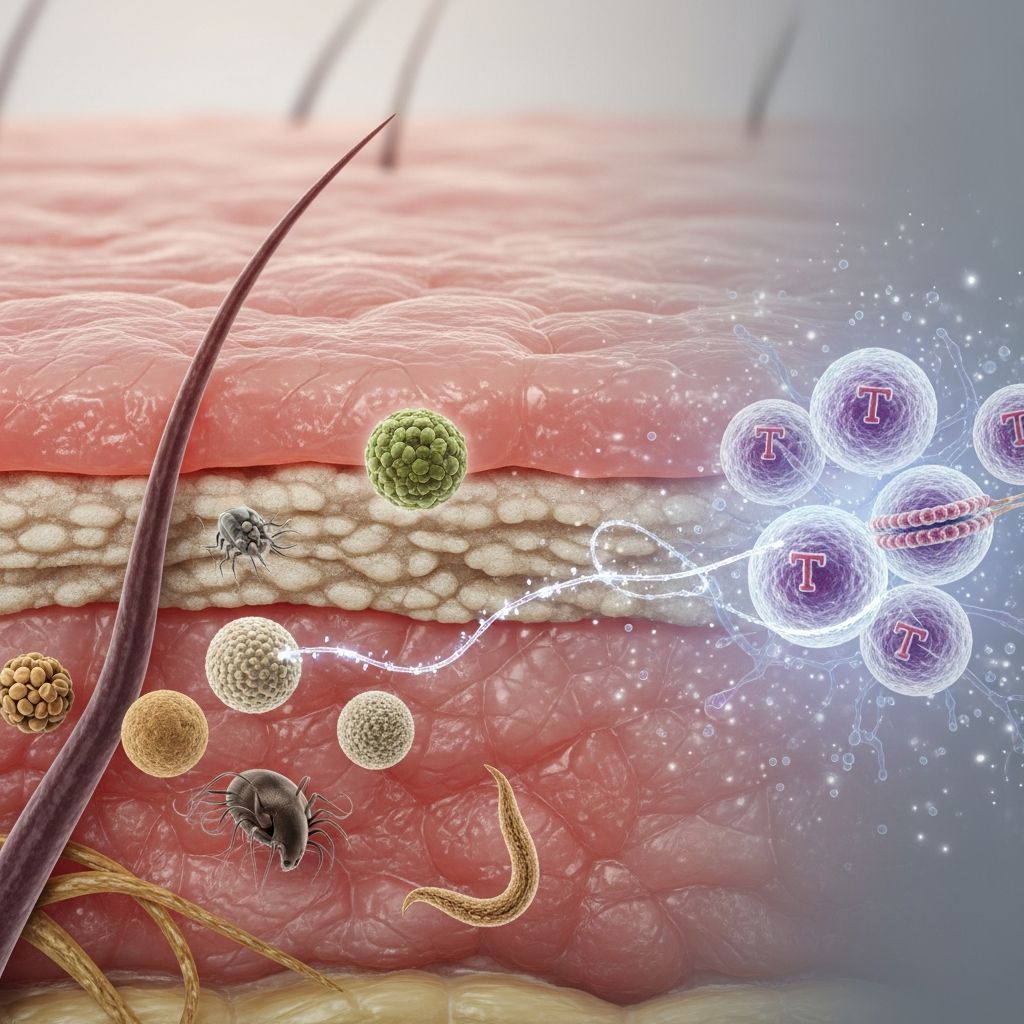
Atopic dermatitis, commonly known as eczema, affects millions of people worldwide and represents more than just a skin condition. Research reveals a profound interconnection between atopic dermatitis and the development of various allergic diseases, creating what medical professionals call the “atopic march” or “allergic march.” This phenomenon describes the tendency for individuals with atopic dermatitis to subsequently develop food allergies, allergic rhinitis, asthma, and other allergic conditions at significantly higher rates than the general population.
The Prevalence of the Atopic March
The relationship between atopic dermatitis and allergic diseases is remarkably common. Approximately 50% of children with atopic dermatitis develop asthma, while about 33% develop food allergies. Additionally, children with atopic dermatitis face substantially elevated risk for allergic rhinitis compared to their peers without the skin condition. These statistics underscore the importance of understanding how skin health directly influences the development of systemic allergic responses.
A large-scale cohort study examining 5,314 children from 12 US birth cohorts identified five distinct atopic dermatitis phenotypes, each with different associations with allergic comorbidities. The timing of when atopic dermatitis first appears plays a crucial role in determining which allergic diseases are most likely to develop, suggesting that the skin barrier’s role in immune sensitization varies depending on the developmental stage at which dysfunction occurs.
Genetic Predisposition and Family Patterns
Genetics forms the foundation of atopic disease susceptibility. Individuals with a family history of atopic dermatitis, asthma, or allergies face significantly higher risks of developing one or more atopic conditions themselves. This genetic tendency manifests as an increased capacity to produce immunoglobulin E (IgE) antibodies in response to common environmental and food proteins, known as allergens.
Research has identified specific genetic mutations that compromise the skin’s protective function. Some individuals inherit a genetic flaw that results in fewer proteins in the skin’s outer layer, particularly affecting the structural integrity of the skin barrier. This genetic vulnerability creates an environment where allergens can more easily penetrate the skin and trigger immune sensitization, setting the stage for allergic disease development.
Patterns of inheritance suggest that children of parents with atopic conditions have substantially higher probabilities of developing atopic dermatitis themselves. The converse relationship also holds true: patients with allergic diseases demonstrate higher rates of atopic dermatitis compared to those without allergic conditions, indicating bidirectional disease associations.
How Skin Barrier Dysfunction Drives Allergic Sensitization
The skin serves as the body’s first line of defense against environmental threats. When atopic dermatitis compromises skin barrier integrity, allergens gain unprecedented access to deeper skin layers where immune cells reside. This disruption initiates a cascade of immune activation that can establish sensitization to various allergens.
The timing of skin barrier disruption appears critical in determining which allergens trigger sensitization. Early-life atopic dermatitis, particularly severe manifestations, correlates strongly with sensitization to food allergens such as eggs, peanuts, and milk. The preschool years represent a vulnerable window during which food allergen exposure through compromised skin can establish lasting IgE-mediated sensitization.
Related Stories



In contrast, skin barrier dysfunction occurring later in childhood shows stronger associations with sensitization to aeroallergens—substances dispersed in the air such as pollen, dust mites, and mold spores. This temporal distinction suggests that the developmental stage of immune system maturation influences which allergen types establish sensitization patterns.
Phenotypic Patterns and Disease Trajectories
Research identifies multiple distinct patterns of atopic dermatitis expression across childhood:
- Transient early-onset: Atopic dermatitis appearing in infancy but resolving during early childhood, associated with food allergy development
- Persistent early-onset: Atopic dermatitis beginning in infancy and continuing throughout childhood, associated with food allergy and all other allergic diseases
- Late-onset: Atopic dermatitis first appearing after infancy, associated with allergic rhinitis and asthma
- Minimal or no disease: The reference category representing children without significant atopic dermatitis
Children with persistent atopic dermatitis demonstrate the most comprehensive allergic disease profiles, showing associations with food allergies, asthma, and allergic rhinitis simultaneously. This pattern reflects prolonged inflammatory immune activation and suggests that continuous skin barrier disruption drives broader systemic allergic sensitization.
Food Allergy Development and the Role of Early Exposure
Food allergies represent one of the earliest allergic manifestations in the atopic march. Young children with atopic dermatitis, particularly those with severe disease, show elevated rates of immediate-type food allergic reactions. The more severe the atopic dermatitis, the higher the likelihood of developing IgE-mediated sensitivity to common allergens including hen’s egg, cow’s milk, and peanuts.
Notably, egg and peanut sensitization demonstrate stronger associations with atopic dermatitis compared to milk sensitization, suggesting that the protein structure and molecular characteristics of specific food allergens influence their capacity to establish sensitization through compromised skin. Once food sensitization occurs, children may experience consistent allergic reactions upon food exposure, ranging from hives and oral reactions to more severe systemic responses.
The distinction between sensitization and true food allergy carries clinical importance. A child may demonstrate elevated food-specific IgE antibodies on testing while tolerating the food without adverse reactions—a state of sensitization without clinical allergy. This discrepancy underscores why testing recommendations emphasize evaluating food allergy only when consistent clinical reactions accompany suspected exposure.
Asthma and Lower Respiratory Involvement
Asthma represents another critical component of the atopic march, with approximately 50% of children with atopic dermatitis eventually developing asthmatic symptoms. Interestingly, atopic dermatitis at any stage—early, late, or persistent—associates with asthma development, suggesting that ongoing skin inflammation may promote systemic Th2 immune skewing (a shift toward allergic-type immune responses) regardless of when skin disease onset occurs.
Persistent atopic dermatitis throughout childhood shows particularly strong associations with asthma diagnosis, indicating that chronic inflammation and immune activation at the skin barrier level may prime the lower respiratory tract for allergic responses. Conversely, teenagers with asthma demonstrate higher rates of atopic dermatitis than those without asthma, confirming bidirectional relationships between skin and respiratory allergic diseases.
Allergic Rhinitis: A Later-Appearing Atopic Disease
Allergic rhinitis typically emerges later in childhood compared to food allergies, appearing more frequently in children older than four years. Late-onset and persistent atopic dermatitis phenotypes show strong associations with allergic rhinitis development. This temporal pattern suggests that aeroallergen sensitization requires different immune maturation windows or different pathways of allergen exposure compared to food allergen sensitization.
The seasonal nature of many aeroallergens (such as pollen) combined with repeated inhalational exposure may establish sensitization more readily when the immune system reaches later developmental stages. The skin barrier’s role in aeroallergen sensitization likely involves both direct allergen penetration through compromised skin and indirect effects on systemic immune regulation.
Contact Allergens and Secondary Sensitization
Beyond food and aeroallergens, individuals with atopic dermatitis face increased risks of developing allergic contact dermatitis to topically applied substances. The compromised skin barrier permits easier penetration and prolonged contact of potential allergens, increasing sensitization risk. Paradoxically, some common ingredients in atopic dermatitis treatments themselves—such as lanolin and fragrances—represent frequent contact allergens in this population.
Studies demonstrate that Dutch children with atopic dermatitis exhibited significantly higher sensitization rates to lanolin and fragrances, highlighting how treatment choices may inadvertently increase allergen exposure through damaged skin. Careful attention to product selection, particularly avoiding common contact allergens, becomes important in atopic dermatitis management to prevent secondary sensitization.
The Role of the Microbiome and Immune Dysregulation
Multiple factors combine to generate the atopic march phenomenon. Beyond genetic predisposition, skin barrier defects, and allergen exposure, the skin microbiome—the community of microorganisms residing on and within skin—plays important roles in immune development and atopic disease. Alterations in skin microbial communities associated with atopic dermatitis may further skew immune responses toward allergic-type reactions.
Prolonged and frequent allergen exposure through compromised skin during critical developmental windows establishes lasting sensitization patterns. Once sensitization occurs, the immune system generates IgE antibodies specific to those allergens, creating the potential for allergic reactions upon subsequent exposure. The severity of atopic dermatitis correlates with the breadth and intensity of allergic sensitization, as measured by specific IgE levels and allergen sensitivity panels.
Clinical Implications and Testing Recommendations
Understanding the atopic dermatitis-allergy connection informs clinical decision-making regarding appropriate testing and management. Current integrated guidelines recommend testing for food allergies in patients with atopic dermatitis who have consistent histories of immediate-type food reactions and refractory disease despite optimal skin management.
Environmental allergy testing merits consideration in patients with atopic dermatitis who have concomitant symptoms of allergic rhinitis or asthma, or who demonstrate inadequate response to standard atopic dermatitis treatments. Patch testing for contact allergens becomes particularly relevant when atopic dermatitis shows unusual distribution patterns or involves primarily the face, hands, or feet—areas prone to contact allergen exposure.
Disease Severity Correlations
The severity of atopic dermatitis shows important correlations with allergic disease risk. More severe atopic dermatitis associates with higher rates of food sensitization, particularly to hen’s egg, peanuts, and cow’s milk. Additionally, patients with atopic dermatitis and concurrent sensitization to these major food allergens demonstrate higher probabilities of developing clinically significant food allergies.
Persistent atopic dermatitis represents the highest-risk phenotype, showing associations with food allergies, asthma, and allergic rhinitis simultaneously. The continuous inflammatory state and ongoing immune activation in persistent disease creates sustained systemic Th2 skewing, predisposing to broader allergic disease development across multiple organ systems.
Distinguishing Sensitization from Clinical Allergy
An important clinical distinction exists between allergic sensitization (detectable IgE antibodies) and clinical allergic disease (consistent reactions upon exposure). Some children with atopic dermatitis develop detectable food-specific IgE without experiencing adverse reactions when eating those foods. These children are sensitized but tolerate the food, representing a state distinct from true food allergy.
This distinction carries significant implications for family counseling and dietary management. Unnecessary food elimination diets based solely on positive IgE testing without clinical correlation may unnecessarily restrict nutrition and quality of life. Comprehensive allergy evaluation should integrate history, examination findings, and testing results rather than relying on testing alone.
Age-Related Patterns of Allergic Disease Emergence
The atopic march follows characteristic age-related patterns. Food allergies predominate in children under two years of age, while asthma and allergic rhinitis become more common in children over four years of age. These temporal patterns likely reflect both developmental immunology changes and differences in allergen exposure routes and timing across childhood.
Understanding these age-related patterns helps clinicians anticipate which allergic diseases warrant monitoring and which warrant proactive screening at different developmental stages. Early recognition of disease patterns enables timely interventions and more effective preventive strategies.
Frequently Asked Questions
Does everyone with atopic dermatitis develop allergies?
No, while atopic dermatitis increases allergic disease risk substantially, not all individuals with the skin condition develop additional allergic diseases. Risk varies based on genetic predisposition, disease severity, and environmental allergen exposure patterns.
Can treating atopic dermatitis prevent allergic disease development?
Optimal atopic dermatitis management that effectively restores skin barrier function may reduce allergen penetration and potentially decrease sensitization risk. Early, aggressive treatment of skin disease appears beneficial for overall atopic disease outcomes.
Why does the timing of atopic dermatitis onset matter for allergy development?
Immune system maturation and the specific allergen exposures relevant at different developmental stages influence which allergic diseases develop. Early skin barrier disruption primarily allows food allergen sensitization, while later disruption associates more with aeroallergen sensitization and respiratory allergies.
How can families reduce allergic disease risk in children with atopic dermatitis?
Optimize skin barrier function through excellent skin care, identify and avoid contact allergens, and work with healthcare providers to screen for emerging allergic diseases. Genetic counseling may benefit families with strong atopic disease histories.
Key Takeaways
- Atopic dermatitis significantly increases risk for subsequent development of food allergies, asthma, and allergic rhinitis through the process called the atopic march
- The timing of atopic dermatitis onset influences which allergic diseases are most likely to develop, with early disease favoring food allergy and later disease favoring respiratory allergies
- Skin barrier dysfunction permits allergen penetration and immune sensitization, establishing the pathophysiologic basis for allergic disease development
- Genetic predisposition, environmental allergen exposure, microbiome alterations, and immune dysregulation all contribute to atopic disease progression
- Severe and persistent atopic dermatitis phenotypes show the strongest associations with multiple concurrent allergic diseases
- Distinguishing allergic sensitization from clinical allergy through integrated history and testing helps guide appropriate management decisions
References
- Phenotypes of Atopic Dermatitis and Development of Allergic Diseases — JAMA Network Open, Rotrosen et al. 2024. https://jamanetwork.com/journals/jamanetworkopen/fullarticle/2835229
- The Complex Relationship Between Atopic Dermatitis and Allergies — Allergy & Asthma Network. 2024. https://allergyasthmanetwork.org/webinars-updates/complex-relationship-atopic-dermatitis-allergies/
- The Link Between Atopic Dermatitis and Allergies — Smith Allergy. https://smithallergy.com/the-link-between-atopic-dermatitis-and-allergies/
- Exploring the Link Between Atopic Dermatitis and Allergic Contact Dermatitis — PMC/NIH. 2025. https://pmc.ncbi.nlm.nih.gov/articles/PMC12900220/
Similar Articles








Read full bio of medha deb