Atopic Dermatitis on the Face: Causes, Symptoms & Home Relief
Expert insights on causes, symptoms, treatments, and care for facial atopic dermatitis to soothe sensitive skin.
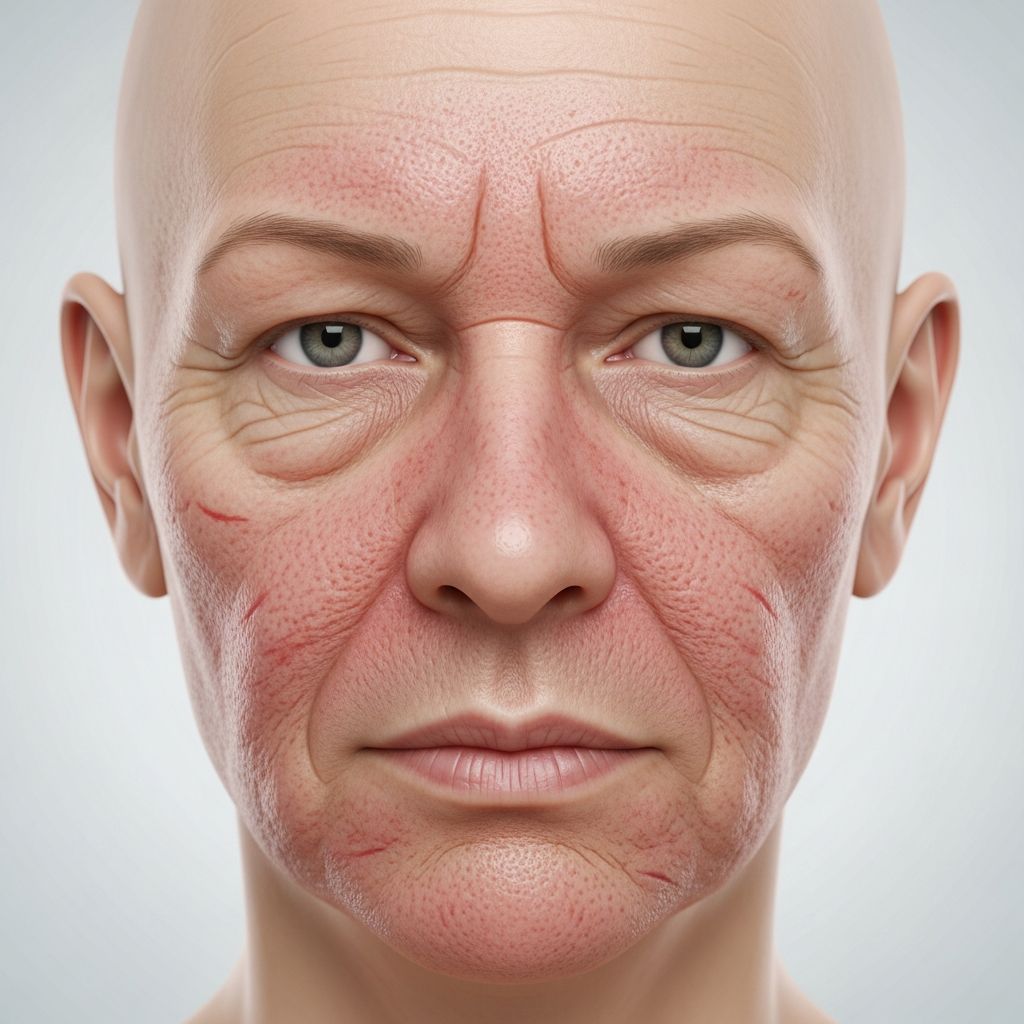
Atopic dermatitis, commonly known as eczema, frequently affects the face, causing discomfort and visible irritation. This chronic inflammatory skin condition impacts up to 13% of children and 7% of adults worldwide, with facial involvement being particularly common in younger patients. The delicate skin on the face makes it prone to flare-ups, exacerbated by exposure to environmental triggers and daily skincare routines. Understanding the nuances of facial atopic dermatitis is crucial for effective management and improving quality of life.
What Is Atopic Dermatitis on the Face?
Atopic dermatitis on the face manifests as red, inflamed patches on areas like the cheeks, forehead, around the eyes, and mouth. Unlike eczema on thicker skin areas such as elbows or knees, facial eczema involves thinner, more sensitive epidermis, leading to heightened reactivity. The condition stems from a defective skin barrier that allows moisture loss and irritant penetration, combined with an overactive immune response.
According to the National Eczema Association, facial atopic dermatitis affects approximately 70% of children with the condition at some point. In adults, it often persists or reemerges around the eyes and lips. The chronic nature means flare-ups alternate with periods of remission, but without proper care, symptoms can become persistent.
Symptoms of Facial Atopic Dermatitis
Recognizing symptoms early is key to preventing escalation. Common signs include:
- Itching (pruritus): Intense, often worsening at night, leading to scratching that damages the skin barrier further.
- Redness and inflammation: Erythema appears on cheeks, eyelids, or nasolabial folds.
- Dry, scaly patches: Skin may flake or crack, especially in cold weather.
- Oozing or crusting: In severe cases, weeping lesions form crusts upon drying.
- Swelling around eyes or lips: Known as periorbital or perioral dermatitis, causing puffiness.
In infants, it often presents as cradle cap-like scaling on the scalp extending to the face. Adults may experience lichenification—thickened, leathery skin—from chronic rubbing.
Causes and Triggers of Facial Eczema
Facial atopic dermatitis arises from a combination of genetic, immune, and environmental factors. A key genetic marker is mutations in the filaggrin gene, which impairs the skin’s natural moisturizing factor, as detailed in studies from the National Institutes of Health (NIH). This leads to transepidermal water loss (TEWL) up to three times higher in affected individuals.
Common triggers include:
| Trigger Type | Examples | Impact on Face |
|---|---|---|
| Environmental | Pollen, dust mites, pet dander | Increased redness via airborne allergens |
| Irritants | Fragranced soaps, makeup, sunscreen | Direct barrier disruption |
| Weather | Cold, dry air; excessive heat/sweat | Drying and flaring sensitive areas |
| Dietary | Dairy, eggs, nuts (in sensitive individuals) | Systemic inflammation triggering flares |
| Stress | Emotional or physical | Immune dysregulation worsening itch |
Food allergies play a role in 30-40% of pediatric cases, per NIH data, though less common in adults. Hormonal changes, such as during pregnancy or menopause, can also provoke facial flares.
How Atopic Dermatitis on the Face Is Diagnosed
Diagnosis typically involves a dermatologist’s clinical evaluation, assessing symptom history, family atopic history (asthma, hay fever), and physical exam. Patch testing identifies contact allergens, while biopsy is rare but used for atypical presentations. The UK’s National Health Service (NHS) emphasizes the Hanifin-Rajka criteria: pruritus plus three of six features like flexural involvement or early-onset atopy.
Recent advancements include transepidermal water loss measurements and genetic testing for filaggrin mutations, aiding personalized care plans.
Related Stories



Treatment Options for Facial Atopic Dermatitis
Treatment follows a stepwise approach, prioritizing gentle, face-safe options to avoid steroid-related side effects like atrophy or rosacea.
Topical Therapies
- Emollients: Ceramide-based moisturizers applied twice daily to restore the barrier. Products like those with colloidal oatmeal are soothing.
- Topical corticosteroids: Low-potency options (hydrocortisone 1%) for short bursts on the face; higher potency avoided.
- Topical calcineurin inhibitors (TCIs): Tacrolimus (Protopic) or pimecrolimus (Elidel) for steroid-sparing, FDA-approved for face/eyelids.
- PDE4 inhibitors: Crisaborole (Eucrisa) reduces inflammation with minimal side effects.
Systemic Treatments
For moderate-severe cases: Oral antihistamines for itch, antibiotics for secondary infections, or phototherapy. Biologics like dupilumab (Dupixent), approved by FDA in 2017, target IL-4/IL-13 pathways, showing 70% improvement in facial symptoms per clinical trials.
Emerging Therapies
JAK inhibitors (e.g., abrocitinib, upadacitinib) offer oral relief, while topical ruxolitinib (Opzelura) is FDA-approved for mild-moderate cases since 2021.
Tips for Managing Facial Eczema at Home
- Gentle cleansing: Use fragrance-free, soap-free cleansers; pat dry.
- Moisturize immediately: Within 3 minutes post-bath to lock in hydration (soak-and-smear technique).
- Avoid triggers: Fragrance-free makeup, hypoallergenic sunscreen (zinc oxide-based).
- Cool compresses: Alleviate acute itch before applying topicals.
- Wet wrap therapy: For severe flares, under medical guidance.
- Humidify air: Maintain 40-60% indoor humidity.
Lifestyle adjustments like stress reduction via mindfulness yield significant benefits, as supported by recent studies.
Prevention Strategies for Facial Atopic Dermatitis
Proactive measures reduce flare frequency:
- Daily barrier repair with emollients containing niacinamide or ceramides.
- Launder fabrics in hypoallergenic detergent; silk pillowcases minimize friction.
- Track triggers with apps for personalized avoidance.
- Early intervention in children via exclusive breastfeeding or probiotics, per WHO guidelines.
When to See a Dermatologist for Facial Eczema
Seek professional care if: symptoms persist >1 week despite OTC care, signs of infection (pus, fever), ocular involvement (blurred vision), or significant impact on mental health. Persistent periocular dermatitis warrants urgent evaluation to rule out complications like ectropion.
Frequently Asked Questions (FAQs)
Can atopic dermatitis on the face be cured?
No, it’s chronic, but symptoms can be controlled effectively with consistent management, achieving long remissions.
Is it safe to use steroid creams on the face?
Low-potency steroids are safe short-term (7-14 days); consult a doctor to avoid side effects like thinning skin.
What sunscreen is best for facial eczema?
Mineral-based (zinc/titanium dioxide), fragrance-free, broad-spectrum SPF 30+; apply 15 minutes before sun exposure.
Does diet affect facial atopic dermatitis?
Yes, in some; elimination diets under supervision can help identify triggers like dairy or gluten.
Can stress trigger facial eczema flares?
Absolutely; cortisol disrupts the skin barrier, so stress management techniques like yoga are beneficial.
This comprehensive approach empowers those with facial atopic dermatitis to reclaim comfort and confidence. Always consult healthcare providers for tailored advice.
References
- Guidelines of care for the management of atopic dermatitis — American Academy of Dermatology. 2024-02-01. https://www.jaad.org/article/S0190-9622(23)03332-5/fulltext
- Atopic dermatitis (eczema) – Diagnosis and treatment — Mayo Clinic. 2025-08-15. https://www.mayoclinic.org/diseases-conditions/atopic-dermatitis-eczema/diagnosis-treatment/drc-20353279
- Atopic Dermatitis – StatPearls — NCBI Bookshelf (National Library of Medicine). 2025-01-20. https://www.ncbi.nlm.nih.gov/books/NBK448071/
- Atopic eczema — National Institute for Health and Care Excellence (NHS). 2024-11-12. https://cks.nice.org.uk/topics/atopic-eczema/
- Dupilumab for treating moderate‐to‐severe atopic dermatitis — World Health Organization via PubMed. 2023-05-10. https://pubmed.ncbi.nlm.nih.gov/36692048/
- Filaggrin mutations associated with skin barrier defects — NIH Genetic Home Reference. 2024-03-05. https://medlineplus.gov/genetics/gene/flg/
Similar Articles








Read full bio of Sneha Tete