Atrial Fibrillation (AFib): Symptoms & Treatment
Comprehensive guide to understanding AFib symptoms, causes, and evidence-based treatment options.
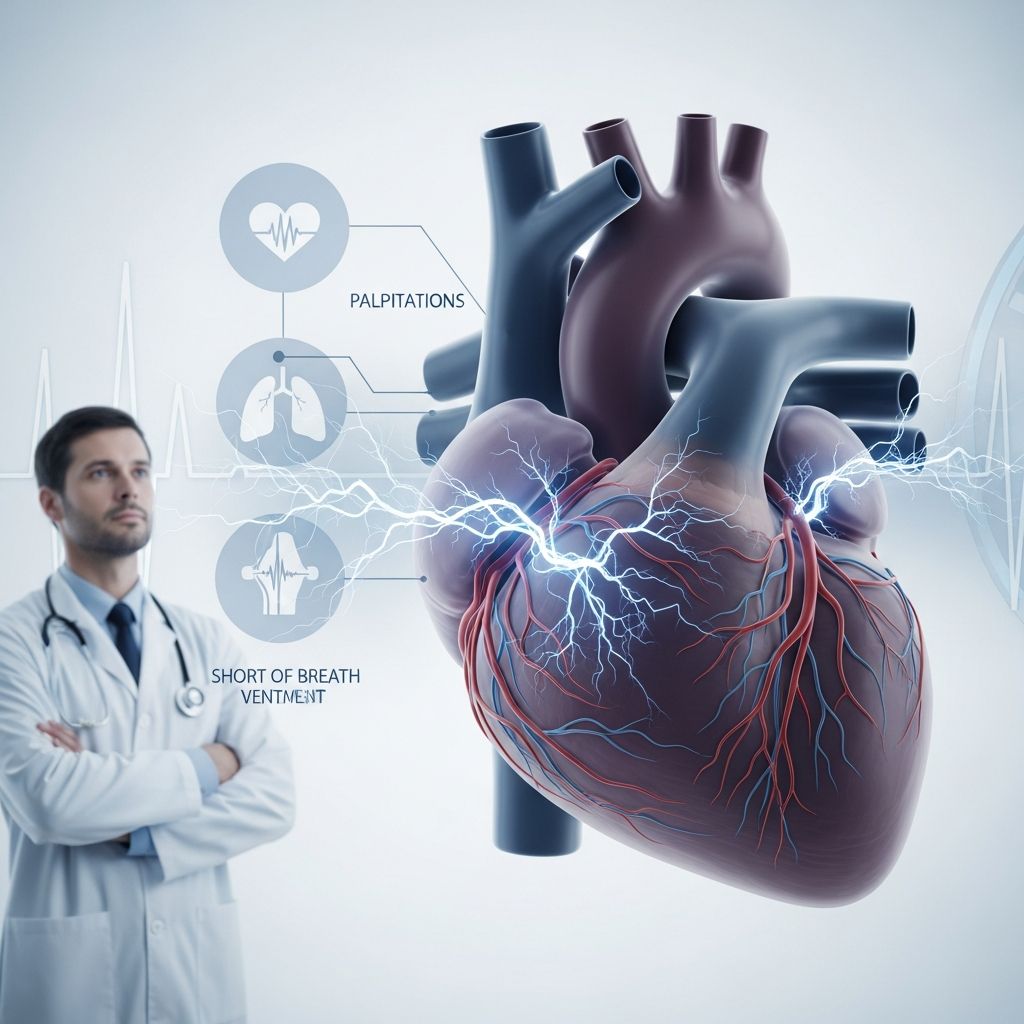
Understanding Atrial Fibrillation (AFib)
Atrial fibrillation, commonly referred to as AFib or AF, is an irregular heart rhythm that originates in the heart’s upper chambers, known as the atria. This condition represents one of the most common types of arrhythmias affecting millions of people worldwide. When someone develops AFib, the normal electrical signals that regulate the heart’s rhythm become chaotic and disorganized. Instead of the sinus node properly directing the heart’s electrical rhythm, many different impulses rapidly fire at the same time, causing a very fast and chaotic rhythm in the atria.
Because these electrical impulses are so fast and chaotic, the atria cannot contract and squeeze blood effectively into the ventricles, which are the heart’s lower chambers. This disruption significantly decreases the heart’s overall pumping ability and increases the risk for serious complications, including blood clots and stroke. Understanding AFib is crucial for early detection and effective management of the condition.
How AFib Affects Your Heart
The heart’s electrical system is responsible for maintaining a regular, coordinated heartbeat. In a normal heart rhythm, electrical signals travel in an organized pattern, allowing the atria to contract first, pushing blood into the ventricles, which then contract to pump blood throughout the body. In AFib, this organized system breaks down. The atria quiver or fibrillate rather than contract in a coordinated manner, leading to an irregular and often rapid heart rate.
This irregular rhythm can result in several hemodynamic changes. The inefficient pumping of the atria means that blood may not move smoothly through the heart chambers, creating conditions favorable for blood clot formation. Additionally, the rapid and irregular rate can lead to reduced cardiac output, meaning less blood reaches the body’s vital organs and tissues. Over time, this inefficiency can weaken the heart muscle and contribute to heart failure.
Types of Atrial Fibrillation
AFib is classified into several distinct types based on how the condition presents and its duration:
Paroxysmal AFib: This type comes and goes, with episodes that may last from minutes to hours or even days. Between episodes, the heart rhythm returns to normal. Many people with paroxysmal AFib experience unpredictable episodes that can be triggered by stress, caffeine, alcohol, or certain physical activities.
Persistent AFib: In this type, the irregular rhythm lasts for more than seven days and does not revert to normal rhythm on its own. Patients with persistent AFib typically require medical intervention or treatment to restore normal heart rhythm.
Long-Standing Persistent AFib: This refers to AFib that has been present continuously for more than one year. Despite attempts at rhythm control therapy, the arrhythmia persists.
Permanent AFib: In this stage, the patient and clinician have jointly decided not to pursue rhythm control measures. The focus shifts to rate control and stroke prevention strategies rather than attempting to restore normal rhythm.
Related Stories



Causes and Risk Factors
Multiple factors can contribute to the development of atrial fibrillation. Understanding these risk factors is essential for prevention and early intervention. Common causes include underlying heart disease, such as coronary artery disease, heart failure, or valvular heart disease. Hypertension, or high blood pressure, is one of the most significant risk factors for AFib development.
Other contributing factors include thyroid disorders, particularly hyperthyroidism, which can trigger or exacerbate AFib. Chronic obstructive pulmonary disease (COPD), sleep apnea, and other respiratory conditions increase AFib risk. Lifestyle factors such as excessive alcohol consumption, caffeine intake, obesity, and physical inactivity can also contribute to AFib development. Additionally, advancing age, family history of AFib, and diabetes are recognized risk factors.
Symptoms of Atrial Fibrillation
The symptoms of AFib vary widely among individuals. Some people experience no symptoms at all and discover they have AFib incidentally during a routine medical examination. Others experience significant and bothersome symptoms that affect their daily quality of life.
Common symptoms include:
- Heart palpitations, described as a fluttering, racing, or pounding sensation in the chest
- Fatigue and weakness, often disproportionate to activity level
- Shortness of breath, particularly during exertion or when lying flat
- Dizziness or lightheadedness
- Chest discomfort or pressure
- Syncope or fainting episodes
- Reduced exercise tolerance
The severity and frequency of symptoms do not necessarily correlate with the severity of the underlying arrhythmia. Some patients with persistent AFib may have minimal symptoms, while others with paroxysmal AFib experience severe, debilitating symptoms.
Complications of Untreated AFib
If left untreated or inadequately managed, AFib can lead to serious complications. The most concerning complication is stroke. Patients with AFib have a significantly increased risk of stroke because the irregular heart rhythm and reduced atrial contractility allow blood to pool and clot within the atria. These clots can travel to the brain and cause ischemic stroke.
Other potential complications include heart failure, where the heart becomes weakened by the chronic irregular rhythm and reduced cardiac output. Rapid ventricular rates in AFib can also lead to tachycardia-induced cardiomyopathy. Additionally, untreated AFib can result in decreased quality of life due to persistent symptoms and activity limitations.
Diagnosis of Atrial Fibrillation
Diagnosing AFib involves several diagnostic approaches and tests. The primary tool is the electrocardiogram (ECG), which records the heart’s electrical activity and can clearly show the irregular rhythm characteristic of AFib. A single ECG captures only a moment in time, so paroxysmal AFib may not be detected on a standard ECG if the patient is not experiencing an episode during the test.
For patients with suspected paroxysmal AFib, ambulatory monitoring devices such as Holter monitors, event monitors, or newer mobile cardiac telemetry devices can capture heart rhythm over extended periods. These portable devices allow detection of irregular rhythms that occur sporadically.
Echocardiography uses ultrasound waves to create detailed images of the heart’s structure and function. This test helps identify structural abnormalities, assess left ventricular function, and evaluate valve function. Transesophageal echocardiography (TEE) provides more detailed images of the heart’s chambers and can detect blood clots within the left atrial appendage.
Additional testing may include stress testing to assess how the heart responds to physical exertion, blood tests to evaluate thyroid function and electrolyte levels, and cardiac catheterization or electrophysiology studies for patients being evaluated for ablation procedures.
Treatment Options for AFib
Modern AFib management follows an individualized approach, with treatment strategies tailored to the patient’s specific situation, preferences, and clinical characteristics. The 2023 guidelines introduce a new emphasis on rhythm control over rate control, particularly in certain patient populations.
Medication Management
Pharmacological treatment for AFib addresses two primary goals: rate control and rhythm control. Rate-control medications, such as beta-blockers, calcium channel blockers, and digoxin, slow the ventricular rate without converting the heart to normal rhythm. These drugs are appropriate when rhythm control is not pursued or as a bridge to other therapies.
Anti-arrhythmic medications work to restore and maintain normal heart rhythm. These medications include flecainide, propafenone, sotalol, amiodarone, and dofetilide. Some anti-arrhythmic medications require hospitalization for initiation due to potential risks and the need for cardiac monitoring.
Anticoagulation therapy is a critical component of AFib management for most patients. Anticoagulants prevent blood clot formation and reduce stroke risk. Options include warfarin or newer direct oral anticoagulants (DOACs) such as apixaban, rivaroxaban, dabigatran, and edoxaban. The decision to anticoagulate is based on individual stroke risk stratification using tools such as the CHA₂DS₂-VASc score.
Catheter Ablation
Catheter ablation has emerged as an increasingly important treatment option for AFib and is now considered first-line therapy for rhythm control in select patient populations. Pulmonary vein isolation (PVI) ablation is the most commonly performed ablation procedure. During this minimally invasive procedure, an electrophysiologist uses specialized catheters to create lesions around the pulmonary veins, which are common sites of ectopic electrical activity triggering AFib episodes.
The procedure is performed under sedation or general anesthesia and typically involves accessing the heart through veins in the groin. Real-time imaging guides catheter placement, and energy (typically radiofrequency or cryotherapy) is applied to create ablation lesions. The goal is to electrically isolate the pulmonary veins, preventing abnormal impulses from entering the atria and triggering AFib.
Catheter ablation offers several advantages, including higher success rates for maintaining normal rhythm compared to medication alone, potential elimination of the need for anti-arrhythmic medications, and improved symptoms and quality of life. The 2023 guidelines recommend early ablation consideration in patients with recent-onset symptomatic AFib and in appropriate patients with heart failure with reduced ejection fraction.
Surgical Procedures
Surgical options for AFib include the Maze procedure, which can be performed as a traditional open-heart operation, minimally invasive thoracoscopic procedure, or robot-assisted surgery. During the Maze procedure, the cardiac surgeon creates a pattern of lesions in the atrial tissue to interrupt chaotic electrical impulses and direct normal impulses along a specific pathway to the ventricles.
The Maze procedure is often combined with other cardiac surgeries, such as coronary artery bypass grafting or mitral valve repair or replacement. For patients with the left atrial appendage (LAA) as a source of clots, surgical occlusion or the implantation of devices like the AtriClip may be performed to prevent clot formation.
Lifestyle and Risk Factor Modification
The 2023 AFib guidelines emphasize lifestyle and risk-factor modification as a foundational pillar of treatment. Patients are encouraged to maintain a healthy weight, as obesity is a significant modifiable risk factor. Regular physical activity, tailored to individual tolerance, improves cardiovascular health and may reduce AFib burden.
Dietary modifications include reducing sodium intake to help control blood pressure, limiting or eliminating caffeine and alcohol, and adopting a heart-healthy diet rich in fruits, vegetables, whole grains, and lean proteins. Stress management through relaxation techniques, meditation, or counseling may help reduce AFib triggers.
Stroke Prevention in AFib
Stroke prevention is a critical aspect of AFib management. Patients with AFib have a five times greater risk of stroke compared to individuals with normal heart rhythm. Anticoagulation therapy significantly reduces this risk. The decision to initiate anticoagulation is based on individual stroke risk assessment, considering factors such as age, hypertension, diabetes, heart failure, and prior stroke or transient ischemic attack.
For patients who cannot tolerate or have contraindications to anticoagulation, left atrial appendage occlusion devices such as the Watchman or Amulet may be considered as an alternative stroke prevention strategy.
Living with Atrial Fibrillation
Patients diagnosed with AFib can lead full, active lives with appropriate management. Regular follow-up with a cardiologist or electrophysiologist is essential to monitor the condition, adjust medications as needed, and assess the effectiveness of treatment strategies. Patients should report new or worsening symptoms promptly to their healthcare provider.
Keeping a symptom diary can help identify AFib triggers and patterns, which can guide lifestyle modifications and inform treatment decisions. Compliance with prescribed medications, particularly anticoagulants, is crucial for preventing serious complications.
Frequently Asked Questions About AFib
Q: Can AFib be cured?
A: While AFib cannot be cured, it can be effectively managed with treatment. Catheter ablation offers the best chance for long-term freedom from AFib episodes, though recurrence is possible in some patients. The goal of treatment is to control symptoms, prevent complications, and maintain optimal quality of life.
Q: Is AFib life-threatening?
A: While AFib itself is not immediately life-threatening, it significantly increases the risk of serious complications such as stroke and heart failure. With appropriate management and treatment, most patients with AFib can live normal lifespans and maintain good quality of life.
Q: Can exercise trigger AFib?
A: For some individuals, intense or excessive exercise may trigger AFib episodes, though moderate regular physical activity is generally beneficial. Patients should discuss appropriate exercise levels with their healthcare provider, as individualized recommendations are important.
Q: Do I need to take blood thinners if I have AFib?
A: Most patients with AFib require anticoagulation therapy to reduce stroke risk, unless individual risk stratification indicates very low risk. Your healthcare provider will assess your individual stroke risk and recommend appropriate anticoagulation therapy based on established guidelines.
Q: What foods should I avoid with AFib?
A: While no foods are absolutely prohibited, moderation is key. Limit caffeine, alcohol, and high-sodium foods, as these may trigger AFib episodes or worsen symptoms in some individuals. Maintaining a balanced, heart-healthy diet is recommended.
References
- Atrial Fibrillation Center — Cleveland Clinic. 2024. https://my.clevelandclinic.org/departments/heart/depts/atrial-fibrillation-center
- New atrial fibrillation guideline: Modify risk, control rhythm, prevent thromboembolism — Cleveland Clinic Journal of Medicine. 2025. https://www.ccjm.org/content/92/5/291
- 2023 ACC/AHA/ACCP/HRS Guideline for the Diagnosis and Management of Atrial Fibrillation — American College of Cardiology, American Heart Association, American College of Chest Physicians, Heart Rhythm Society. 2023. https://my.clevelandclinic.org/-/scassets/files/org/heart/depts/arrhythmia/2023-acc-aha-accp-hrs-guidelines-for-afib.pdf
- Advanced Treatment for Atrial Fibrillation — Cleveland Clinic. 2024. https://pages.clevelandclinic.org/atrial-fibrillation-index.html
Similar Articles








Read full bio of Sneha Tete