Atrophic Vulvovaginitis: Guide To Causes, Symptoms & Treatment
Comprehensive guide to atrophic vulvovaginitis: causes, symptoms, diagnosis, and effective treatments for postmenopausal women.
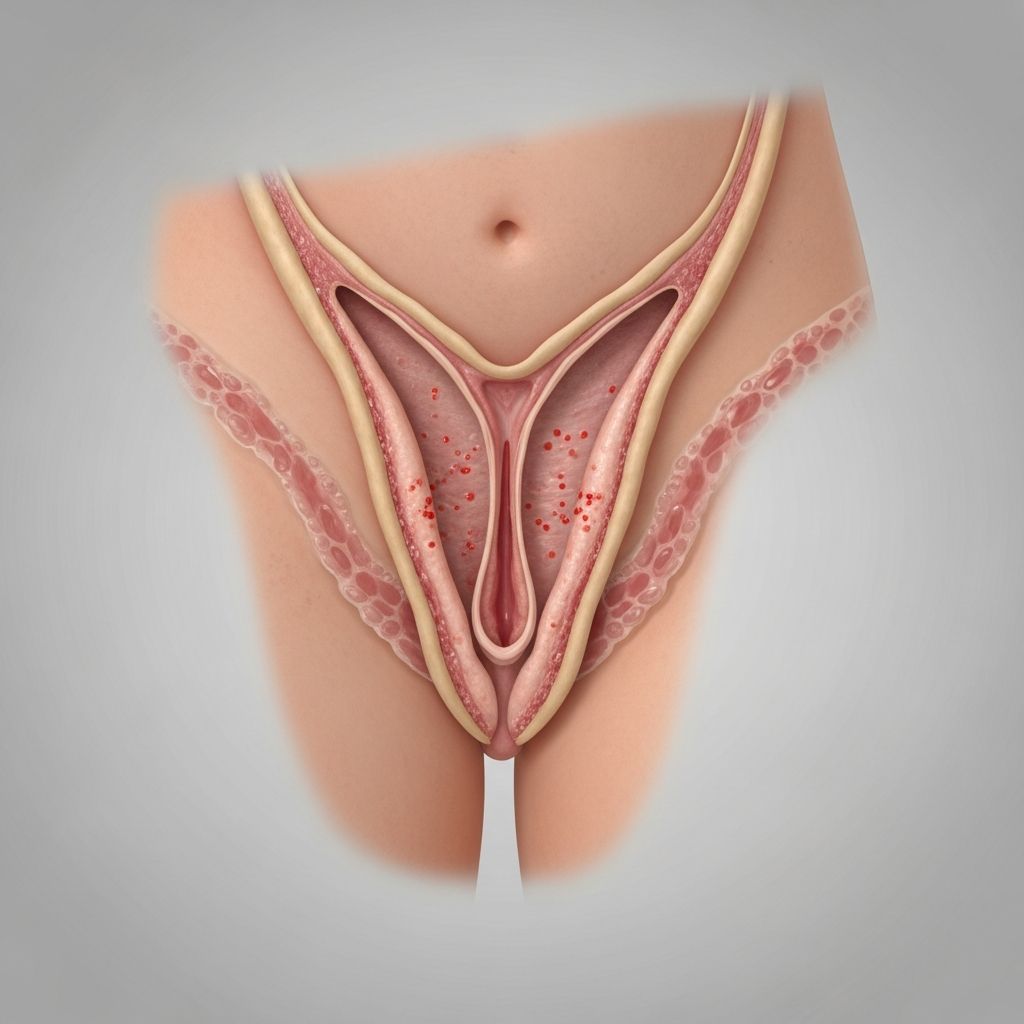
Atrophic vulvovaginitis, commonly referred to as atrophic vaginitis, describes the thinning and inflammation of genital tissues in women, primarily due to estrogen deficiency. This condition predominantly affects the vaginal tissues but can involve the vulva, leading to significant discomfort. It is especially prevalent in postmenopausal women, hence sometimes called senile vulvovaginitis. Understanding its pathophysiology, clinical presentation, and management is crucial for improving quality of life.
What is atrophic vulvovaginitis?
Atrophic vulvovaginitis occurs when estrogen levels drop sharply, causing the vaginal and vulvar epithelium to thin, lose elasticity, and become inflamed. Normally, estrogen maintains thick, rugated vaginal walls with abundant superficial cells and healthy lubrication. In its absence, the epithelium atrophies, pH rises (becoming less acidic), and the vaginal flora shifts, increasing infection risk. This leads to symptoms that impair daily activities, sexual function, and urinary health.
The condition is part of the genitourinary syndrome of menopause (GSM), encompassing both genital and urinary symptoms. Up to 50-60% of postmenopausal women experience it, though many suffer silently due to embarrassment.
Who gets atrophic vulvovaginitis?
Primarily postmenopausal women, as menopause causes ovarian estrogen production to cease. However, it can affect:
- Women after surgical menopause (oophorectomy).
- Those undergoing chemotherapy or radiation therapy affecting ovaries.
- Women with primary ovarian insufficiency or immunologic disorders.
- Breastfeeding mothers postpartum due to temporary prolactin-induced estrogen suppression.
- Younger women on long-term hormonal contraceptives or anti-estrogen therapies (e.g., tamoxifen for breast cancer).
Prevalence increases with postmenopause duration; risk factors include smoking, nulliparity, and vaginal delivery history.
What causes atrophic vulvovaginitis?
The root cause is hypoestrogenism. Estrogen deficiency leads to:
- Vaginal epithelium thinning: Reduced glycogen-rich superficial cells, fewer lactobacilli, elevated pH (>4.5).
- Decreased vascularity and lubrication: Loss of submucosal collagen and elastic fibers.
- Vulvar changes: Atrophy of labia minora/majora, clitoris hood, and introitus narrowing.
- Secondary effects: Increased susceptibility to infections (candida, bacterial vaginosis) and urinary issues.
In menopause, this stems from ovarian failure; other causes mimic this hormonal milieu.
What are the clinical features of atrophic vulvovaginitis?
Vulvar and vaginal symptoms
Early signs include vaginal dryness and reduced lubrication. Progressive symptoms:
- Dryness, burning, soreness, or rawness.
- Itching (pruritus), irritation.
- Dyspareunia (painful intercourse), postcoital spotting/bleeding.
- Leukorrhea or yellow malodorous discharge (often from secondary infection).
- Vulvar dermatitis-like changes: erythema, fissures, petechiae.
Urinary symptoms
Due to urethral and bladder trigone atrophy:
- Dysuria, urgency, frequency.
- Recurrent UTIs, hematuria.
- Stress urinary incontinence.
Symptoms worsen with infections or trauma (e.g., sex, exams).
Diagnosis of atrophic vulvovaginitis
Diagnosis is clinical, based on history and exam:
- History: Postmenopausal status, symptom onset post-estrogen drop.
- Examination: Pale, thin, non-rugated vaginal walls; contact bleeding; vulvar pallor/shrinkage; urethral caruncle possible.
- Vaginal pH: >4.5 (normal premenopausal: <4.5).
- Microscopy: ‘Clue cells’ absent; few white cells, parabasal cells predominant, low lactobacilli.
- Vaginal Maturation Index (VMI): <10% superficial cells (normal: 20-50%).
Related Stories



Differentiate from infections, lichen sclerosus, or malignancy via swabs/cultures/biopsy if needed.
Differential diagnosis
| Condition | Main Features |
|---|---|
| Vaginal infections | Discharge (leukorrhea), odor, pH variable, pathogens on microscopy. |
| Lichen sclerosus | White plaques, scarring, intense itch, no vaginal involvement primarily. |
| Contact dermatitis | History of irritants, localized erythema/swelling. |
| Vulval cancer | Ulcer, mass, persistent despite treatment. |
Treatment of atrophic vulvovaginitis
Treatment targets estrogen restoration, symptom relief, and prevention of complications. First-line: topical estrogen.
Oestrogen treatment
Topical low-dose estrogen (creams, pessaries, rings, tablets) restores epithelium, lowers pH, boosts lactobacilli. Regimens:
- Creams (e.g., estriol 0.1%): Nightly 2 weeks, then 1-2x/week maintenance.
- Pessaries/tablets: Similar induction/maintenance.
- Vaginal ring (Estring): 3-month replacement, systemic absorption minimal.
Safe for most; minimal endometrial stimulation. Monitor if breast cancer history.
Systemic hormone replacement therapy (HRT)
For women with vasomotor symptoms too: oral/transdermal estrogen ± progestogen. May not fully resolve local symptoms; combine with vaginal if needed.
Non-hormonal options
- Moisturizers/lubricants: Regular use (e.g., hyaluronic acid gels) for mild cases.
- Laser therapy: CO2 fractional laser stimulates collagen (emerging, 2-3 sessions).
- Ospemifene: Oral SERM for dyspareunia.
- DHEA suppositories: Local androgen-to-estrogen conversion.
- Pelvic floor therapy: For incontinence.
Treat infections concurrently.
What is the outcome for atrophic vulvovaginitis?
Untreated, it progresses: severe narrowing, chronic pain, infections. With treatment, 80-90% symptom relief within 4-12 weeks. Maintenance prevents relapse. Early intervention preserves function; delays risk permanent changes.
Prevention of atrophic vulvovaginitis
- Early menopause discussion with providers.
- Regular sexual activity maintains vascularity.
- Avoid irritants (dyes, spermicides).
- Smoking cessation.
- Proactive topical estrogen postmenopause if symptomatic.
Frequently Asked Questions (FAQs)
Q: Is atrophic vulvovaginitis the same as vaginal atrophy?
A: Yes, terms are interchangeable; ‘vulvovaginitis’ emphasizes vulvar involvement.
Q: Can it affect younger women?
A: Yes, via breastfeeding, cancer treatments, or ovarian issues.
Q: Is topical estrogen safe long-term?
A: Generally yes, low systemic absorption; consult for contraindications like undiagnosed bleeding.
Q: What if estrogen isn’t an option?
A: Use moisturizers, lubricants, lasers, or ospemifene.
Q: Does it increase cancer risk?
A: No direct link; treat symptoms to avoid chronic irritation.
References
- Diagnosis and Treatment of Atrophic Vaginitis — American Academy of Family Physicians. 2000-05-15. https://www.aafp.org/pubs/afp/issues/2000/0515/p3090.html
- Atrophic Vaginitis Treatment Options — UVA Health. Recent (no specific date; authoritative health provider). https://www.uvahealth.com/conditions/atrophic-vaginitis
- Vaginal Atrophy: Causes, Symptoms, Diagnosis & Treatment — Cleveland Clinic. Recent. https://my.clevelandclinic.org/health/diseases/15500-vaginal-atrophy
- Current treatment options for postmenopausal vaginal atrophy — PMC (NCBI). 2018-08-21. https://pmc.ncbi.nlm.nih.gov/articles/PMC6074805/
- Atrophic Vaginitis — NHS Wales (WISDOM). 2022. https://wisdom.nhs.wales/health-board-guidelines/c-vgleafletfile/atrophic-vaginitis2cvg-leaflet-2022pdf/
- Atrophic Vulvovaginitis — DermNet NZ. Recent. https://dermnetnz.org/topics/atrophic-vulvovaginitis
Similar Articles








Read full bio of medha deb