Atrophie Blanche: Expert Guide to Causes, Symptoms & Treatments
Understanding atrophie blanche: causes, symptoms, diagnosis, and tailored treatments for this distinctive skin scarring condition.
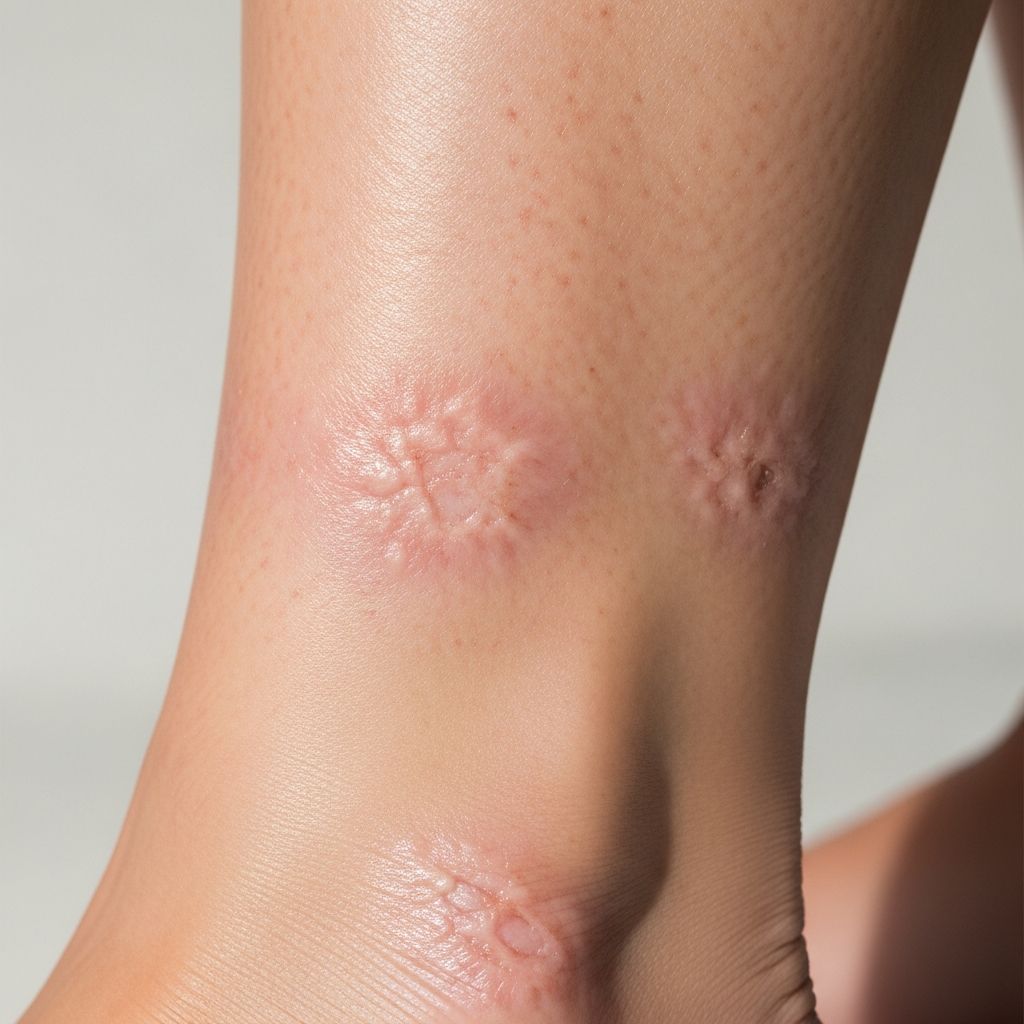
Atrophie blanche is a distinctive dermatological condition marked by porcelain-white, atrophic, stellate plaques typically on the lower extremities, often resulting from microvascular occlusion and tissue ischemia.
What is atrophie blanche?
Atrophie blanche (AB), also known as white atrophy, refers to smooth, ivory-white patches of skin that are depressed below the surrounding normal skin surface and encircled by engorged telangiectatic capillaries forming a red halo or ‘red ring’. These lesions measure 1–2 cm in diameter and have an irregular, stellate outline. They commonly appear on the ankles, particularly around the medial malleolus (inner ankle), dorsa of the feet, lower legs, or thighs. While often preceded by painful punched-out ulcers with a necrotic base that heal over weeks to months, atrophie blanche can develop without prior ulceration.
The atrophic scars represent end-stage changes from chronic vascular damage, where dermal fibrosis and loss of skin appendages occur due to repeated ischemic insults. Surrounding hyperpigmentation or hypopigmentation may be present, and active lesions can be tender or painful.
Who gets atrophie blanche?
Atrophie blanche primarily affects young to middle-aged women (20–50 years old), with a female-to-male ratio of approximately 4:1, though it can occur in any age group or gender. Risk factors include:
- Chronic venous insufficiency (CVI), the most common association.
- Coagulopathies or prothrombotic states predisposing to livedoid vasculopathy.
- Family history of similar lesions or thrombotic disorders.
- Conditions like antiphospholipid syndrome, factor V Leiden, or protein C/S deficiencies.
- Medications such as hydroxyurea used in myeloproliferative disorders.
- Smoking, obesity, and sedentary lifestyle exacerbating venous hypertension.
What causes atrophie blanche?
The pathogenesis involves microvascular occlusion in the subpapillary dermal plexus, leading to ischemia, infarction, and subsequent atrophic scarring. Key mechanisms include:
- Endothelial damage and thrombosis: Intravascular fibrin deposition, platelet thrombi, and hyalinized vessel walls obstruct small vessels.
- Venous hypertension in CVI: Stasis promotes inflammation and capillary leakage.
- Livedoid vasculopathy: A thrombotic vasculopathy with segmental hyalinization of dermal vessels.
- Other vasculopathies: Vasculitis, cryofibrinogenemia, or Degos disease.
- Drug-induced: Hydroxyurea causes painful perimalleolar ulcers after years of use via epidermal toxicity and microvascular changes.
These processes impair tissue perfusion, triggering a cycle of ulceration, poor healing, and fibrosis.
Clinical features of atrophie blanche
Lesions evolve in stages:
- Purpura and pain: Preceded by tender purplish macules or papules.
- Ulceration: Small (3–10 mm), painful ulcers with punched-out edges and yellow fibrinous base.
- Healing phase: Ulcers resolve into white atrophic scars with telangiectasias.
- Chronic stage: Smooth, hypopigmented, depressed plaques with stellate borders and peripheral red dots (dilated capillaries).
| Stage | Features | Duration |
|---|---|---|
| Early | Painful purpura, livedo-like nets | Days |
| Ulcerative | Necrotic ulcers, severe pain | Weeks |
| Scar | White atrophy, telangiectasia | Permanent |
Associated symptoms include burning pain, pruritus, and leg edema. Multiple lesions may be bilateral and recurrent.
Diagnosis of atrophie blanche
Diagnosis is clinical but requires identifying the underlying cause through:
- History and exam: Assess for CVI signs (varicose veins, edema), ulcers, and risk factors.
- Duplex ultrasound: Essential to evaluate venous reflux and deep vein thrombosis.
- Histopathology: Punch biopsy shows fibrin thrombi, endothelial swelling, and dermal sclerosis.
- Laboratory tests: Coagulation profile (antiphospholipid antibodies, homocysteine, proteins C/S), cryoglobulins, ANA.
- Dermoscopy: Reveals white structureless areas with peripheral dotted vessels.
Related Stories



Differential diagnosis
Conditions mimicking atrophie blanche include:
- Martorell ulcer (hypertensive ischemic ulcer).
- Pyoderma gangrenosum.
- Degos disease (systemic malignant atrophic papulosis).
- Sickle cell ulcers.
- Venous stasis dermatitis with lipodermatosclerosis.[10]
Investigations for atrophie blanche
Routine tests:
- Full blood count, ESR, CRP.
- Coagulation studies: PT, aPTT, fibrinogen, D-dimer.
- Thrombophilia screen if vasculopathy suspected.
- Venous duplex scan of legs.
- Biopsy if atypical or non-venous.
What is the treatment for atrophie blanche?
Treatment targets the underlying etiology:
For CVI-related AB:
- Compression therapy: First-line; multilayer bandaging or stockings (20–40 mmHg) to reduce hypertension.
- Venoactive drugs: Micronized purified flavonoid fraction (MPFF), pentoxifylline, sulodexide improve microcirculation.
- Interventions: Endovenous ablation, sclerotherapy for reflux.
- Wound care: Moist dressings, debridement for ulcers.
For livedoid vasculopathy:
- Anticoagulation: Low-molecular-weight heparin, rivaroxaban for thrombosis.
- Antiplatelets: Aspirin, clopidogrel.
- CHAP regimen: Cilostazol, hydroxychloroquine, aspirin, pentoxifylline.
- IVIG or rituximab for refractory cases.
Drug-induced (e.g., hydroxyurea):
- Discontinue offending agent; switch therapies.
General measures: Leg elevation, exercise, smoking cessation, weight loss, pain management.
Prevention of atrophie blanche
Prevent recurrences by managing CVI early with compression, lifestyle changes, and treating coagulopathies. Regular follow-up prevents progression to ulcers.
Prognosis and complications
AB is chronic and recurrent, with scars often permanent but potentially reversible with venous interventions. Complications include painful ulcers, infection, and reduced quality of life due to pain and mobility issues.
Frequently Asked Questions (FAQs)
Is atrophie blanche curable?
No, the atrophic scars are permanent, but underlying causes can be managed to prevent new lesions and promote healing.
Does compression therapy work for atrophie blanche?
Yes, it’s first-line for venous causes, speeding ulcer healing and reducing scar severity.
Can atrophie blanche be caused by medications?
Yes, particularly hydroxyurea in myeloproliferative disorders, leading to painful leg ulcers.
What does atrophie blanche look like?
Porcelain-white, stellate scars 1–2 cm with red telangiectatic halos on ankles/legs.
Who is at risk for atrophie blanche?
Young-middle-aged women with CVI, thrombophilias, or on certain drugs like hydroxyurea.
References
- Atrophie blanche: a diagnostic and therapeutic challenge — Phlebolymphology. 2023. https://www.phlebolymphology.org/atrophie-blanche-a-diagnostic-and-therapeutic-challenge/
- Atrophie Blanche — MD Searchlight. 2024. https://mdsearchlight.com/skin-problems-and-treatments/atrophie-blanche/
- Atrophie Blanche — DermNet NZ. 2023. https://dermnetnz.org/topics/atrophie-blanche
- Atrophie Blanche — StatPearls NCBI Bookshelf. 2023-10-01. https://www.ncbi.nlm.nih.gov/books/NBK544285/
- Livedoid Vasculopathy — National Organization for Rare Disorders (rarediseases.org). 2024. https://rarediseases.org/rare-diseases/livedoid-vasculopathy/
- What Is Atrophie Blanche? — Central Florida Vein and Vascular Care. 2023. https://cfvein.com/blog/atrophie-blanche/
Similar Articles








Read full bio of medha deb