Atropine Injection: Uses, Dosage & Side Effects
Complete guide to atropine injection: mechanism, uses, proper administration, and safety information.
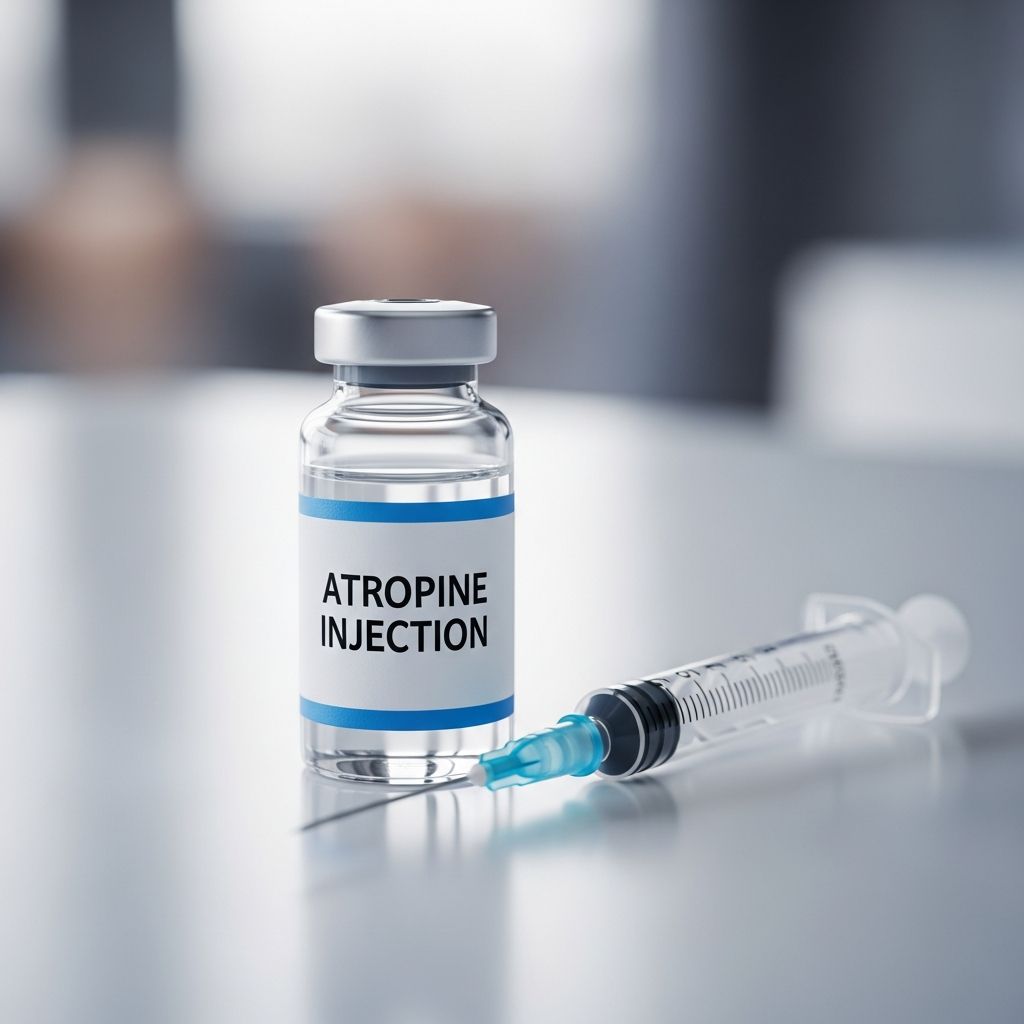
Overview of Atropine Injection
Atropine injection is a critical medication classified as an anticholinergic agent that functions as a competitive, reversible antagonist of muscarinic receptors. This pharmaceutical is primarily used to treat life-threatening conditions, particularly poisoning caused by organophosphorus nerve agents and certain types of insecticides. The medication works by blocking the chemical acetylcholine, effectively counteracting the excess acetylcholine that accumulates during organophosphorus poisoning. Additionally, atropine injection serves important roles in managing symptomatic bradycardia and reducing vagal tone during procedural care.
What Atropine Injection Is Used For
Atropine injection has several critical therapeutic applications in emergency and clinical settings. The most important uses include:
Organophosphorus Poisoning Treatment
The primary indication for atropine injection is the treatment of poisoning caused by organophosphorus nerve agents and carbamate insecticides. These substances can cause severe cholinergic crisis, leading to life-threatening complications. Atropine rapidly counteracts the toxic effects by blocking excess acetylcholine at muscarinic receptor sites, allowing patients to regain control of vital functions.
Bradycardia Management
Atropine injection is indicated for symptomatic bradycardia—abnormally slow heart rate—particularly in cardiac emergency situations. By decreasing vagal tone, atropine can help improve heart rate temporarily and restore more normal cardiac function. This application is especially critical during cardiac resuscitation and emergency care situations.
Reduction of Secretions
Healthcare providers use atropine to reduce vagal tone and secretions during procedural care, including pre-treatment for rapid sequence intubation (RSI). By decreasing hypersalivation and bronchial secretions, the medication facilitates better visualization during procedures and reduces complications related to excessive secretions.
How Atropine Injection Works
Atropine functions through a well-defined pharmacological mechanism. As a cholinergic muscarinic antagonist, it competitively and reversibly blocks muscarinic acetylcholine receptors throughout the body. This action prevents acetylcholine from binding to its receptors, effectively interrupting the cholinergic cascade that becomes pathologically excessive in organophosphorus poisoning. The medication’s ability to restore normal autonomic nervous system function makes it particularly valuable in emergency toxicologic interventions.
Proper Administration of Atropine Injection
Who Can Administer the Medication
Atropine injection must be administered only by or under the direct supervision of a healthcare provider. In most clinical settings, a nurse or other trained health professional will administer the medication. However, certain formulations—particularly autoinjectors—may be used by trained individuals in emergency situations, and patients may receive training for home administration under professional guidance.
Administration Route
Atropine can be administered through multiple routes depending on clinical circumstances. These include intravenous (IV), intramuscular, subcutaneous, and endotracheal administration. The intramuscular route is commonly used for autoinjector formulations, with injection typically administered into the outer thigh. The intravenous route is generally preferred for rapid onset of action in emergency situations.
Autoinjector Administration Technique
For 0.5 mg, 1 mg, and 2 mg autoinjectors, the proper technique includes:
- Snap the end of the plastic sleeve down and over the yellow safety release
- Remove the autoinjector from the plastic sleeve without placing fingers on the green tip
- Hold the autoinjector firmly with the green tip pointed downward
- Pull off the yellow safety release with your other hand
- Aim and firmly poke the green tip straight down at a 90-degree angle against the outer thigh
- Note that the autoinjector can inject through clothing, but ensure pockets at the injection site are empty
- For children and thin individuals, bunch up the thigh to provide a thicker injection area
- Hold the autoinjector in place for at least 10 seconds to allow complete injection
- Remove the autoinjector and massage the injection site for a few seconds
Related Stories



The 0.25 mg autoinjector follows a slightly different procedure, using a black tip with a gray safety release instead of yellow and green components.
Dosage Information
Standard Dosing Guidelines
Atropine dosing varies significantly based on the indication and patient population. Key dosing parameters include:
- Anti-sialagogue/Anti-vagal: 0.5 to 1 mg every 1 to 2 hours
- Organophosphate or Muscarinic Poisoning: 2 to 3 mg every 20 to 30 minutes (may require doses up to 20 mg, titrated to effect for secretion control)
- Bradycardia: 1 mg every 3 to 5 minutes (maximum 3 mg), repeated until achieving desired heart rate
- Rapid Sequence Intubation Pretreatment: 0.01 mg/kg IV for adults
Adult Dosing
For adults weighing more than 41 kilograms with organophosphorus poisoning, the typical initial dose is 2 milligrams injected into a muscle. However, in severe poisoning cases, doses may be titrated upward and repeated every 20 to 30 minutes, with some cases requiring doses approaching 20 mg. The medication should be titrated to effect by monitoring the patient’s ability to clear excess secretions.
Pediatric Dosing
Pediatric dosing of atropine requires careful calculation based on body weight and clinical indication. The typical pediatric dose for bradycardia or poisoning is 0.01 to 0.03 mg/kg every 3 to 5 minutes, with a pediatric minimum dose of 0.1 mg. The maximum dose is 0.5 mg for children and 1.0 mg for adolescents, with a maximum cumulative dose of 1 mg for children and 2 mg for adolescents. For rapid sequence intubation pretreatment in pediatric patients, the dose is 0.02 mg/kg IV with a minimum dose of 0.1 mg.
Endotracheal Administration
When administered via the endotracheal route, 1 to 2 mg may be diluted in 10 mL of sterile water or normal saline before administration. For pediatric endotracheal administration, the usual IV dose should be doubled and diluted in 3 to 5 mL of sterile water.
Available Dosage Forms and Strengths
Atropine injection is available primarily as a solution for parenteral administration. The most commonly encountered formulations include autoinjector devices in strengths of 0.25 mg, 0.5 mg, 1 mg, and 2 mg. These autoinjectors are designed for ease of use in emergency situations and can deliver medication through clothing if necessary. The brand name Atropen represents one common formulation available in the United States.
Important Precautions and Warnings
Special Considerations
Certain patient populations require special attention when considering atropine injection. Adults receiving doses greater than 0.5 mg delivered via slow IV push may experience paradoxical bradycardia (though this is likely transient) or, in rare cases, ventricular fibrillation. In organophosphate poisoning cases, pupils and heart rate are poor indicators of appropriate dosing; instead, titration should be guided by the patient’s ability to clear excess secretions.
Rapid Sequence Intubation Considerations
Although not recommended as a routine agent, atropine may be used 3 to 5 minutes before rapid sequence intubation initiation to prevent bradycardia. This is particularly important in pediatric patients, who demonstrate a greater predominance of vagal response. Post-intubation bradycardia is more common in children, even without succinylcholine use, making atropine pretreatment beneficial in select cases.
Potential Side Effects and Adverse Reactions
Like all medications, atropine injection carries the potential for adverse effects. Common side effects may include dry mouth, increased heart rate, dilated pupils, urinary retention, constipation, and blurred vision. More serious adverse reactions can occur, particularly with overdose or in sensitive patient populations. Healthcare providers must weigh the life-saving benefits of atropine against potential risks, particularly in emergency toxicologic situations where the alternative—untreated organophosphorus poisoning—poses immediate life-threatening danger.
Drug Interactions and Contraindications
Healthcare providers must consider potential drug interactions when administering atropine injection. Certain medications may potentiate anticholinergic effects, leading to increased risk of adverse reactions. Specific contraindications may exist depending on the patient’s medical history, current medications, and underlying conditions. Close assessment by qualified healthcare personnel is essential before administration.
Special Patient Populations
Hepatic Impairment
No specific dosage adjustments have been provided in the product labeling for patients with hepatic impairment. However, clinical judgment should guide dosing decisions in patients with significant liver dysfunction.
Renal Impairment
Although specific guidance is limited, careful monitoring is warranted in patients with significant renal impairment, as this may affect drug metabolism and clearance.
Pediatric Patients
Special attention should be given to pediatric dosing, with careful weight-based calculations and consideration of age-specific physiologic responses. Pediatric patients often require proportionally different dosing compared to adults.
Clinical Applications in Emergency Medicine
Cardiac Resuscitation
In emergency cardiac care protocols, atropine plays a specific role in managing symptomatic bradycardia. Current recommendations suggest atropine 1 mg IV every 3 to 5 minutes (up to 3 doses) for symptomatic bradycardia in appropriate clinical contexts. This application helps identify and address reversible causes of cardiac dysrhythmias.
Toxicologic Emergencies
Atropine’s most critical application in emergency medicine involves management of acute organophosphorus poisoning. This includes exposure to industrial chemicals, pesticides, and chemical weapons. The medication can rapidly reverse life-threatening cholinergic crisis manifestations, making it essential for emergency departments and toxicology teams.
Monitoring and Follow-Up
After atropine injection administration, healthcare providers must closely monitor patients for therapeutic response and development of adverse effects. In organophosphate poisoning cases, monitoring should focus on the patient’s ability to clear secretions rather than pupil size or heart rate alone. Vital signs, respiratory function, and mental status should be continuously assessed. Repeat dosing may be necessary depending on clinical response and ongoing assessment of poisoning severity.
Important Patient Instructions
Patients who receive training for autoinjector use should understand the following important points:
- Never place fingers on the colored tip of the autoinjector during use
- The autoinjector can deliver medication through clothing
- Ensure injection site pockets are empty before administration
- Maintain firm pressure at a 90-degree angle for complete delivery
- Hold the autoinjector in place for the full prescribed duration
- Seek immediate emergency medical attention after using an autoinjector
- Report any side effects to healthcare providers promptly
When to Seek Emergency Care
Patients exposed to organophosphorus agents or experiencing symptomatic bradycardia should seek immediate emergency care. After administering an atropine autoinjector for suspected organophosphate poisoning, emergency medical services must be contacted immediately, even if symptoms appear to improve. Healthcare professionals need to assess the severity of poisoning and provide additional supportive care as necessary.
Frequently Asked Questions
Q: What is the difference between atropine injection and atropine eye drops?
A: Atropine injection is administered systemically (usually intramuscularly) to treat poisoning and bradycardia by blocking muscarinic receptors throughout the body. Atropine eye drops, conversely, are applied topically to dilate pupils and treat eye inflammation by relaxing eye muscles. These represent different formulations for different clinical purposes.
Q: Can atropine injection be used at home?
A: While autoinjector formulations can be used outside medical settings by trained individuals in emergency situations, atropine injection should generally be administered only by or under the direct supervision of healthcare professionals. Patients may receive training for emergency autoinjector use, but immediate medical attention remains necessary.
Q: How quickly does atropine injection work?
A: Atropine injection works rapidly, particularly when administered intravenously. Intramuscular administration also provides relatively quick onset, though slightly slower than IV administration. The medication’s effects begin within minutes, making it valuable for life-threatening emergencies.
Q: Is atropine safe for children?
A: Atropine can be safely used in children when properly dosed based on body weight and clinical indication. Pediatric dosing follows strict weight-based guidelines with specified minimum and maximum doses. Healthcare providers must carefully calculate appropriate pediatric doses.
Q: What should I do if I accidentally overdose on atropine injection?
A: Overdose of atropine requires immediate emergency medical attention. Call emergency services immediately and provide information about the dose and time of administration. Do not attempt to treat overdose at home.
Q: Can atropine injection be mixed with other medications?
A: Mixing atropine with other medications should only be done by qualified healthcare professionals under appropriate clinical conditions. Certain drug interactions may occur, and improper mixing could affect medication efficacy or safety.
References
- Atropine (intramuscular route) – Description — Mayo Clinic. Accessed December 2025. https://www.mayoclinic.org/drugs-supplements/atropine-intramuscular-route/description/drg-20506387
- Atropine — National Center for Biotechnology Information (NCBI) StatPearls. Updated 2024. https://www.ncbi.nlm.nih.gov/books/NBK470551/
- Anticholinergic Drugs Uses & Side Effects — Cleveland Clinic. Accessed December 2025. https://my.clevelandclinic.org/health/treatments/anticholinergic-drugs
- Advanced Cardiovascular Life Support Guidelines — American Heart Association. 2023. https://www.heart.org/
- Atropine in Emergency Cardiac Care — Cleveland Clinic Medicine Education. 2006. https://www.ccjm.org/
Similar Articles








Read full bio of medha deb