Atypical Fibroxanthoma: Diagnosis & Treatment Essentials
Understanding atypical fibroxanthoma: a rare dermal tumour in sun-damaged skin of older adults, its diagnosis, treatment, and outcomes.
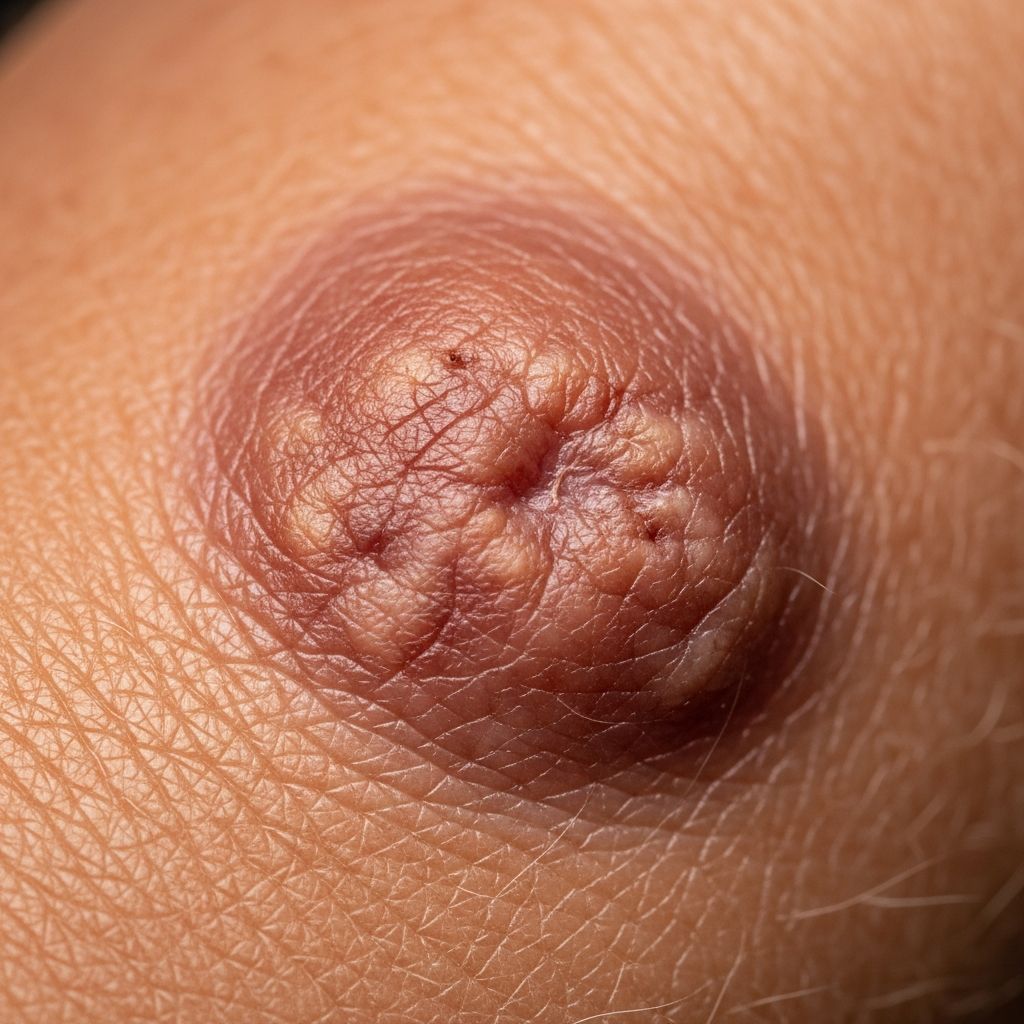
Atypical fibroxanthoma (AFX) is a dermal spindle-cell tumour that typically occurs on the head and neck of sun-damaged older people. It presents as a rapidly growing, dome-shaped nodule and is considered a superficial form of undifferentiated pleomorphic sarcoma, though it often behaves benignly with low metastasis risk.
Introduction
Atypical fibroxanthoma, also known as cutaneous undifferentiated pleomorphic sarcoma, is a rare mesenchymal skin neoplasm arising in chronically sun-damaged skin. It manifests as a fast-growing, exophytic nodule, usually less than 2 cm in diameter, often ulcerated, red, flesh-coloured, or bluish-brown. While histologically alarming due to pleomorphic and spindle-shaped cells, AFX is typically low-grade, with excellent prognosis following complete excision. It accounts for less than 0.2% of all skin cancers and predominantly affects elderly white males.
Rare variants occur in younger patients on non-sun-exposed sites like the trunk or extremities, associated with genetic factors such as TP53 mutations or xeroderma pigmentosum. These tend to be larger and slower-growing.
Causes
The development of AFX is strongly linked to cumulative ultraviolet (UV) radiation from sun exposure and, less commonly, ionizing radiation such as X-rays. Both damage DNA in dermal fibroblasts or epidermal keratinocytes, leading to abnormal proliferation of atypical spindle cells. Fair-skinned individuals with heavy lifetime sun exposure are at highest risk. Other predisposing factors include advanced age, immunosuppression, and rarely, genetic syndromes like xeroderma pigmentosum, which impairs DNA repair.
- UV radiation: Primary cause in sun-damaged skin of head/neck.
- Ionizing radiation: History of radiotherapy increases risk.
- Genetic factors: TP53 germline mutations in rare young-patient cases.
Demographics
AFX primarily affects older adults over 70 years, with a strong male predominance (male-to-female ratio approximately 2:1). It is most common in fair-skinned (Fitzpatrick skin types I-II) individuals of European descent living in sunny climates. Incidence peaks in the seventh and eighth decades of life. Exceptionally rare in children or young adults unless associated with genodermatoses.
| Demographic Factor | Characteristics |
|---|---|
| Age | >70 years (peak 70-80) |
| Gender | Male > Female (2:1) |
| Skin type | Fair skin (types I-II) |
| Geography | Sunny regions, elderly whites |
Clinical Features
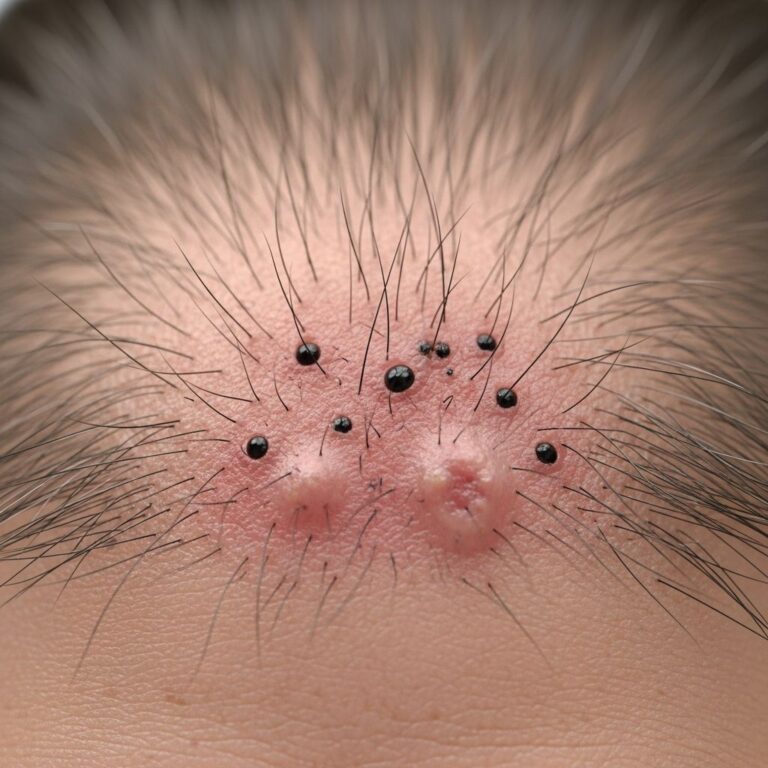
AFX typically presents as a solitary, rapidly growing (over weeks to months), dome-shaped or polypoid nodule on sun-exposed sites, especially head and neck (85-90% of cases: scalp, ears, nose, cheeks, forehead). Lesions start small (<1 cm) but can reach 2-3 cm, often ulcerated, crusted, friable, and haemorrhagic. Colour varies from red, pink, or flesh-toned to bluish-brown. They are usually asymptomatic but may bleed or become tender.
- Appearance: Red, moist, dome-shaped nodule; may ulcerate/crust.
- Size: 0.5-3 cm, rapid growth.
- Sites: Head/neck (common); trunk/extremities (rare, younger patients).
- Symptoms: Painless; prone to bleeding/oozing.
Dermoscopically, features mimic basal cell carcinoma (ulceration, polymorphous vessels) or squamous cell carcinoma (keratin, blood crust).
Diagnosis
Diagnosis requires histopathological examination following biopsy or excision. Key features include large pleomorphic, spindled, anaplastic fibrohistiocytic cells in the dermis, arranged haphazardly with high mitotic rate, necrosis, and solar elastosis in adjacent skin. Tumours are superficial, sparing deeper fascia/muscle.
Immunohistochemistry is crucial for exclusion of mimics: positive for CD10, CD68, procollagen-1; negative for cytokeratins (AE1/3, CAM5.2), S100, desmin, SOX10 (rules out melanoma/sarcoma). Ki-67 proliferation index is high (>30%).
Clinical suspicion arises from rapid growth on actinically damaged skin; biopsy is definitive. Misdiagnosis as squamous cell carcinoma is common without IHC.
Related Stories



Differential Diagnoses
AFX mimics other aggressive skin tumours clinically and histologically. Accurate differentiation relies on IHC and clinicopathological correlation.
| Differential | Key Distinguishing Features |
|---|---|
| Squamous cell carcinoma | Cytokeratin positive; atypical keratinocytes. |
| Melanoma | S100/SOX10 positive; melanin pigment. |
| Leiomyosarcoma | Smooth muscle actin positive. |
| Angiosarcoma | CD31/CD34 positive; vascular channels. |
| Dermatofibroma | Benign; factor XIIIa positive, low mitoses. |
Treatment
Complete surgical excision is the mainstay, with Mohs micrographic surgery preferred for recurrent, large, or high-risk site lesions due to tissue-sparing and high cure rates (>98%). Small lesions (<1 cm) may undergo curettage and electrodesiccation. Wide local excision with 1 cm margins for others. Sentinel lymph node biopsy not routine due to low metastasis risk. Adjuvant radiation rarely needed.
- Mohs surgery: Gold standard for head/neck; examines 100% margins.
- Excision: 1 cm margins; pathology confirms clear margins.
- Curettage: Small, low-risk lesions only.
Outcome
Prognosis is excellent with complete excision: local recurrence 0-16% (higher with incomplete excision), metastasis <1% (usually to lungs/lymph nodes in deep/subfascial tumours). Mortality is rare (<0.5%). Poor prognosticators: subcutaneous invasion, necrosis, vascular invasion, high mitotic rate. Regular follow-up advised.
Prevention
Prevent UV-induced skin damage: daily broad-spectrum SPF 50+ sunscreen, protective clothing, hats, sun avoidance 10am-4pm. Regular skin checks for high-risk individuals (elderly, fair skin, radiation history). Early biopsy of suspicious lesions.
Frequently Asked Questions
What is atypical fibroxanthoma?
AFX is a rare, low-grade skin sarcoma-like tumour in sun-damaged skin of elderly patients, presenting as a rapidly growing nodule on the head/neck.
Is AFX aggressive?
Generally benign with low metastasis risk (<1%), but locally recurrent if incompletely excised. Not highly aggressive.
How is AFX diagnosed?
By skin biopsy with histopathology and immunohistochemistry to exclude mimics like melanoma or squamous cell carcinoma.
What is the best treatment for AFX?
Mohs micrographic surgery for optimal margins and tissue preservation, especially on face/head.
Can AFX be prevented?
Minimize UV exposure with sunscreen, clothing, and sun avoidance to prevent precursor skin damage.
References
- Atypical Fibroxanthoma | Clinical Keywords — Yale Medicine. 2024. https://www.yalemedicine.org/clinical-keywords/atypical-fibroxanthoma
- Atypical Fibroxanthoma — DermNet NZ. 2024-09-11. https://dermnetnz.org/topics/atypical-fibroxanthoma
- Atypical Fibroxanthoma — Roswell Park Comprehensive Cancer Center. 2024. https://www.roswellpark.org/cancer/skin/what-skin-cancer/atypical-fibroxanthoma
- Atypical Fibroxanthoma — Sarcoma Foundation of America. 2024. https://curesarcoma.org/sarcoma-subtypes/atypical-fibroxanthoma/
- Atypical Fibroxanthoma (AFX) Skin Cancer Treatment — Mohs Derm Houston. 2024. https://mohsdermhouston.com/atypical-fibroxanthoma-afx-skin-cancer-treatment/
- Atypical Fibroxanthoma FAQs — American Society for Mohs Surgery. 2024. https://www.mohssurgery.org/skin-cancer-faqs/atypical-fibroxanthoma-faqs/
Similar Articles








Read full bio of medha deb