Australian Box Jellyfish Stings: 5 Life-Saving First-Aid Steps
Comprehensive guide to the deadly Australian box jellyfish stings: symptoms, first aid, treatment, and prevention strategies.
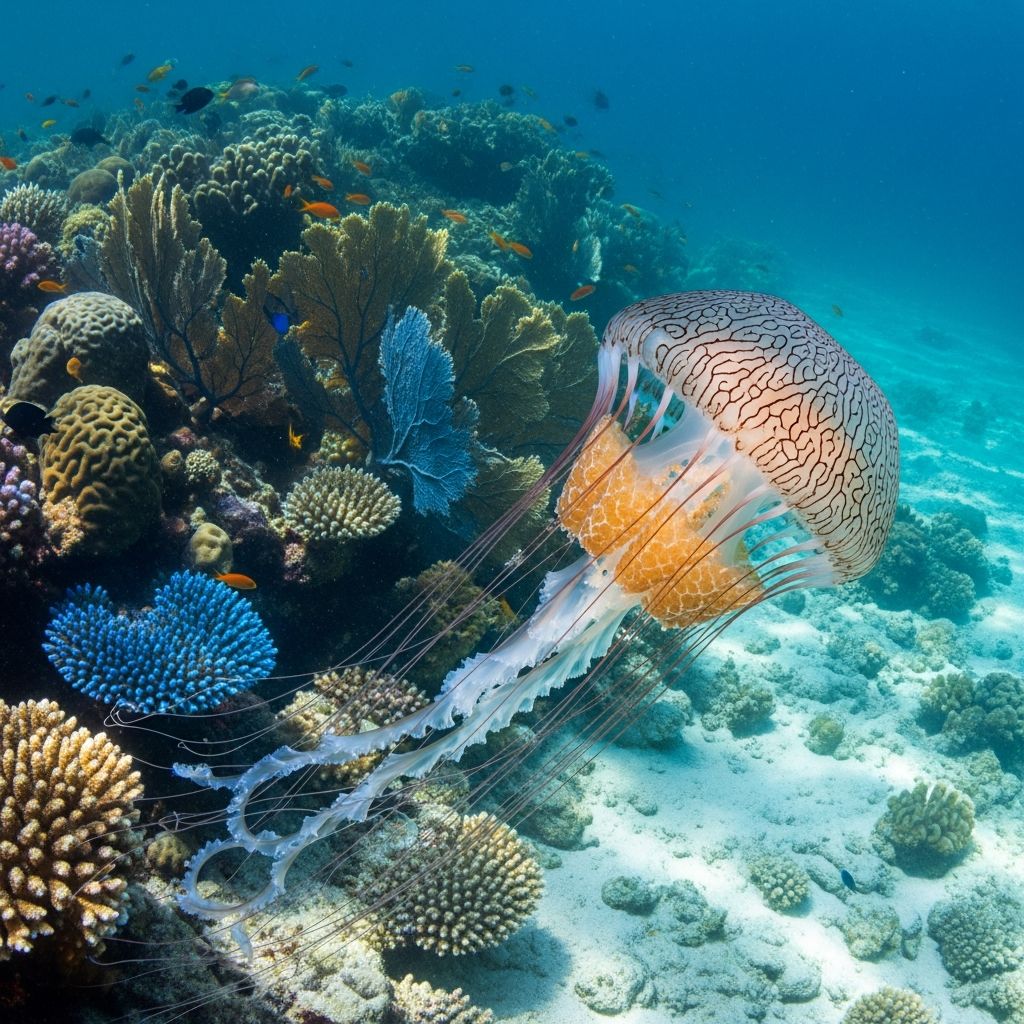
The Australian box jellyfish, scientifically known as Chironex fleckeri, represents one of the most venomous marine animals in the world. Found primarily in the coastal waters of northern Australia, these creatures are responsible for severe envenomations that can lead to rapid death if not managed promptly. Their stings cause excruciating pain and potentially fatal systemic effects due to potent cardiotoxins and neurotoxins.
What is the Australian box jellyfish?
The Australian box jellyfish (Chironex fleckeri) belongs to the class Cubozoa, characterized by its cube-shaped bell, which can measure up to 30 cm in height and 20 cm across. Unlike true jellyfish, box jellyfish possess complex eyes and can swim actively at speeds up to 6 meters per minute, making them highly efficient predators. Their tentacles, extending up to 3 meters, are lined with millions of nematocysts—specialized stinging cells that discharge venom upon contact.
These jellyfish inhabit warm coastal waters from November to May, peaking in the wet season. They are transparent, nearly invisible in water, with pale blue hues, increasing the risk of accidental encounters by swimmers. A single tentacle contact can deliver enough venom to kill three adults, underscoring their extreme danger.
Clinical features of Australian box jellyfish stings
Stings from Chironex fleckeri produce immediate, intense burning pain likened to acid immersion. Within seconds, characteristic whip-like, ladder-patterned welts (urticarial plaques) appear on the skin, often with central ischemic zones that may blister or necrose. The affected area shows rapid erythema, edema, and dermonecrosis in severe cases.
Systemic symptoms escalate quickly: anxiety, diaphoresis, piloerection, tachycardia, and hypertension. Victims may experience nausea, vomiting, muscle spasms, dyspnea, and cardiac arrhythmias. Collapse, unconsciousness, and cardiopulmonary arrest can occur within 2-5 minutes of severe envenomation.
Local effects
- Immediate excruciating pain
- Linear or flagellate wheals with pseudopod-like extensions
- Ischemic pallor followed by blistering and necrosis
- Secondary infection risk with purulent discharge
Local reactions persist for days to weeks, with hyperpigmented scarring common.
Systemic effects
Severe envenomations trigger massive catecholamine release, leading to pulmonary edema, acute respiratory distress, and myocardial injury. Hypotension follows initial hypertension, culminating in asystole. Fatality rates exceed 25% without intervention.
Irukandji syndrome
Distinct from Chironex fleckeri, Irukandji syndrome arises from tiny box jellyfish like Carukia barnesi. Initial stings are minor, often unnoticed, with delayed onset (30 minutes to 2 hours) of severe backache, chest pain, anxiety, sweating, piloerection, and tachycardia. Catecholamine surge causes hypertension, potentially fatal cerebral hemorrhage or pulmonary edema.
Symptoms mimic phaeochromocytoma crisis: nausea, vomiting, rigors, and global pain. Unlike Chironex stings, skin marks are small (1-2 mm papules), and fatalities are rarer but rising with recognition.
First aid treatment for Australian box jellyfish stings
Critical first aid prioritizes rescuer safety—use protective clothing. Remove victim from water immediately. Flood sting site with vinegar (4-6% acetic acid) for 30 seconds to inactivate undischarged nematocysts; do not use fresh water, alcohol, urine, or pressure immobilization, as these trigger further venom discharge.
Related Stories



Remove tentacles using gloved hands, sticks, or seawater rinse. Immerse affected area in hot water (42-45°C, as hot as tolerable) for 20-45 minutes to denature venom proteins and relieve pain. Provide analgesia, oxygen, and cardiopulmonary resuscitation if needed. Call emergency services promptly.
| Step | Action | Rationale |
|---|---|---|
| 1 | Get victim out of water safely | Prevents further stings and drowning |
| 2 | Pour vinegar over sting (30s) | Inactivates nematocysts |
| 3 | Remove tentacles carefully | Eliminates venom source |
| 4 | Hot water immersion (45°C, 20-45 min) | Pain relief, venom inactivation |
| 5 | Monitor ABCs, CPR if required | Manages systemic collapse |
Medical treatment of Australian box jellyfish stings
Hospital management focuses on airway support, cardiac monitoring, and antivenom administration. Intravenous CSL box jellyfish antivenom (neutralizes Chironex fleckeri venom) is given early in severe cases—up to 6 vials initially, monitoring for anaphylaxis. Magnesium sulfate infusion controls neuromuscular effects.
Pain management employs opioids (morphine), local anesthetics, and benzodiazepines for anxiety. Wound care includes debridement, antibiotics for infection, and tetanus prophylaxis. For Irukandji syndrome, titrated nitrates/phentolamine reduce hypertension; avoid beta-blockers.
Prevention of Australian box jellyfish stings
Avoid swimming during box jellyfish season (Oct-May) in northern Australia; heed stinger warning signs. Use full-body stinger suits or wetsuits covering torso, arms, legs. Apply sunscreen SPF 50+ as physical barriers. Beach enclosures with nets reduce risk. Lifeguards patrol high-risk areas.
Post-sting, survivors develop partial immunity, but vigilance remains essential. Public education campaigns have reduced fatalities significantly.
Frequently Asked Questions
What should I do if stung by a box jellyfish?
Immediately exit water, rinse with vinegar, remove tentacles, apply hot water, and seek emergency care.
Is vinegar effective for box jellyfish stings?
Yes, vinegar inactivates nematocysts in Chironex fleckeri, preventing further envenomation.
Can box jellyfish stings be fatal?
Yes, severe stings cause cardiac arrest within minutes; antivenom saves lives.
What is Irukandji syndrome?
Delayed severe reaction from tiny box jellyfish, causing catecholamine storm and hypertension.
How to prevent box jellyfish stings?
Wear stinger suits, avoid swimming in season, follow beach warnings.
Complications and Prognosis
Survivors face chronic pain, keloid scars, and psychological trauma. Renal failure and neurological deficits occur rarely. Prognosis improves with rapid first aid; child mortality higher due to body mass. Early antivenom halves mortality.
In summary, Australian box jellyfish stings demand swift, evidence-based response. Awareness saves lives amid rising coastal recreation.
References
- Treatment of Jellyfish Envenomation — American Academy of Family Physicians. 2014-05-15. https://www.aafp.org/pubs/afp/issues/2014/0515/od1.html
- How to Treat Box Jellyfish Sting — CPR AED Course. 2023-01-01. https://cpraedcourse.com/blog/how-to-treat-box-jellyfish-sting/
- Jellyfish Stings and Their Management: A Review — National Center for Biotechnology Information. 2013-04-12. https://pmc.ncbi.nlm.nih.gov/articles/PMC3640396/
- Box Jellyfish Sting: Emergency First Aid — Healthline. 2023-06-20. https://www.healthline.com/health/box-jellyfish-sting
- Australian Box Jellyfish Stings — DermNet NZ. 2024-01-01. https://dermnetnz.org/topics/australian-box-jellyfish-stings
- Guideline 9.4.5 – Envenomation – Jellyfish Stings — Australia and New Zealand Committee on Resuscitation. 2023-01-01. https://www.anzcor.org/assets/anzcor-guidelines/guideline-9-4-5-envenomation-jellyfish-stings-290.pdf
Similar Articles








Read full bio of medha deb