Autoimmune Polyglandular Syndrome Type 2
Comprehensive guide to APS-2 (Schmidt syndrome): causes, symptoms, diagnosis, and lifelong management strategies.
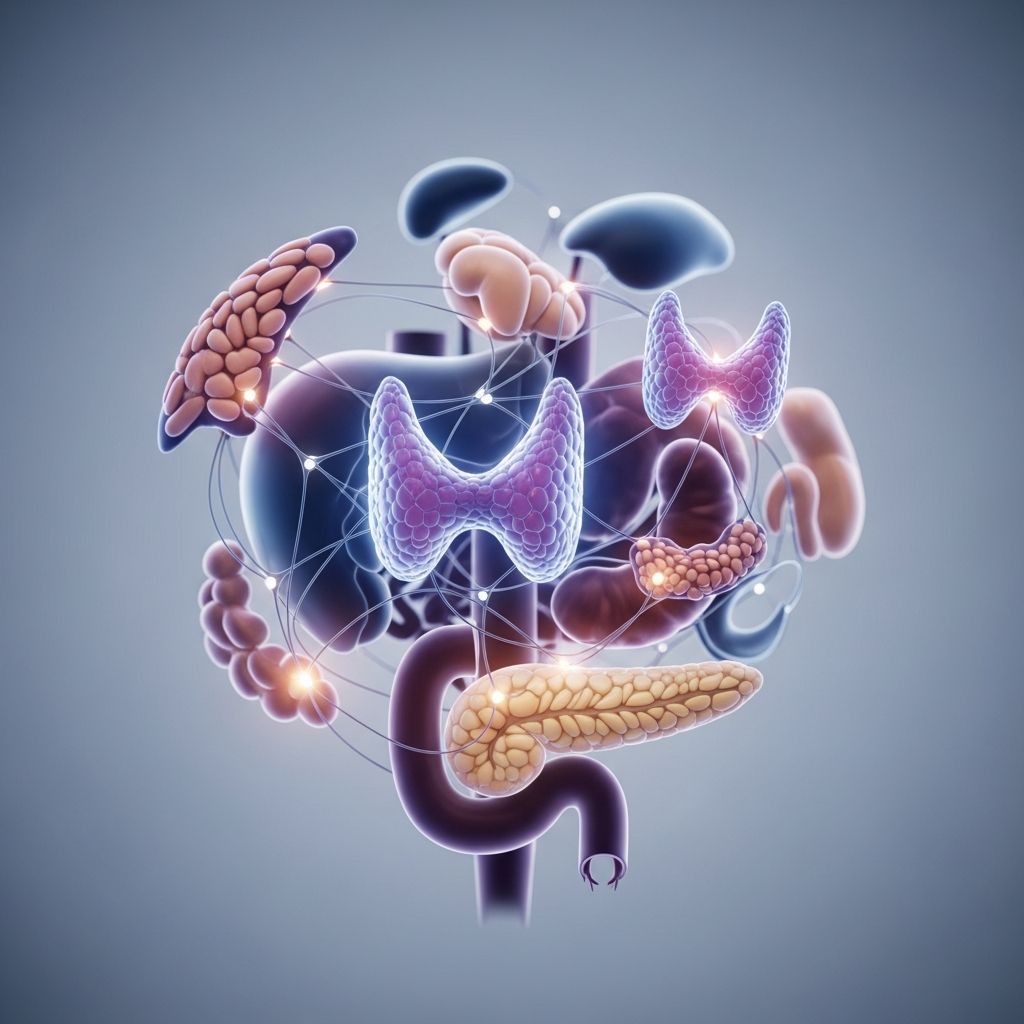
Autoimmune polyglandular syndrome type 2 (APS-2), also known as Schmidt syndrome, is a rare autoimmune disorder characterized by the combination of at least two of the following: primary adrenal insufficiency (Addison disease), autoimmune thyroid disease (such as Hashimoto thyroiditis or Graves disease), and type 1 diabetes mellitus. This polyendocrine condition arises from lymphocytic infiltration and autoimmune destruction of multiple endocrine glands, often presenting in adulthood with insidious symptoms that can lead to life-threatening crises if undiagnosed.
What is autoimmune polyglandular syndrome type 2?
APS-2 represents a cluster of autoimmune endocrinopathies without the mucocutaneous candidiasis or hypoparathyroidism typical of APS-1. It typically manifests after age 20, with a female predominance, and follows a polygenic inheritance pattern influenced by HLA associations like DR3 and DR4. The core triad—Addison disease (50-70% of cases), autoimmune thyroid disease (69-88%), and type 1 diabetes (52%)—defines the syndrome, but patients often develop additional manifestations over time, making long-term screening essential.
Unlike APS-1, which is monogenic (AIRE gene mutation), APS-2 involves complex genetic and environmental triggers, with subclinical autoimmunity preceding overt disease by years. Antibodies such as 21-hydroxylase (anti-21OH), anti-thyroid peroxidase (anti-TPO), and islet cell antibodies (anti-GAD, IA-2) serve as early markers.
Who gets autoimmune polyglandular syndrome type 2?
APS-2 affects adults predominantly, with onset after age 20 in over 84% of cases, peaking in middle age (30-50 years). Females comprise 60-70% of patients, linked to hormonal and genetic factors. Familial clustering occurs in 20-30% of cases, warranting screening of first-degree relatives for organ-specific antibodies every 1-2 years.
Prevalence is estimated at 1:100,000 in the general population but rises to 10-15% among patients with isolated Addison disease or autoimmune thyroiditis. Certain ethnic groups, such as those of European descent, show higher HLA-linked risks.
Clinical features
Core components
- Primary adrenal insufficiency (Addison disease): Occurs in 50-70% of APS-2 cases, causing cortisol and aldosterone deficiency. Symptoms include fatigue, weight loss, nausea, vomiting, abdominal pain, salt craving, orthostatic hypotension, and hyperpigmentation of skin/mucosa due to elevated ACTH.
- Autoimmune thyroid disease: Present in 69-88%, manifesting as Hashimoto thyroiditis (hypothyroidism: fatigue, cold intolerance, weight gain, bradycardia, dry skin) or Graves disease (hyperthyroidism: weight loss, tachycardia, goiter, exophthalmos).
- Type 1 diabetes mellitus: Affects 52%, with polyuria, polydipsia, weight loss, and hyperglycemia from pancreatic beta-cell destruction.
Associated conditions
Up to 20% develop minor autoimmune diseases, including:
- Vitiligo (10-20%)
- Alopecia areata (5-10%)
- Pernicious anemia (10%)
- Celiac disease (5-10%)
- Primary hypogonadism (5%)
- Myasthenia gravis (<5%)
- Others: idiopathic thrombocytopenia, dermatitis herpetiformis, stiff-person syndrome.
| Component | Prevalence in APS-2 | Key Antibodies |
|---|---|---|
| Addison disease | 50-70% | Anti-21OH |
| Thyroid autoimmunity | 69-88% | Anti-TPO, anti-Tg |
| Type 1 DM | 52% | Anti-GAD, IA-2 |
| Vitiligo | 10-20% | – |
Diagnosis
APS-2 is diagnosed clinically when two or more core components coexist, confirmed by serology, hormone levels, and stimulation tests. History reveals insidious onset with latent phases between endocrinopathies; physical exam shows hyperpigmentation, goiter, or orthostasis.
- Lab tests: Morning cortisol <3 mcg/dL, ACTH >100 pg/mL, low aldosterone, high renin; TSH/free T4 for thyroid; HbA1c/glucose for DM; autoantibodies (anti-21OH >90% sensitive for Addison).
- Dynamic tests: ACTH stimulation (cortisol rise <18 mcg/dL confirms insufficiency); cosyntropin test.
- Screening: Annual antibody checks in at-risk patients/family; endoscopy/biopsy for celiac suspicion.
Related Stories



Differential includes adrenal crisis, hypothyroidism, celiac disease, hemochromatosis, and septic shock.
Management
Treatment is symptomatic hormone replacement, with multidisciplinary follow-up every 6 months to prevent crises (adrenal, DKA, myxedema).
- Addison: Hydrocortisone 15-25 mg/day (divided), fludrocortisone 0.05-0.2 mg/day; stress dosing.
- Hypothyroidism: Levothyroxine 1.6 mcg/kg/day, titrated by TSH.
- DM: Insulin therapy, glucose monitoring, diet/exercise.
- Associated: Gluten-free diet (celiac), vitamin B12 (pernicious anemia), immunosuppressants rarely due to risks.
Patient education on medical alert bracelets, sick-day rules, and family screening is crucial.
Prognosis and screening
With early diagnosis and replacement, prognosis is good, though lifelong therapy and monitoring for new autoimmunity are required. Mortality risk from undiagnosed crises is high; screened families reduce delays. Antibody-positive relatives need annual endocrine evaluation.
Frequently asked questions (FAQs)
Q: What causes APS-2?
A: Genetic predisposition (HLA-DR3/DR4) plus environmental triggers lead to autoimmune destruction of endocrine glands.
Q: Is APS-2 hereditary?
A: Polygenic with familial risk; screen relatives for antibodies.
Q: Can APS-2 be cured?
A: No, but hormone replacement controls symptoms effectively.
Q: What is the difference between APS-1 and APS-2?
A: APS-1 (childhood, candidiasis, hypoparathyroidism, monogenic); APS-2 (adult, no candidiasis, polygenic).
Q: How is Addison disease screened in APS-2?
A: Anti-21OH antibodies; cosyntropin test if positive.
References
- Polyglandular Autoimmune Syndrome Type II — Neema et al., StatPearls. 2023-07-17. https://www.ncbi.nlm.nih.gov/books/NBK525992/
- Schmidt Syndrome and Autoimmune Polyendocrine Syndrome Type 2 — Johns Hopkins Guide. 2024-01-01. https://www.hopkinsguides.com/hopkins/view/Johns_Hopkins_Diabetes_Guide/547131/all/Schmidt_Syndrome_and_Autoimmune_Polyendocrine_Syndrome_Type_2
- Autoimmune polyglandular syndrome Type 2: the tip of an iceberg? — Betterle et al., PMC. 2002-04-01. https://pmc.ncbi.nlm.nih.gov/articles/PMC1809126/
- Autoimmune Polyglandular Syndrome Type II: Epidemiological… — JOFEM. 2023-01-01. https://jofem.org/index.php/jofem/article/view/227
- Polyglandular Deficiency Syndromes — Merck Manuals (Professional). 2024-06-01. https://www.merckmanuals.com/professional/endocrine-and-metabolic-disorders/polyglandular-deficiency-syndromes/polyglandular-deficiency-syndromes
Similar Articles








Read full bio of Sneha Tete