Autoimmune Progesterone Dermatitis: 4 Treatment Options
Rare cyclical skin hypersensitivity to progesterone: symptoms, diagnosis, and management strategies explored in depth.
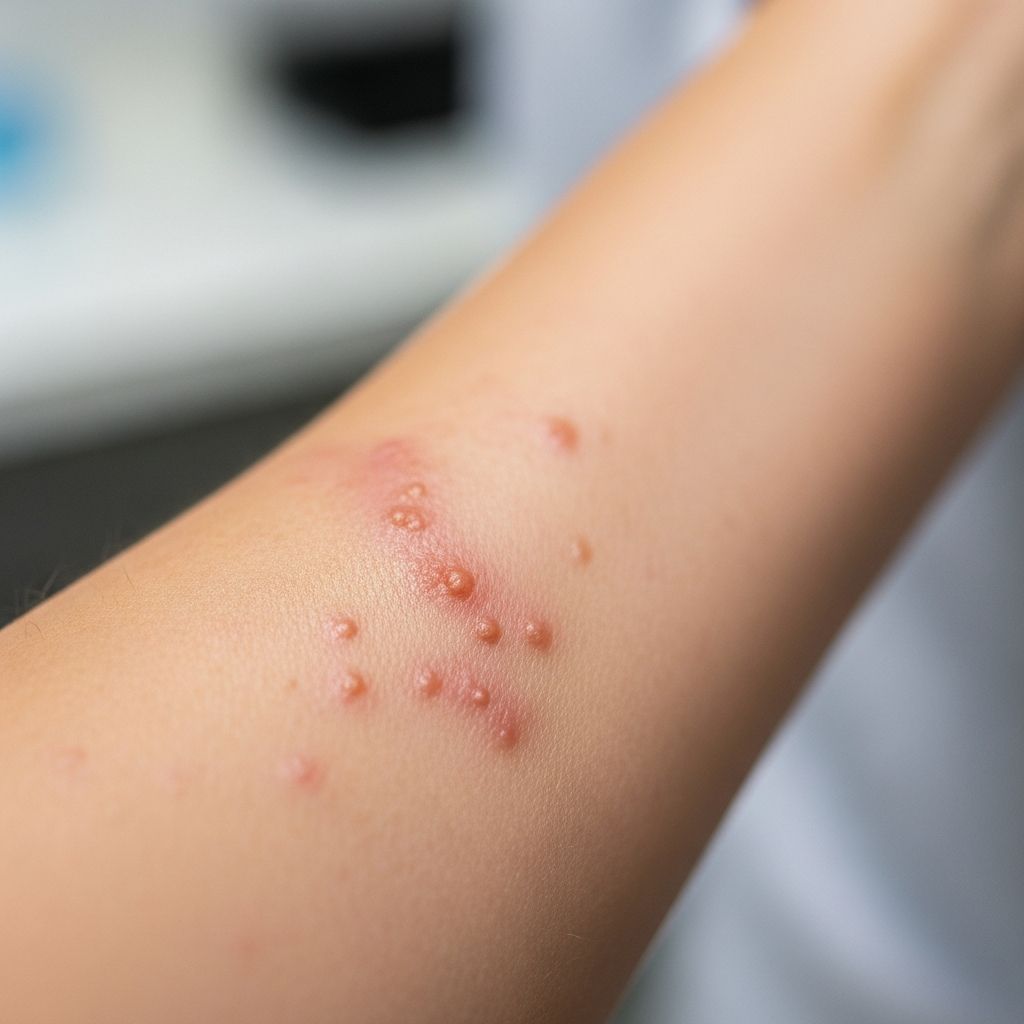
Autoimmune progesterone dermatitis (APD) is a rare condition characterised by recurrent skin eruptions triggered by endogenous progesterone during the luteal phase of the menstrual cycle. Symptoms typically emerge 3–10 days prior to menses when progesterone levels peak, resolving shortly after menstruation begins. This hypersensitivity reaction may mimic various dermatoses but is distinguished by its strict cyclical timing.
What is autoimmune progesterone dermatitis?
**Autoimmune progesterone dermatitis** refers to a hypersensitivity reaction to one’s own progesterone, manifesting as cyclical dermatological symptoms aligned with the menstrual cycle’s luteal phase. First described in 1964, APD affects women of reproductive age and can significantly impair quality of life due to predictable premenstrual flares. The term “autoimmune” reflects the immune-mediated response to an endogenous hormone, though mechanisms blend allergic and autoimmune features, often involving mast cell degranulation and histamine release.
Unlike typical dermatitis, APD’s hallmark is its temporality: rashes appear reliably 3–4 days before menstruation (or up to 10 days in some cases), correlating precisely with progesterone surges post-ovulation. Progesterone levels rise 10–35 times higher in the luteal phase, potentially overwhelming sensitised immune systems. Pregnancy or exogenous progestins (e.g., contraceptives) can exacerbate or trigger symptoms by elevating progesterone thousands-fold.
Who gets autoimmune progesterone dermatitis?
APD predominantly affects women aged 20–45 in their reproductive years, with fewer than 100 cases documented worldwide, underscoring its rarity. No strong ethnic or genetic predispositions are established, though prior exposure to synthetic progestogens (e.g., oral contraceptives, progesterone-only pills, or fertility treatments) is reported in up to 70% of cases. Endogenous-onset APD occurs without such history, suggesting spontaneous sensitisation.
Risk factors include:
- Prior use of progesterone-containing contraceptives or hormone therapies
- Conditions elevating progesterone, such as pregnancy or in vitro fertilisation (IVF)
- Possible cross-reactivity with hydrocortisone or 17-α-hydroxyprogesterone
- Underlying mast cell disorders or histamine intolerance
APD may impact fertility due to flares during conception attempts or early pregnancy.
Causes of autoimmune progesterone dermatitis
The precise aetiology remains elusive, but hypersensitivity to progesterone—endogenous or synthetic—is central. Hypotheses include:
- Exogenous sensitisation: Synthetic progestins in oral contraceptives (OCPs) or injectables may act as haptens, prompting IgE-mediated responses via antigen-presenting cells and TH2 lymphocytes.
- Endogenous autoimmunity: Spontaneous antibody or T-cell recognition of native progesterone, possibly triggered by molecular mimicry or hormonal fluctuations.
- Mast cell mediation: Progesterone directly degranulates mast cells, releasing histamine and causing urticaria, angioedema, and pruritus independent of IgE.
- Cross-reactivity: Structural similarity between progesterone and corticosteroids like hydrocortisone.
Not all progesterone-exposed women develop APD, implying individual immune susceptibility.
Clinical features of autoimmune progesterone dermatitis
APD presents with polymorphic rashes 3–10 days pre-menses, resolving post-menses, recurring cyclically. Severity varies from mild pruritus to anaphylaxis.
Skin lesions
Most common morphologies include:
- Urticaria/hives: Transient, itchy wheals on trunk/limbs (60–70% of cases)
- Eczematous eruptions: Dry, inflamed patches with lichenification
- Angioedema: Deep swelling of face, lips, or genitalia
Less common:
- Erythema multiforme (target lesions)
- Papulovesicular or pustular rashes
- Fixed drug eruptions
- Vulvovaginal candidiasis or pruritus
- Oral mucosa involvement
Systemic symptoms
- Pruritus (universal)
- Asthma-like dyspnea
- Anaphylaxis (rare)
Symptoms spare anogenital areas in some but affect them in others. Flares worsen with pregnancy or progestin exposure.
Related Stories



Diagnosis of autoimmune progesterone dermatitis
Diagnosis is clinical, relying on:
- Cyclical history: Rash onset 3–10 days pre-menses, resolution within 1–2 days post-menses
- Exclusion: Rule out cyclic exacerbations of lupus, acne, psoriasis, or premenstrual dysphoric disorder (PMDD)
Investigations:
- Skin biopsy: Non-specific (perivascular infiltrate, eosinophils)
- Intradermal progesterone challenge: Local/systemic reaction (not standardised)
- In vitro tests: Progesterone-specific IgE or basophil activation (research only)
- Hormone levels/timing: Confirm luteal phase correlation
Differential includes PMDD (mood-focused, no hives), lupus (photosensitive, multi-organ), and contact dermatitis.
Treatment of autoimmune progesterone dermatitis
Treatment escalates from symptomatic to definitive based on severity and fertility desires.
Symptomatic
- Antihistamines: Non-sedating H1-blockers (cetirizine 10–20mg daily) ± H2-blockers (ranitidine)
- Topicals: Potent steroids (clobetasol) for eczema; calcineurin inhibitors
- Short-course oral steroids: Prednisone 0.5mg/kg for flares
- Mast cell stabilisers: Cromolyn sodium
Hormonal suppression
| Approach | Mechanism | Pros/Cons |
|---|---|---|
| Combined oral contraceptive pill (COCP) | Ovarian suppression | May worsen if progestin-reactive; anovulatory benefit |
| GnRH agonists (e.g., leuprolide) | Hypo-oestrogenic state | Effective but menopausal side effects; add-back therapy |
| Danazol | Androgenic suppression | Virilisation risk |
| Tamoxifen | Oestrogen receptor modulator | Fertility-sparing |
Desensitisation
Subcutaneous progesterone injections escalating from 5–100mg over months induce tolerance in 50–70%.
Definitive
- Total abdominal hysterectomy + bilateral salpingo-oophorectomy (TAH-BSO): Curative in refractory cases post-childbearing
Lifestyle: Low-histamine diet, stress reduction.
Outcomes and fertility in autoimmune progesterone dermatitis
With treatment, 80% achieve control; untreated cases disrupt life profoundly. Pregnancy often triggers severe flares, but IVF with GnRH suppression succeeds. Post-menopause, symptoms remit.
Frequently Asked Questions
Is autoimmune progesterone dermatitis curable?
No universal cure exists, but symptoms are manageable in most; hysterectomy offers definitive relief post-childbearing.
How is APD diagnosed?
Primarily by cyclical history; confirmed via progesterone challenge tests.
Can birth control help APD?
Often worsens due to synthetic progestins; GnRH agonists preferred.
Does APD affect pregnancy?
Yes, exacerbates severely; requires specialised management.
Is APD the same as PMDD?
No—PMDD is neuropsychiatric; APD is dermatological/hypersensitivity.
References
- Autoimmune Progesterone Dermatitis: Causes & Foods to Avoid — Dr. Jolene Brighten. 2023. https://drbrighten.com/autoimmune-progesterone-dermatitis/
- Autoimmune progesterone dermatitis — Wikipedia (citing primary literature). 2024-01-15. https://en.wikipedia.org/wiki/Autoimmune_progesterone_dermatitis
- Autoimmune progesterone dermatitis and lupus — Medical News Today. 2023-05-20. https://www.medicalnewstoday.com/articles/autoimmune-progesterone-dermatitis-and-lupus
- Autoimmune Progesterone Dermatitis (APD) — DermNet NZ. 2024. https://dermnetnz.org/topics/autoimmune-progesterone-dermatitis
- Autoimmune Progesterone Dermatitis Imitating Eczematous Dermatitis — Herald Open Access. 2018-10-12. https://www.heraldopenaccess.us/openaccess/autoimmune-progesterone-dermatitis-imitating-eczematous-dermatitis
- Whole course of treatment of autoimmune progesterone dermatitis — Frontiers in Immunology. 2022-06-23. https://www.frontiersin.org/journals/immunology/articles/10.3389/fimmu.2022.939083/full
Similar Articles








Read full bio of Sneha Tete