Autonomic Denervation Dermatitis: 4 Effective Treatments
Uncommon post-surgical eczematous eruption linked to nerve damage and autonomic disruption around incision sites.
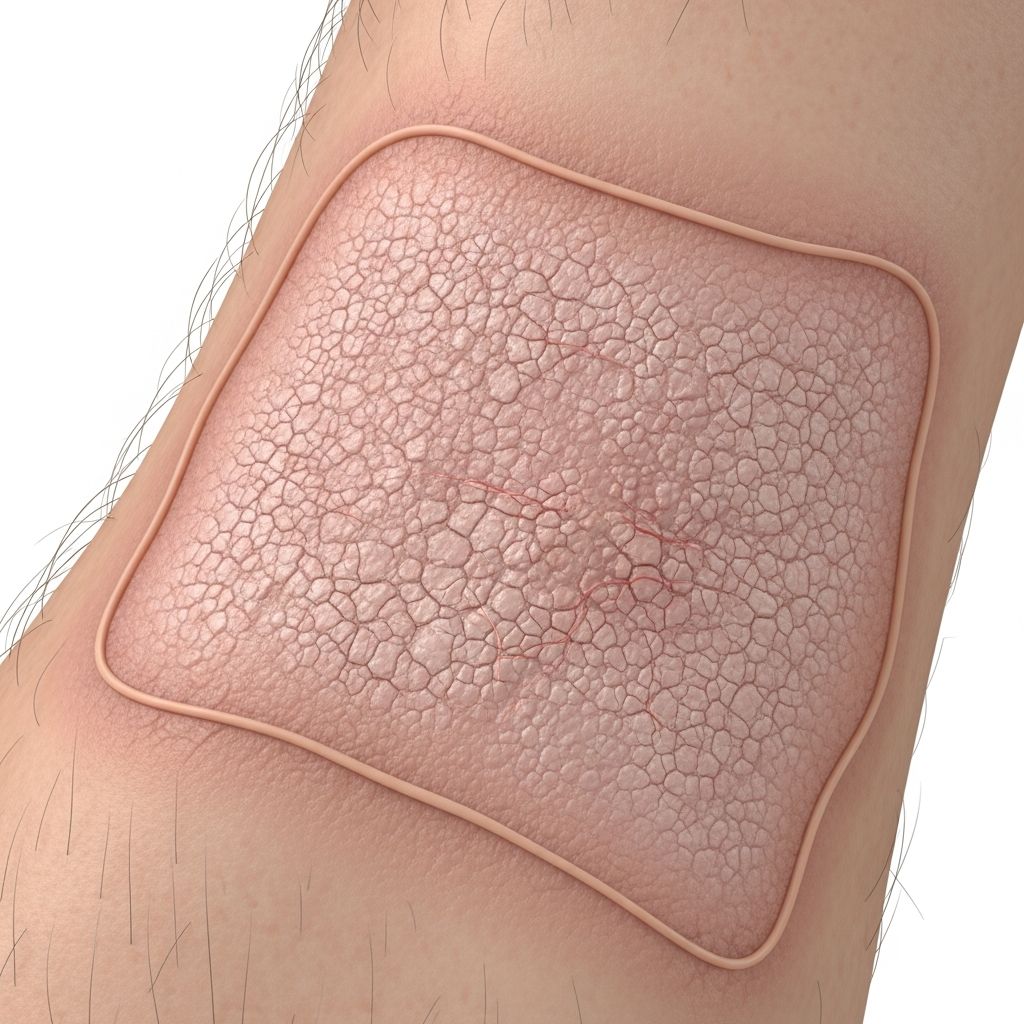
Autonomic denervation dermatitis (ADD) is an uncommon localised eczematous eruption around a surgical incision site. It is often associated with cutaneous anaesthesia or hypoesthesia, and may result from iatrogenic nerve damage and autonomic disruption from surgery.
Introduction
Autonomic denervation dermatitis, also known as ADD, represents a distinctive post-operative skin condition characterised by eczematous changes in areas of prior surgical intervention. This condition arises due to inadvertent transection of dermal nerve fibres, particularly autonomic nerves, leading to disrupted skin homeostasis. Commonly observed following procedures such as total knee replacement (TKR) or saphenous vein harvesting, ADD manifests as itchy, scaly rashes confined to the incision vicinity, often accompanied by sensory alterations.
The recognition of ADD is crucial in post-surgical care, as it can be mistaken for allergic reactions or infections, potentially leading to inappropriate management. A small prospective study of 203 consecutive TKR patients reported a 4.4% incidence, highlighting its relevance in orthopaedic and vascular surgeries. Understanding its pathogenesis involves appreciating the role of neuropeptides, altered microcirculation, and barrier dysfunction, which collectively precipitate the eczematous response.
Demographics
ADD predominantly affects adults undergoing major lower limb surgeries, with no strong gender predilection reported in available literature. Patients typically range from middle-aged to elderly, aligning with the demographics of procedures like TKR, which is common in individuals over 60 years with osteoarthritis.
In cases of bilateral TKRs, presentations are often unilateral, though bilateral occurrences have been documented. Darker skin types may show less apparent erythema, altering clinical presentation, but no specific racial or ethnic disparities are noted. Case reports describe occurrences in diverse populations, including those post-coronary artery bypass grafting (CABG) with saphenous vein harvest.
Causes
The primary cause of ADD is iatrogenic injury to subcutaneous nerves during surgery, leading to denervation of skin autonomic functions. The infrapatellar branch of the saphenous nerve (IPSN) is particularly vulnerable in TKR via anterior midline incisions, supplying the anterolateral knee below the patella.
Proposed mechanisms include:
- Disruption of autonomic constituents, altering microcirculation and prompting aberrant keratinocyte proliferation.
- Release of neuropeptides like substance P and neurotensin, triggering inflammatory cascades and hypersensitivity.
- Increased transepidermal water loss (TEWL), xerosis, and defective inter-corneocyte lipids due to impaired ceramide release, compromising the skin barrier.
- Impairment of sudomotor and vasomotor responses from dermal nerve transections.
Other surgeries implicated include saphenous vein graft harvesting for CABG, femur fracture reduction, and even foot surgeries, indicating broader procedural risks beyond TKR.
Clinical Features
Onset of ADD varies from 3 weeks to 3 years post-surgery, with lesions developing as dry, scaly, erythematous papules or plaques around the incision. Common features encompass:
- Localised eczematous eruption, ranging from simple rash to extensive eruptions or excoriated papules/macules.
- Pruritus (itching), which may be intense, leading to excoriation.
- Cutaneous sensory loss (numbness or hypoesthesia) in the nerve distribution, e.g., IPSN area lateral to midline incision.
- Oozing, scaling, hyperpigmentation, or lichenification in chronic cases.
Lesions are typically unilateral post-bilateral surgery and location-specific, aiding differentiation from generalised dermatitis. In lower extremities, compromised blood supply may exacerbate manifestations compared to chest sites post-CABG.
Related Stories



Variation in Skin Types
Limited data exists on skin type variations, but erythema is less prominent in darker phototypes, potentially masking early inflammation. Hyperpigmentation and scaling may dominate, mimicking other chronic eczemas. No reports indicate differing severity or incidence across Fitzpatrick skin types, though clinical photos often feature lighter skin.
Complications
While mostly self-limiting, ADD can lead to:
- Chronic relapsing course with winter exacerbations due to dry air.
- Secondary bacterial infection from excoriation.
- Significant discomfort impacting quality of life.
- Scarring or post-inflammatory pigmentary changes in prolonged cases.
Patient anxiety from alarming lesions and numbness underscores the need for education.
Diagnosis
Diagnosis is clinical, based on history of recent surgery, location-specific eczematous lesions with sensory deficit, and exclusion of alternatives. Key diagnostic clues:
- Post-operative timeline and incision proximity.
- Neurological exam confirming hypoesthesia in affected nerve territory.
- Histopathology showing chronic spongiotic dermatitis, non-specific but supportive.
No imaging or labs are routinely required unless infection suspected (e.g., Doppler for varicosities).
Differential Diagnoses
| Condition | Key Distinguishing Features |
|---|---|
| Contact dermatitis | Diffuse, history of allergen exposure, no numbness. |
| Infectious cellulitis | Fever, warmth, pus; responds to antibiotics. |
| Xerotic eczema | Generalised dryness, no sensory loss or incision link. |
| Psoriasis | Well-defined plaques, nail changes, family history. |
| Atopic dermatitis | Flexural, personal/family atopy history. |
ADD’s focal nature and paraesthesia differentiate it effectively.
Treatment
Management is conservative and topical:
- Emollients: Liberal application of occlusive moisturisers (e.g., white soft paraffin) to restore barrier.
- Topical corticosteroids: Moderate-potency like mometasone 0.1%, fluticasone 0.05%, or halobetasol 0.05% twice daily for 2-3 weeks; avoid prolonged high-potency use.
- Antibiotics: If secondarily infected, e.g., fusidic acid 2% combined.
- Antihistamines: Oral for pruritus control.
Resolution typically occurs within weeks; monitor for relapse.
Prevention
Strategies focus on surgical technique:
- Meticulous dissection to spare sensory nerves like IPSN.
- Minimally invasive approaches or nerve mapping.
- Post-op: Early emollient use, patient education on signs.
Though challenging, awareness reduces incidence.
Outcome
Most cases resolve gradually with treatment; sensory loss improves via reinnervation from adjacent nerves. Relapses, especially winter, occur in some, necessitating ongoing emollients. Rarely chronic, but informed patients fare better. Further research on pathogenesis promised.
Frequently Asked Questions (FAQs)
Q: What is autonomic denervation dermatitis?
A: ADD is a rare post-surgical eczema around incisions due to nerve damage, causing rash and numbness.
Q: How common is ADD after TKR?
A: About 4.4% in prospective studies of TKR patients.
Q: Does ADD resolve on its own?
A: Often self-limiting with treatment; numbness resolves with reinnervation.
Q: Can ADD affect other surgeries?
A: Yes, including saphenous vein harvest and fracture repairs.
Q: Is surgery needed for ADD?
A: No, topical treatments suffice; prevention during initial surgery is key.
References
- Autonomic Denervation Dermatitis: A Relatively Undocumented … — PMC/NCBI. 2021-10-28. https://pmc.ncbi.nlm.nih.gov/articles/PMC8586114/
- Autonomic Denervation Dermatitis – DermNet — DermNet NZ. 2023. https://dermnetnz.org/topics/autonomic-denervation-dermatitis
- Autonomic denervation dermatitis – A post-operative enigma — JCAS Online. 2023. https://jcasonline.com/autonomic-denervation-dermatitis-a-post-operative-enigma/
- Autonomic Denervation Dermatitis: A Tale of Two Cases — PMC/NCBI. 2024. https://pmc.ncbi.nlm.nih.gov/articles/PMC12413149/
- Autonomic Denervation Dermatitis — Cosmoderma. 2023. https://cosmoderma.org/autonomic-denervation-dermatitis/
- Autonomic denervation dermatitis — IJDVL. 2023. https://ijdvl.com/autonomic-denervation-dermatitis/
Similar Articles








Read full bio of Sneha Tete