Autonomic Nervous System: Function, Structure & Disorders
Understanding your body's automatic control system: How your ANS regulates vital functions.
Autonomic Nervous System: What It Is, Function & Disorders
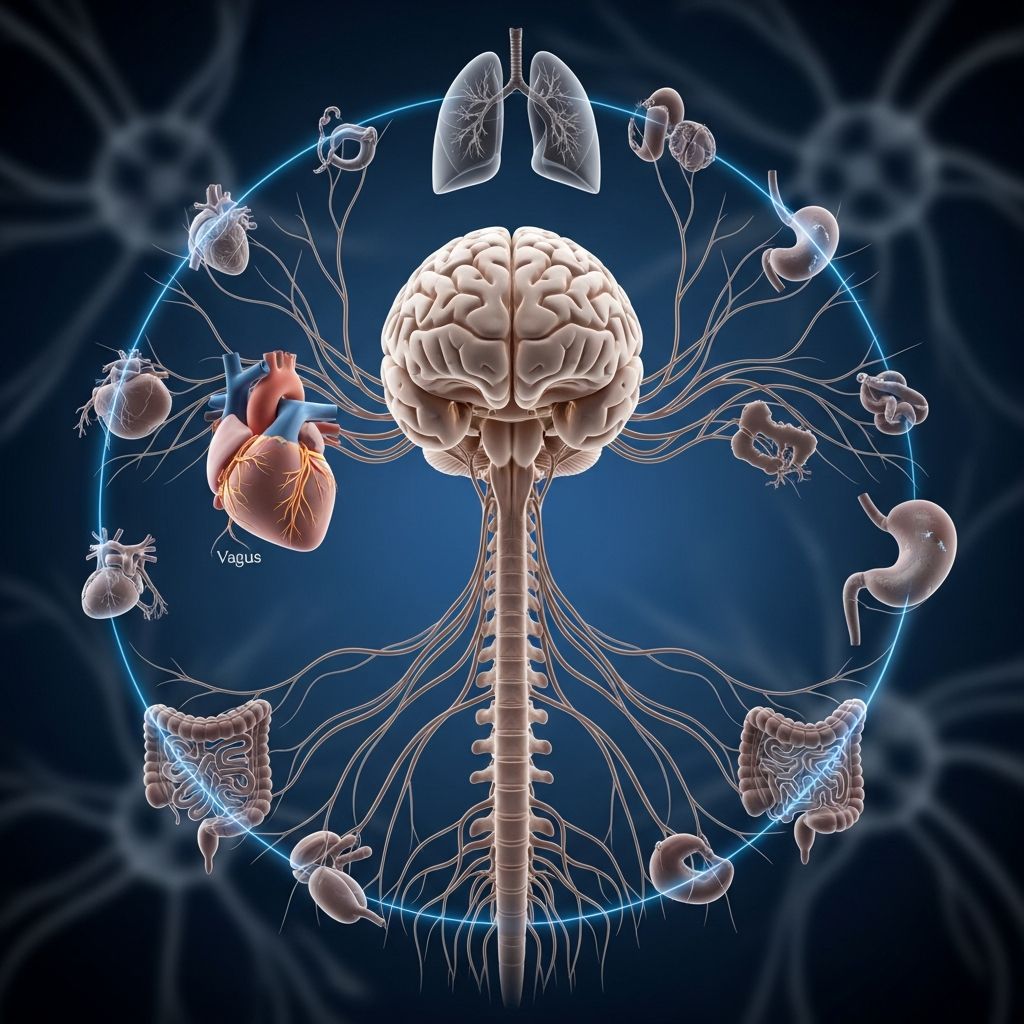
Your autonomic nervous system is a network of nerves throughout your body that control unconscious processes. These are things that happen without you thinking about them, such as breathing and your heart beating. Your autonomic nervous system is always active, even when you’re asleep, and it’s key to your continued survival. It manages the automatic functions of your body that you need to survive—processes you don’t think about and that your brain manages while you’re awake or asleep.
Understanding Your Nervous System Structure
Your overall nervous system includes two main subsystems that work together to keep you functioning properly. Your peripheral nervous system also has two subsystems that handle different types of signals and functions. To understand how your autonomic nervous system fits into the bigger picture, it’s important to recognize that your brain and spinal cord are constantly communicating with the rest of your body through a complex network of nerves.
Much like a home needs electrical wiring to control lights and everything inside that needs power, your brain needs the autonomic nervous system’s network of nerves. These nerves are the physical connections your brain needs to control almost all of your major internal organs. Without this intricate communication system, your body couldn’t regulate vital functions automatically.
The Three Divisions of the Autonomic Nervous System
Your autonomic nervous system breaks down into three divisions, each with its own specific job:
Sympathetic Nervous System (SNS)
Your sympathetic nervous system is a network of nerves that helps your body activate its “fight-or-flight” response. This system’s activity increases when you’re stressed, in danger or physically active. Its effects include increasing your heart rate and breathing ability, improving your eyesight and slowing down processes like digestion. When you encounter a stressful situation, your SNS kicks in to prepare your body for action by redirecting resources to muscles and the brain.
Parasympathetic Nervous System (PSNS)
Your parasympathetic nervous system is a network of nerves that relaxes your body after periods of stress or danger. This system promotes the “rest-and-digest” response, helping your body return to a calm state. Your parasympathetic nervous system uses four of your 12 cranial nerves. These are nerves that connect directly to your brain. Three of those four only involve your senses and glands connected to your eyes, nose and mouth.
The fourth, your vagus nerve, connects to part of your mouth and also extends down through your neck to your chest and abdomen (belly). Your vagus nerve makes up about 75% of your parasympathetic nervous system overall, connecting to your heart, lungs and other vital internal organs. This single nerve is remarkably important for regulating many critical body functions.
Enteric Nervous System
The third division manages the functions of your gastrointestinal system, working somewhat independently but still coordinating with the other divisions to regulate digestion and gut health.
How Your Autonomic Nervous System Works
Your autonomic nervous system includes a network of nerves that extend throughout your head and body. Some of those nerves extend directly out from your brain, while others extend out from your spinal cord, which relays signals from your brain into those nerves. This dual pathway ensures redundancy and efficient communication throughout your body.
Related Stories



Cranial Nerves
There are 12 cranial nerves, which use Roman numerals to set them apart, and your autonomic nervous system has nerve fibers in four of them. These include the third, seventh, ninth and 10th cranial nerves. They manage pupil dilation, eye focusing, tears, nasal mucus, saliva and organs in your chest and belly. These nerves handle many functions related to your senses and facial expressions.
Spinal Nerves
Your autonomic nervous system also uses most of the 31 spinal nerves. These include spinal nerves in your thoracic (chest and upper back), lumbar (lower back) and sacral (tailbone). The spinal nerve connections are how your autonomic system controls your blood vessels, sweat glands, digestive organs, bladder and sexual organs.
The Brain’s Role in Autonomic Function
The part of your brain that runs autonomic functions is your hypothalamus. This structure isn’t part of your autonomic nervous system, but is a key part of how it works. The hypothalamus acts as the command center, receiving information about your body’s state and sending out signals through the autonomic nervous system to maintain homeostasis.
Effects on Your Body’s Systems
Your autonomic nervous system has the following effects on your body’s systems:
| Body System | Autonomic Functions |
|---|---|
| Cardiovascular | Heart rate and blood pressure regulation |
| Respiratory | Breathing rate and depth |
| Digestive | Stomach acid production and intestinal movement |
| Urinary | Bladder control and urine production |
| Reproductive | Sexual function and response |
| Endocrine | Hormone secretion and regulation |
| Thermoregulation | Body temperature control and sweating |
Common Autonomic Nervous System Disorders
There are many conditions and causes of autonomic neuropathy, which means damage or disease that affects your autonomic nervous system. Common examples include Type 2 diabetes, autoimmune conditions, and spinal cord injuries. Understanding these disorders is crucial for early diagnosis and treatment.
Dysautonomia
Dysautonomia is a nervous system disorder that disrupts autonomic body processes. These are automatic functions like your blood pressure and heart rate. If you have dysautonomia, one or more of these ANS processes aren’t working as they should. As your ANS does so many things for you, dysautonomia can cause a lot of different symptoms. These include, but aren’t limited to, chest pain, mood swings, fainting, fatigue and dizziness.
Autonomic Dysreflexia (AD)
Autonomic dysreflexia (AD) is a dangerous syndrome involving an overreaction of your autonomic nervous system. It causes a sudden and severe rise in blood pressure, in addition to other symptoms. People who’ve had a spinal cord injury are most at risk. AD requires immediate treatment.
The main sign of AD is sudden and severe high blood pressure (hypertension), and the main symptom is headache. During autonomic dysreflexia, your body senses an unpleasant or noxious stimulus somewhere below your damaged spinal cord that provokes a sympathetic nervous system reflex. In other words, your SNS thinks you’re in danger and responds accordingly. This results in widespread vasoconstriction (constricting blood vessels) in the lower part of your body (legs and abdomen), which results in increased blood pressure.
The most common cause of autonomic dysreflexia (AD) is a spinal cord injury. Typically, a noxious visceral stimulation below the level of the spinal cord injury triggers a massive sympathetic reflex causing widespread narrowing of blood vessels (vasoconstriction). A noxious stimulus is anything that’s actually, or potentially, damaging tissue and is likely to cause pain, but may not actually cause pain. This could be anything ranging from an itch that can’t be scratched to an overly full bladder.
Pure Autonomic Failure (PAF)
Pure autonomic failure (PAF) is a rare condition that causes sudden low blood pressure upon standing, as well as other autonomic nervous system issues. Your autonomic nervous system controls the automatic (out of your control) functions of your body that you need to survive. This includes things like blood pressure, heart rate, digestion and breathing. With PAF, you might first notice that you feel dizzy when you get up from a chair. You may notice other symptoms over time, like loss of bladder control or blurry vision.
The affected nerve cells are in clusters (called autonomic ganglia) on either side of your spinal cord or near organs. Over time, the number of these nerve cells decreases, causing autonomic malfunctions. PAF doesn’t affect any other nerves, and your brain and spinal cord don’t experience damage.
Autoimmune Autonomic Ganglionopathy (AAG)
Autoimmune autonomic ganglionopathy (AAG) is a rare type of autonomic neuropathy. In AAG, your immune system attacks your autonomic nervous system. This system controls involuntary body functions, like your heart rate, blood pressure or digestion. If you have AAG, you might faint or feel dizzy when you stand up.
AAG is extremely rare. In the United States, doctors diagnose about 100 people with AAG each year. In AAG, your immune system damages a specific receptor in your autonomic ganglia. The autonomic ganglia are clusters of nerve cells throughout your autonomic nervous system. These nerve cell clusters send and receive signals that control your reflexes and other involuntary body functions. AAG is unique because it is both an autoimmune condition and a type of autonomic neuropathy.
Symptoms of Autonomic Nervous System Damage
The symptoms of autonomic nervous system conditions depend on the location of the damage. With conditions like Type 2 diabetes, the damage can happen in many places throughout your body. The most likely symptoms of autonomic nervous system damage include:
- Dizziness or lightheadedness, especially when standing up
- Abnormal heart rate patterns
- Difficulty with temperature regulation and abnormal sweating
- Digestive problems including constipation or diarrhea
- Bladder control issues
- Vision problems or difficulty focusing
- Sexual dysfunction
- Excessive fatigue
- Exercise intolerance
- Mood changes and anxiety
The Polyvagal Theory and Adaptive Responses
The polyvagal theory describes an autonomic nervous system that is influenced by the central nervous system, sensitive to afferent influences. It is characterized by an adaptive reactivity dependent on the phylogeny of the neural circuits, and interactive with source nuclei in the brainstem regulating the striated muscles of the face and head. This theory provides insights into how our autonomic nervous system has evolved to respond adaptively to environmental challenges and stress.
Frequently Asked Questions
Q: Can you control your autonomic nervous system?
A: While most autonomic functions are automatic, some can be influenced through techniques like deep breathing, meditation, biofeedback, and physical exercise. However, the primary functions remain largely involuntary.
Q: What causes autonomic nervous system disorders?
A: Common causes include diabetes, autoimmune diseases, spinal cord injuries, Parkinson’s disease, and certain medications. Some disorders are genetic, while others develop over time.
Q: How are autonomic nervous system disorders diagnosed?
A: Diagnosis typically involves blood pressure monitoring, heart rate variability testing, sweat tests, and sometimes autonomic reflex screening to assess how well your ANS is functioning.
Q: Can autonomic nervous system disorders be cured?
A: While some autonomic disorders can be managed effectively, many are chronic conditions. Treatment focuses on managing symptoms and preventing complications rather than achieving a complete cure.
Q: What lifestyle changes help support autonomic nervous system health?
A: Regular exercise, stress management, adequate sleep, proper hydration, limiting alcohol and caffeine, and maintaining stable blood sugar levels can all support autonomic nervous system function.
References
- New Insights into Adaptive Reactions of the Autonomic Nervous System — Cleveland Clinic Journal of Medicine. 2010-04-01. https://www.ccjm.org/content/76/4_suppl_2/S86
- Autonomic Dysreflexia (AD): What It Is, Symptoms & Treatment — Cleveland Clinic. 2024-11-15. https://my.clevelandclinic.org/health/diseases/24378-autonomic-dysreflexia-ad
- Pure Autonomic Failure: Causes, Symptoms & Treatment — Cleveland Clinic. 2024-09-20. https://my.clevelandclinic.org/health/diseases/pure-autonomic-failure
- Autonomic Nervous System: What It Is, Function & Disorders — Cleveland Clinic. 2024-10-08. https://my.clevelandclinic.org/health/body/23273-autonomic-nervous-system
- Autoimmune Autonomic Ganglionopathy: Causes & Treatment — Cleveland Clinic. 2024-08-30. https://my.clevelandclinic.org/health/diseases/22781-autoimmune-autonomic-ganglionopathy
- Dysautonomia: What It Is, Symptoms, Types & Treatment — Cleveland Clinic. 2024-07-15. https://my.clevelandclinic.org/health/diseases/6004-dysautonomia
- Sympathetic Nervous System (SNS): What It Is & Function — Cleveland Clinic. 2024-06-20. https://my.clevelandclinic.org/health/body/23262-sympathetic-nervous-system-sns-fight-or-flight
Similar Articles








Read full bio of medha deb