Autophagy: Definition, Process, Fasting & Signs
Understanding your body's cellular recycling system and its role in health and disease prevention.
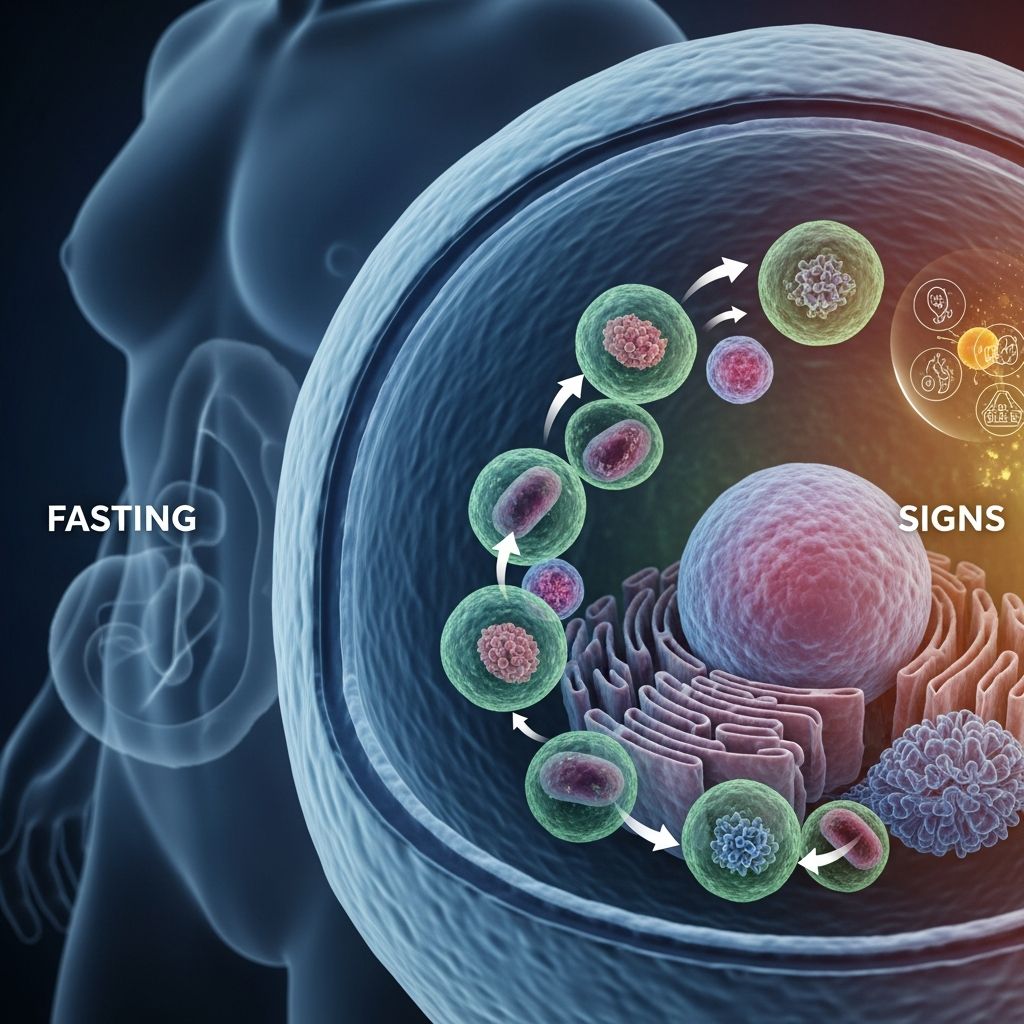
Understanding Autophagy: Your Body’s Cellular Recycling System
Autophagy is your body’s natural cellular recycling system—a sophisticated process that allows cells to disassemble their damaged or worn-out components and repurpose the salvageable materials. The term “autophagy” literally means “self-eating,” and it represents one of the most fundamental mechanisms your cells use to maintain optimal function and survive under stress. Rather than being a destructive process, autophagy is actually a highly organized quality control mechanism that keeps your cells clean, efficient, and healthy.
Think of autophagy as your cells’ way of taking out the garbage. Over time, cells accumulate damaged proteins, dysfunctional organelles, and other cellular debris that can interfere with normal cellular operations. When these “junk” components accumulate, they take up valuable space and can slow down or even prevent a cell from functioning correctly. Autophagy steps in to remove this clutter, essentially cleaning house so that your cells can operate at peak efficiency.
How Autophagy Works: The Cellular Mechanism
Autophagy is a highly conserved biological process, meaning it has remained remarkably similar across different species throughout evolution. This consistency underscores its critical importance to cellular survival and function. The process involves several specialized proteins and structures working in concert to break down and recycle cellular components.
The Key Players in Autophagy
At the molecular level, autophagy-related proteins (ATGs) orchestrate the entire recycling process. These specialized proteins are responsible for initiating and driving the autophagy cascade. ATGs cause structures called autophagosomes to form—these are essentially membranes that wrap around damaged or unnecessary cellular components, encapsulating them for processing.
Once an autophagosome forms and surrounds its cargo, it travels through the cell to meet up with a lysosome. The lysosome is a specialized cellular compartment filled with digestive enzymes. Think of the lysosome as your cell’s recycling facility—it breaks down the contents of the autophagosome into their basic molecular components, which can then be reused by the cell for energy production or the synthesis of new cellular structures.
Types of Autophagy
Scientists have identified three primary types of autophagy in mammalian cells, each with distinct characteristics:
Macroautophagy is the most well-studied form and occurs constitutively at low levels in healthy cells. During macroautophagy, large portions of cytoplasm and intact organelles are engulfed by double-membraned structures called autophagosomes. This type can be significantly induced under stress conditions such as nutrient starvation or energy depletion, allowing cells to generate metabolites for energy production and biosynthesis.
Microautophagy involves direct invaginations or protrusions of the lysosomal membrane to capture and engulf cargo material. The uptake occurs directly at the lysosomal membrane, and this process can target intact organelles for degradation.
Chaperone-Mediated Autophagy (CMA) is unique to mammalian cells and operates with high selectivity. Unlike the other forms, CMA doesn’t use membrane structures to sequester cargo. Instead, it uses specialized chaperone proteins to identify and recognize cargo proteins containing specific targeting motifs. These identified proteins are then unfolded and transported individually across the lysosomal membrane for degradation.
What Triggers Autophagy?
Autophagy is not a constant process running at full capacity in your cells. Rather, it occurs at a baseline level during normal conditions, but becomes significantly upregulated when your cells encounter stress. Understanding the triggers of autophagy is essential to comprehend how this process protects your health.
Related Stories



Natural Triggers for Autophagy
Your cells initiate autophagy when they face several types of challenges:
Nutrient Deprivation is one of the most powerful triggers. When your cells are starved of nutrients or lack sufficient glucose, they activate autophagy as a survival mechanism. This stress signal tells your cells to break down internal components to generate energy and essential molecules needed for survival.
Oxygen Deprivation (Hypoxia) similarly activates the autophagy response. When cells don’t receive adequate oxygen, they cannot produce energy efficiently through normal aerobic respiration, so autophagy kicks in to provide alternative energy sources.
Physical Damage to cells or their components triggers autophagy. If organelles become damaged or proteins misfold, autophagy recognizes these problems and removes the damaged material before it can cause further harm.
Growth Factor Absence signals cells to activate autophagy. Even when adequate nutrients are present, the absence of growth factors can induce this recycling process.
Endoplasmic Reticulum (ER) Stress activates autophagy through two mechanisms: increased cytosolic calcium concentrations can activate AMPK through calcium/calmodulin-dependent protein kinase kinase 2, and unfolded protein responses (UPR) signaling can also induce macroautophagy.
Autophagy and the Aging Process
One of the most fascinating aspects of autophagy research involves its relationship to aging and cellular longevity. As people age, the efficiency and frequency of autophagy naturally decrease. This decline has significant consequences for overall health and cellular function.
When autophagy decreases with age, cellular debris and damaged components accumulate within cells. This buildup of what scientists call “cellular junk” leads to cells that don’t function optimally. Over time, this accumulation of dysfunctional cellular material may contribute to many age-related diseases and the general decline in physical function that accompanies aging.
This connection between autophagy and aging has sparked considerable research interest in whether enhancing autophagy could slow aging or improve healthspan—the number of years a person lives in good health. While promising in animal studies, the translation of these findings to practical human applications remains an active area of investigation.
Autophagy and Disease Prevention
Beyond its role in normal cellular maintenance, autophagy plays an important role in protecting against disease. Researchers have discovered that problems with autophagy are associated with numerous human pathologies, including:
– Neurodegenerative diseases such as Alzheimer’s and Parkinson’s disease
– Cardiovascular diseases including heart failure and atherosclerosis
– Liver and lung diseases
– Muscle disorders and myopathies
– Metabolic diseases such as diabetes and obesity
– Cancer development and progression
The Complex Relationship Between Autophagy and Cancer
The autophagy-cancer connection illustrates the complexity of this cellular process. On one hand, impaired autophagy can increase cancer risk. When cells fail to remove damaged DNA and dysfunctional organelles, genetic mutations accumulate, potentially leading to cancerous transformation. Additionally, the buildup of cellular junk can increase the likelihood of errors in a cell’s genetic material.
However, the relationship is not straightforward. Some research suggests that autophagy may prevent tumor formation in the early stages of cancer by removing potentially dangerous cellular debris. Conversely, other studies have found that autophagy can promote tumor growth by helping cancer cells survive and function more efficiently under harsh conditions. This paradoxical relationship means that autophagy’s role in cancer is still being actively researched, and the implications for treatment strategies continue to evolve.
Inducing Autophagy: Fasting and Other Methods
Because autophagy appears to have numerous health benefits, significant interest exists in methods to deliberately induce this process. Several strategies can trigger autophagy by stressing your cells and pushing them into survival mode:
Fasting Approaches
Extended Fasting involves abstaining from food for extended periods. Studies involving animals suggest that autophagy may begin between 24 to 48 hours of fasting, with more robust autophagy occurring toward the end of this period.
Intermittent Fasting cycles between periods of eating and fasting. Various protocols exist, such as eating during an 8-hour window and fasting for 16 hours daily, or other time-restricted eating patterns.
Alternate Day Fasting involves eating regular meals on one day and fasting the next day, alternating this pattern continuously.
16-Hour Fasting involves fasting for 16 hours, with autophagy beginning during this period, though stronger autophagy typically develops with longer fasting durations of 24-48 hours.
Dietary Changes
Beyond fasting, certain dietary modifications can trigger autophagy:
Calorie Restriction involves consuming significantly fewer calories than normal while maintaining adequate nutrition. This dietary stress can activate autophagy pathways.
Ketogenic Diet is a very low-carbohydrate, high-fat diet that forces the body to use fat for energy instead of glucose, potentially triggering autophagy responses.
Physical Stress
Vigorous Exercise can induce autophagy by creating an energy deficit and cellular stress. Both endurance and high-intensity exercise may activate this process.
Important Cautions About Autophagy Induction
While autophagy induction is often promoted as a health trend, the reality is considerably more nuanced. Being able to induce autophagy does not automatically mean you should attempt to do so. Several important caveats exist:
Safety Considerations: Fasting, calorie restriction, dramatic dietary changes, or vigorous exercise may not be safe for everyone. These interventions are contraindicated in certain conditions:
– Pregnancy and breastfeeding
– Diabetes and other metabolic disorders
– History of eating disorders
– Certain medications that require food intake
– Individuals with compromised immune systems
Limited Human Research: While animal studies suggest autophagy begins between 24-48 hours of fasting, not enough research has been collected on the ideal timing or methods to trigger autophagy safely and effectively in humans. The translation from animal models to human physiology is not always straightforward.
Complexity of Effects: Autophagy is not inherently good or bad—its effects depend on context, duration, intensity, and individual health factors. Excessive autophagy can actually be harmful to cells, whereas optimal levels promote health.
The Bottom Line on Autophagy
Autophagy is indeed essential for healthy cells and normal cellular function. It serves as your body’s quality control mechanism, removing damaged components and optimizing cellular performance. Problems with autophagy are associated with various diseases, and research into autophagy dysfunction continues to yield important insights into disease mechanisms.
However, autophagy as a wellness trend—a simple strategy to achieve younger, healthier cells—oversimplifies a complex biological process. There is not enough research to support inducing autophagy as a general wellness strategy for healthy individuals. The scientific evidence supporting specific autophagy-induction protocols in humans remains limited.
If you’re considering significant lifestyle changes such as fasting, calorie restriction, dramatic dietary modifications, or vigorous exercise programs to induce autophagy, consulting with a healthcare provider is essential. They can evaluate your individual health status, medical history, medications, and specific health goals to determine whether such interventions are appropriate and safe for you.
Frequently Asked Questions About Autophagy
Q: How long does it take for autophagy to start?
A: Animal studies suggest that autophagy may begin between 24 to 48 hours of fasting. Some research indicates that a 16-hour fast may initiate the process, though stronger autophagy typically develops with longer fasting periods. However, not enough research has been collected on the ideal timing in humans.
Q: Is autophagy the same as fasting?
A: No. Autophagy is a cellular process, while fasting is one method that may trigger it. Autophagy occurs naturally in your cells at baseline levels and can also be induced through other methods including exercise, calorie restriction, and certain dietary changes.
Q: Can everyone safely induce autophagy?
A: No. Fasting and other autophagy-induction methods may not be safe for pregnant or breastfeeding women, people with diabetes, those with eating disorder histories, or individuals taking certain medications. Always consult with a healthcare provider before making significant lifestyle changes.
Q: Is autophagy always beneficial?
A: While autophagy is essential for normal cellular function, it’s not always beneficial or harmful in isolation. Its effects depend on the context, duration, intensity, and individual health status. Excessive autophagy can be harmful, and too little is also problematic.
Q: How does autophagy relate to cancer?
A: The relationship is complex. Impaired autophagy may increase cancer risk by allowing damaged DNA to accumulate, but autophagy can also help cancer cells survive and proliferate. Research is ongoing to better understand this dual role.
Q: Does autophagy help with weight loss?
A: While autophagy is involved in breaking down cellular material for energy, inducing autophagy through fasting or calorie restriction results in weight loss primarily because you’re consuming fewer calories, not necessarily because of autophagy itself. The weight loss mechanisms are more complex than simply activating autophagy.
Q: Can autophagy slow aging?
A: Autophagy does decrease with age, and this may contribute to age-related cellular dysfunction. While animal studies suggest that enhancing autophagy might slow aging, there isn’t enough research to confirm this effect in humans or to establish safe and effective autophagy-enhancement strategies.
References
- Autophagy: Definition, Process, Fasting & Signs — Cleveland Clinic. 2024. https://my.clevelandclinic.org/health/articles/24058-autophagy
- An Overview of Autophagy: Morphology, Mechanism, and Regulation — National Center for Biotechnology Information (NCBI/PMC). 2013. https://pmc.ncbi.nlm.nih.gov/articles/PMC3894687/
- Autophagy: A Cellular Degradation and Recycling Process — U.S. National Library of Medicine. 2024. https://pubmed.ncbi.nlm.nih.gov/
Similar Articles








Read full bio of medha deb