Avoiding Fake Eclipse Glasses: Protect Your Eyes
Discover how to spot counterfeit eclipse glasses and ensure safe solar viewing with certified protection for unforgettable celestial events.
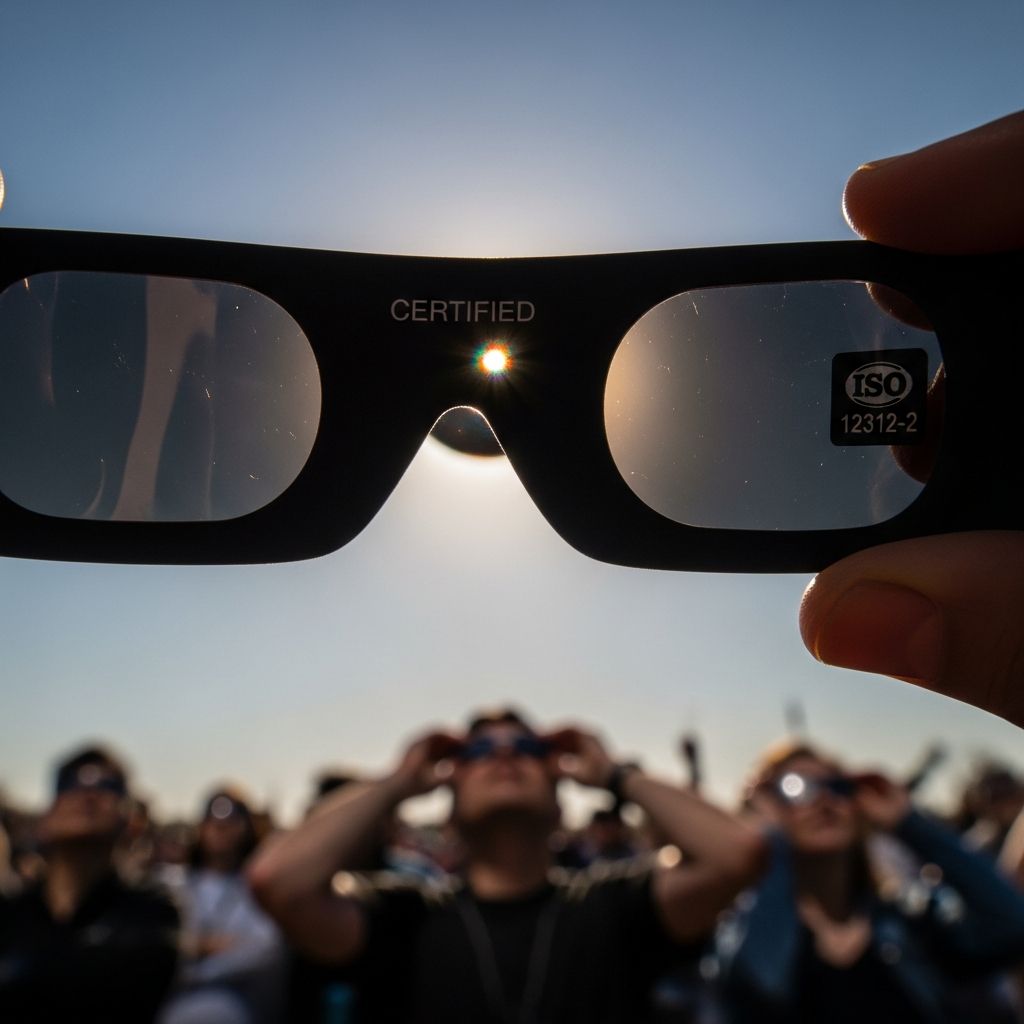
Solar eclipses captivate millions, but viewing them safely requires specialized eye protection. Counterfeit eclipse glasses flood the market, posing severe risks to vision. This guide explains how to select genuine products, verify standards, and adopt safe practices endorsed by leading authorities.
Understanding the Dangers of Improper Solar Viewing
Direct exposure to the sun, even during a partial eclipse, can cause solar retinopathy, a condition damaging the retina with permanent vision loss. The sun’s intense ultraviolet, visible, and infrared rays penetrate ordinary eyewear, leading to burns on the eye’s sensitive tissues. Unlike nighttime events, solar eclipses demand filters thousands of times darker than sunglasses to block nearly all harmful radiation.
Children and contact lens wearers face heightened risks, as smaller pupils and lens materials can intensify damage. Historical events show surges in eye injuries from unsafe viewing, underscoring the need for vigilance.
Key Features of Authentic Eclipse Glasses
Genuine eclipse glasses feature lenses made from black polymer resin infused with carbon particles, rendering them about 100,000 times darker than standard sunglasses. These block virtually all UV and IR light while transmitting a safe sliver of visible light for viewing. Look for the ISO 12312-2 label, the international standard certifying compliance through rigorous lab testing.
- Label Verification: Must state “ISO 12312-2” or “ISO 12312-2:2015” explicitly; vague claims like “blocks 100% UV” are red flags, as safe filters allow minimal transmission.
- Material Quality: Lenses appear uniformly black; no color tint, scratches, or bubbles.
- Packaging: Includes instructions and manufacturer details from reputable suppliers.
How to Spot Counterfeit Products
Fake glasses mimic appearances but fail safety tests. Vendors on unverified online platforms or street markets often sell them cheaply, especially near eclipse dates. Test authenticity by viewing a bright light source: legitimate lenses show no internal glow or pinpoints; fakes leak light.
| Feature | Authentic | Fake |
|---|---|---|
| Price | $5–15 per pair from certified sellers | Unrealistically low, e.g., $1/pair |
| ISO Label | Clear, specific ISO 12312-2 marking | Missing, generic, or misspelled |
| Light Test | Sun appears pinkish-orange, comfortable | Too bright, green/blue tint, or glare |
| Source | AAS-approved vendors | Unverified e-commerce or pop-ups |
AAS maintains a list of verified suppliers after independent checks, ensuring products pass transmittance tests. Avoid bulk deals from unknown origins.
Approved Sources for Safe Solar Filters
Rely on organizations like the American Astronomical Society (AAS) for supplier recommendations. Their vetted list includes manufacturers who submit products for ISO certification. NASA advises against specific brands but emphasizes ISO compliance and pre-use inspection.
- Check eclipse.aas.org/eye-safety/viewers-filters for current approved vendors.
- Purchase from astronomy retailers, science museums, or official outlets.
- For groups, buy in bulk from certified distributors to ensure uniformity.
Step-by-Step Inspection Before Use
Examine glasses under bright indoor light. Discard if lenses show dents, tears, or creases, as these compromise filtration.
- Hold at arm’s length against a lamp; no light should leak around edges.
- Look through at a halogen bulb; it should appear faint orange, not vivid.
- Verify frames fit securely over prescription glasses if needed.
- Supervise children and test their pairs separately.
Store in protective cases away from heat or pets to maintain integrity until the event.
Related Stories



Safe Viewing Techniques During an Eclipse
Position yourself stably before looking up. Wear eclipse glasses over regular eyewear and turn away before removing them. During totality—the brief phase when the sun is fully obscured—glasses can be removed, but replace immediately as the sun reemerges.
Never use filters with unfiltered optics like cameras or binoculars; concentrated rays can shatter lenses and injure eyes. For magnified viewing, attach certified solar filters to the front of devices after consulting experts.
Alternative Safe Viewing Methods
Indirect methods eliminate direct filter use, ideal for crowds or uncertain gear.
- Pinhole Projector: Poke a small hole in foil over a box; project the sun’s image onto paper inside.
- Colander Projection: Hold a colander against a wall; sunlight through holes casts multiple crescent images.
- Shadow Casting: Cross fingers or use tree leaves for natural projections.
These techniques provide thrilling views without eye risk, perfect for educational group activities.
Special Considerations for Vulnerable Groups
Children require constant supervision, as curiosity may lead to improper use. Contact lens users should prioritize glasses over lenses to avoid intensified UV focus. Those with pre-existing eye conditions should consult ophthalmologists beforehand.
Common Myths and Dangerous Alternatives
Steer clear of unproven substitutes lacking scientific backing.
- Sunglasses or stacked pairs: Transmit excessive light.
- Smoked glass, CDs, or film: Allow damaging IR/UV passage.
- Welder’s glasses below shade 14: Insufficient for prolonged solar exposure.
Only ISO 12312-2 certified products or equivalent certified filters are reliable.
Frequently Asked Questions (FAQs)
Can I reuse eclipse glasses for future events?
Yes, if undamaged and stored properly; re-inspect before each use.
Are eclipse glasses safe for cameras?
No; use front-attached solar filters instead.
What if my glasses fail the light test?
Discard immediately and source replacements from AAS-approved vendors.
Is it safe during totality?
Yes, briefly, when no bright disk remains visible through filters.
How do I know if a vendor is legitimate?
Cross-reference with AAS or NASA lists; avoid unlisted sellers.
Preparing for the Next Solar Eclipse
Plan ahead: mark eclipse dates, secure gear early, and educate your community. Apps and official calendars from NASA provide timings. By prioritizing certified protection, you ensure safe enjoyment of nature’s grandest spectacles without vision-threatening mishaps.
References
- Eclipse Viewing Safety — NASA Science. 2024-01-15. https://science.nasa.gov/eclipses/safety/
- Solar Eclipse Safety: What You Should Know — NEW Health Center. 2024-03-20. https://newhealthcenter.org/solar-eclipse-safety/
- Solar Eclipse Safety Tips One Pager — Ohio.gov. 2024-02-10. https://dam.assets.ohio.gov/image/upload/ohio.org/uploads/pdfs/solar_eclipse_safety_tips_one_pager.pdf
- Solar Eclipses and Eye Safety — American Optometric Association. 2024-04-05. https://www.aoa.org/healthy-eyes/caring-for-your-eyes/solar-eclipses
- How to View a Solar Eclipse Safely — American Astronomical Society. 2024-06-12. https://eclipse.aas.org/eye-safety
- Are Your Solar Eclipse Glasses Safe? — The Planetary Society. 2024-05-18. https://www.planetary.org/articles/are-your-solar-eclipse-glasses-safe
- How to Make Sure Solar Eclipse Glasses Are Safe — Sky at Night Magazine. 2024-07-22. https://www.skyatnightmagazine.com/advice/how-know-solar-eclipse-glasses-are-safe
Similar Articles








Read full bio of medha deb