Axillary Temperature: What You Need to Know
Understanding armpit temperature readings and their clinical accuracy for health monitoring.
Understanding Axillary Temperature
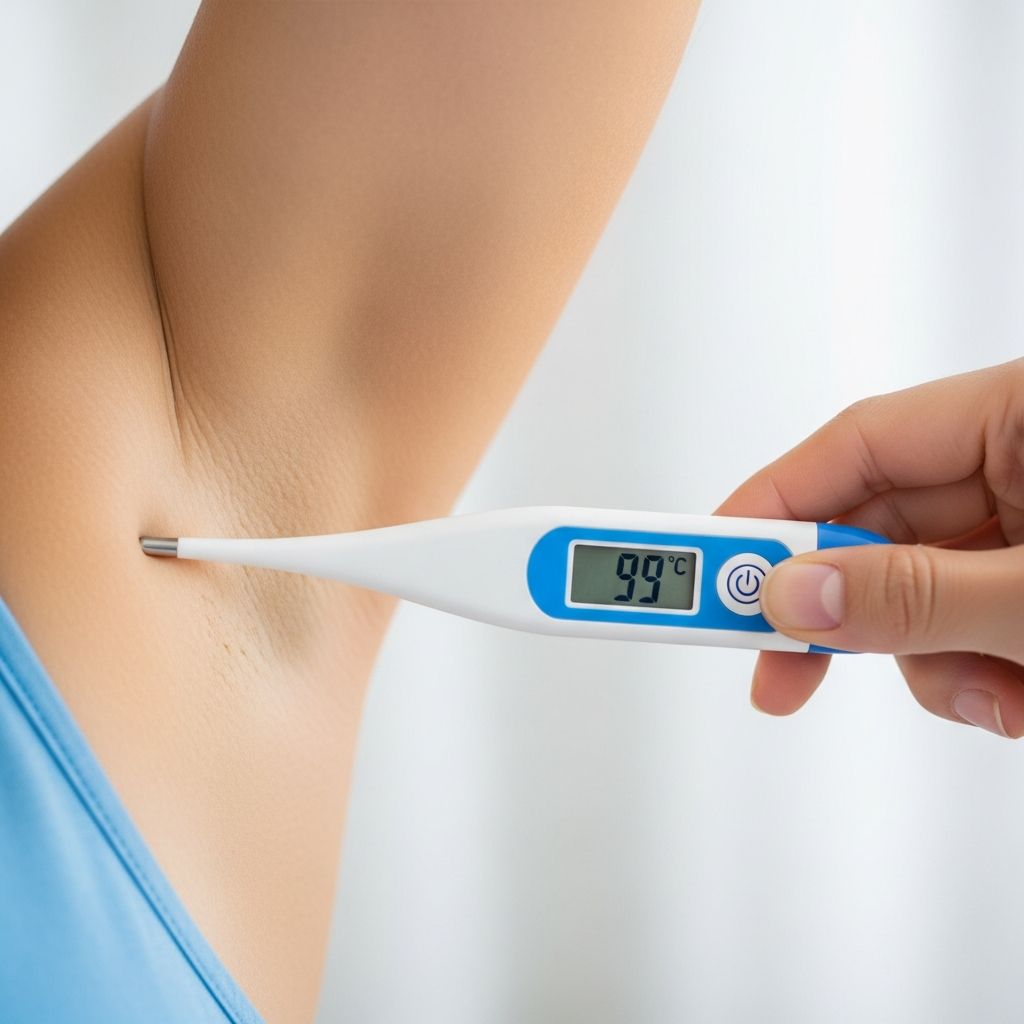
Axillary temperature refers to a body temperature reading taken from the armpit using a thermometer. This method has been used in clinical and home settings for decades as a non-invasive way to assess body temperature. The armpit, medically known as the axilla, provides a convenient location for temperature measurement that is accessible and relatively safe for patients of all ages, from infants to elderly individuals.
The axillary method involves placing a thermometer in the armpit and holding the arm across the chest to maintain contact. While this approach is widely used, it is important to understand its accuracy relative to other temperature measurement methods and when it is most appropriate to use.
How Axillary Temperature Compares to Other Methods
Different sites for measuring temperature provide varying levels of accuracy and reliability. Understanding these differences helps healthcare providers and patients choose the most appropriate method for their needs.
Oral Temperature
Oral temperature measurement, taken under the tongue, is one of the most common methods and is generally considered more accurate than axillary readings. Oral temperatures are typically about one degree Fahrenheit lower than rectal temperatures but provide reliable results for most healthy individuals. This method is suitable for children over three years old and adults who can safely hold a thermometer in their mouth.
Rectal Temperature
Rectal temperature is considered the gold standard for accuracy in many clinical settings, particularly for young children and infants. Rectal readings tend to be approximately one degree Fahrenheit higher than oral temperatures and are the most reliable indicator of core body temperature. However, this method is more invasive and may be uncomfortable for patients, limiting its use in many situations.
Ear and Temporal Artery Temperature
Tympanic (ear) thermometers and temporal artery thermometers use infrared technology to measure heat waves. These methods are quick and non-invasive but may be affected by environmental factors such as cerumen buildup in the ear canal or sweating on the forehead. They are generally less accurate than oral or rectal measurements but more reliable than axillary readings.
Accuracy of Axillary Measurements
Axillary temperature is the least accurate method among commonly used techniques because it measures temperature from the skin surface rather than from inside the body. Additionally, the axillary skin and tissue are not always positioned close enough to major blood vessels to obtain a consistently accurate reading. When using the axillary method, healthcare providers often add 0.5 to 1 degree Fahrenheit (0.3 to 0.6 degrees Celsius) to the measured reading to estimate a more accurate body temperature. Recent clinical research has demonstrated that modern wireless axillary thermometers can provide better accuracy than traditional methods, with some devices showing agreement within 0.5°C of esophageal reference temperatures in surgical patients.
Related Stories



Normal Axillary Temperature Ranges
Understanding what constitutes a normal temperature is essential for identifying when fever or hypothermia may be present. Temperature varies naturally among individuals and fluctuates throughout the day.
A standard body temperature is approximately 98.6 degrees Fahrenheit (37 degrees Celsius), though this figure originated from studies conducted in the mid-1800s. Modern research suggests that average body temperatures today are actually slightly lower, ranging from 97.5°F to 97.9°F (36.4°C to 36.6°C). For most healthy adults, normal body temperature typically falls between 97 to 99 degrees Fahrenheit.
For specific age groups, temperature ranges vary slightly:
– People ages 11 to 65: 97.6°F to 99.6°F (36.4°C to 37.6°C)- People older than 65: 96.4°F to 98.5°F (35.8°C to 36.9°C)
Axillary temperatures are typically about one degree lower than rectal temperatures and may be slightly lower than oral temperatures. An axillary reading of 99°F in the morning could represent the start of a fever, depending on the individual’s baseline temperature and time of day.
Daily Temperature Variations
Body temperature naturally fluctuates throughout the day due to hormone cycles and circadian rhythms. Axillary and oral temperatures tend to be lowest in the morning and increase by one to two degrees Fahrenheit in the late afternoon and evening. Rectal temperatures remain more consistent throughout the day. This variation is important to consider when interpreting temperature readings, as a reading of 100°F taken just before bedtime might be normal, while the same reading in the morning could indicate a fever.
Identifying Fever with Axillary Temperature
A fever is generally defined as a temperature of 100.4°F (38°C) or above. This threshold was established based on historical axillary temperature measurements taken in the 1860s. In children, fevers are common responses to infections and viral illnesses and typically do not require specific medical treatment beyond comfort measures.
However, if a child’s temperature reaches 102°F (38.8°C) or higher and does not respond to home treatment with fever-reducing medication and fluids, parents should contact their healthcare provider. Additionally, fevers that persist for more than two days warrant medical attention, as they may indicate a more serious underlying condition requiring professional evaluation.
When to Use Axillary Temperature
The axillary method is most appropriate in specific clinical and home situations where other measurement sites are not feasible or safe.
Ideal Uses for Axillary Temperature
– Young children or infants for whom oral or rectal readings are challenging- Adults whose temperature cannot safely be taken orally- Patients unable to cooperate with other temperature measurement methods- Quick preliminary temperature screening before more accurate measurements- Individuals with mouth injuries or who are unable to keep their mouth closed- Patients in conditions where other sites are contraindicated
Advantages of Axillary Measurement
The axillary method offers several advantages that make it useful in specific situations. It is non-invasive, quick to perform, and accessible without special equipment. Patients generally find it comfortable, and there are no safety concerns associated with the procedure. It can be performed on individuals of all ages and does not require the patient’s cooperation or ability to follow complex instructions.
Limitations of Axillary Measurement
Despite its accessibility, the axillary method has significant limitations. It is the least accurate temperature measurement technique among commonly used methods. Factors such as skin moisture, ambient room temperature, and how firmly the thermometer is held against the skin can affect readings. Because of these variables, axillary measurements should ideally be followed up with more accurate methods such as oral or rectal temperature readings for confirmation.
Proper Technique for Axillary Temperature
To obtain the most accurate axillary temperature reading, proper technique is essential. The thermometer should be placed in the center of the armpit, with the arm positioned across the chest to maintain firm contact between the thermometer and skin. The patient should remain still and hold the thermometer in place for the time recommended by the manufacturer, typically several minutes for digital thermometers.
For young children or uncooperative patients, an adult may need to gently hold the child’s arm in place. It is important to ensure that the armpit is dry before taking the measurement, as moisture can affect accuracy. If the patient has been exercising or sweating, allow time for the skin to dry before obtaining a reading.
Types of Thermometers for Axillary Use
Various thermometer types can be used for axillary temperature measurement:
– Digital thermometers: Electronic devices that display temperature on a screen and typically provide readings within 30-60 seconds- Tympanic thermometers: Infrared devices designed for ear use but sometimes adaptable for other sites- Temporal artery thermometers: Infrared devices that scan the forehead along the temporal artery- Wireless axillary thermometers: Advanced medical-grade devices that provide improved accuracy for clinical use
Traditional glass mercury thermometers should no longer be used due to safety concerns related to mercury exposure.
Clinical Applications and Research
Recent clinical research has explored the reliability of modern axillary temperature measurement devices. Studies have demonstrated that wireless axillary thermometers can provide clinically acceptable accuracy when properly used. In a study involving adults undergoing noncardiac surgery, axillary temperature readings obtained with the iThermonitor WT701 showed excellent correlation with core esophageal temperatures, with a mean difference of only 0.14°C. Approximately 91% of measurements were within 0.5°C of reference esophageal readings, indicating good agreement across the temperature range from 34.9°C to 38.1°C. This suggests that modern wireless axillary thermometers may be suitable for clinical monitoring situations where other measurement sites are not accessible.
Special Considerations
Infants and Young Children
For infants and young children, axillary temperature measurement is often preferred over oral or rectal methods due to safety and comfort considerations. However, parents should understand that these readings may be less accurate than other methods and should be interpreted with this limitation in mind.
Elderly Patients
Elderly individuals may have lower baseline temperatures compared to younger adults. A normal temperature range for people older than 65 is 96.4°F to 98.5°F. Healthcare providers should consider this age-related variation when interpreting axillary temperature readings in older patients.
Patients with Mobility Issues
For patients with limited mobility or arthritis affecting the shoulder and arm, axillary temperature measurement may be challenging. Alternative sites such as the ear or temporal artery may be more appropriate in these situations.
Frequently Asked Questions
Q: How accurate is axillary temperature compared to oral temperature?
A: Axillary temperature is generally less accurate than oral temperature because it measures skin surface temperature rather than internal body temperature. Axillary readings are typically about one degree lower than oral readings and require an adjustment factor for more accurate interpretation.
Q: Should I add degrees to an axillary reading?
A: Yes, many healthcare providers recommend adding 0.5 to 1 degree Fahrenheit (0.3 to 0.6 degrees Celsius) to axillary readings to estimate a more accurate core body temperature, though modern wireless devices may provide more accurate readings without adjustment.
Q: What temperature reading indicates a fever when using the axillary method?
A: A fever is generally considered to be a temperature of 100.4°F (38°C) or above, based on historical axillary temperature standards.
Q: Is axillary temperature suitable for infants?
A: Yes, axillary temperature measurement is often appropriate for infants and young children as a safe and accessible method. However, parents should be aware of its limitations regarding accuracy and may want to confirm readings with other methods when fever is suspected.
Q: Can environmental factors affect axillary temperature readings?
A: Yes, factors such as room temperature, skin moisture, and how firmly the thermometer is held can all affect the accuracy of axillary readings. Ensure the armpit is dry and the thermometer maintains firm contact with skin for best results.
Q: When should I use axillary temperature instead of other methods?
A: Axillary temperature is most appropriate for quick preliminary screening, situations where other measurement sites are not accessible or safe, and for patients who cannot tolerate oral or rectal measurements.
When to Seek Medical Attention
Contact a healthcare provider if an axillary temperature reading suggests a fever of 100.4°F or above that persists for more than two days, or if fever is accompanied by other concerning symptoms such as difficulty breathing, severe headache, or persistent vomiting. For infants and very young children, any fever should be reported to a pediatrician.
References
- Axillary Temperature, as Recorded by the iThermonitor WT701, Well Represents Core Temperature in Adults Having Noncardiac Surgery — Anesth Analg. 2018-03-01. https://doi.org/10.1213/ANE.0000000000002706
- Which Thermometer is Best for Taking Your Child’s Temperature — Cleveland Clinic. 2024. https://health.clevelandclinic.org/which-thermometer-is-best-for-taking-your-childs-temperature
- Thermometers: How To Take Your Temperature — Cleveland Clinic. 2024. https://health.clevelandclinic.org/thermometers-how-to-take-your-temperature
- When Your Child Has a Fever: 5 Myths Debunked — Cleveland Clinic. 2024. https://health.clevelandclinic.org/your-childs-fevers-5-common-myths-debunked
- Oral Temperature of Noninfected Hospitalized Patients — National Institutes of Health. 2021. https://doi.org/10.1001/jama.2020.14465
- What a Normal Body Temperature Is — Cleveland Clinic. 2024. https://health.clevelandclinic.org/body-temperature-what-is-and-isnt-normal
- How to Treat Your Child’s Fever Naturally — Cleveland Clinic. 2024. https://health.clevelandclinic.org/reduce-fever-naturally
Similar Articles








Read full bio of Sneha Tete