Azithromycin Eye Drops: 3-Day Azyter Treatment Guide
Effective treatment for bacterial conjunctivitis with a simple 3-day course of eye drops, morning and evening doses.
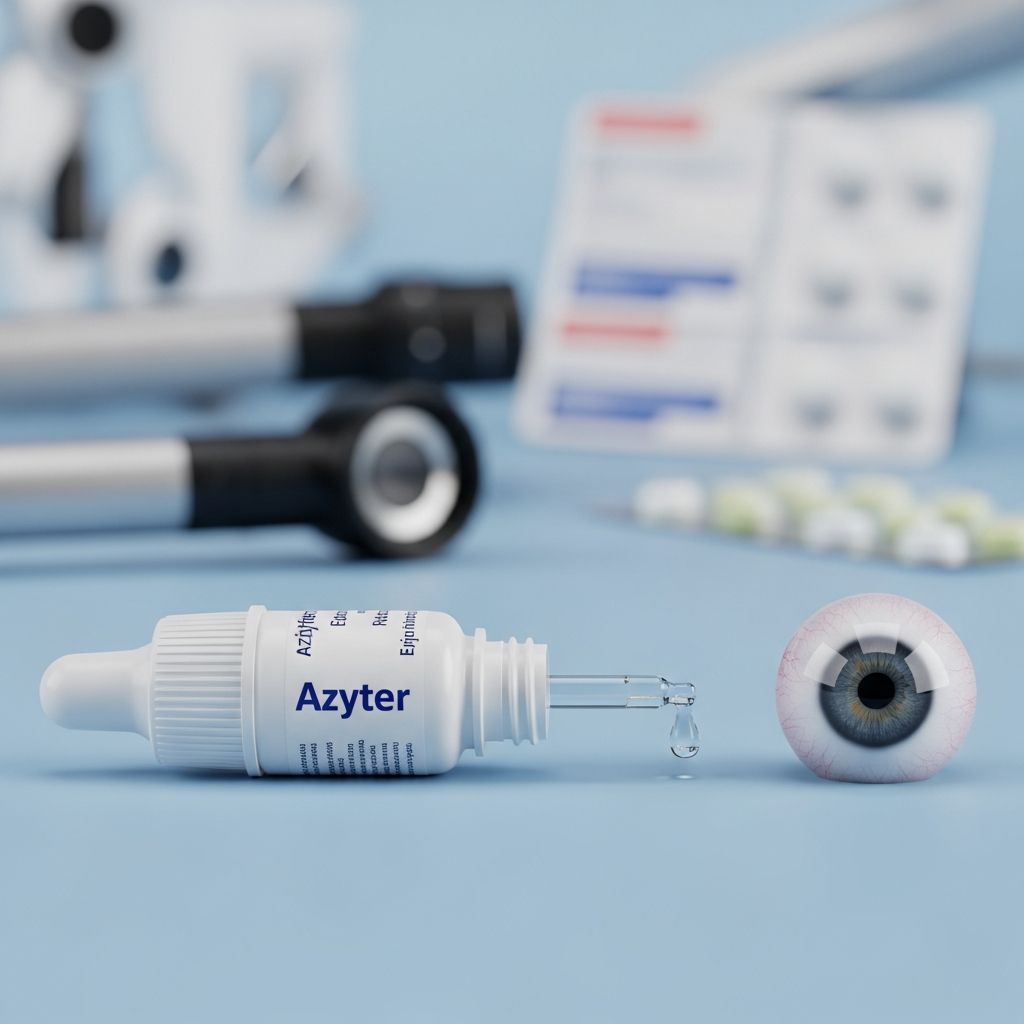
Azithromycin eye drops, marketed as Azyter, are a targeted antibiotic treatment for bacterial eye infections, particularly
bacterial conjunctivitis
. This medication belongs to the macrolide class of antibiotics, which works by stopping the growth of bacteria responsible for infections in the eye.About Azithromycin Eye Drops
Azithromycin eye drops are specifically formulated to treat infections of the eye caused by susceptible bacteria. The most common condition treated is
bacterial conjunctivitis
, where the eye becomes inflamed, gritty, red, and may produce pus-like discharge, especially noticeable upon waking when eyelids stick together. These drops are effective against purulent bacterial conjunctivitis and trachomatous conjunctivitis caused by Chlamydia trachomatis, suitable for adults and children from birth to 17 years.The unique formulation of Azyter provides prolonged action, continuing to combat bacteria even after the short three-day treatment course.[10] This makes it a convenient option compared to longer regimens, requiring only one drop twice daily (morning and evening) for three days.
Bacterial conjunctivitis is a frequent issue, often producing significant pus. Azithromycin kills the bacteria directly, alleviating symptoms like redness, watering, swelling, and discomfort. Unlike viral or allergic conjunctivitis, bacterial forms respond well to antibiotics like these drops.
Before Using Azithromycin Eye Drops
Before starting treatment, consult your doctor to ensure suitability. Provide full details on your medical history.
- Pregnancy or breastfeeding: Inform your doctor if pregnant, planning pregnancy, or breastfeeding, as safety data may require evaluation.
- Allergies: Do not use if allergic to azithromycin, other macrolide antibiotics (e.g., erythromycin, clarithromycin), or any ingredients in the drops. Seek immediate help for signs of severe allergy like rash, itching, swelling, breathing difficulty, or anaphylaxis.
- Other medications: Disclose all prescription, over-the-counter, herbal, or complementary medicines, as interactions could occur.
- Eye conditions: Mention any ongoing eye issues or recent treatments.
Your eye doctor will monitor progress during regular visits to confirm efficacy and check for adverse effects. Avoid contact lenses until symptoms resolve completely and at least 24 hours after the final dose.
How to Use Azithromycin Eye Drops
Follow your doctor’s instructions precisely. Azyter comes in single-dose containers, with six units per pack sufficient for the full course treating both eyes if needed.
- Wash hands: Thoroughly with soap and water before and after use.
- Prepare the container: Turn the closed bottle upside down and shake once. Remove the cap while keeping it inverted.
- Instill the drop: Tilt head back, pull down lower eyelid to form a pocket. Squeeze to release one drop into the pocket. Close eye gently without blinking for 1-2 minutes to aid absorption.
- Prevent drainage: Press gently on the inner corner of the eye (near nose) for a minute.
- Repeat if needed: If the drop misses, repeat with another. Treat the other eye if instructed.
- Hygiene: Avoid touching the tip to any surface, including the eye, to prevent contamination. If contact occurs, squeeze out drops onto tissue, rinse tip with salt water, or discard.
- Discard: Throw away the single-use container after use, even if liquid remains. Do not save opened containers.
Dosage: One drop twice daily (morning and evening, 8-12 hours apart) for three days in the affected eye(s). Some sources note variations like 2 days twice daily then 5 days once daily, but Azyter specifically uses the 3-day regimen.[10]
| Day | Dosage | Frequency |
|---|---|---|
| 1-3 | 1 drop per affected eye | Twice daily (morning & evening) |
If using other eye drops, wait at least 5 minutes between applications to avoid overflow.
Getting the Most from Your Treatment
To optimize results and ensure complete bacterial eradication:
- Complete the course: Use all doses even if symptoms improve quickly. Stopping early risks recurrence.
- Clean eyes: Bathe crusted eyes with cool clean water before drops.
- Prevent spread: Wash hands frequently, avoid sharing towels/pillows, and don’t touch unaffected eye.
- Blurred vision: Drops may temporarily blur sight; wait until clear before driving or operating machinery.
- Sun sensitivity: Wear sunglasses if eyes feel more light-sensitive.
- Read leaflet: Review the patient information leaflet for full side effect details.
- Monitor progress: If no improvement in a few days or worsening, contact your doctor immediately.
Related Stories



Bacteria may persist invisibly post-symptom relief, so finishing the regimen is crucial.
Side Effects
Most side effects are mild and transient. Common ones include:
| Side Effect | Description |
|---|---|
| Eye itching, burning, stinging | Occurs on application, resolves quickly |
| Blurred vision | Temporary; avoid driving until resolved |
| Sticky sensation or foreign body feeling | Passes shortly after use |
Rare but serious: Allergic reactions (rash, swelling, breathing issues)—seek emergency care. Report any unusual symptoms to your doctor or pharmacist.
Regular check-ups ensure no unwanted effects develop.
Frequently Asked Questions (FAQs)
Q: How long does treatment last?
A: Three days, with one drop twice daily. The prolonged action continues working afterward.[10]
Q: Can children use Azyter?
A: Yes, licensed from birth to 17 years for bacterial and trachomatous conjunctivitis.
Q: What if I miss a dose?
A: Use as soon as remembered, but maintain spacing. Do not double dose. Try not to miss any.
Q: Is it safe during pregnancy?
A: Consult your doctor; inform them if pregnant or breastfeeding.
Q: When can I wear contact lenses again?
A: Wait until symptoms fully resolve and at least 24 hours post-final dose.
Q: What if symptoms persist?
A: See your doctor if no improvement in a few days or if worse.
Who Makes Azithromycin Eye Drops?
Azyter is produced by Théa Pharmaceuticals, specialists in ocular treatments. It’s the first 3-day ocular antibiotic POM.[10]
This article provides general guidance based on authoritative sources. Always follow personalized medical advice from your healthcare provider.
References
- Azithromycin (ophthalmic route) — Mayo Clinic. 2023. https://www.mayoclinic.org/drugs-supplements/azithromycin-ophthalmic-route/description/drg-20070979
- Azithromycin eye drops – Azyter — Patient.info. 2023. https://patient.info/medicine/azithromycin-eye-drops-azyter
- Azithromycin (Azyter®) 15mg/g eye drops — Scottish Government Publications. 2023-10-01. https://www.publications.scot.nhs.uk/files/msan-2023-35.pdf
- Azithromycin ophthalmic — MedlinePlus. 2024. https://medlineplus.gov/druginfo/meds/a624056.html
- Azyter 15 mg/g eye drops PIL — Medicines.org.uk (EMC). 2023. https://www.medicines.org.uk/emc/files/pil.4671.pdf
- Azithromycin Solution – Ophthalmic — MyHealth Alberta. 2023. https://myhealth.alberta.ca/Health/medications/Pages/conditions.aspx?hwid=fdb0976
Similar Articles








Read full bio of Sneha Tete