Azoospermia: Causes, Diagnosis, and Treatment Options
Understanding azoospermia: A comprehensive guide to zero sperm count causes and proven treatments.
Understanding Azoospermia: Complete Guide to Zero Sperm Count
Azoospermia is a medical condition characterized by the complete absence of sperm in the ejaculate. This condition affects male fertility and can be a significant concern for couples attempting to conceive. However, it is important to understand that azoospermia is often treatable, and various therapeutic options exist depending on the underlying cause.
The condition is typically discovered during fertility investigations when a couple has been unable to conceive after attempting to do so without medical assistance. Many men with azoospermia may not experience any noticeable symptoms until they or their partner seek fertility evaluation. However, some individuals may have symptoms related to the underlying cause, such as reduced libido due to hormonal imbalances or physical lumps on the testicles resulting from infections.
Types of Azoospermia
Azoospermia is classified into two primary categories based on the underlying mechanism: obstructive azoospermia and nonobstructive azoospermia. Understanding which type a patient has is crucial for determining appropriate treatment strategies.
Nonobstructive Azoospermia (NOA)
Nonobstructive azoospermia occurs when the testicles do not produce sufficient sperm or fail to produce sperm altogether. This type accounts for approximately 60 percent of azoospermia cases. In nonobstructive azoospermia, the problem originates with sperm production itself rather than with the delivery mechanism.
Nonobstructive azoospermia can be further subdivided into pretesticular and testicular categories, though modern medical experts often prefer the broader term nonobstructive azoospermia regardless of where the problem originates.
Obstructive Azoospermia
Obstructive azoospermia, also known as post-testicular azoospermia, occurs when the testicles produce sperm normally, but the sperm cannot exit the reproductive tract due to a blockage or obstruction. Approximately 40 percent of men diagnosed with azoospermia have the obstructive type. In this condition, the testicles are functioning properly, but physical obstructions prevent sperm from reaching the ejaculate.
Causes of Azoospermia
The causes of azoospermia are diverse and depend on whether the condition is obstructive or nonobstructive in nature.
Causes of Nonobstructive Azoospermia
Hormonal Disorders
Hormonal problems represent a significant category of nonobstructive azoospermia causes. These conditions can prevent the body from producing adequate amounts of testosterone or other hormones necessary for sperm production. Specific hormonal causes include:
- Low testosterone (hypogonadism)
- Pituitary tumors
- Hypopituitarism, where the pituitary gland cannot produce sufficient amounts of certain hormones
- Hyperprolactinemia, characterized by elevated prolactin levels
Medication and Substance-Related Causes
Certain medications and substances can significantly impair sperm production. Testosterone replacement therapy (TRT), whether prescribed or self-administered, often results in poor or absent sperm production, though this may often be reversible. Anabolic steroid abuse suppresses natural testosterone synthesis, directly inhibiting sperm production. Additionally, chemotherapy drugs, narcotics, and illicit drugs can all interfere with sperm production.
Related Stories



Genetic Conditions
Several genetic abnormalities can cause nonobstructive azoospermia. These include:
- Klinefelter’s syndrome, in which males are born with an extra X chromosome
- Sertoli cell-only syndrome, characterized by the absence of sperm-producing cells in the testicles
- Y chromosome deletions, where certain genes affecting sperm production are missing
Environmental and Physical Factors
Various environmental exposures and physical conditions can damage sperm production. Exposure to certain chemicals, pesticides, and radiation can harm testicular function. Varicoceles, which are enlarged veins in the scrotum, can cause testicular overheating (testicular hyperthermia) and lead to reduced sperm production. Cancer treatments, including chemotherapy and radiation therapy, may also cause azoospermia. Additionally, childhood infections such as viral orchitis (testicular swelling), undescended testicles, groin injuries, and testicular trauma can all result in nonobstructive azoospermia.
Lifestyle Factors
Poor nutrition and frequent use of hot tubs or baths can contribute to testicular dysfunction and azoospermia. These lifestyle factors may impair the delicate conditions required for optimal sperm production.
Causes of Obstructive Azoospermia
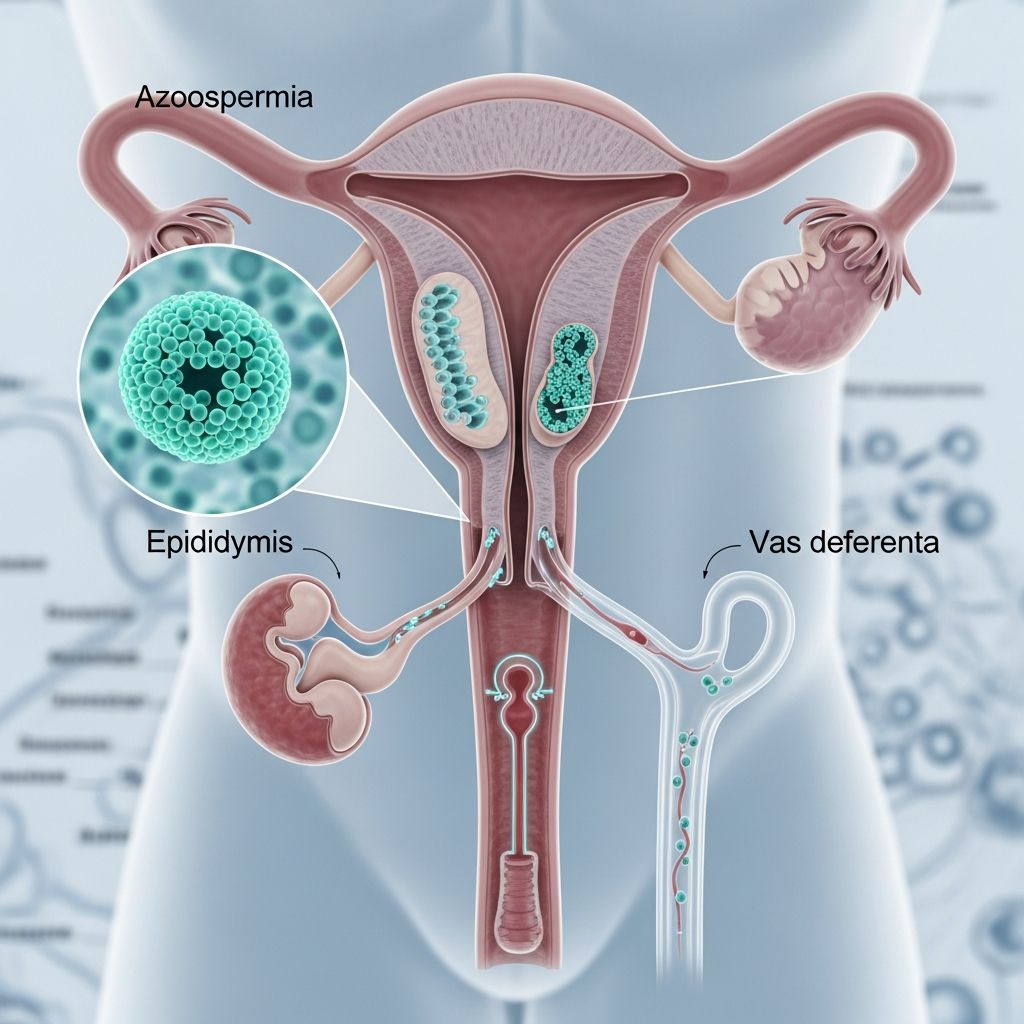
Obstructive azoospermia results from blockages in the reproductive tract that prevent sperm from being ejaculated, despite normal production. The obstruction can occur in three main anatomical locations:
- The epididymis, which stores sperm after production
- The vas deferens, the tubes that transport sperm from the epididymis to the ejaculatory duct
- The ejaculatory duct, which connects to the urethra where sperm mixes with semen
Common causes of obstructive azoospermia include:
- Vasectomy, the most common cause of obstructive azoospermia
- Cystic fibrosis
- Ejaculatory duct obstruction
- Severe infections in the epididymis (epididymitis)
- Radical prostatectomy for prostate cancer treatment
- Trauma and injury to the epididymis or testicles
- Inflammation of the reproductive tract
- Genetic conditions such as cystic fibrosis
- Surgeries around the pelvis, including hernia repair
- Growths or cysts blocking the reproductive tract
Diagnosis of Azoospermia
Diagnosing azoospermia involves a comprehensive evaluation to confirm the absence of sperm and identify the underlying cause.
Semen Analysis
The primary diagnostic tool for azoospermia is a semen analysis. Healthcare providers diagnose azoospermia when semen analysis performed on two separate occasions shows no sperm. This double confirmation ensures accuracy and helps eliminate the possibility of false results.
Medical History and Physical Examination
To determine the cause of azoospermia, healthcare providers take a comprehensive medical history, including questions about past illnesses, medications, lifestyle factors, and reproductive history. A thorough physical examination follows, with particular attention paid to the scrotum. The examination may also include a rectal exam to assess the prostate and other reproductive structures.
Additional Diagnostic Tests
Depending on the initial findings, additional tests may be recommended. Genetic testing and counseling are often important components of understanding and treating azoospermia. Imaging studies such as ultrasound may be used to visualize the reproductive structures and identify potential obstructions. Hormone level testing can help identify hormonal causes of azoospermia.
Treatment Options for Azoospermia
Treatment approaches for azoospermia depend significantly on the underlying cause. Many causes of azoospermia can be reversed, while others may require alternative fertility approaches.
Treatment for Obstructive Azoospermia
Surgical Interventions
Surgical procedures represent the primary treatment approach for obstructive azoospermia. Surgery can unblock tubes and ducts or reconstruct and reconnect ones that are not allowing sperm to flow through properly. For men who have undergone vasectomy, vasectomy reversal surgery may restore fertility and allow sperm to flow into the ejaculate.
Sperm Retrieval and Assisted Reproduction
When surgical reconstruction is not possible or unsuccessful, sperm retrieval procedures can extract sperm directly from the testicles or epididymis for use in assisted reproductive techniques such as in vitro fertilization (IVF).
Treatment for Nonobstructive Azoospermia
Hormonal Treatment
Hormonal problems and related causes of nonobstructive azoospermia are usually treatable, and fertility can potentially be restored. Pretesticular azoospermia is often amenable to treatment with physician-supervised hormone replacement therapy. Medications such as clomiphene citrate (Clomid) may be prescribed to increase testosterone levels. This medication is typically taken for four months, after which semen analysis is repeated. Treatment with clomiphene citrate can double the chances of finding sperm during microsurgical testicular sperm extraction (microTESE).
Medication Adjustment
If azoospermia is caused by medications or substances, adjusting or discontinuing these agents may restore sperm production. Men on chronic narcotics often have impaired testosterone and sperm production that can be reversed by adjusting medication regimens. Similarly, discontinuing anabolic steroids or testosterone replacement therapy can sometimes restore natural sperm production.
Lifestyle Modifications
For azoospermia resulting from environmental or lifestyle factors, modifications may improve sperm production. Avoiding toxins and adjusting medications with a healthcare provider’s guidance can also improve sperm counts. Reducing exposure to pesticides, chemicals, and radiation may help protect testicular function.
Surgical Treatment for Varicocele
If azoospermia is linked to a varicocele, a urologist may recommend surgery to repair it and conduct a testicular biopsy. Surgery ties off the affected veins and reroutes blood flow through healthy veins, which can sometimes restore sperm production. A testicular biopsy can also help determine the cause of azoospermia if it remains unknown.
Sperm Retrieval and Assisted Reproduction
For nonobstructive azoospermia cases where testicular disorders are the cause, it is still possible to retrieve live sperm to be used in assisted reproductive techniques like IVF. Microsurgical testicular sperm extraction (microTESE) is a procedure that can retrieve sperm from testicular tissue even when no sperm appear in the ejaculate.
Prognosis and Fertility Restoration
The prognosis for azoospermia varies depending on the underlying cause. Hormonal problems and obstructive causes of azoospermia are usually treatable, with fertility potentially being restored. However, some causes of azoospermia do not have a cure. Every cause of azoospermia has a different prognosis, and patients should work closely with their healthcare team to determine the specific cause and appropriate treatment options.
Many acquired causes of testicular azoospermia, such as those resulting from toxic exposures or chemotherapeutic drugs, may resolve with time after discontinuation of the offending agents.
When to See a Healthcare Provider
Men should consult with a healthcare provider specializing in fertility or urology if they and their partner have been attempting to conceive without success for an extended period. Early diagnosis and treatment can improve the chances of achieving natural conception or successful assisted reproduction.
Frequently Asked Questions (FAQs)
Q: What is the difference between azoospermia and low sperm count?
A: Azoospermia is the complete absence of sperm in the ejaculate, whereas low sperm count (oligospermia) refers to reduced numbers of sperm. Azoospermia is a more severe condition affecting fertility.
Q: Is azoospermia always permanent?
A: No, azoospermia is not always permanent. Many causes are treatable, particularly hormonal disorders and obstructive causes. However, some genetic or severe testicular conditions may not be reversible, though sperm retrieval for assisted reproduction may still be possible.
Q: Can azoospermia be caused by lifestyle factors?
A: Yes, certain lifestyle factors can contribute to azoospermia, including poor nutrition, frequent use of hot tubs or baths, and exposure to toxins or radiation. Addressing these factors may help improve sperm production.
Q: What treatment options exist if azoospermia cannot be reversed?
A: If azoospermia cannot be reversed, assisted reproductive techniques such as IVF with sperm retrieval (microTESE) can be used. Sperm can often be retrieved directly from the testicles and used for fertility treatment.
Q: How long does treatment for azoospermia typically take?
A: The duration of treatment varies depending on the cause and type of azoospermia. Hormonal treatments may take several months to show results, while surgical interventions may restore fertility more quickly. Your healthcare provider can provide specific timelines based on your diagnosis.
Q: Can azoospermia be prevented?
A: While some causes of azoospermia cannot be prevented, certain precautions can reduce risk. These include avoiding exposure to toxins and chemicals, practicing safe medication use under medical supervision, protecting testicles from injury, and maintaining a healthy lifestyle.
References
- What Is Azoospermia (Semen Without Sperm)? — WebMD. 2024. https://www.webmd.com/infertility-and-reproduction/azoospermia-causes-treatment
- Azoospermia — The Men’s Clinic at UCLA, UCLA Health. 2024. https://www.uclahealth.org/medical-services/urology/mens-clinic-ucla/fertility/azoospermia
- Azoospermia (Zero Sperm Count): Causes & Treatment — Cleveland Clinic. 2024. https://my.clevelandclinic.org/health/diseases/15441-azoospermia
- Azoospermia — UNC Department of Urology, University of North Carolina. 2024. https://www.med.unc.edu/urology/patientcare/adult-non-cancer/male-fertility/azoospermia/
- Azoospermia (Sperm Production) — University of Utah Health. 2024. https://healthcare.utah.edu/fertility/conditions/sperm-production-azoospermia
- Non-Obstructive Azoospermia: Causes and Treatment — Progyny. 2024. https://progyny.com/education/male-infertility/non-obstructive-azoospermia/
Similar Articles








Read full bio of Sneha Tete