Babies and Toddlers Developmental Milestones Guide
Track your child's growth: Essential milestones from birth through toddlerhood.
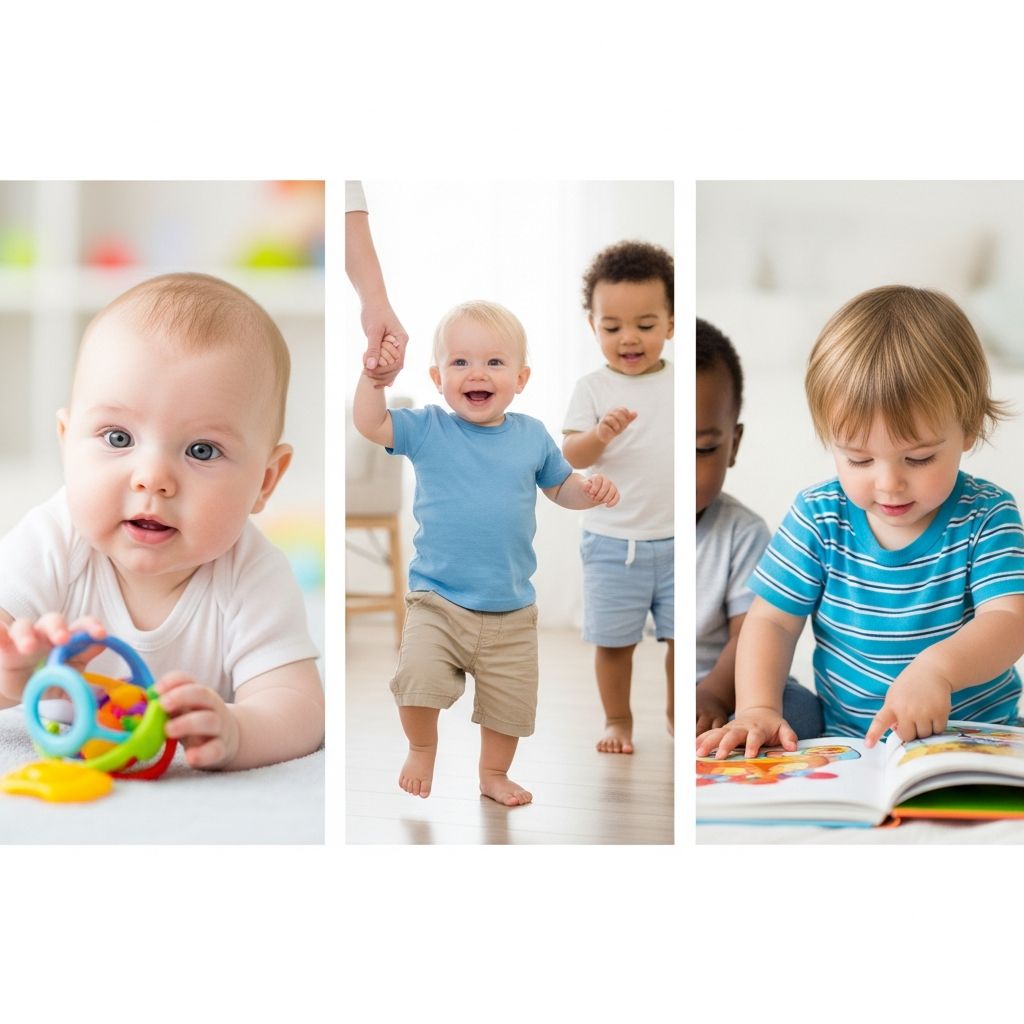
Understanding Babies and Toddlers Developmental Milestones
Developmental milestones are key skills and behaviors that children typically achieve by certain ages. These milestones serve as important markers in tracking a child’s physical, cognitive, social, and emotional growth. Understanding what to expect at each stage helps parents and caregivers identify whether their child is developing typically or if additional support might be needed.
The early years of life are critical for development, as babies and toddlers undergo rapid physical and neurological changes. From birth through the toddler years, children progress through predictable stages of development, though the exact timing can vary from child to child. Recognizing these milestones allows parents to celebrate achievements, identify potential concerns early, and provide appropriate support and stimulation.
Birth to Three Months: Early Development
During the first three months of life, newborns focus primarily on adjusting to the outside world. While much of their time is spent sleeping and eating, significant developmental progress occurs during this period.
Physical Development
Newborns begin with basic reflexes that are essential for survival. These include the rooting reflex, which helps babies find the breast or bottle for feeding, and the Moro reflex, a startle response. By three months, babies typically gain better control over their head and neck muscles. Most infants can briefly hold their head up when placed on their stomach and may begin to follow objects with their eyes. Hand coordination starts developing, with babies beginning to bring their hands to their mouth and grasping objects placed in their hands.
Social and Emotional Development
Early smiling begins around 6 to 8 weeks of age, initially as a reflex but gradually becoming a genuine response to familiar faces. Babies start making eye contact and may coo or make gurgling sounds in response to voices. These early interactions form the foundation for secure attachments with caregivers.
Communication Development
Newborns communicate primarily through crying, which is their main tool for expressing hunger, discomfort, or tiredness. By three months, babies begin to make cooing sounds, babble, and respond to familiar voices. They may turn their head when they hear sounds and show awareness of their environment.
Four to Six Months: Growing Control and Interaction
As babies reach four to six months, they gain increasingly better control over their bodies and show greater interest in their surroundings.
Motor Skill Development
Around four months, many babies can hold their head steady without support and may begin to roll over from back to stomach. They show increased strength in their neck, shoulders, and back. By six months, babies typically sit with minimal support and may start to scoot or rock back and forth, preparing for crawling. Hand-eye coordination continues improving, and babies grasp objects intentionally and transfer them from one hand to another.
Related Stories



Social Interaction
During this stage, babies begin to recognize familiar people and may show anxiety around strangers. They smile readily at familiar faces, laugh out loud, and enjoy social interaction. Babies at this age often enjoy looking at themselves in mirrors and may begin to recognize their own reflection as something interesting, though they don’t understand it’s themselves.
Communication Advances
Babbling becomes more complex, with babies producing sounds like “ba,” “da,” and “ma.” They enjoy back-and-forth interactions with caregivers and may begin to understand simple words. Babies respond to their names and show interest in simple games like peek-a-boo.
Seven to Twelve Months: Mobility and Independence
The second half of the first year brings dramatic changes as babies become more mobile and demonstrate increased independence.
Gross Motor Skills
Many babies begin crawling between seven and ten months, though some may scoot on their bottom or use other methods of mobility. Babies become better at sitting independently and may pull themselves up to standing by holding onto furniture. Some babies may take their first steps by twelve months, though many don’t walk until 13-15 months. The progression toward walking varies significantly among typically developing children.
Fine Motor Development
Hand coordination improves remarkably during this period. Babies develop the “pincer grasp,” the ability to pick up small objects between their thumb and finger. They bang objects together, drop items intentionally to watch them fall, and begin to explore objects by mouthing and manipulating them. These activities are crucial for developing fine motor control.
Cognitive Development
Object permanence develops during this stage, meaning babies understand that objects still exist even when out of sight. This cognitive achievement transforms how babies play and interact with their environment. They begin to understand simple cause and effect and may start to imitate simple actions.
Communication and Language
Babies begin to understand more words and may say their first words, often “mama” or “dada,” around ten to twelve months. They follow simple directions and may wave bye-bye. Babbling becomes increasingly complex and may include inflection that sounds like conversation. Some babies begin to use gestures to communicate, pointing at objects of interest.
Twelve to Eighteen Months: Language Explosion and Exploration
Toddlers in this age range become increasingly mobile, curious, and communicative.
Walking and Movement
Most toddlers are walking by this age, though the timing can vary widely. Early walkers may begin around twelve months, while some typically developing children don’t walk until 18 months. Once walking is established, toddlers quickly gain confidence and begin running, climbing, and exploring their environment. They become more independent in their movements and increasingly active.
Language Development
This period is often called the “vocabulary explosion” as toddlers begin to rapidly expand their word usage. Many toddlers have several words by eighteen months and can follow simple instructions. They may combine two words into simple phrases like “mama up” or “more milk.” They enjoy pointing out objects and asking “what’s that?” They show understanding of many more words than they can yet produce.
Social and Play Skills
Toddlers at this age show increasing independence and may display both excitement and anxiety about separation from caregivers. They enjoy playing alongside other children, though true cooperative play typically doesn’t develop until later. They may begin to show interest in simple pretend play and enjoy copying actions of adults and older children.
Self-Care Skills
Toddlers begin to feed themselves with increasing proficiency, though spilling remains common. They may begin to show interest in using the potty, though true toilet training typically doesn’t begin until after age two. They show preferences for certain foods and activities and become more vocal about their choices.
Eighteen to Twenty-Four Months: Rapid Growth and Communication
This period marks continued rapid development in language, movement, and independence.
Language Skills
Toddlers’ vocabularies expand dramatically, with many having 50 or more words by two years. Simple two-word combinations become common, and toddlers begin to understand and follow two-step directions. They enjoy naming objects, songs, and simple stories. Pronunciation is often unclear, but the intent is usually understandable to familiar caregivers.
Motor Development
Toddlers run, jump, and climb with increasing confidence. They begin to kick balls, throw objects, and may start to pedal a tricycle with help. Fine motor skills advance as toddlers begin to scribble with crayons, build towers with blocks, and turn pages of books. They may show hand preference during this period.
Cognitive and Play Development
Toddlers show increasing understanding of cause and effect and enjoy simple problem-solving activities. Pretend play expands, and toddlers may feed a doll or pet a stuffed animal. They begin to understand the concept of possession and show interest in their own possessions. They may follow simple rules and respond to their name and simple directions.
Social and Emotional Development
Toddlers show increased independence and may assert their preferences strongly, sometimes resulting in tantrums. They begin to show empathy, concern when others are upset, and may try to comfort distressed individuals. They enjoy being with other children and may engage in simple interactive play.
Two to Three Years: Increased Independence and Complexity
Toddlers in this age range show remarkable progress in all developmental domains.
Language Development
Vocabulary continues to expand rapidly, often reaching 200-300 words by age three. Toddlers begin to form simple sentences and engage in simple conversations. They ask many questions, especially “why” questions. They enjoy listening to stories and may repeat words or sounds from familiar books.
Motor Skills
Toddlers run smoothly, jump, climb stairs with alternating feet, and may begin to pedal a tricycle independently. Fine motor skills advance significantly as children draw circles and simple figures, build taller towers, and begin to copy simple strokes with pencils. They show increasing independence in self-care activities.
Play and Cognitive Development
Pretend play becomes more complex and elaborate. Toddlers create simple scenarios, play with toy figures, and engage in imaginative activities. They begin to understand basic concepts like counting, colors, and shapes. Memory improves, and they can recall events and songs from the past.
Social and Behavioral Development
Toddlers show increased interest in playing with peers and may engage in simple games together. They begin to understand rules and may follow simple household expectations. They express a wider range of emotions and may show behaviors like defiance and assertiveness as they develop independence.
Three to Five Years: Preschool Development
Children in this age range show significant advances in all areas of development.
Language and Communication
Most children speak in complete sentences and engage in extended conversations. They use language for many purposes including playing, joking, storytelling, and asking complex questions. Pronunciation becomes much clearer, and they may speak in complete paragraphs describing experiences and thoughts.
Gross Motor Skills
Children balance on one foot, hop, skip, and engage in more complex physical activities like climbing playground equipment. They may begin learning to swim or ride a bicycle with training wheels. Coordination continues to improve, and they enjoy participating in group physical activities.
Fine Motor Skills
Drawing becomes more sophisticated, with children able to draw people with multiple body parts, houses, and recognizable objects. They begin to copy letters and numbers and may start to write their own names. Scissor skills develop, and they can cut paper with increasing accuracy.
Cognitive Development
Children’s thinking becomes more logical and they begin to understand concepts like time, numbers, and spatial relationships. They show sustained attention to tasks and can engage in problem-solving. Memory improves significantly, and they can recall and discuss events in detail.
Social and Emotional Development
Preschoolers show increased independence and may express strong preferences and opinions. They engage in cooperative play with peers and begin to understand concepts like fairness. They show concern for others and may demonstrate helping behaviors. Emotions are expressed more clearly, and they develop better self-regulation skills, though tantrums may still occur.
Tracking Growth and Development
Parents and caregivers play a crucial role in monitoring developmental progress. Regular pediatric visits provide opportunities for professional assessment, but ongoing observation at home is equally important. Keeping records of when milestones are achieved, taking photos or videos, and noting changes in skills helps create a clear picture of development.
When to Seek Professional Guidance
While there is normal variation in development, certain signs warrant professional evaluation. These include significant delays in communication, lack of interest in social interaction, difficulty with motor movements, or regression in previously acquired skills. A pediatrician can provide appropriate referrals for developmental screening or evaluation if concerns arise.
Supporting Healthy Development
Creating an environment that supports developmental progress involves providing age-appropriate activities, engaging in responsive interactions, reading together, providing safe spaces for exploration, and maintaining consistent routines. Responsive parenting, where caregivers attend to and respond to a child’s needs and interests, supports secure attachment and healthy development across all domains.
Frequently Asked Questions
Q: At what age should babies roll over?
A: Most babies begin to roll over between four and six months of age. Some may roll over as early as three months, while others may not roll until seven months. If a baby hasn’t rolled over by nine months, discuss this with a pediatrician.
Q: When do babies typically say their first words?
A: Most babies say their first recognizable words around twelve months of age, though the range is typically between eight and sixteen months. Babbling before this age is a normal part of language development.
Q: What if my child is not meeting milestones on the typical timeline?
A: Development varies among children, and reaching milestones at different times is often normal. However, if you have concerns about your child’s development or notice significant delays, discuss these with your pediatrician who can determine if evaluation is needed.
Q: How can I support my baby’s development?
A: Talking to your baby frequently, reading together, providing safe spaces to explore, engaging in responsive play, and maintaining consistent routines all support healthy development. Tummy time helps develop motor skills, and social interaction supports emotional and social development.
Q: Is it normal for development to progress at different rates in different areas?
A: Yes, it is completely normal for children to progress at different rates in different developmental domains. For example, a child might be advanced in language but developing motor skills at an average pace.
Q: What role do pediatric well-baby visits play in tracking development?
A: Well-baby visits include developmental screening and assessment of physical growth. These visits provide opportunities for healthcare providers to identify any concerns early and offer guidance on supporting healthy development.
References
- Well-Baby Care — Hopkins Medical Association. 2025. https://hopkinsmedicalassociation.com/medical-conditions/healthcare/well-baby-care/
- CDC Milestones — Centers for Disease Control and Prevention. 2024. https://www.cdc.gov/ncbddd/actearly/milestones/index.html
- American Academy of Pediatrics: Developmental Milestones — American Academy of Pediatrics. 2024. https://www.healthychildren.org/English/ages-stages/Pages/default.aspx
Similar Articles








Read full bio of Sneha Tete