Bacillary Angiomatosis: Symptoms, Diagnosis, Treatment
Rare bacterial infection causing vascular skin lesions, primarily in immunocompromised patients like those with HIV/AIDS.
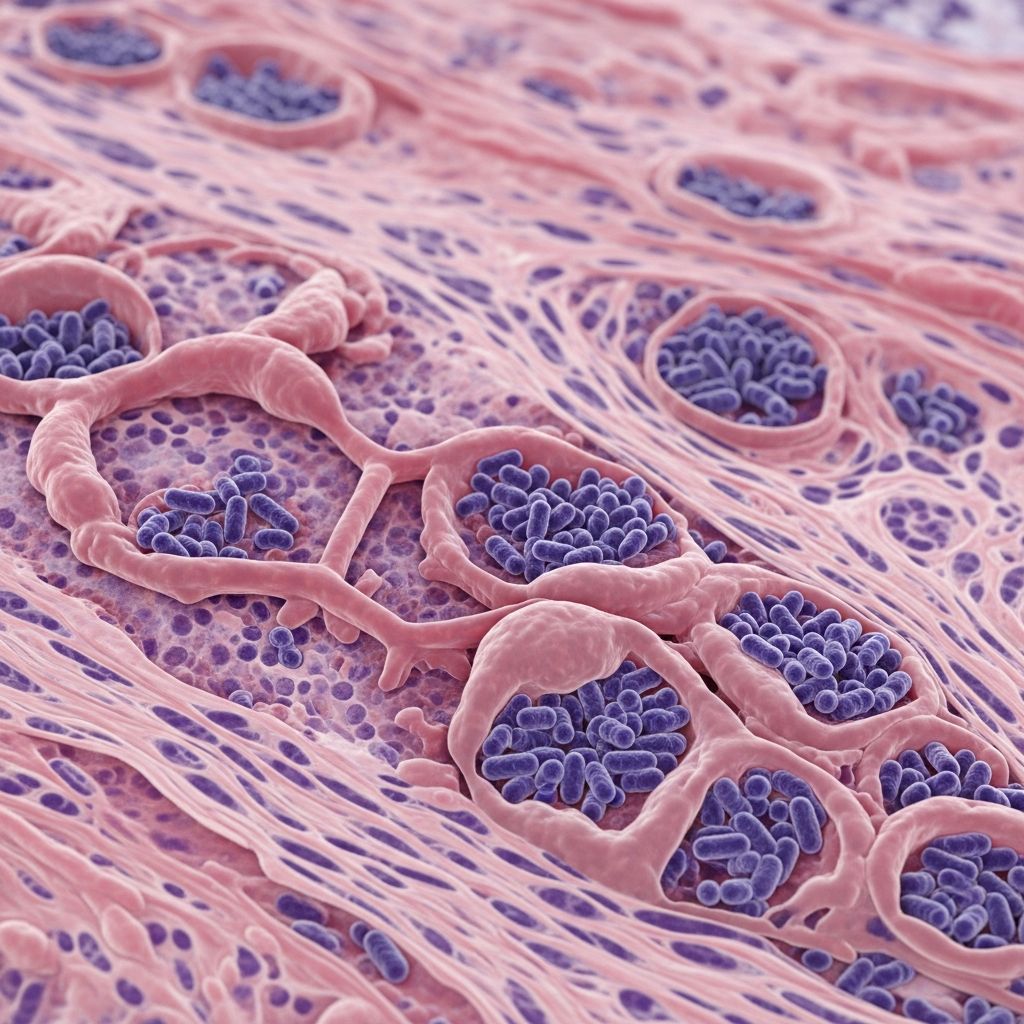
Bacillary angiomatosis is an opportunistic cutaneous and systemic bacterial infection caused by Bartonella quintana and Bartonella henselae, usually affecting immunocompromised patients.
Who gets bacillary angiomatosis?
Bacillary angiomatosis predominantly affects individuals with weakened immune systems, particularly those with drug-induced immunosuppression such as organ transplant recipients and patients with chronic lymphocytic leukaemia or HIV/AIDS. However, it can also occur in otherwise healthy individuals, including children, often following major local trauma like cat scratches or bites. The condition is classified as a category B AIDS-defining illness in HIV-infected patients, highlighting its significance in immunocompromised populations. Nearly all reported cases occur in those with advanced immunosuppression, though rare instances in immunocompetent hosts have been documented.
What causes bacillary angiomatosis?
This infection stems from two gram-negative intracellular bacteria: Bartonella quintana (formerly Rochalimaea quintana) and Bartonella henselae (formerly Rochalimaea henselae). Cats serve as the primary reservoir for B. henselae, with transmission occurring via cat bites, scratches, or flea vectors. B. quintana is transmitted human-to-human through body lice (Pediculus humanus corporis) or fleas. Ticks may act as additional vectors. Once inside the host, these bacteria infect endothelial cells, inducing uncontrolled vascular proliferation through mechanisms like upregulation of vascular endothelial growth factor (VEGF), monocyte-macrophage chemoattractant protein 1 (MCP-1), and inhibition of apoptosis. This leads to tumour-like angiomatous masses in skin and viscera.
What are the clinical features of bacillary angiomatosis?
Skin lesions typically herald the infection, presenting as the initial manifestation. Common appearances include:
- Small, initially colourless bumps that enlarge into reddish-purple nodules with prominent telangiectasia, resembling pyogenic granuloma.
- Violaceous nodules mimicking Kaposi sarcoma.
- Subcutaneous nodules, sometimes up to 10 cm, with or without ulceration, resembling bacterial abscesses.
- Lichenoid violaceous plaques, particularly hyperpigmented indurated plaques on skin of colour.
- Patients may have a single lesion or hundreds scattered across the body.
As lesions proliferate, systemic symptoms emerge: high fever, chills, night sweats, tender lymphadenopathy, nausea, vomiting, anorexia, and weight loss. Organ involvement can cause life-threatening complications, including airway obstruction from respiratory tract lesions, bone pain from lytic lesions, or gastrointestinal bleeding.
Peliosis hepatis
Liver involvement, termed bacillary peliosis hepatis, features blood-filled cystic dilatations within the liver parenchyma, often accompanied by splenomegaly. Associated symptoms include fever, elevated alkaline phosphatase, anaemia, and in severe cases, spontaneous rupture leading to hemoperitoneum. B. henselae is more commonly implicated than B. quintana. Similar peliosis can affect the spleen.
Diagnosis of bacillary angiomatosis
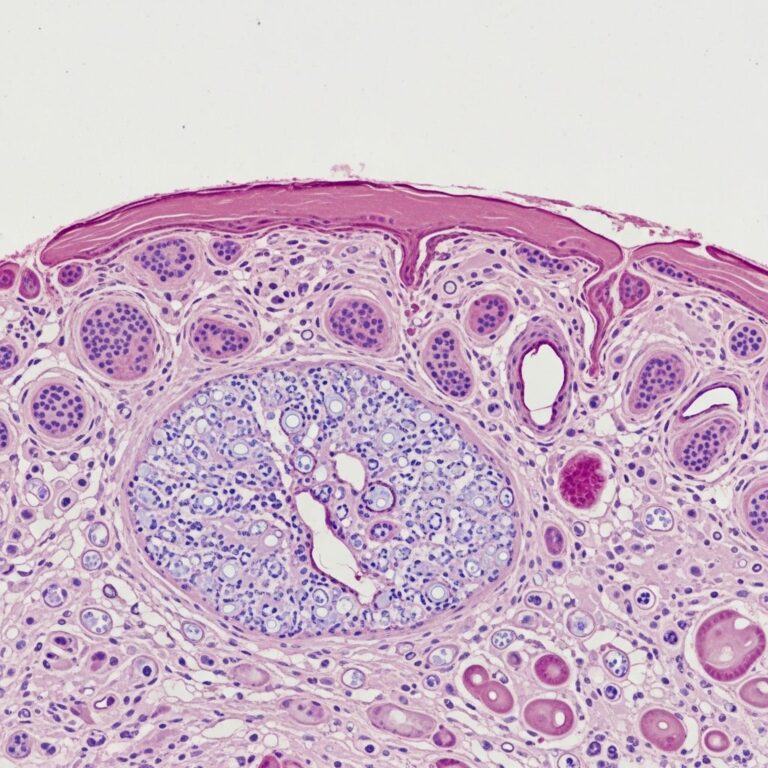
Suspicion arises clinically in at-risk patients with characteristic vascular lesions. Definitive diagnosis requires skin or lesion biopsy. Histopathology reveals:
- Lobular capillary proliferation with epithelioid endothelial cells.
- Neutrophilic infiltrate with leukocytoclastic debris and fibrin deposits.
- Basophilic clumps of bacteria in stroma, confirmed by Warthin-Starry silver stain or Giemsa stain.
Polymerase chain reaction (PCR) identifies the specific Bartonella species. Blood cultures may yield the organism after prolonged incubation. Serology detects antibodies but lacks specificity. Differential diagnoses include Kaposi sarcoma, pyogenic granuloma, angiosarcoma, and sporotrichosis.
What is the treatment for bacillary angiomatosis?
Prompt antibiotic therapy is curative for most cases. First-line agents include:
| Antibiotic | Dose | Duration |
|---|---|---|
| Erythromycin | 500 mg orally four times daily | 3–6 months |
| Doxycycline | 100 mg orally twice daily | 3–6 months |
| Azithromycin or Clarithromycin | Per specialist advice | Alternative if intolerant |
Related Stories



Treatment duration extends to 3–6 months to prevent relapse, especially in HIV patients until CD4 count exceeds 200 cells/μL for over six months alongside antiretrovirals. Large abscesses or lymph nodes may require incision and drainage. Adjunctive therapies for persistent skin lesions post-antibiotics include cryotherapy, electrodesiccation with curettage, or excision. Supportive care involves hydration, analgesics, and warm compresses.
What is the outcome of bacillary angiomatosis?
Cutaneous lesions regress within days to weeks of initiating antibiotics, though response may be incomplete initially. Systemic disease resolves with prolonged therapy, but untreated cases carry high mortality, particularly with visceral involvement. Relapse is common in immunocompromised patients upon treatment cessation, necessitating vigilant monitoring. Spontaneous resolution is rare but reported in immunocompetent hosts.
Prevention of bacillary angiomatosis
- Avoid cat scratches/bites, especially in immunocompromised individuals; trim cats’ nails and supervise interactions.
- Flea control on pets and in environment.
- Maintain immune function via antiretroviral therapy in HIV patients (target CD4 >200/μL).
- Body louse eradication in endemic settings for B. quintana.
Frequently asked questions
What is bacillary angiomatosis?
Bacillary angiomatosis is a bacterial infection by Bartonella species causing vascular proliferative lesions on skin and internal organs, primarily in immunocompromised patients.
Who is at risk for bacillary angiomatosis?
Primarily those with HIV/AIDS, transplant recipients, or other immunosuppressed states, though immunocompetent individuals can be affected post-trauma.
How is bacillary angiomatosis transmitted?
Via cat scratches/bites/fleas (B. henselae) or body lice (B. quintana). Ticks may also vector.
What do bacillary angiomatosis lesions look like?
Red-purple angiomatous papules/nodules resembling pyogenic granuloma or Kaposi sarcoma, subcutaneous masses, or plaques.
How is bacillary angiomatosis diagnosed?
By skin biopsy showing vascular proliferation and Warthin-Starry-positive bacilli, confirmed by PCR.
What is the treatment for bacillary angiomatosis?
Erythromycin or doxycycline for 3–6 months; drain abscesses if needed.
Is bacillary angiomatosis curable?
Yes, with prompt antibiotics; untreated systemic disease can be fatal.
References
- Bacillary angiomatosis (bartonella infection) — DermNet NZ. 2023. https://dermnetnz.org/topics/bacillary-angiomatosis
- Bacillary Angiomatosis — MD Searchlight. 2024-05-15. https://mdsearchlight.com/infectious-disease/bacillary-angiomatosis/
- Bartonellosis: Causes, Symptoms, Treatment & Prevention — Cleveland Clinic. 2023-11-08. https://my.clevelandclinic.org/health/diseases/bartonellosis
- Bacillary Angiomatosis — A.T. Still University. 2022. https://www.atsu.edu/faculty/chamberlain/website/lectures/bacillaryangiomatosis.htm
- Bacillary Angiomatosis — StatPearls, NCBI Bookshelf. 2023-07-17. https://www.ncbi.nlm.nih.gov/books/NBK448092/
Similar Articles








Read full bio of Sneha Tete