Back Muscles: Anatomy and Function Guide
Complete guide to back muscle anatomy, layers, and functions for better health.
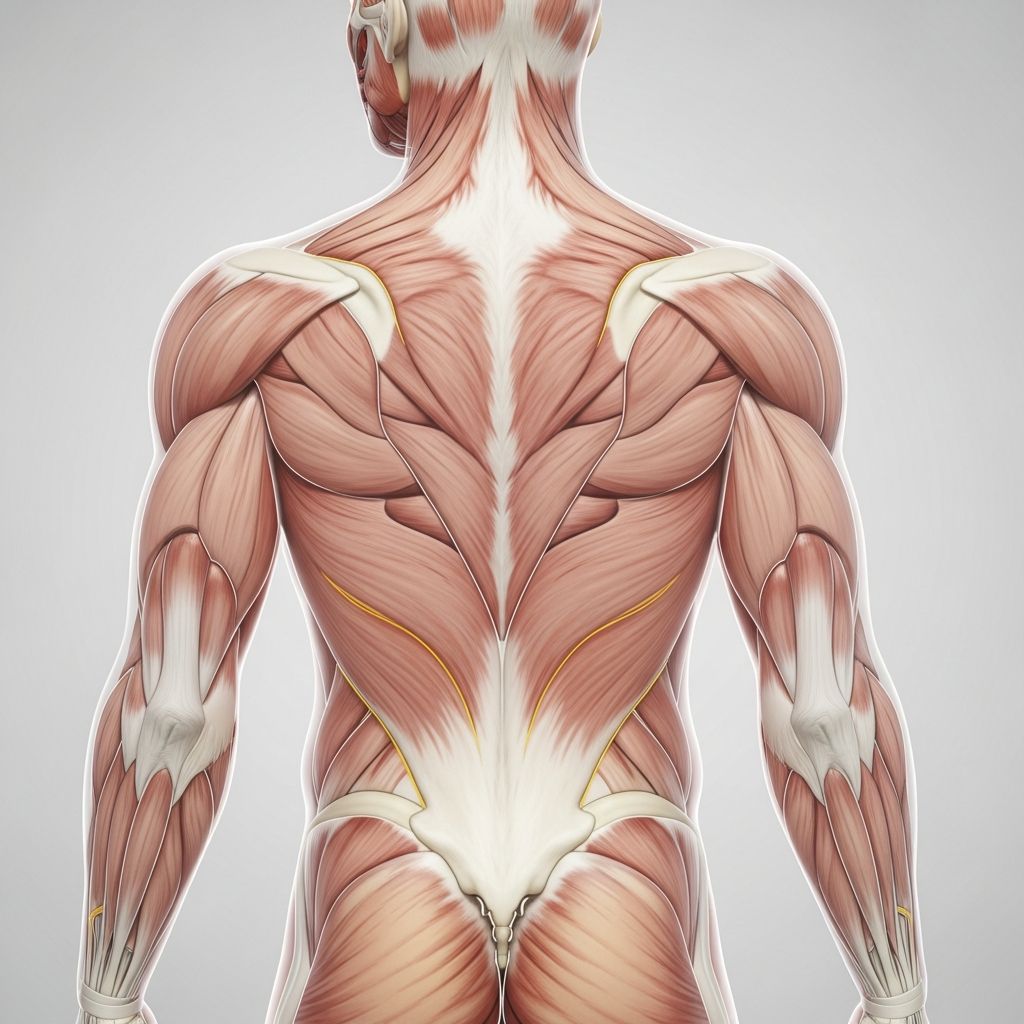
Understanding Your Back Muscles: Structure and Function
Your back muscles are among the most important muscle groups in your body, serving as the primary structural support for your trunk and enabling countless daily movements. These powerful muscles start just below your skull, extend across your shoulders, run down your entire spine, and end just above your hips. Your back muscles do far more than just help you move—they control your posture, stabilize your body, assist in breathing, and work continuously to keep you upright whether you’re sitting still or moving actively.
Back muscles function like a built-in security system for your posture and movement. Even when you’re not consciously thinking about your position, your back muscles are constantly working to hold you in place and maintain stability. This complex network of muscles weaves together like a quilt covering your back, running in all directions to coordinate movements throughout your entire body.
What Your Back Muscles Do
Your back muscles perform several critical functions that allow you to live an active, mobile life. Understanding these functions helps explain why keeping your back healthy is so important for your overall well-being.
Maintaining Posture and Stability
One of the primary roles of your back muscles is to maintain proper posture and provide structural stability to your entire trunk. Your back muscles support your body weight and keep your spine aligned, whether you’re standing, sitting, or moving. They work continuously to adjust your position and maintain balance, even when you’re not actively thinking about your posture.
Enabling Movement and Mobility
Your back muscles are responsible for a wide range of movements that you perform every day. They allow you to bend over, twist your torso, turn your head, and extend your back. These muscles work together in coordinated patterns to reposition your torso and upper body, enabling you to reach, lift, and maneuver in all directions.
Facilitating Breathing
Your back muscles play an essential role in the breathing process. They help expand and contract your chest when you breathe in (inhale) and out (exhale). This is an involuntary action that happens automatically without you consciously controlling it, yet your back muscles are essential to the mechanics of respiration.
Supporting Movement of Other Body Parts
Beyond moving your trunk and spine, your back muscles help facilitate movement of other parts of your body, including your arms, legs, head, and neck. The interconnected nature of your muscular system means that back muscles work in conjunction with muscles throughout your body to create smooth, coordinated movements.
Anatomical Location and Attachments
Your back muscles extend from the base of your skull down to just above your hips, creating a long chain of muscular support along your spine. These muscles attach to bones throughout your body, including your:
- Skull
- Spine and vertebrae
- Ribs
- Shoulders (scapula)
- Collarbone (clavicle)
- Pelvis
- Arm bones
Related Stories



This extensive network of attachments allows your back muscles to coordinate with muscles throughout your body and provide the broad support system your trunk requires for proper function.
The Three Layers of Back Muscles
Healthcare providers classify back muscles into three distinct groups or layers, each with specific functions and anatomical characteristics. Understanding these layers helps explain how your back works and why injuries can affect different aspects of movement and stability.
Superficial Back Muscles
Superficial back muscles are the ones closest to the surface, lying just under your skin. These are typically the muscles people think of when they picture back muscles, as they’re the most visible and accessible layer. Superficial muscles are primarily responsible for moving your shoulders and upper back.
The main superficial back muscles include your trapezius, which forms a trapezoid-like shape across your upper back and shoulders, helping you move your head, neck, and upper back. Your latissimus dorsi, commonly called your “lats,” are large fan-shaped muscles that help you pull your arms down and rotate your torso. Your rhomboid muscles sit between your shoulder blades and help pull your shoulders back, improving posture.
Intermediate Back Muscles
Intermediate back muscles are located just above and below your ribcage. These muscles are crucial for breathing and rib movement. You have two main intermediate back muscles: the serratus posterior superior, which helps lift your ribs during inhalation, and the serratus posterior inferior, which helps lower your ribs during exhalation. These muscles work in coordination with your lungs and diaphragm to facilitate efficient breathing.
Intrinsic Back Muscles
The intrinsic muscles form the deepest layer of back muscles, positioned closest to your spine and under the other two layers. Healthcare providers further divide intrinsic back muscles into their own subgroups: superficial intrinsic muscles, intermediate intrinsic muscles, and deep intrinsic muscles.
Even though these subgroups use names similar to the main muscle layers, they remain part of the intrinsic group. The repeated names simply reference their location relative to each other. For example, superficial intrinsic muscles are closer to the surface of your skin than intermediate intrinsic muscles, while deep intrinsic muscles are positioned underneath all other groups and subgroups. The intrinsic muscles include erector spinae muscles that run alongside your spine and provide essential support and stability.
The Microscopic Structure of Muscle
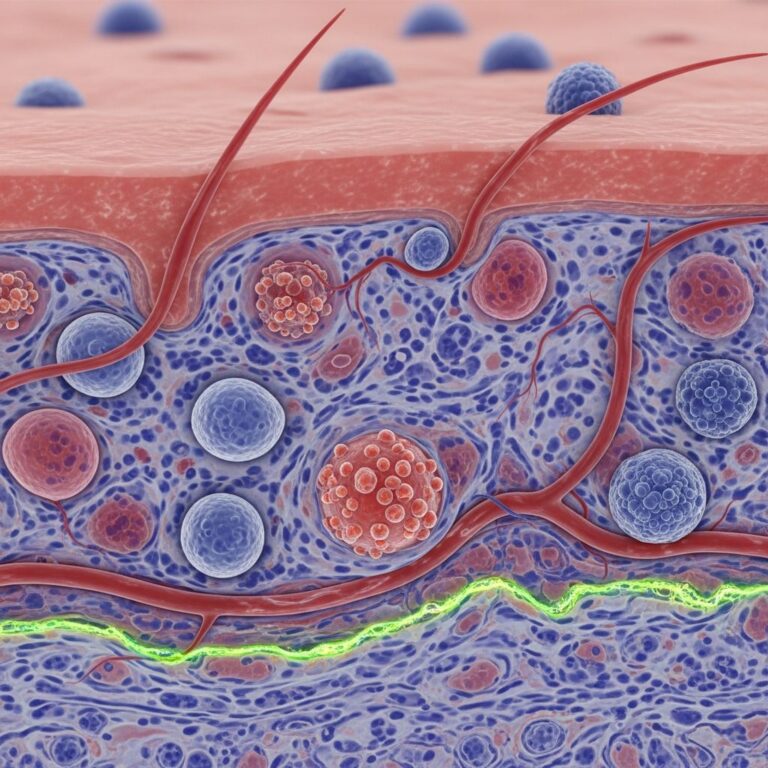
To understand how your back muscles function, it’s helpful to know how muscle tissue is organized at the microscopic level. Your muscles are composed of thousands of small fibers woven together in a complex pattern. These muscle fibers stretching and pressing together is what allows your body to move when you squeeze a muscle.
Your back muscles weave together like an intricate quilt that covers your back, running in all directions to create a flexible, strong support system. This multidirectional arrangement allows your back to move in all planes of motion while maintaining stability and support.
Common Back Muscle Injuries
Back strains are among the most common back muscle injuries. A muscle strain, also called a pulled muscle, occurs when you overuse a muscle or lift something incorrectly. During a strain, the strands of muscle fiber are stretched beyond their normal limit and tear apart.
Back strains can range from mild to severe and may occur suddenly during a specific incident or develop gradually over time. Common causes of back strains include:
- Lifting heavy objects with improper technique
- Sudden movements or awkward twisting
- Overuse from repetitive activities
- Poor posture over extended periods
- Inadequate muscle conditioning or flexibility
When back muscles are strained, you may experience pain, stiffness, muscle spasms, and reduced range of motion. Most minor back strains improve with rest, ice, over-the-counter pain relievers, and gentle stretching.
When to Seek Medical Attention
While occasional back pain or stiffness is normal, certain symptoms warrant professional evaluation. You should visit a healthcare provider if you experience:
- Back pain that lasts longer than one week
- Severe pain that limits your daily activities
- Pain following an injury or accident
- Numbness or tingling in your legs or feet
- Loss of bladder or bowel control
- Unexplained weight loss accompanying back pain
A healthcare provider can properly evaluate your symptoms, determine the underlying cause, and recommend appropriate treatment to get you back to normal functioning.
Maintaining Healthy Back Muscles
Keeping your back muscles healthy is essential for maintaining mobility, preventing injury, and enjoying an active lifestyle. Regular exercise that strengthens your back muscles, combined with proper posture awareness, can significantly reduce your risk of back problems.
Incorporating stretching, strengthening exercises, and activities like walking, swimming, or yoga can help keep your back muscles flexible and strong. Additionally, maintaining good posture during daily activities, using proper lifting techniques, and taking frequent breaks during sedentary work can help protect your back muscles from strain and injury.
Frequently Asked Questions
Q: What are the main functions of back muscles?
A: Back muscles control posture, enable movement, facilitate breathing, and provide structural support for your trunk. They work continuously to keep you stable and upright, whether you’re moving or sitting still.
Q: How many layers of back muscles do I have?
A: You have three main layers of back muscles: superficial muscles closest to the surface, intermediate muscles near your ribcage, and intrinsic muscles that form the deepest layer closest to your spine.
Q: What is the most common back muscle injury?
A: Back strains, also called pulled muscles, are the most common back muscle injuries. They occur when muscle fibers are stretched beyond their limit and tear, usually from overuse or improper lifting.
Q: When should I see a doctor for back pain?
A: Visit a healthcare provider if you experience back pain lasting longer than one week, severe pain that limits your activities, or pain accompanied by numbness, tingling, or loss of bladder/bowel control.
Q: How can I keep my back muscles healthy?
A: Regular exercise, stretching, maintaining good posture, using proper lifting techniques, and taking breaks during sedentary work can help keep your back muscles healthy and prevent injury.
References
- Back Muscles: Anatomy and Function of Upper, Middle & Lower Back — Cleveland Clinic. 2024. https://my.clevelandclinic.org/health/body/21632-back-muscles
- Trapezius Muscle: What It Is, Anatomy & Function — Cleveland Clinic. 2024. https://my.clevelandclinic.org/health/body/21563-trapezius-muscle
- Spine: Anatomy, Function, Parts, Segments & Disorders — Cleveland Clinic. 2024. https://my.clevelandclinic.org/health/body/10040-spine-structure-and-function
- The Structure And Function Of A Healthy Spine — Cleveland Clinic Abu Dhabi. 2024. https://www.clevelandclinicabudhabi.ae/en/health-hub/health-resource/diseases-and-conditions/the-structure-and-function-of-a-healthy-spine
- Psoas Muscle: What It Is, Where It Is & Anatomy — Cleveland Clinic. 2024. https://my.clevelandclinic.org/health/body/psoas-muscle
Similar Articles








Read full bio of medha deb