Understanding Backward Urine Flow in Children
Comprehensive guide to recognizing and managing urine reflux in kids
The Mechanics of Urinary Tract Dysfunction
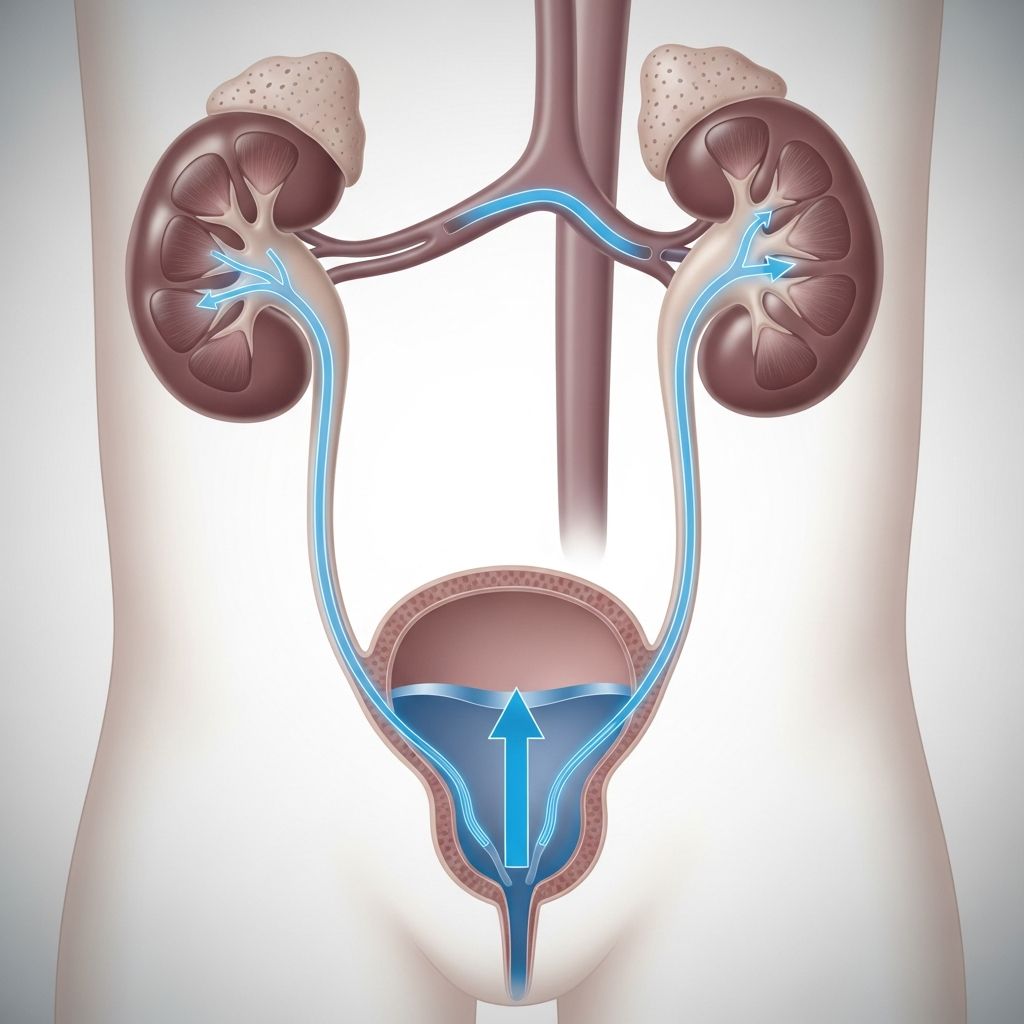
The human urinary system operates as a carefully orchestrated one-way pathway, where urine travels downward from the kidneys through specialized tubes called ureters, collecting in the bladder until it is released through the urethra during urination. This directional flow is maintained by a sophisticated valve mechanism at the junction where each ureter enters the bladder wall. However, in certain individuals—predominantly infants and young children—this protective system fails to function correctly, allowing urine to reverse direction and flow backward toward the kidneys. This abnormal retrograde movement of urine is medically termed a urinary reflux condition, and when specifically involving the ureters and kidneys, it is known as vesicoureteral reflux.
Understanding this condition is essential for parents and caregivers, as early detection and appropriate management can significantly reduce the risk of serious complications, including recurrent infections and potential kidney damage. The condition affects a notable percentage of the pediatric population, particularly newborns and children under two years of age, though older children and occasionally adults can also develop this disorder.
Origins and Development of Reflux Disorders
Vesicoureteral reflux occurs through two distinct pathways, classified as primary and secondary forms. Primary reflux represents the most common presentation and develops due to anatomical abnormalities present from birth. In this form, the ureter—rather than entering the bladder at an optimal oblique angle—penetrates the bladder wall in a nearly perpendicular orientation, eliminating the muscle tunnel that normally creates a valve effect. This geometric misalignment prevents proper closure during bladder contraction, making retrograde flow inevitable.
Secondary reflux develops differently, arising when excessive pressure builds within the bladder, forcing urine backward through otherwise normal ureter-bladder junctions. In infants, this elevated pressure often results from posterior urethral valves, a condition involving abnormal tissue flaps within the urethra. In adult cases, prostate enlargement commonly obstructs normal urine outflow, creating the pressure gradient necessary for reflux to occur.
The hereditary component of primary reflux is noteworthy; children whose parents or siblings have been diagnosed with the condition face an increased likelihood of developing it themselves. Certain congenital anomalies, particularly neural tube defects affecting spinal development, correlate with an elevated risk of reflux disorder.
Clinical Presentation and Recognition
One of the most challenging aspects of vesicoureteral reflux is its frequently silent nature. Many children with the condition display no noticeable symptoms whatsoever, with the diagnosis occurring incidentally during investigation of other medical concerns or following diagnosis in a family member. When symptoms do manifest, they are typically associated with secondary complications rather than the reflux itself.
Primary Indicators and Warning Signs
The most common clinical manifestation is a urinary tract infection, particularly one accompanied by fever. Approximately 30 percent of children presenting with fever-associated urinary tract infections are subsequently diagnosed with vesicoureteral reflux. The specific symptoms experienced depend on the infection’s location within the urinary system:
Related Stories



- Lower urinary tract involvement produces frequent or urgent urination, bedwetting or daytime accidents, burning sensations during micturition, and cloudiness or discoloration of urine
- Upper urinary tract involvement includes the aforementioned lower symptoms plus localized pain in the flank, back, or abdominal region, accompanied by systemic fever and chills
In infants too young to communicate verbally, recognition becomes more difficult. Parents and caregivers should remain alert to behavioral changes such as unusual fussiness, feeding difficulties, temperature elevation, persistent jaundice beyond the newborn period, or unexplained vomiting.
Physical Examination Findings
During clinical assessment, healthcare providers may detect physical manifestations including palpable kidney enlargement felt as an abdominal mass, failure to achieve expected growth and weight gain milestones, or elevated blood pressure readings that may indicate subclinical kidney dysfunction.
Severity Classification System
Medical professionals utilize a standardized five-grade system to classify the severity and extent of reflux, enabling consistent communication and treatment planning. This grading reflects both the anatomical extent of retrograde urine flow and the degree of structural dilation within the collecting system:
| Grade | Characteristics | Clinical Significance |
|---|---|---|
| Grade I | Urine reversal confined to ureters only | Mildest form; urine does not reach kidneys |
| Grade II | Reflux extends into renal pelvis without dilation | Urine reaches kidney but no structural enlargement |
| Grade III | Mild to moderate dilation of ureter and renal pelvis | Progressive structural changes visible on imaging |
| Grade IV | Significant dilation of ureter, pelvis, and minor calyces | Marked structural deformity; increased infection risk |
| Grade V | Severe dilation of entire upper urinary system | Most severe; highest risk of complications |
The assigned grade influences clinical decision-making regarding monitoring frequency, intervention timing, and prognostic counseling. Higher grades typically warrant more aggressive management strategies.
Diagnostic Evaluation Pathways
Establishing a definitive diagnosis involves a combination of clinical assessment and specialized imaging techniques. The diagnostic approach varies depending on the clinical context and degree of suspicion.
Laboratory and Initial Assessment
Urinalysis and urine culture form the foundation of evaluation, identifying evidence of infection, while blood tests assess kidney function and detect any evidence of renal impairment from chronic reflux. These baseline investigations help distinguish between primary reflux disease and complications arising from secondary causes.
Advanced Imaging Modalities
Abdominal ultrasound represents the first-line imaging tool, utilizing harmless sound waves to visualize the kidneys, ureters, and bladder. This non-invasive method can reveal kidney enlargement, structural changes suggesting chronic reflux, bladder wall thickening indicating obstruction, or other anatomical variants.
When reflux is specifically suspected, more specialized imaging becomes necessary. The voiding cystourethrogram (VCUG) has long served as the diagnostic gold standard, involving catheter placement to fill the bladder with radiopaque contrast material followed by sequential X-ray imaging during filling and emptying. This technique directly visualizes urine reversal and allows grading of reflux severity.
Contrast-enhanced voiding urosonography represents a newer alternative, offering comparable diagnostic accuracy to VCUG while eliminating ionizing radiation exposure—a significant advantage in the pediatric population. This technique combines ultrasound imaging with contrast material instillation, providing real-time visualization of reflux without radiation risk.
Prenatal diagnosis has become increasingly common with widespread fetal ultrasound screening. When prenatal imaging reveals kidney dilation, postnatal confirmation with imaging studies may be recommended to determine whether reflux is responsible for the findings.
Risk Factors and Potential Consequences
The most significant concern associated with vesicoureteral reflux is the elevated susceptibility to urinary tract infections. When urine reverses direction and remains in contact with the upper urinary system, bacterial contamination more readily leads to infection of the kidneys themselves, a condition termed acute pyelonephritis. Infants and young children with reflux face substantial risk for repeated episodes.
The consequences of recurrent pyelonephritis can be profound. Especially in young children, repeated inflammatory episodes—particularly when treatment is delayed—result in permanent scarring of kidney tissue. This scarring diminishes kidney function progressively, potentially leading to chronic kidney disease requiring long-term medical management or dialysis in severe cases. Early recognition and appropriate treatment substantially reduce this scarring risk, making the condition potentially preventable in many instances.
Additionally, children with untreated or inadequately managed reflux may develop hypertension due to renal parenchymal damage, further accelerating decline in kidney function.
Management Strategies and Treatment Considerations
Treatment approaches depend on multiple factors including reflux grade, presence or absence of infection, age at diagnosis, and family preferences. The encouraging news is that most children with primary vesicoureteral reflux spontaneously improve over time, with approximately 80 percent resolving without intervention by adolescence. However, active management strategies prevent complications during this resolution period.
Conservative Monitoring Approach
Many children, particularly those with lower grades of reflux and no history of infection, are managed through careful observation with prophylactic antibiotic therapy to prevent infections while spontaneous resolution occurs. Regular clinical follow-up, periodic imaging studies to monitor for progression, and urine cultures to detect asymptomatic bacteriuria form the cornerstone of this approach.
Intervention Considerations
Surgical or endoscopic intervention becomes appropriate for certain clinical scenarios, including higher grades of reflux, breakthrough infections despite prophylaxis, progressive renal scarring, non-compliance with medical management, or psychological factors favoring definitive treatment. Modern minimally invasive techniques offer alternatives to traditional open surgical approaches, with comparable effectiveness and reduced recovery requirements.
Frequently Asked Questions
Is vesicoureteral reflux a painful condition?
Reflux itself is not inherently painful. However, secondary urinary tract infections accompanying the condition produce characteristic pain with urination and localized discomfort in the kidney or abdominal region.
Can older children or adults develop this condition?
While vesicoureteral reflux predominantly affects infants and young children, older children and occasionally adults can develop the condition, particularly secondary forms resulting from bladder outlet obstruction.
What distinguishes unilateral from bilateral reflux?
Unilateral reflux affects only one ureter and kidney, while bilateral reflux involves both sides of the urinary system, generally indicating more extensive disease requiring closer monitoring.
How is reflux detected during prenatal care?
Prenatal ultrasounds may reveal kidney dilation (hydronephrosis), prompting postnatal imaging studies to confirm whether reflux is the underlying cause.
Outlook and Long-term Prognosis
The prognosis for children with vesicoureteral reflux has improved substantially with modern diagnostic and treatment approaches. Most children with primary reflux experience spontaneous resolution during childhood, particularly those with lower grades. Even children requiring intervention have excellent long-term outcomes when managed appropriately to prevent kidney complications. The key to optimal outcomes lies in early recognition through appropriate screening of children with urinary tract infections, appropriate grading through specialized imaging, and individualized treatment plans balancing infection prevention with spontaneous resolution potential.
References
- Vesicoureteral Reflux — St. Louis Children’s Hospital. Accessed 2026. https://www.stlouischildrens.org/conditions-treatments/vesicoureteral-reflux
- Vesico-ureteric Reflux: Symptoms, Diagnosis and Treatments — Kidney Research UK. Accessed 2026. https://www.kidneyresearchuk.org/conditions-symptoms/vesico-uretal-reflux/
- Vesicoureteral Reflux (VUR) — Nemours KidsHealth. Accessed 2026. https://kidshealth.org/en/parents/vesicoureteral-reflux.html
- Vesicoureteral Reflux (VUR): Causes, Symptoms & Treatment — Cleveland Clinic. Accessed 2026. https://my.clevelandclinic.org/health/diseases/5995-vesicoureteral-reflux
- Vesicoureteral Reflux (VUR) — Children’s Hospital of Philadelphia. Accessed 2026. https://www.chop.edu/conditions-diseases/vesicoureteral-reflux-vur
- Vesicoureteral Reflux (VUR) — National Institute of Diabetes and Digestive and Kidney Diseases (NIDDK). Accessed 2026. https://www.niddk.nih.gov/health-information/urologic-diseases/hydronephrosis-newborns/vesicoureteral-reflux
Similar Articles








Read full bio of Sneha Tete