Baclofen for Chronic Muscle Spasm (Lyflex, Lioresal)
Comprehensive guide to baclofen: uses, dosage, side effects, and management of chronic muscle spasms in MS and spinal conditions.
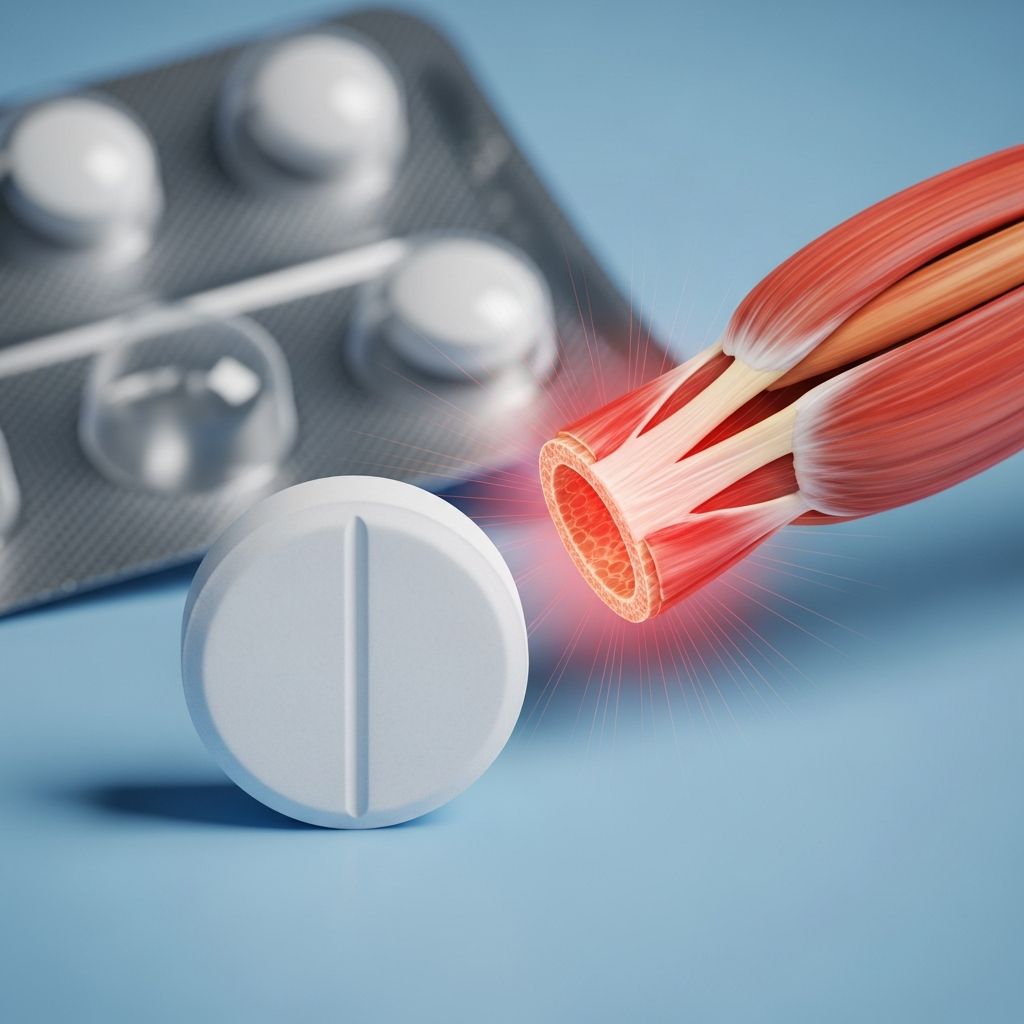
Baclofen is a skeletal muscle relaxant used to relieve chronic muscle spasms associated with conditions like multiple sclerosis (MS) and spinal cord injuries. It works by acting on nerves in the spinal cord to reduce spasm frequency and severity, easing pain and improving mobility.
| Type of medicine | Skeletal muscle relaxant |
|---|---|
| Used for | To relieve muscle spasms |
| Also called | Lyflex®; Lioresal® |
| Available as | Tablets, oral liquid and injection |
About baclofen
Long-term muscle stiffness, known as
spasticity
, develops in conditions such as multiple sclerosis or nerve damage from spinal cord injuries, strokes, or cerebral palsy. Affected muscles contract tightly, becoming stiff, painful, and difficult to move. Baclofen relaxes these muscles by mimicking the neurotransmitter GABA, binding to GABA-B receptors in the spinal cord. This hyperpolarizes motor neurons, inhibiting reflex hyperactivity that causes spasms, clonus, and pain.Unlike general muscle relaxants, baclofen specifically targets spasticity from neurological damage rather than short-term strains. It decreases spasm number and severity, improves muscle movement, and alleviates discomfort without causing complete muscle weakness in most cases. Clinical studies confirm its efficacy across mild to severe spasticity origins, outperforming placebo in reducing muscle tone (55-72% improvement vs. 0-17%) and spasm frequency (42-72% vs. 6-16%).
Baclofen is available in oral forms (tablets 10mg, oral solution) for systemic use and intrathecal injections via pump for severe cases, delivering medication directly to the spinal fluid to minimize side effects.
Key facts about baclofen
- Baclofen reduces pain and discomfort from muscle spasms, starting to work within 1 hour for oral forms, though optimal dosing may take days.
- Common side effects include drowsiness, nausea, and fatigue; these often improve as the body adjusts.
- Do not stop suddenly; taper over 1-2 weeks to avoid withdrawal symptoms like seizures or hallucinations.
- Suitable for long-term use in chronic conditions like MS or spinal cord lesions.
- Intrathecal baclofen pumps provide targeted relief for severe spasticity, improving gait, comfort, and function with fewer systemic effects.
How baclofen works
Baclofen is a GABA-B receptor agonist, selectively binding to presynaptic sites in the spinal cord. This reduces excitatory neurotransmitter release, dampening stretch reflexes, clonus, and spasm triggers. For spinal cord spasticity, it relieves flexor spasms and pain; cerebral origins respond at lower doses.
Systematic reviews show oral baclofen superior to placebo in 5/10 trials for tone reduction and all assessed spasm studies. It matches tizanidine and diazepam in efficacy but may cause more weakness at high doses. Intrathecal delivery bypasses blood-brain barriers, using microgram doses (300-800μg/day spinal vs. 20-120mg oral).
When to take baclofen
Take with or after food to reduce nausea. Oral doses start low and titrate slowly. Tablets: swallow whole. Liquid: use provided syringe.
Dosage for adults (oral)
| Condition | Starting Dose | Maintenance Dose | Max Daily |
|---|---|---|---|
| Spinal spasticity | 5mg 3x/day | 30-80mg (divided) | 80mg |
| Cerebral spasticity | 5mg 3x/day | 30-60mg (divided) | 60mg |
Increase by 5-10mg every 3 days until effective. SCI patients tolerate higher doses (up to 200mg).
Related Stories



For children (8+ years): start 0.3mg/kg/day, max 1.5mg/kg/day (40mg). Elderly: lower doses due to sensitivity.
Intrathecal: screening dose 50μg, titrate to 300-800μg/day via pump.
How long to take it for
Often lifelong for chronic spasticity. Periodic dose reviews needed; tolerance may develop, requiring breaks or pump adjustments.
Getting the most from your treatment
- Avoid alcohol; enhances drowsiness.
- Physiotherapy complements baclofen to maintain mobility.
- Monitor spasms; report lack of improvement.
- Drive only if unaffected; sedation impairs.
- Combine with antispastics if needed, but watch interactions.
Side-effects of baclofen
Most are mild, dose-related, and resolve with reduction. Serious effects rare.
| Common (>1/10) | Less Common | Rare/Serious |
|---|---|---|
| Drowsiness, nausea, fatigue | Dizziness, headache, weakness | Seizures (withdrawal), hallucinations, breathing issues |
| Insomnia, constipation | Urinary issues, confusion | Low blood pressure, depression |
Muscle weakness more with baclofen vs. tizanidine. Intrathecal: infection risk at pump site. Report severe symptoms immediately.
How to cope with side effects
- Drowsiness: Take evening doses early; avoid driving.
- Nausea: With food; ginger aids.
- Weakness: Dose reduction; physio.
- Withdrawal: Taper slowly under supervision.
Precautions when taking baclofen
Not for acute spasms or epilepsy alone. Caution in kidney/liver disease, psychosis, elderly, pregnancy (category C).
- Epilepsy: may worsen seizures.
- Peptic ulcers: risk of bleeding.
- Pregnancy: use if benefits outweigh risks; monitor newborn.
- Breastfeeding: low amounts in milk; generally safe.
Interactions
Additive sedation with opioids, benzodiazepines, alcohol. Antihypertensives: enhanced hypotension. Reduce doses accordingly.
Stopping baclofen
Abrupt halt risks rebound spasticity, hallucinations, seizures. Reduce by 10% every 3-4 days over 1-2 weeks.
Other medicines for muscle spasm
| Medicine | Examples | Notes |
|---|---|---|
| GABA agonists | Baclofen | First-line for spinal spasticity. |
| Alpha-2 agonists | Tizanidine | Similar efficacy, less weakness. |
| Benzodiazepines | Diazepam | Sedating; short-term. |
| Dantrolene | Dantrium | Acts on muscle directly; hepatotoxic. |
| Intrathecal | Baclofen pump | For refractory cases. |
Baclofen comparable to others; choice by side effects.
Frequently Asked Questions (FAQs)
Q: How quickly does baclofen work?
Oral baclofen starts in 1 hour; full effect in days with titration.
Q: Can I drink alcohol on baclofen?
No; increases sedation and dizziness risk.
Q: Is baclofen safe long-term?
Yes, for chronic spasticity; monitor tolerance.
Q: What if I miss a dose?
Take ASAP; skip if near next. Never double.
Q: Baclofen vs. intrathecal pump?
Pump for severe cases: lower dose, fewer sides, better function.
References
- Baclofen for chronic muscle spasm (Lyflex, Lioresal) — Patient.info. 2023. https://patient.info/medicine/baclofen-for-chronic-muscle-spasm-lyflex-lioreal
- Baclofen: MedlinePlus Drug Information — MedlinePlus (NIH). 2024-01-15. https://medlineplus.gov/druginfo/meds/a682530.html
- Efficacy and safety of oral baclofen for spasticity — Journal of Rehabilitation Medicine. 2017-05-04. https://www.medicaljournals.se/jrm/content/html/10.2340/16501977-2211
- About baclofen — NHS.uk. 2024. https://www.nhs.uk/medicines/baclofen/about-baclofen/
- Baclofen Tablets — Cleveland Clinic. 2023. https://my.clevelandclinic.org/health/drugs/19760-baclofen-tablets
- Baclofen – StatPearls — NCBI Bookshelf (NIH). 2024-08-11. https://www.ncbi.nlm.nih.gov/books/NBK526037/
- Treating Spasticity with a Baclofen Pump — Kennedy Krieger Institute. 2023. https://www.kennedykrieger.org/treating-spasticity-with-a-baclofen-pump
Similar Articles








Read full bio of medha deb