Bacterial Biofilm: Definition, Formation & Skin Impact
Understanding bacterial biofilms: How they form, resist treatment, and affect skin health.
Bacterial Biofilm: Understanding Formation and Skin Impact
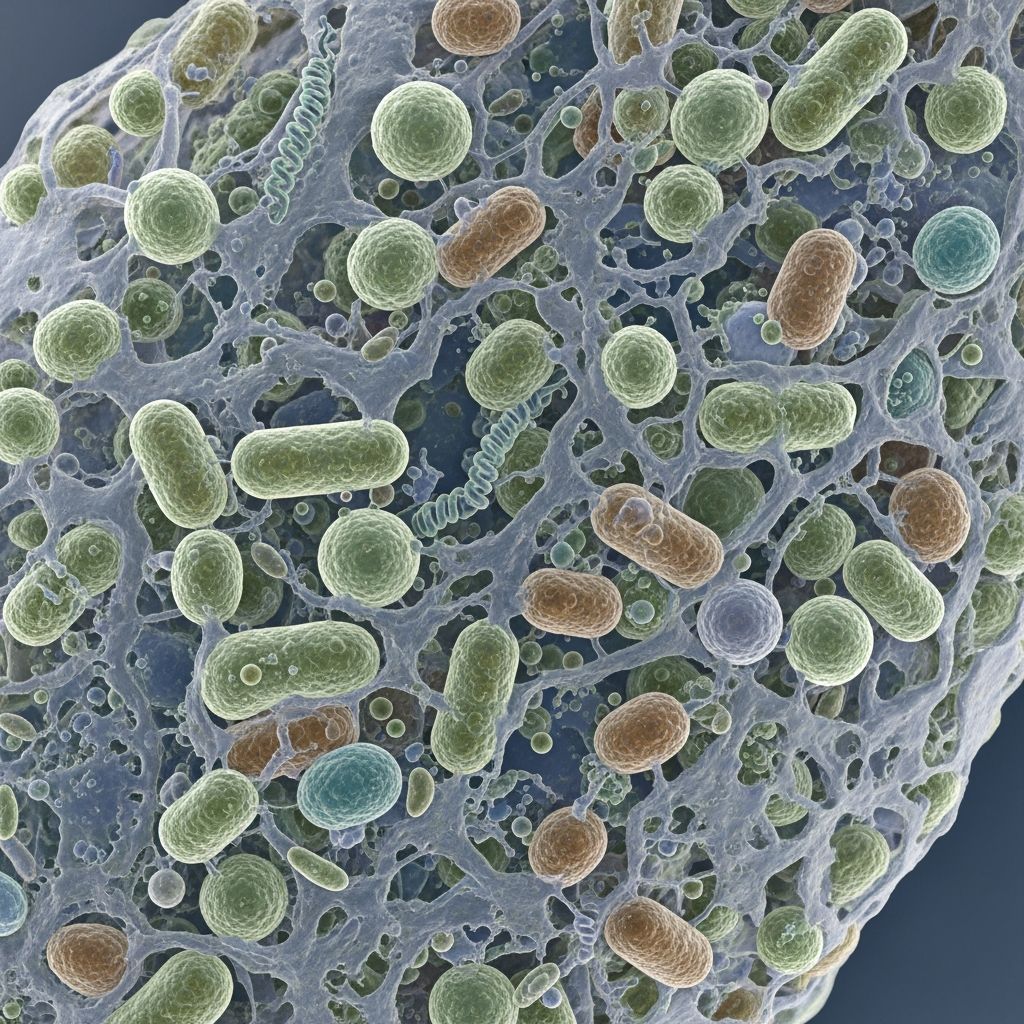
Bacterial biofilms are collections of bacteria that have attached to a surface—such as a wound, prosthetic joint, skin, or teeth—and to each other, forming organized microbial communities encased in a complex matrix of extracellular polymeric substances (EPS). These biofilms represent the predominant bacterial phenotype on both healthy and diseased human skin, fundamentally differing from planktonic bacteria, which are free-floating single cells. Understanding biofilm structure and behavior is essential for dermatologists, as these microbial communities pose significant challenges to conventional antibiotic therapy and host immune defenses.
What Are Biofilms?
Biofilms are complex, sessile microbial communities consisting of one or more bacterial species surrounded by extracellular polymeric substances. The EPS matrix is composed of polysaccharides, proteins, extracellular DNA, and host-produced factors, creating a sophisticated three-dimensional structure. Beyond providing structural support, the EPS matrix serves informative, redox-active, and nutritive roles within the biofilm community.
These bacterial communities attach to biological and nonbiological surfaces with altered phenotypes and growth characteristics distinct from their planktonic counterparts. Biofilms protect microorganisms from altered pH levels, osmolarity changes, nutrient scarcity, mechanical and shear forces, while simultaneously blocking antibiotics and preventing access to host immune cells. This protective architecture enables bacteria to tolerate harsh host environments and persist in infections.
Stages of Biofilm Formation
Bacterial biofilm formation is a sophisticated multi-step process that varies slightly depending on bacterial species but follows a generally consistent pattern:
- Stage 1 – Initial Attachment: Free-floating microorganisms first attach to a surface using surface-specific adhesion molecules that recognize device or tissue surface receptors. Upon adhesion, gene expression levels are immediately affected, initiating biofilm development.
- Stage 2 – Microcolony Formation: Following surface colonization, bacteria communicate using quorum sensing (QS) products, such as N-acyl homoserine lactone and autoinducer-2. These signaling molecules coordinate bacterial behavior and facilitate community organization.
- Stage 3 – EPS Production and Maturation: Bacterial cells synthesize extracellular polymeric substances while forming microbial communities and early biofilm structures. During this stage, metabolic activity is modified through reduced growth rates and increased EPS production, along with alterations in genes associated with biofilm emergence. The mature biofilm develops three-dimensional architecture with maximum cell density.
- Stage 4 – Mature Biofilm: The fully developed biofilm reaches its maximum cell density and becomes a true three-dimensional community, with the EPS matrix holding cells in close proximity to enable cell-to-cell communication and facilitate horizontal gene transfer.
- Stage 5 – Dispersal: The mature biofilm releases microcolonies of cells from the main community, which are free to migrate to new surfaces and spread infections to additional sites.
Advantages of Biofilm Formation
Biofilm formation provides significant survival advantages to organisms, including:
- Protection from host defenses and inflammatory responses
- Metabolic cooperation among bacterial cells
- Increased virulence compared to planktonic forms
- Differential gene expression enabling specialized functions
- Dramatically increased resistance to antimicrobial agents
These advantages combine to create biofilms as formidable barriers to treatment and immune clearance.
Antibiotic Resistance Mechanisms in Biofilms
Antibiotic tolerance in biofilms is defined as the ability of biofilm-residing bacteria to survive antimicrobial treatment by utilizing their existing complement of genes. The degree of resistance is remarkable: bacteria within biofilms demonstrate 10 to 1,000 times greater antibiotic resistance compared to planktonic cells, with some studies showing resistance increases of 50 to 500 times. In certain cases, biofilms can reduce bacterial susceptibility to antibiotics by up to 1,000 fold.
Related Stories



Key Factors Contributing to Antibiotic Tolerance
Multiple factors contribute to biofilm antibiotic tolerance, divided into innate (due to biofilm growth) and induced (due to antimicrobial treatment response) categories:
- Physical Barrier: The extracellular matrix prevents antibiotic diffusion through the biofilm structure, reducing drug concentration at deeper bacterial cells.
- Altered Growth and Metabolism: Cells within biofilms exhibit different growth kinetics, with cells deeper in the polymer existing in stationary phase (slow or non-growth phase), making them less susceptible to β-lactam antibiotics that target actively dividing cells.
- Persister Cells: Metabolically dormant, antibiotic-resistant persister cells can recolonize biofilms following antibiotic administration.
- Viable-But-Nonculturable State: Bacteria may enter a state of latency, surviving antibiotic stress without growth.
- Increased Mutation Rates and Gene Transfer: Enhanced genetic exchange through horizontal gene transfer increases adaptive capacity.
- Phenotype Switching: Bacteria alter their phenotypic expression to evade antimicrobial effects.
- Increased Efflux Pumps: Biofilm bacteria produce enhanced efflux pump systems that actively remove antibiotics from cells.
- Enzyme Production: Biofilms produce enzymes such as β-lactamases that inactivate certain antibiotic classes.
Biofilms in Specific Dermatological Conditions
Atopic Dermatitis
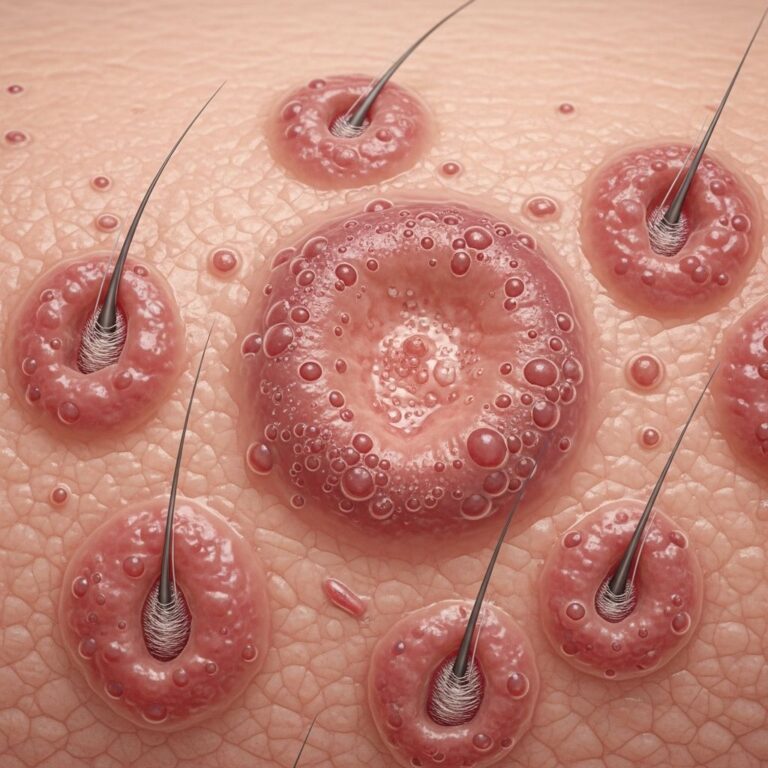
Staphylococcus aureus (S. aureus) and Staphylococcus epidermidis (S. epidermidis) are the two most commonly found bacteria in atopic dermatitis (AD) lesions and are known to form biofilms. Studies demonstrate that S. aureus is identified more frequently in AD lesions and atopic skin than in normal skin and is implicated in disease pathogenesis. Research by Katsuyama and colleagues revealed that biofilm-related antibiotic resistance of S. aureus, combined with its rapid growth, contributes significantly to its colonization in atopic skin.
In one study of 40 patients with AD, 93% of biopsied lesions contained staphylococci, with 85% being strong biofilm producers. Treatment goals focus on reducing inflammation and improving dysbiosis by reducing S. aureus populations. Sodium hypochlorite bleach baths have demonstrated efficacy in improving clinical AD symptoms by limiting bacterial colonization and restoring skin surface microbiome. Research shows significant anti-staphylococcal and anti-biofilm activity at a concentration of 0.02% compared to the standard recommendation of 0.005%.
Acne
Propionibacterium acnes (P. acnes) can form biofilms both in vitro and on implants, a mechanism first clearly hypothesized by Burkhart and Burkhart in 2003. This biofilm formation is aided by autoinducer-2, which acts as a quorum sensing molecule, allowing bacteria to organize and optimize nutrient utilization within the biofilm structure.
Within P. acnes biofilms, bacteria exhibit microheterogeneity controlled by various genes, creating distinct phenotypes and functional specialization. Additionally, toll-like receptors TLR2 and TLR4 are activated to bind to biofilms, which activate the transcription factor NFκB, leading to a robust proinflammatory response characteristic of acne. Well-nested within biofilms, P. acnes become protected from antimicrobial effects, necessitating long-term treatment for acne that sometimes yields limited success.
Filler Granulomas
Bacterial biofilms have been implicated in complications following cosmetic filler injections. P. acnes, Staphylococcus, and Pseudomonas species have been isolated from biopsy samples of filler granulomas, likely representing bacterial contamination during filler injection therapy. This finding points to the importance of broad-spectrum antibiotics for treatment and resolution of these lesions. Notably, steroids should be avoided in this context, as they may worsen the condition.
Clinical Implications and Challenges
Bacterial biofilms present significant clinical challenges due to their persistent nature and resistance to conventional antimicrobial therapy. Their altered phenotype makes detection using routine culture techniques extremely difficult, complicating accurate diagnosis. The predominance of biofilms on both healthy and diseased skin means that clinicians must fundamentally reconsider approaches to bacterial skin infections.
The persistent nature of biofilm-associated infections has profound implications for treatment duration, antibiotic selection, and overall clinical outcomes. Inappropriate use of antibiotics may actually enhance biofilm formation, creating a paradox where standard antimicrobial therapy inadvertently worsens the condition.
Treatment Approaches
Despite recent developments, complete eradication of biofilms in dermatological disorders remains challenging. However, novel treatment approaches have been attempted and tested with varying degrees of efficacy, including:
- Topical antimicrobial and anti-biofilm agents
- Light-based therapies and laser treatments
- Sodium hypochlorite solutions for biofilm disruption
- Systemic antibiotics with enhanced biofilm penetration
- Combination therapies targeting multiple biofilm mechanisms
Better understanding of biofilm composition and structure will lead to the development of improved therapeutic strategies that can effectively disrupt and prevent biofilm formation.
Future Perspectives
Newer molecular and genome analyses have provided unprecedented opportunities to understand biofilm roles in cutaneous disease pathogenesis. As biofilm is now recognized as the predominant bacterial phenotype on skin that fundamentally alters host immunity and antibiotic susceptibility, researchers will likely need to rewrite understanding of its role in the etiopathogenesis of cutaneous diseases.
Future research directions include developing targeted therapies that specifically disrupt biofilm matrix components, enhance antibiotic penetration, and restore host immune recognition of biofilm-associated bacteria. Understanding the precise mechanisms of quorum sensing and cell-to-cell communication may enable novel intervention strategies that prevent biofilm formation or trigger dispersal of existing biofilms.
Frequently Asked Questions
Q: What is the difference between biofilm bacteria and planktonic bacteria?
A: Planktonic bacteria are free-floating, individual cells with limited protection. Biofilm bacteria are organized communities encased in a protective extracellular matrix, demonstrating 10 to 1,000 times greater antibiotic resistance and enhanced virulence compared to their planktonic counterparts.
Q: How long does it take for a bacterial biofilm to form?
A: Biofilm formation is a multi-stage process beginning with initial bacterial attachment, followed by microcolony formation, maturation with EPS production, and eventual dispersal. The timeline varies depending on bacterial species, environmental conditions, and substrate characteristics, but typically progresses over hours to days.
Q: Why are antibiotics less effective against biofilms?
A: Multiple factors reduce antibiotic effectiveness, including the physical barrier of the EPS matrix that prevents drug penetration, altered bacterial metabolism making cells less susceptible to growth-dependent antibiotics, production of inactivating enzymes, increased efflux pumps, and the presence of metabolically dormant persister cells.
Q: Can biofilms be completely eradicated from skin?
A: Complete eradication of biofilms remains challenging despite recent developments. However, combination approaches using topical agents, antimicrobial solutions like sodium hypochlorite, and systemic antibiotics can significantly reduce biofilm burden and improve clinical outcomes.
Q: Is Staphylococcus aureus always present in atopic dermatitis?
A: No, but it is highly prevalent. Studies show that 93% of biopsied AD lesions contain staphylococci, with 85% being strong biofilm producers, making bacterial control an important treatment component.
Q: How does quorum sensing contribute to biofilm formation?
A: Quorum sensing uses chemical signaling molecules like N-acyl homoserine lactone and autoinducer-2 to enable bacteria to communicate, coordinate behavior, and regulate genes essential for biofilm development, maturation, and virulence.
References
- Biofilm in dermatology — Journal of Skin and Sexually Transmitted Diseases. Accessed via jsstd.org. https://jsstd.org/biofilm-in-dermatology/
- A Review of the Role and Treatment of Biofilms in Skin Disorders — Skin Therapy Letter. https://www.skintherapyletter.com/acne/treatment-of-biofilms-in-skin-disorders/
- Biofilms in Dermatology — Our Dermatology Online, 2025. https://www.odermatol.com/issue-in-html/2025-2-17-biofilms_dermatology/
- The Role of Biofilms in Dermatological Disease — British Journal of Dermatology, Oxford Academic. https://academic.oup.com/bjd/article-abstract/165/4/751/6644026
- Understanding Bacterial Biofilms: From Definition to Treatment — National Center for Biotechnology Information (NCBI). https://pmc.ncbi.nlm.nih.gov/articles/PMC10117668/
Similar Articles








Read full bio of Sneha Tete