Bacterial Conjunctivitis: How To Diagnose, Treat & Prevent
Comprehensive guide to bacterial conjunctivitis: causes, symptoms, diagnosis, treatment, and prevention strategies for this common eye infection.
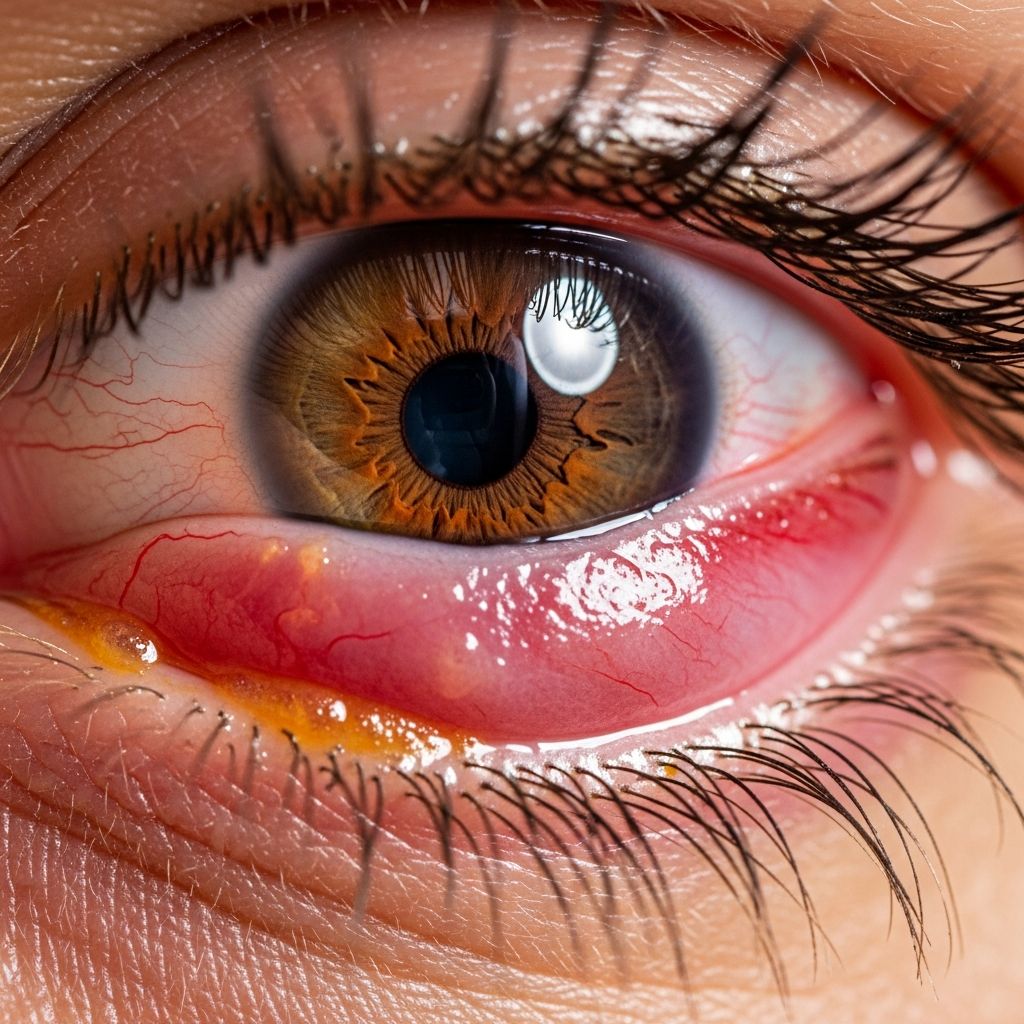
Bacterial conjunctivitis is a common, highly contagious infection of the conjunctiva, the thin transparent layer covering the white part of the eye and inner eyelids, leading to redness, discharge, and discomfort. It is one of the most frequent causes of red eye presentations in primary care and can affect people of all ages, though it is particularly prevalent in children.
What is the conjunctiva?
The conjunctiva is a thin, transparent mucous membrane that lines the inner surface of the eyelids and covers the front surface of the sclera (the white of the eye). It plays a crucial role in protecting the eye from pathogens and debris while producing lubricating mucus and tears. Inflammation of this membrane, known as conjunctivitis, results in the characteristic red appearance of the eye due to dilated blood vessels.
Who gets bacterial conjunctivitis?
Bacterial conjunctivitis affects individuals across all age groups but is most common in children under 5 years and those in close-contact environments like schools, daycare centers, and households. Risk factors include crowded living conditions, poor hygiene, contact lens wear (especially with improper cleaning), and exposure to infected individuals. Immunocompromised patients or those with chronic eyelid conditions like blepharitis are also more susceptible.
- Children: High incidence due to Haemophilus influenzae, Streptococcus pneumoniae, and Moraxella catarrhalis.
- Adults: Often linked to Staphylococcus aureus, particularly in chronic cases.
- Contact lens users: Increased risk of severe complications like keratitis.
What causes bacterial conjunctivitis?
The most common causative organisms are Staphylococcus aureus, Streptococcus pneumoniae, Haemophilus influenzae, and Moraxella catarrhalis. These bacteria are normal flora on the skin and respiratory tract but can invade the conjunctiva via direct contact or autoinoculation (touching nose/eyes).
Other notable causes include:
- Hyperacute form: Neisseria gonorrhoeae or Neisseria meningitidis, leading to rapid, severe progression.
- Chronic form: Staphylococcus aureus or Moraxella lacunata, often associated with blepharitis.
- Chlamydial conjunctivitis: Chlamydia trachomatis, causing follicular patterns and syndromes like trachoma, inclusion conjunctivitis, or adult inclusion conjunctivitis.
Transmission occurs through direct contact with infected eye secretions, contaminated fomites (towels, makeup), or respiratory droplets. It is highly contagious, spreading easily in households or schools.
What are the symptoms of bacterial conjunctivitis?
Symptoms typically develop acutely over 1-2 days, starting in one eye and spreading to the other. Key features include:
- Redness (hyperaemia) of the conjunctiva and eyelids.
- Purulent discharge: Thick, yellow-green pus that causes eyelids to stick together, especially upon waking (“glue eye”).
- Gritty or foreign body sensation, mild photophobia, and tearing.
- Lid swelling and crusting of eyelashes.
- No significant pain or vision loss in uncomplicated cases.
Symptom severity varies by type:
| Type | Symptoms | Onset |
|---|---|---|
| Acute | Mild-moderate discharge, redness; self-limited 1-2 weeks. | 1-3 days |
| Hyperacute | Profuse exudate, severe chemosis, pain, vision threat. | 12-48 hours |
| Chronic | Persistent irritation, flaky lids with blepharitis. | >4 weeks |
Related Stories



Clinical features distinguishing bacterial from other conjunctivitis
Bacterial conjunctivitis is differentiated by prominent purulent discharge and lack of intense itching (vs. allergic). Viral forms have watery discharge and preauricular nodes; allergic has bilateral itching and chemosis.
- Bacterial hallmark: Sticky, yellow-green pus; unilateral start.
- Viral: Serous discharge, respiratory symptoms.
- Allergic: Itch-dominant, no pus.
- Hyperacute: Rapid lid swelling, pseudomembrane.
How is bacterial conjunctivitis diagnosed?
Diagnosis is primarily clinical based on history and slit-lamp exam showing follicular or papillary reactions. Culture/swabs are reserved for severe, chronic, neonatal, or treatment-resistant cases. Chlamydial PCR if follicular pattern suspected. Referral if hyperacute features or vision impairment.
What is the treatment for bacterial conjunctivitis?
Many cases resolve spontaneously in 5-14 days, but topical antibiotics hasten recovery (especially if started early), reduce contagiousness, and prevent complications.
Acute bacterial conjunctivitis:
- Chloramphenicol 0.5% drops: 1 drop every 2 hours day 1-2, then 3-4x/day until 48h post-resolution.
- Framycetin 0.5% drops or chloramphenicol 1% ointment at night.
- Alternatives: Fluoroquinolones (e.g., moxifloxacin) for contact lens wearers.
Hyperacute: Urgent ophthalmology referral; systemic + topical antibiotics (ceftriaxone IM/IV).
Chlamydial/Chronic: Systemic doxycycline or azithromycin; treat partner.
Supportive care:
- Warm compresses for lid hygiene.
- Artificial tears; avoid vasoconstrictors.
- Corticosteroids only under specialist supervision—risk corneal perforation.
Discard opened bottles post-treatment. Complete course.
Complications of bacterial conjunctivitis
Usually mild, but risks include:
- Keratitis, corneal ulcer/perforation (hyperacute, contact lens).
- Chronicity with blepharitis/scarring.
- Trachoma: Blindness in endemic areas (Chlamydia).
- Neonatal: Systemic gonococcal/chlamydial infection.
How can bacterial conjunctivitis be prevented?
Prevention focuses on hygiene and containment:
- Hand hygiene: Wash frequently; avoid eye touching.
- Don’t share towels, makeup, pillows.
- Discard contaminated contacts; clean cases rigorously.
- Isolate infected children from school until discharge-free (24-48h post-antibiotics).
- Clean lids with boiled/cooled water.
Patient education reduces community spread.
Related topics
- Viral conjunctivitis
- Allergic conjunctivitis
- Blepharitis
- Trachoma
- Neonatal conjunctivitis
Frequently Asked Questions
Q: How long is bacterial conjunctivitis contagious?
A: Contagious until 24-48 hours after starting antibiotics or until discharge resolves; practice hygiene throughout.
Q: Can I wear contact lenses with bacterial conjunctivitis?
A: No—remove immediately, discard if disposable, and avoid until cleared to prevent keratitis.
Q: Is bacterial conjunctivitis dangerous?
A: Usually not, but hyperacute forms threaten vision; seek urgent care for severe pain/swelling.
Q: Do I need antibiotics for pink eye?
A: Topical antibiotics speed recovery and reduce spread; self-limits in 1-2 weeks otherwise.
Q: How to clean crusty eyes?
A: Use warm compresses and sterile saline; gently wipe from inner to outer lid.
References
- Types of Bacterial Conjunctivitis — Centers for Disease Control and Prevention (CDC). 2023. https://www.cdc.gov/conjunctivitis/hcp/clinical-overview/bacterial-types.html
- Bacterial Conjunctivitis — DermNet NZ. 2024-01-15. https://dermnetnz.org/topics/bacterial-conjunctivitis
- Bacterial Conjunctivitis (Pink Eye) — Prevent Blindness. 2023. https://preventblindness.org/bacterial-conjunctivitis-pink-eye/
- Pink Eye (Conjunctivitis) – Symptoms and Causes — Mayo Clinic. 2025-06-12. https://www.mayoclinic.org/diseases-conditions/pink-eye/symptoms-causes/syc-20376355
- Bacterial Conjunctivitis: Diagnosis and Management — The Pharmaceutical Journal. 2022-11-20. https://pharmaceutical-journal.com/article/ld/bacterial-conjunctivitis-diagnosis-and-management
Similar Articles








Read full bio of Sneha Tete