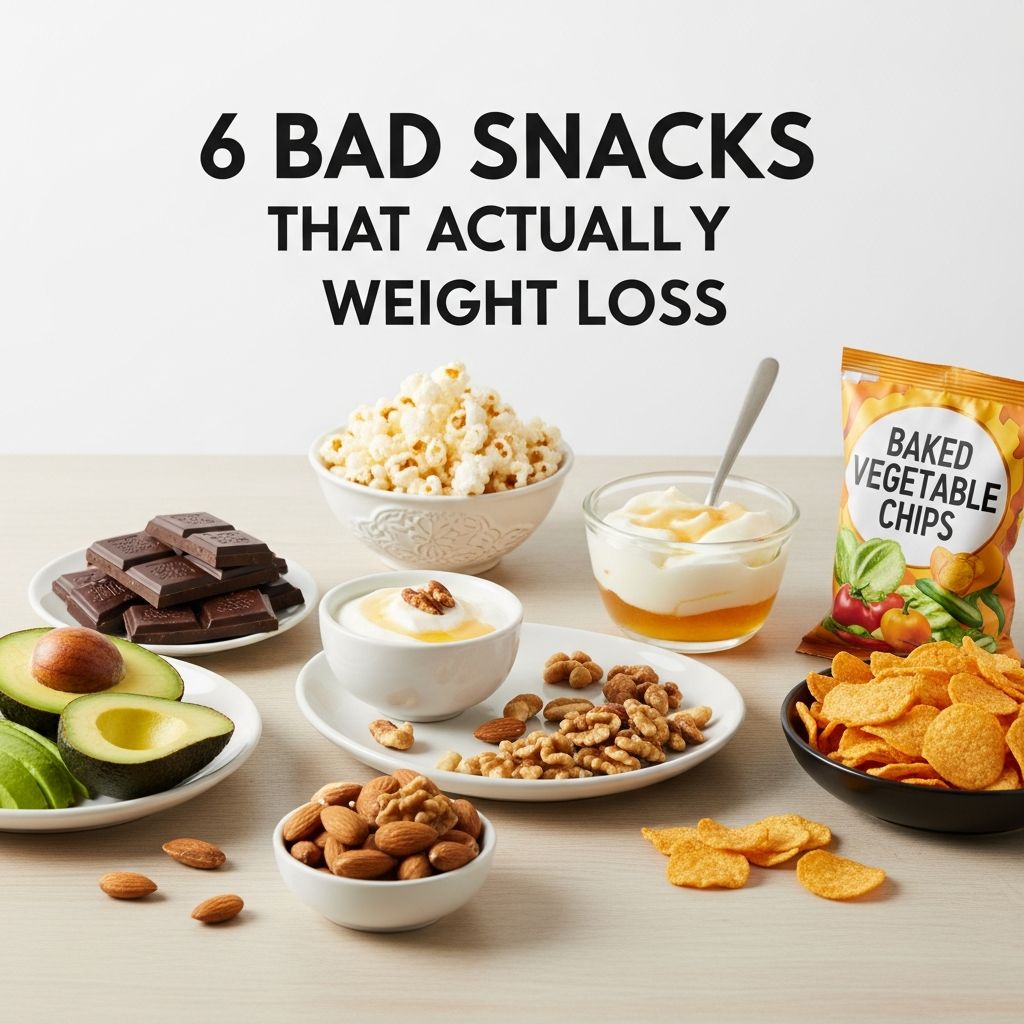
6 Bad Snacks That Actually Support Weight Loss
Discover surprising snacks that defy expectations and genuinely help you lose weight effectively.
When it comes to weight loss, many people believe they must eliminate all their favorite snacks and resort to bland, unsatisfying alternatives. However, nutritional science reveals a more nuanced approach to snacking that doesn’t require complete deprivation. Some foods that are commonly labeled as “bad” can actually be valuable allies in your weight loss journey when understood properly and consumed strategically.
The key to successful weight loss isn’t necessarily avoiding all indulgent foods—it’s making informed choices about which snacks provide the most nutritional benefit while keeping you satisfied between meals. This article explores six surprisingly effective snacks that defy the traditional “bad snack” label and can genuinely support your weight loss efforts.
Understanding the Snacking Paradox
The traditional approach to weight loss often frames snacking as problematic, suggesting people should eliminate snacks entirely to reduce calorie intake. However, research indicates that strategic snacking can actually support weight loss by preventing extreme hunger, stabilizing blood sugar levels, and reducing the likelihood of overeating at main meals.
The real issue isn’t snacking itself—it’s choosing snacks that lack nutritional density while being calorie-dense. The paradox lies in recognizing that some foods traditionally considered “indulgent” contain nutrients and properties that actively support weight management goals.
1. Full-Fat Cheese
Cheese often appears on lists of foods to avoid during weight loss, primarily due to its calorie density. However, full-fat cheese deserves reconsideration as a weight loss snack. A serving of quality cheese contains protein, calcium, and conjugated linoleic acid (CLA), a fatty acid linked to body composition improvements.
The protein content in cheese promotes satiety—the feeling of fullness that prevents overeating. When you consume cheese as part of a balanced snack, the protein and fat content slows digestion and keeps you satisfied for hours. A one-ounce serving paired with whole grain crackers or fruit creates a balanced snack with staying power.
The key to incorporating cheese into a weight loss plan involves portion control and pairing it with foods that add volume and fiber without excess calories. Quality matters too; a small amount of sharp cheddar or aged gouda provides more satisfaction than larger quantities of milder varieties.
2. Dark Chocolate
Dark chocolate represents one of the most misunderstood weight loss snacks. While chocolate is stereotypically associated with weight gain, high-quality dark chocolate with 70% cacao or higher offers compelling benefits for people managing their weight.
Dark chocolate contains compounds including phenylethylamine and anandamide, which can influence mood and satisfaction signals in the brain. Additionally, it’s rich in antioxidants and has been shown in studies to support metabolic health. The key differentiator from milk chocolate is the significantly lower sugar content and the presence of beneficial plant compounds.
Related Stories



A small serving of dark chocolate—approximately one ounce or a few squares—can satisfy cravings while providing only 150-170 calories. The psychological satisfaction of enjoying chocolate, combined with its actual nutritional benefits, makes it an underrated weight loss snack. It addresses both the physical hunger and the emotional aspects of eating restrictions.
3. Nuts and Nut Butters
Nuts are frequently avoided during weight loss due to their high fat content and calorie density. However, the fat in nuts is predominantly unsaturated, and the combination of protein, fiber, and healthy fats makes nuts exceptional for weight management.
A small handful of almonds, walnuts, or pistachios provides substantial satiety that extends for hours. The act of cracking pistachio shells, for example, creates additional satiety cues and slows consumption. Research consistently demonstrates that nut consumption is associated with lower body weight and waist circumference when portions are controlled.
Natural nut butters without added sugar or oils offer similar benefits. Two tablespoons of almond or peanut butter paired with apple slices creates a snack with balanced macronutrients that stabilizes blood sugar and prevents energy crashes that trigger additional snacking.
4. Whole Milk and Full-Fat Yogurt
The conventional weight loss wisdom often recommends low-fat or fat-free dairy products. However, full-fat varieties may actually be superior for weight loss. Whole milk and full-fat Greek yogurt contain more calories per serving than their low-fat counterparts, but they provide superior satiety and nutritional density.
The fat in full-fat dairy slows gastric emptying—the rate at which food leaves your stomach—extending the period during which you feel full. Additionally, full-fat dairy contains fat-soluble vitamins like vitamins A and D that are better absorbed than in low-fat versions.
A cup of plain full-fat Greek yogurt with berries provides protein, probiotics, and sustained satiety. The absence of added sugar (present in many low-fat flavored varieties) prevents blood sugar spikes that trigger subsequent hunger.
5. Eggs and Egg-Based Snacks
Eggs have historically faced unwarranted criticism regarding weight management, largely due to outdated cholesterol concerns. Modern research firmly establishes eggs as one of the most satiating foods available, making them ideal weight loss snacks.
The protein quality in eggs is exceptional—all nine essential amino acids are present in the ideal ratio for human nutrition. A hard-boiled egg or two provides approximately 12-13 grams of protein in just 70-80 calories. This exceptional protein-to-calorie ratio makes eggs unmatched for creating sustained fullness.
Beyond whole eggs, egg-based snacks like deviled eggs (made with Greek yogurt instead of mayonnaise) or simple egg muffins with vegetables provide portable, satisfying options that support weight loss through their superior protein content.
6. Popcorn (Air-Popped)
Popcorn’s reputation varies widely depending on preparation method. Microwave popcorn laden with butter and artificial flavoring deserves its poor nutritional reputation. However, air-popped popcorn represents an exceptional weight loss snack often overlooked due to its association with less healthy varieties.
Air-popped popcorn provides substantial volume and crunch—important sensory components of satisfaction—while remaining remarkably low in calories. Three cups of air-popped popcorn contains only approximately 90 calories and three grams of fiber. This high fiber content in a low-calorie package makes popcorn uniquely suited to weight loss.
The act of eating popcorn—the chewing and the volume consumed—triggers satiety signals more effectively than more calorie-dense snacks. Light seasoning with nutritional yeast, herbs, or a small amount of high-quality salt provides flavor without significant calorie addition.
Why These Snacks Work: The Science Behind Satiety
These six snacks share common characteristics that make them effective for weight loss despite their traditional “bad snack” classification:
- Protein content: Protein has the highest thermic effect of any macronutrient, meaning your body burns more calories digesting it. Protein also triggers more powerful satiety signals than carbohydrates or fats alone.
- Healthy fat content: Unsaturated fats slow digestion and extend satiety signals. They also satisfy the psychological satisfaction of eating flavorful foods.
- Volume and texture: Foods with high volume relative to calories—like popcorn—and foods with interesting textures—like nuts—create powerful satiety cues through mechanical stimulation.
- Nutrient density: These snacks provide vitamins, minerals, and beneficial plant compounds that support overall health and metabolic function.
- Psychological satisfaction: By including foods you genuinely enjoy rather than forcing bland alternatives, you’re more likely to maintain your weight loss approach long-term.
How to Incorporate These Snacks Successfully
Portion control remains essential, even with these beneficial snacks. The strategy involves understanding appropriate serving sizes while recognizing that these foods provide superior satiety relative to their calorie content.
Consider these practical applications:
- Pair cheese with whole grain crackers and fruit for a balanced afternoon snack
- Keep dark chocolate squares available for when cravings strike
- Portion nuts into small containers beforehand to prevent mindless overeating
- Choose plain full-fat yogurt and add your own fruit and minimal sweetener
- Hard-boil eggs in batches for grab-and-go protein snacks
- Air-pop popcorn and season creatively for satisfying crunchy snacks
Common Mistakes to Avoid
While these snacks support weight loss, certain application errors can undermine their benefits:
- Portion sizes: Even beneficial snacks contribute to weight gain in excessive quantities. Stick to recommended serving sizes.
- Added ingredients: Flavored yogurts, chocolate-covered nuts, or added-sugar nut butters negate many benefits. Choose versions without added sugars.
- Consuming without hunger: These snacks are most effective when eaten in response to genuine hunger rather than boredom or habit.
- Replacing meals: Snacks should supplement balanced meals, not replace them entirely.
- Neglecting overall diet: No snack can offset a fundamentally unbalanced diet. These work within a comprehensive approach to nutrition.
Frequently Asked Questions (FAQs)
Q: How much cheese can I eat as a snack while losing weight?
A: A standard serving is one ounce (about the size of a pair of dice), which contains approximately 100-110 calories and 7 grams of protein. This portion size provides satiety without excessive calorie addition. Pairing it with whole grain crackers or fruit adds volume and additional nutrients.
Q: Is dark chocolate really better than regular chocolate for weight loss?
A: Yes, dark chocolate with 70% cacao or higher contains significantly less sugar and more beneficial compounds than milk chocolate. A one-ounce serving satisfies chocolate cravings while providing only 150-170 calories and offering antioxidant benefits. The psychological satisfaction of enjoying chocolate while dieting improves long-term adherence.
Q: How much of my daily calories can come from nuts?
A: A small handful (approximately one ounce) of nuts provides excellent satiety. Research suggests that including nuts in a weight loss diet—accounting for about 15-20% of daily calories—supports better weight loss outcomes than nut-free diets, likely due to improved satiety and adherence.
Q: Should I choose full-fat or low-fat yogurt for weight loss?
A: Plain full-fat yogurt is generally superior for weight loss compared to low-fat versions. Full-fat yogurt provides better satiety, contains fat-soluble vitamins, and typically has less added sugar since manufacturers often add sugar to compensate for reduced fat in low-fat versions. Always choose plain varieties and add your own fruit.
Q: How many eggs can I eat as a snack?
A: One to two hard-boiled eggs make an excellent snack, providing 12-17 grams of protein in just 70-140 calories. Eggs are among the most satiating foods available, making them ideal for between-meal hunger management during weight loss.
Q: How much air-popped popcorn should I eat?
A: Three to four cups of air-popped popcorn makes a satisfying snack containing only 90-120 calories and three to four grams of fiber. The high volume and crunch provide significant psychological satisfaction while remaining calorie-efficient for weight loss.
Q: Can I eat these snacks every day?
A: Yes, these snacks can be incorporated daily as part of a balanced diet. The key is rotating among them and maintaining appropriate portion sizes. Daily inclusion of these nutrient-dense snacks supports consistent weight loss better than rigid approaches that eliminate all “indulgent” foods.
Moving Beyond the “Bad Snack” Label
The evolution of nutritional science increasingly recognizes that food categories aren’t inherently “good” or “bad.” Context, portion size, food quality, and individual metabolic factors all influence whether a food supports or undermines weight loss goals.
These six snacks illustrate this principle perfectly. Each is commonly avoided during weight loss despite containing properties—satiety factors, nutrient density, and psychological satisfaction—that actively support weight management. By understanding the science behind these foods and incorporating them strategically, you can build a sustainable, satisfying approach to weight loss that doesn’t require complete deprivation.
The most successful weight loss approach combines nutritional knowledge with psychological realism. Allowing yourself to enjoy foods you genuinely like—in appropriate portions and with awareness of their properties—creates sustainable habits far superior to rigid restriction of all “bad” foods.
References
- The Role of Protein in Weight Loss and Appetite — National Institutes of Health (NIH). 2024. https://www.nih.gov/health-information
- Nuts and Weight Management — American Journal of Clinical Nutrition, published by Oxford University Press. 2023. https://academic.oup.com/ajcn
- Dark Chocolate and Metabolic Health — Department of Nutrition, Harvard School of Public Health. 2024. https://www.hsph.harvard.edu/nutritionsource/
- Full-Fat Dairy and Weight Management — American Journal of Clinical Nutrition. 2023. https://academic.oup.com/ajcn
- Satiety and Weight Loss Success — Nutrition Reviews, Oxford University Press. 2024. https://academic.oup.com/nutritionreviews
- Fiber Content and Appetite Regulation — Mayo Clinic Diet and Nutrition Department. 2024. https://www.mayoclinic.org/
Similar Articles








Read full bio of Sneha Tete