Balamuthia mandrillaris Infection: Symptoms, Diagnosis & Treatment
Rare but deadly amebic infection affecting skin and CNS: causes, diagnosis, and management.
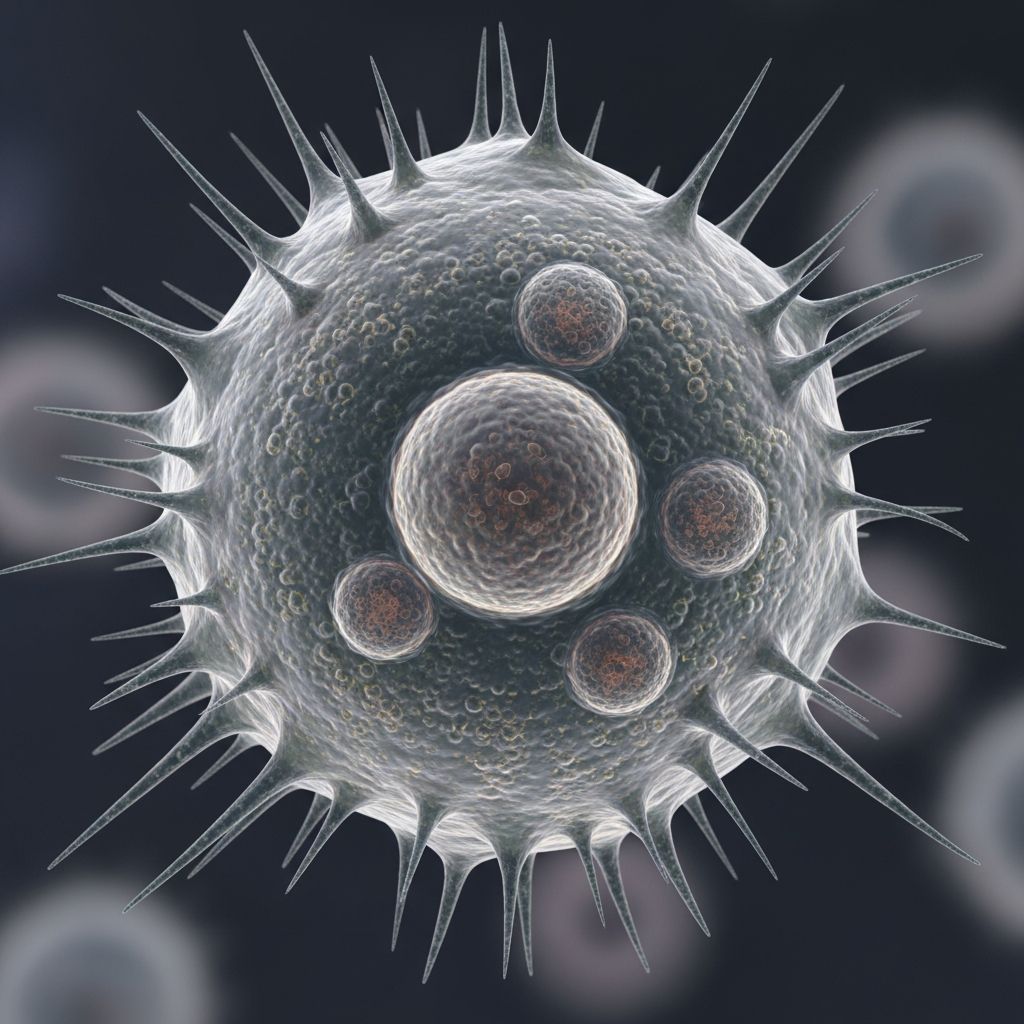
Balamuthia mandrillaris Infection
Balamuthia mandrillaris is a rare but potentially fatal free-living ameba that causes serious infections in humans. This opportunistic pathogen exists in soil, water, and air, but occasionally becomes pathogenic when it enters the human body through contaminated wounds or inhalation. The infection primarily affects two organ systems: the skin and the central nervous system (CNS). When left untreated, Balamuthia infection typically progresses from initial cutaneous lesions to a life-threatening condition known as granulomatous amoebic encephalitis (GAE), which affects the brain and spinal cord.
Overview of Balamuthia mandrillaris
Balamuthia mandrillaris is a single-celled organism classified as a protozoan parasite. Unlike many infectious agents, this ameba can infect both immunocompetent and immunocompromised individuals of all ages. The organism exists in two distinct forms in nature:
- Trophozoites: The vegetative, active form that divides asexually through binary fission and directly attacks host tissues
- Cysts: The dormant, highly resilient form that can survive harsh environmental conditions and resist chemotherapy, potentially leading to recurrent infections
Over 200 cases have been reported worldwide, though the actual incidence may be underestimated due to diagnostic challenges and disease rarity. The infection is more common in North and South America, particularly affecting children and adult males of Hispanic descent in the United States.
How Balamuthia mandrillaris is Transmitted
Balamuthia mandrillaris can enter the human body through multiple routes:
- Open wounds or cuts on the skin from contaminated soil or dust exposure
- Inhalation through the respiratory tract after breathing in contaminated dust or water droplets
- Rare cases of transmission through organ transplants, with an incubation period of 17-24 days
- Occasionally through the olfactory nerve (related to nasal passages)
Risk factors for exposure include swimming or wading in lakes, ponds, and swimming pools. Once the ameba enters the body, it may remain dormant for weeks to years before causing clinical symptoms, making early detection particularly challenging.
Pathogenesis and Disease Mechanism
After penetrating the skin or respiratory tract, Balamuthia mandrillaris employs sophisticated mechanisms to evade the immune system and spread throughout the body. The ameba successfully avoids immediate immune destruction through ecto-ATPases expressed on its surface, which cleave adenosine triphosphate released by activated cytotoxic T-cells. Once established in the bloodstream, the organism undergoes hematogenous spread, lodging in various organs but most commonly the brain and skin.
The pathogenic mechanism involves several key processes:
- Ingestion of host tissue pieces
- Production of tissue-degrading enzymes that destroy cellular structures
- Triggering of host immune responses leading to inflammation
- Formation of necrosis (tissue death), granulomas (inflammatory nodules), and hemorrhage
- Eventual breach of the blood-brain barrier through endothelial damage and inflammatory disruption
Once the ameba reaches the central nervous system, it causes extensive damage through phagocytosis (cell engulfment) and induction of apoptosis (programmed cell death), resulting in the serious complications characteristic of advanced infection.
Clinical Presentation: Cutaneous Infection
Following penetration through the skin, Balamuthia mandrillaris typically causes a distinctive skin lesion before the infection spreads to the CNS. The classical presentation includes:
Related Stories



- Appearance: An asymptomatic granulomatous plaque (a nodule composed of inflammatory cells) with a characteristically rubbery consistency
- Location: Usually on the central face, though lesions may occur on the extremities, knees, elbows, or chest
- Characteristics: Painless, skin-colored to violaceous (purplish) papules or plaques that may be thin initially
- Progression: Single or multiple lesions may be present, with potential enlargement to involve the entire face in some cases, and occasional appearance of smaller satellite lesions
- Late-stage changes: Ulceration occurs at late stages of infection
Skin infection often precedes CNS involvement and serves as a strong indicator of potential CNS disease. Cutaneous balamuthiasis has been particularly noted in Peruvian patients as a precursor to more serious neurological complications.
Neurological Manifestations and CNS Involvement
Weeks to years after initial skin infection (averaging 5-8 months), the infection typically spreads to the central nervous system, causing amoebic encephalitis—inflammation of the brain. This progression marks a critical turning point in disease severity. Initial symptoms of CNS involvement include:
- Headache and photophobia (light sensitivity)
- Nausea and vomiting
- Myalgia (muscle pain)
- Low-grade fever
- Stiff neck
- Hemiparesis (partial paralysis on one side of the body)
As the disease progresses, more severe neurological symptoms develop, including weight loss, behavioral changes, speech defects, focal seizures, difficulty swallowing, focal paralysis, and ultimately coma. The disease progression is typically rapid once CNS involvement occurs, leading to paralysis and death in the majority of cases.
Granulomatous Amoebic Encephalitis (GAE)
Balamuthia mandrillaris causes a condition known as granulomatous amoebic encephalitis (GAE), which is a slowly progressive yet life-threatening disease characterized by:
- Multifocal infections in multiple brain areas simultaneously
- Hemorrhagic lesions (bleeding in brain tissue)
- Necrotizing encephalitis (tissue death in the brain)
- Possible ocular involvement (eye complications)
- Potential upper and lower respiratory tract involvement
In 95% of patients, Balamuthia mandrillaris encephalitis is fatal. The fatality rate exceeds 95% in most cases, partly due to delayed diagnosis and ineffective treatment approaches. Patients with CNS involvement typically present with subacute onset of neurological symptoms and rapid progression to death within weeks to years if untreated.
Diagnostic Approaches
As Balamuthia mandrillaris infection is extremely rare, diagnosis is often significantly delayed, contributing to poor outcomes. Diagnosis requires specific identification of the organism, which can be challenging. The diagnostic process includes:
- Tissue Biopsy: Skin biopsy shows granulomatous infiltrate within the dermis and subcutaneous tissues
- Histological Findings: Leukocytic infiltrates and vasculitis (inflammation of blood vessels) are common, though necrosis is fairly rare; infiltrates tend to be perineural in distribution
- Organism Identification: Finding the amoeba (trophozoites and cysts) in skin or other tissue specimens confirms diagnosis, though organisms are rarely seen in biopsy samples
- CSF Analysis: Cerebrospinal fluid examination may show lymphocytic pleocytosis with elevated protein levels
- Culture and Specialized Tests: Advanced diagnostic techniques may be required to differentiate Balamuthia from other amebic infections, particularly Acanthamoeba
The difficulty in diagnosis stems from the organism’s rarity, variable presentation, and the requirement for specialized laboratory expertise to identify the ameba in clinical samples. Early biopsy of suspicious skin lesions is recommended to facilitate timely diagnosis and treatment initiation.
Differential Diagnosis
Balamuthia infection must be differentiated from other parasitic and infectious conditions. Unlike Acanthamoeba infection, Balamuthia can infect both the very young and the elderly, affecting a broader age range. The presence of characteristic rubbery, granulomatous plaques on the face, combined with eventual neurological progression, should raise suspicion for Balamuthia infection and warrant specific diagnostic testing.
Treatment Considerations
The infection should be treated aggressively because most patients with cutaneous infection follow a fatal course progressing to granulomatous amoebic encephalitis. However, specific, standardized treatment protocols remain limited due to the disease’s rarity and high fatality rate even with intervention. The resilient nature of the cyst form, which resists chemotherapy, creates additional therapeutic challenges and may lead to recurrent infections despite treatment attempts.
Early recognition and aggressive management of cutaneous lesions may offer the best opportunity to prevent progression to the invariably fatal CNS form of disease.
Frequently Asked Questions
Q: How is Balamuthia mandrillaris infection transmitted to humans?
A: Transmission occurs through open skin wounds contaminated with soil or dust containing the ameba, inhalation of contaminated dust or water droplets through the respiratory tract, and rarely through organ transplants. Swimming or wading in contaminated water sources may also pose a risk.
Q: What is the incubation period for Balamuthia infection?
A: The incubation period is uncertain and highly variable, ranging from weeks to years, with an average of 5-8 months from initial skin infection to CNS involvement. In cases of organ transplant transmission, the incubation period is typically 17-24 days.
Q: Can Balamuthia mandrillaris infect immunocompetent individuals?
A: Yes, Balamuthia infection can affect both immunocompetent and immunocompromised individuals of all ages, distinguishing it from many other opportunistic infections.
Q: What is the fatality rate of Balamuthia mandrillaris encephalitis?
A: The fatality rate is approximately 95% in patients who develop encephalitis. In 95% of cases, Balamuthia mandrillaris encephalitis proves fatal, making early diagnosis and aggressive treatment critical.
Q: Why is Balamuthia infection so difficult to diagnose?
A: The rarity of the infection, variable clinical presentation, and difficulty visualizing the organism in tissue samples contribute to diagnostic delays. Additionally, many clinicians lack familiarity with the disease, leading to misdiagnosis or delayed recognition of characteristic skin lesions.
Q: Can cutaneous lesions indicate CNS involvement?
A: Yes, cutaneous balamuthiasis serves as a strong indicator of potential CNS involvement. Skin infection often precedes CNS disease, and the presence of characteristic facial granulomatous plaques should prompt investigation for neurological complications.
References
- Balamuthia mandrillaris: An opportunistic, free-living ameba — National Center for Biotechnology Information (NCBI/PMC). 2022. https://pmc.ncbi.nlm.nih.gov/articles/PMC8579774/
- Balamuthia mandrillaris infection — DermNet NZ. https://dermnetnz.org/topics/balamuthia-mandrillaris-infection
- Balamuthia mandrillaris infection — VisualDx. https://www.visualdx.com/visualdx/diagnosis/balamuthia+mandrillaris+infection
- The Epidemiology and Clinical Features of Balamuthia mandrillaris Infection — National Center for Biotechnology Information (NCBI/PMC). 2020. https://pmc.ncbi.nlm.nih.gov/articles/PMC7453664/
- Balamuthia infection — Wikipedia. https://en.wikipedia.org/wiki/Balamuthia_infection
- Fatal amoebic meningoencephalitis caused by Balamuthia mandrillaris — Frontiers in Veterinary Science. 2025. https://www.frontiersin.org/journals/veterinary-science/articles/10.3389/fvets.2025.1534378/full
Similar Articles








Read full bio of Sneha Tete