Baldness and Alopecia: Types, Causes, and Treatment
Comprehensive guide to understanding baldness, alopecia types, and evidence-based treatment options.
Understanding Baldness and Alopecia
Baldness and alopecia represent conditions characterized by the loss of hair from the scalp or other areas of the body. While these terms are often used interchangeably, alopecia is the medical term for hair loss, which can range from mild thinning to complete baldness. Hair loss affects millions of individuals worldwide and can significantly impact self-esteem and quality of life. Understanding the different types, causes, and treatment options is essential for those experiencing hair loss and seeking effective solutions.
What Is Hair Loss?
Hair loss, or alopecia, occurs when hair falls out faster than it grows back or when hair follicles stop producing new hair. The condition can develop gradually or suddenly and may be temporary or permanent. Hair loss is not merely a cosmetic concern; it can indicate underlying health conditions or be a side effect of medical treatments. On average, people lose between 50 to 100 hairs per day as part of the normal hair growth cycle. However, when hair loss exceeds this normal range or becomes noticeable, it may warrant medical evaluation.
Types of Alopecia
Several distinct types of alopecia exist, each with different causes and treatment approaches. Understanding these classifications is crucial for determining appropriate management strategies.
Androgenetic Alopecia (Male and Female Pattern Baldness)
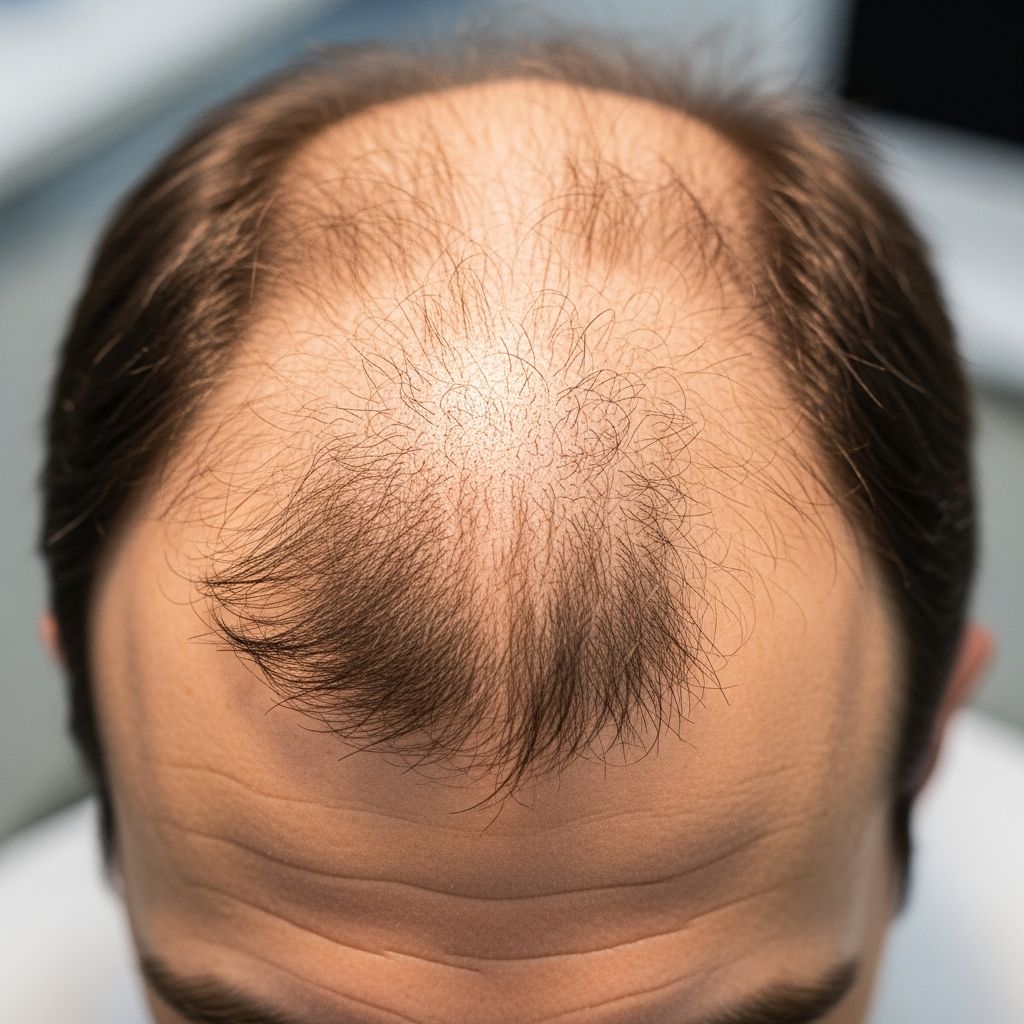
Androgenetic alopecia, commonly known as male or female pattern baldness, is the most prevalent form of hair loss. This condition is characterized by progressive miniaturization of hair follicles and a reduction in the number of active hair follicles. Male pattern baldness typically begins with a receding hairline or thinning at the crown, while female pattern baldness usually manifests as overall thinning of the hair across the scalp.
The development of androgenetic alopecia involves genetic predisposition and the influence of the hormone dihydrotestosterone (DHT). Individuals with a family history of baldness have a significantly higher risk of developing this condition. Research has identified that prostaglandin D2 is elevated in the bald scalp of men with androgenetic alopecia and functionally inhibits hair lengthening through its receptor GPR44. This discovery has opened new avenues for potential therapeutic interventions targeting the prostaglandin pathway.
Alopecia Areata
Alopecia areata is an unpredictable autoimmune disorder that affects more than two and a half million men, women, and children in the United States and Canada. This condition causes hair to fall out in round or oval patches, most commonly on the scalp, though it can occur on any body part. The condition occurs when the immune system mistakenly attacks hair follicles, causing them to enter a resting phase.
Alopecia areata varies widely in severity and progression. Some individuals experience only a few small bald patches that regrow spontaneously, while others may progress to alopecia totalis (complete scalp hair loss) or alopecia universalis (loss of all body hair). The emotional impact of alopecia areata can be significant, as the unpredictable nature of hair loss and regrowth creates psychological stress for patients.
Scarring Alopecia
Scarring alopecia, also known as cicatricial alopecia, represents a group of conditions characterized by permanent hair loss due to inflammation and subsequent scarring of hair follicles. One notable form is central centrifugal cicatricial alopecia (CCCA), which almost exclusively affects African-American women. CCCA involves chronic inflammation radiating outward from the crown of the scalp, resulting in permanent baldness in affected areas.
Related Stories



CCCA presents a significant clinical challenge, as there is currently no cure or fully effective treatment for this condition. However, dermatologists can work with patients to prevent progression and maximize hair preservation in unaffected areas. Management often involves reducing tension on the scalp through modified hairstyling practices and addressing underlying inflammatory processes.
Causes of Hair Loss
Hair loss can result from multiple underlying factors, ranging from genetic and hormonal influences to lifestyle and environmental causes.
Genetic and Hormonal Factors
Genetic predisposition plays a central role in androgenetic alopecia. Individuals with a family history of baldness are at significantly higher risk. The condition is also influenced by sensitivity to DHT, a byproduct of testosterone metabolism. Men with genetic susceptibility to DHT sensitivity experience progressive hair follicle miniaturization, leading to thinner and shorter hair growth before eventual cessation of hair production.
Autoimmune Conditions
Alopecia areata occurs when the body’s immune system attacks hair follicles, causing disruption of the normal hair growth cycle. The exact triggers for this autoimmune response remain not fully understood, though genetic factors and environmental stressors may play roles in disease development and progression.
Lifestyle and Hair Care Practices
Hair care practices significantly influence hair health, particularly in individuals with textured hair. Excessive tension from tight hairstyles, inadequate moisturization, frequent harsh styling, and improper shampooing can all contribute to hair damage and loss. Research indicates that curly hair is farther away from the scalp’s natural oils compared to straight hair, making it more susceptible to dryness, breakage, and fragility. Daily shampooing often destroys curly hair by removing protective natural oils, while tight braids and other high-tension styles can cause traction alopecia, particularly affecting the front and sides of the scalp.
Medical Conditions and Medications
Various medical conditions and medications can trigger or exacerbate hair loss. Thyroid disorders, lupus, and other systemic conditions may manifest with hair loss symptoms. Additionally, certain medications used to treat hypertension, cancer, and other conditions may cause telogen effluvium, a temporary form of hair shedding where hair prematurely enters the resting phase of the growth cycle.
Treatment Options
Several evidence-based treatment approaches exist for different types of alopecia, ranging from topical and oral medications to surgical interventions.
Pharmacological Treatments
The two primary FDA-approved medications for androgenetic alopecia are finasteride and minoxidil. Finasteride works by inhibiting the enzyme 5-alpha reductase type II, which converts testosterone to DHT, thereby reducing DHT levels and slowing hair loss progression. Minoxidil, originally developed to treat hypertension, was serendipitously discovered to promote hair growth and is now widely used as a topical treatment for androgenetic alopecia.
Prostaglandin analogs, including latanoprost and bimatoprost, were initially developed to decrease ocular pressure in glaucoma patients but were incidentally observed to cause hair lengthening. This discovery has prompted research into prostaglandin-based therapies for androgenetic alopecia, particularly those targeting the prostaglandin D2 pathway and its receptor GPR44.
Hair Transplantation
Hair transplantation remains one of the most effective treatments for androgenetic alopecia, particularly in cases where medical management alone proves inadequate. This surgical approach involves harvesting hair-bearing skin from areas resistant to DHT-induced miniaturization (typically the back and sides of the scalp) and transplanting it to areas of hair loss. Results are generally long-lasting, though multiple sessions may be necessary to achieve desired density.
Emerging Therapies
Research into novel treatment approaches continues to expand. Platelet-rich plasma (PRP) injections are being investigated for their potential in treating various types of alopecia, particularly inflammatory conditions like CCCA. These emerging therapies aim to harness the body’s natural healing mechanisms to stimulate hair follicle activity and reduce inflammation.
Addressing Ethnic and Cultural Differences
A critical gap in dermatological practice involves the inadequate attention to hair care in diverse ethnic populations. Most dermatologists receive minimal training on hair care and styling practices during medical school, despite their significant impact on hair health. This educational deficit has resulted in many patients from African-American and other ethnic backgrounds receiving suboptimal care for hair-related conditions.
Dermatologists should recognize that hair care practices have cultural and religious significance and that styling decisions directly impact scalp health. Patients with permanent hair loss seeking camouflage through styling should receive comprehensive guidance on how different hairstyling approaches affect their condition. For individuals with CCCA, recommending looser protective styles and discussing regular maintenance with hair care professionals can help preserve hair in unaffected areas.
Impact on Quality of Life
Hair loss significantly impacts self-esteem, psychological well-being, and overall quality of life. Studies demonstrate that nearly 50 percent of African-American women experience some form of hair loss, with many expressing concerns about hair health. These concerns sometimes lead individuals to avoid exercise and social activities to protect their hair, creating a cascade of negative health consequences beyond the hair loss itself.
The emotional burden of hair loss is particularly acute for conditions with unpredictable progression, such as alopecia areata. Dermatologists recognize that hair loss patients require compassionate, comprehensive care that addresses both the medical and psychological dimensions of the condition.
Future Directions in Alopecia Research
Our understanding of alopecia pathogenesis continues to evolve, revealing new potential treatment targets. Lipid-based pathways, including prostaglandin biology, represent an underexplored area that may yield novel therapeutic opportunities. Research investigating how the prostaglandin D2 pathway changes during the human hair cycle, the role of PGD2 in age-related hair loss, and its potential involvement in inflammation and fibrosis is ongoing.
Additionally, further investigation into the mechanisms underlying scarring alopecia and development of effective treatments for conditions like CCCA remain high priorities. Advances in understanding the immunological basis of alopecia areata may lead to improved therapeutic approaches for this unpredictable condition.
Frequently Asked Questions
Q: Is male pattern baldness preventable?
A: While genetic predisposition cannot be changed, early intervention with medications like finasteride and minoxidil may slow hair loss progression. Maintaining scalp health and avoiding unnecessary tension on hair may also help preserve existing hair.
Q: Can alopecia areata be cured?
A: Alopecia areata is unpredictable, and while hair often regrows spontaneously in some individuals, there is currently no cure. Various treatments can help manage symptoms and encourage hair regrowth, but individual responses vary significantly.
Q: What can I do to prevent hair loss related to styling?
A: Avoid tight hairstyles that create excessive tension on the scalp and hair follicles. For textured hair, ensure proper moisturization, limit harsh chemical treatments, and avoid daily shampooing. Regular maintenance with professionals experienced in your hair type is beneficial.
Q: How long does it take to see results from hair loss treatments?
A: Most hair loss medications require consistent use for at least 3-6 months before visible results appear. Hair transplantation results develop over several months as transplanted hair establishes blood supply and enters the growth phase.
Q: Are there racial or ethnic differences in how hair loss presents?
A: Yes, different hair types have distinct chemical and physical properties affecting how they respond to disease and styling practices. African-American, Asian, and Caucasian hair require different care approaches, and some conditions like CCCA predominantly affect specific populations.
References
- Prostaglandin D2 and Male Pattern Baldness: Potential Therapeutic Targets — National Institutes of Health, National Center for Biotechnology Information. 2014. https://pmc.ncbi.nlm.nih.gov/articles/PMC3982925/
- Help for Those Struggling with Hair Loss — Johns Hopkins University. 2018. https://hub.jhu.edu/2018/07/19/black-women-hair-loss-treatment-dermatology-crystal-aguh/
- Alopecia Areata: An Overview — Johns Hopkins University Press. 1996. https://www.press.jhu.edu/books/title/1096/alopecia-areata
- Androgenetic Alopecia: Scalp Hair Growth and Follicle Miniaturization — Johns Hopkins University Research Portal. 2025. https://pure.johnshopkins.edu/en/publications/androgenetic-alopecia-2/
- An Overview of Alopecias: Presentation and Management — Johns Hopkins University Research Portal. 2014. https://pure.johnshopkins.edu/en/publications/an-overview-of-alopecias-4/
Similar Articles








Read full bio of medha deb