Barrett’s Esophagus: Causes, Symptoms, and Treatment
Understanding Barrett's esophagus: A precancerous condition linked to chronic acid reflux and esophageal cancer risk.
Understanding Barrett’s Esophagus
Barrett’s esophagus is a serious medical condition that develops as a complication of chronic acid reflux disease, medically known as gastroesophageal reflux disease (GERD). This condition affects approximately 5.6% of people in the United States and represents the most common precancerous condition of the esophagus. While occasional acid reflux is uncomfortable but generally harmless, chronic and frequent acid reflux can lead to significant changes in the esophageal lining that increase the risk of developing esophageal cancer.
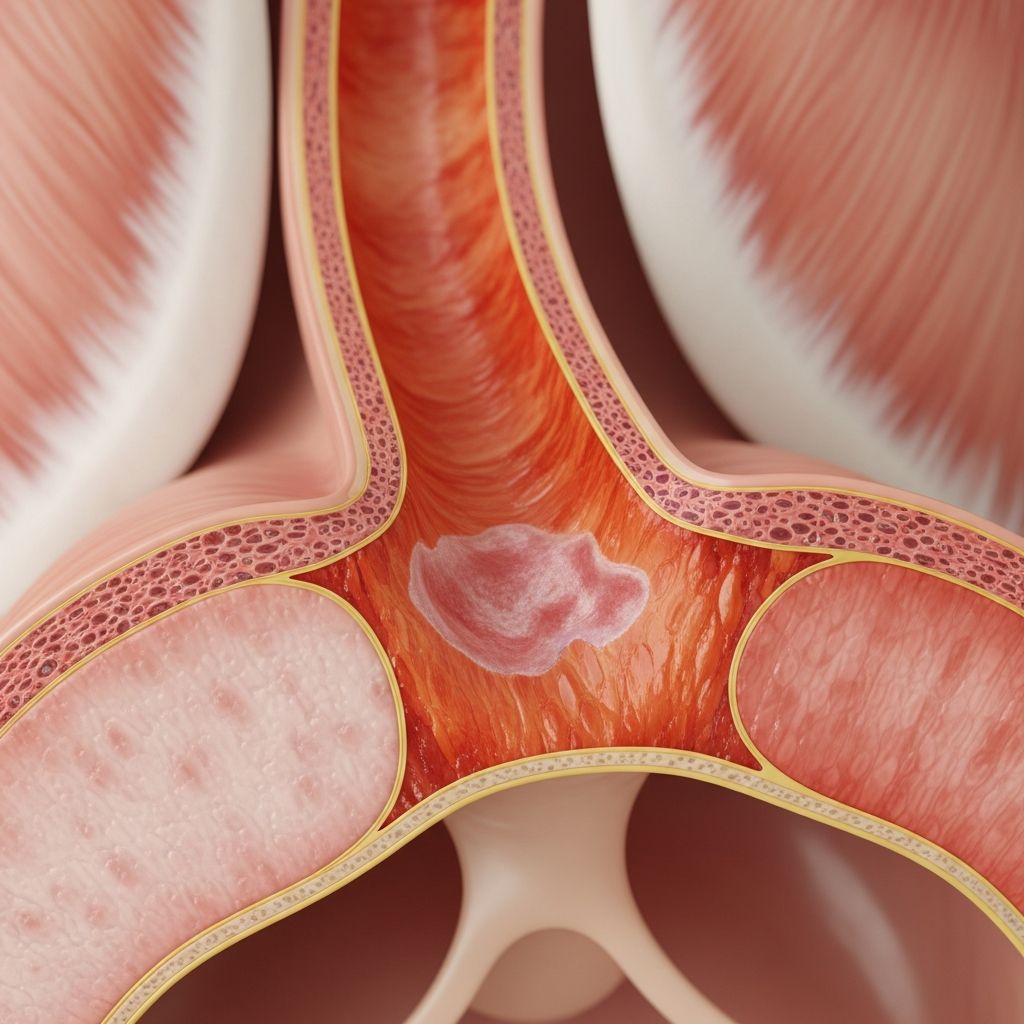
The esophagus is the muscular tube that carries food and liquids from the mouth to the stomach. In Barrett’s esophagus, the normal cells lining the esophagus become damaged and are replaced by cells that resemble intestinal cells—a process called intestinal metaplasia. This cellular transformation occurs because the normal esophageal tissue attempts to protect itself from chronic acid exposure, but in doing so, it creates cells that are more prone to becoming cancerous.
How Barrett’s Esophagus Develops
To understand how Barrett’s esophagus develops, it’s important to understand the normal function of your digestive system. When you swallow food, it travels down your esophagus and enters your stomach, where powerful acids begin breaking down the food for digestion. Between your stomach and esophagus lies a muscular barrier called the lower esophageal sphincter (LES), which acts as a gatekeeper to prevent stomach acid and food from flowing backward into the esophagus.
When the lower esophageal sphincter weakens or malfunctions, stomach acid and digestive enzymes can flow back into the esophagus, a process called acid reflux. If this occurs frequently—several times per week—it may indicate GERD. The chronic backwash of stomach contents damages the esophageal lining over time. In response to this repeated injury, your body attempts to heal the damaged tissue, but the replacement cells that form are not normal esophageal cells. Instead, they resemble intestinal cells, which are more resistant to acid but unfortunately more prone to cancerous transformation.
Risk Factors for Barrett’s Esophagus
While chronic GERD is the primary cause of Barrett’s esophagus, not everyone with GERD develops this condition. Several risk factors increase your likelihood of developing Barrett’s esophagus:
- Age: The condition is significantly more common in people age 50 or older
- Sex: Men are more likely to develop Barrett’s esophagus than women
- Race: The condition is more prevalent in Caucasian populations
- Weight: Excess weight, particularly weight concentrated around the waist, increases risk
- Tobacco use: Current or former smokers have a higher risk of developing the condition
- Family history: Having a family member with Barrett’s esophagus or esophageal cancer increases your risk
- Geographic location: Barrett’s esophagus is more common in the United States than in other countries
- Hiatal hernia: A condition in which part of the stomach protrudes into the chest can contribute to reflux and Barrett’s development
Related Stories



Interestingly, some people develop Barrett’s esophagus without experiencing any prior symptoms of GERD, suggesting that silent reflux may play a role in disease development.
Symptoms and Detection
One of the most challenging aspects of Barrett’s esophagus is that the condition itself has no specific symptoms. Most people with Barrett’s esophagus don’t experience any warning signs unique to the condition. However, many individuals with Barrett’s esophagus also have GERD, which does produce recognizable symptoms.
Symptoms associated with the underlying GERD include:
- Heartburn and chest pain
- Stomach acid moving up into the esophagus (acid reflux)
- Indigestion
- Nausea and vomiting
- Regurgitation of stomach contents into the mouth
- Chronic cough
- Hoarseness in the voice
- Difficulty swallowing
- Frequent lung infections such as pneumonia
- Dental damage from stomach acid exposure
Because Barrett’s esophagus has no distinctive symptoms, diagnosis typically occurs when patients seek medical evaluation for GERD or during screening procedures. Doctors usually diagnose Barrett’s esophagus using endoscopy, a procedure in which a thin, flexible tube with a camera is inserted through the mouth to visualize the inside of the esophagus. During an endoscopy, the doctor can observe changes in the esophageal lining and collect tissue samples (biopsies) for examination under a microscope to confirm the diagnosis.
Stages and Cancer Risk
Barrett’s esophagus is classified into four distinct stages based on the extent of cellular abnormality present. Understanding these stages is crucial for determining appropriate treatment and monitoring strategies.
Barrett’s metaplasia represents the earliest stage, in which the normal esophageal cells have been replaced by intestinal-type cells, but no abnormal cells (dysplasia) have yet developed. Cancer risk at this stage remains low. Barrett’s with low-grade dysplasia indicates that a small number of abnormal cells are present in the esophageal lining. While the cancer risk is elevated compared to metaplasia alone, it remains relatively low. Barrett’s with high-grade dysplasia represents a more advanced stage where many abnormal cells are present, creating significant cancer risk. Finally, Barrett’s with cancer occurs when the abnormal cells have progressed to become frankly cancerous tissue.
People with Barrett’s esophagus are 30 to 125 times more likely to develop esophageal cancer than the general population. However, it’s important to note that not all cases progress to cancer. Esophageal cancer develops in approximately 2 percent of Barrett’s esophagus cases each year. The progression from Barrett’s to cancer is often unpredictable, and doctors cannot reliably predict which patients will eventually develop malignancy. This uncertainty underscores the importance of regular monitoring.
Esophageal cancer itself is a rare but serious disease that is challenging to treat because most cases are not diagnosed until they reach advanced stages. Advanced esophageal cancer symptoms include difficulty swallowing, unexplained weight loss, vomiting with blood, and blood in sputum. The incidence of esophageal cancer has risen approximately sixfold in the United States since the 1970s and is rising faster than breast cancer, prostate cancer, or melanoma.
Treatment Approaches
Treatment of Barrett’s esophagus focuses on two primary goals: preventing further damage to the esophagus and preventing progression to cancer. The specific treatment approach depends on the stage of Barrett’s esophagus and whether dysplasia is present.
Managing Underlying GERD: The first objective in treating Barrett’s esophagus is to control GERD and prevent additional acid-related injury. This may be accomplished through several methods:
- Lifestyle modifications: Reducing reflux triggers such as avoiding large meals, not eating close to bedtime, maintaining healthy weight, limiting alcohol and caffeine, and quitting smoking
- Medications: Proton pump inhibitors (PPIs) or H2 receptor blockers can significantly reduce stomach acid production and relieve GERD symptoms
- Surgical intervention: In cases where medication fails or hiatal hernia is present, surgery may be recommended to reinforce the lower esophageal sphincter, improving its function and reducing reflux
Surveillance and Monitoring: For Barrett’s esophagus without dysplasia, regular monitoring with endoscopic surveillance is typically recommended. Your doctor will schedule periodic endoscopies to examine the esophagus and collect tissue samples to watch for any development or progression of dysplasia. This surveillance approach allows early detection of concerning changes.
Endoscopic Eradication Therapy: When dysplasia is detected, particularly high-grade dysplasia, endoscopic treatment becomes appropriate. One highly effective procedure is endoscopic radiofrequency ablation (RFA) using the HALO system, which has been featured in the New England Journal of Medicine as a proven treatment for completely eliminating Barrett’s esophagus. This procedure uses controlled heat to destroy the precancerous tissue in the esophageal lining, encouraging normal tissue to regrow. Traditional endoscopic removal techniques are also available. After RFA or endoscopic removal, surveillance biopsies continue because Barrett’s tissue sometimes regrows and requires repeat treatment.
Living with Barrett’s Esophagus
An important aspect of managing Barrett’s esophagus is understanding that the condition cannot be cured or reversed. Instead, the goal is to halt disease progression and prevent cancer development through consistent management and surveillance. This requires ongoing commitment to GERD control and regular monitoring appointments.
People with chronic GERD or Barrett’s esophagus should maintain regular follow-up with their healthcare providers and undergo recommended surveillance procedures. Treatment should improve acid reflux symptoms and help prevent disease progression. Lifestyle modifications—including weight management, smoking cessation, dietary changes, and medication adherence—play crucial roles in long-term outcomes.
Frequently Asked Questions
Q: Is Barrett’s esophagus the same as esophageal cancer?
A: No, Barrett’s esophagus is not cancer but rather a precancerous condition. It increases the risk for developing esophageal cancer, but only about 2 percent of cases progress to cancer annually.
Q: Can Barrett’s esophagus be reversed?
A: No, Barrett’s esophagus cannot be reversed, but it can be managed through GERD control and, when necessary, through endoscopic eradication therapies to remove precancerous tissue.
Q: How often do I need endoscopy if I have Barrett’s esophagus?
A: The frequency of endoscopic surveillance depends on whether dysplasia is present. Your gastroenterologist will recommend an appropriate surveillance schedule based on your specific condition.
Q: What lifestyle changes help prevent Barrett’s esophagus progression?
A: Weight management, smoking cessation, avoiding reflux triggers (like large meals and late-night eating), limiting alcohol and caffeine, and taking prescribed GERD medications as directed are all important.
Q: Should my family members be screened for Barrett’s esophagus?
A: Family history is a risk factor for Barrett’s esophagus. Discuss screening recommendations with your doctor if you have a family member diagnosed with the condition.
References
- Barrett’s Esophagus: A Hidden Risk for Esophageal Cancer — Orlando Health. Accessed January 2026. https://www.orlandohealth.com/content-hub/barretts-esophagus-a-hidden-risk-for-esophageal-cancer/
- Barrett’s Esophagus — Vitruvian Health. Accessed January 2026. https://vitruvianhealth.com/services/digestive-health/barretts-esophagus/
- What Is Barrett’s Esophagus? — National Institutes of Health News in Health. September 2025. https://newsinhealth.nih.gov/2025/09/what-barrett-s-esophagus
- Barrett’s Esophagus — Canadian Cancer Society. Accessed January 2026. https://cancer.ca/en/cancer-information/cancer-types/esophageal/what-is-esophageal-cancer/precancerous-conditions
- Barrett’s Esophagus: Understanding the Connection to GERD and Preventing Cancer — Baylor Scott & White Health. Accessed January 2026. https://www.bswhealth.com/blog/barretts-esophagus-understanding-the-connection-to-gerd-and-preventing-cancer
- Barrett Esophagus — MedlinePlus Medical Encyclopedia, U.S. National Library of Medicine. Accessed January 2026. https://medlineplus.gov/ency/article/001143.htm
Similar Articles








Read full bio of medha deb