Basal Cell Naevus Syndrome: Guide To Diagnosis & Care In 2025
Rare genetic disorder with multiple basal cell carcinomas, jaw cysts, and skeletal anomalies requiring lifelong management.
Introduction
Basal cell naevus syndrome (BCNS), also known as Gorlin syndrome or nevoid basal cell carcinoma syndrome (NBCCS), is a rare autosomal dominant genetic cancer predisposition syndrome. It is characterized by the development of multiple basal cell carcinomas (BCCs) at an unusually early age, often in childhood or adolescence, alongside odontogenic keratocysts (OKCs) of the jaw and various skeletal, facial, and other abnormalities. The condition affects approximately 1 in 30,000 to 1 in 256,000 individuals worldwide, with no significant gender predominance.
BCNS arises from dysregulation of the sonic hedgehog (SHH) signaling pathway, which is essential for embryonic development and cell differentiation. Mutations in key genes lead to uncontrolled cell proliferation, predisposing affected individuals to a lifetime of tumor formation. Early recognition is crucial, as patients may develop hundreds or even thousands of BCCs, jaw cysts that recur and cause complications, and other features that impact quality of life. Lifelong multidisciplinary surveillance is recommended to mitigate morbidity and mortality.
Demographics
BCNS has a global incidence but is underdiagnosed due to its variable expressivity and the subtlety of early signs. It affects all ethnic groups equally, though BCCs may appear less aggressive in darker skin types where palmar pits are more diagnostic. Familial cases account for 70-80% of diagnoses, with de novo mutations in the remainder. The median age for first BCC is 20 years, but some children develop them before age 10. Jaw cysts typically present between ages 10-30, with peak incidence in the second and third decades.
Causes
BCNS is primarily caused by germline heterozygous mutations in the PTCH1 gene (chromosome 9q22.3) in 70-85% of cases, which encodes the PATCHED1 receptor inhibiting the hedgehog pathway. In 5-10% of cases, mutations occur in SUFU (chromosome 10q24.32), a downstream negative regulator. Rarely, PTCH2 mutations are implicated. These loss-of-function variants lead to constitutive pathway activation, promoting tumorigenesis. Mosaicism can occur postzygotically, explaining milder phenotypes. Genetic testing confirms diagnosis and enables cascade screening of at-risk relatives.
Genetic counseling is essential, as inheritance is autosomal dominant with 50% risk to offspring. Prenatal and preimplantation genetic diagnosis are options for families.
Clinical Features
BCNS manifests with a wide spectrum of features, categorized as major and minor criteria for diagnosis. Skin, skeletal, odontogenic, neurological, and ocular abnormalities predominate.
Skin Lesions
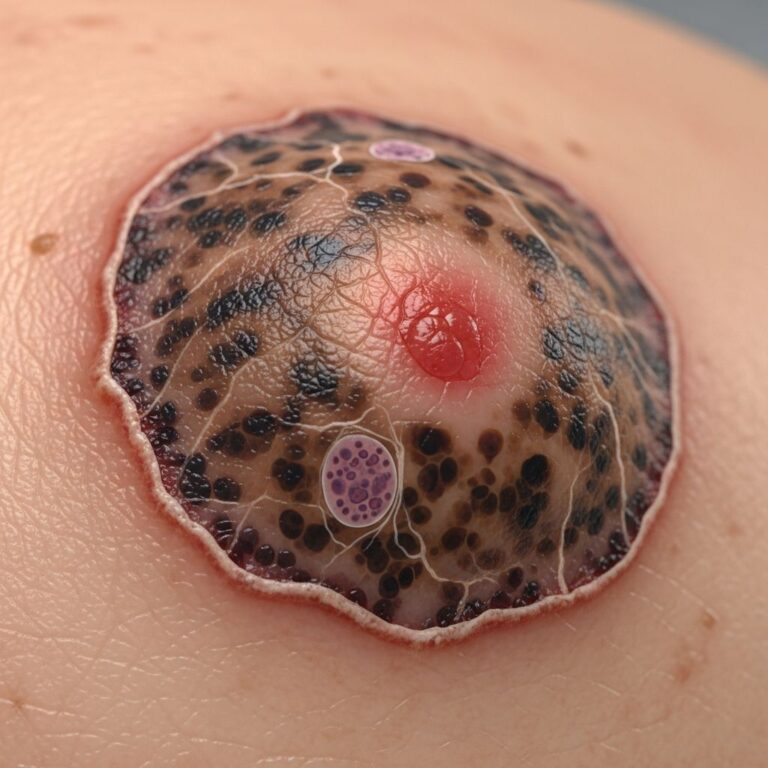
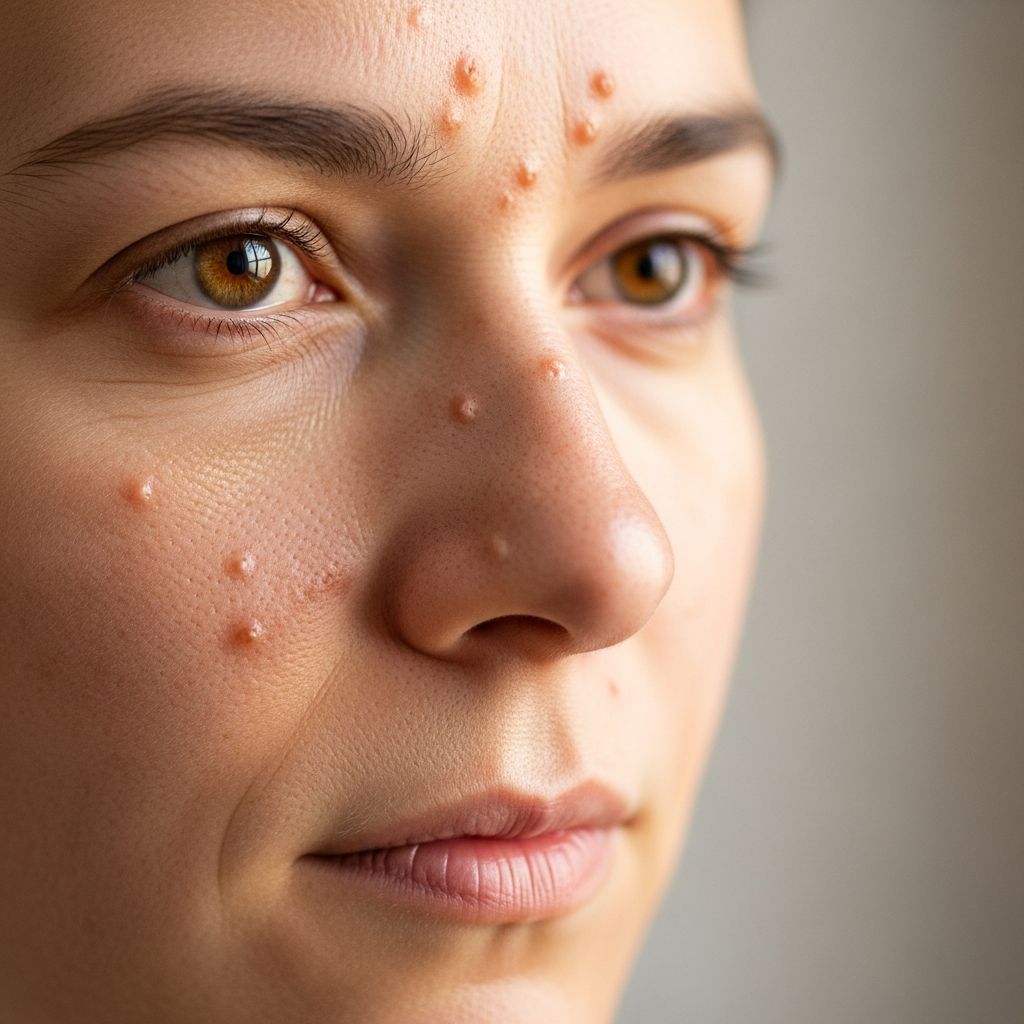
- Basal cell carcinomas (BCCs): Multiple (>2 before age 20 or >5 total), often on sun-exposed sites like face, neck, back. Pink, pearly papules or nodules that ulcerate; median 8 lifetime, but up to >1000. Childhood onset in 10-20%.
- Palmar/plantar pits: Small (1-3mm) ice-pick depressions, best seen after water immersion; present in 80%.
- Other: Milia, comedones, basaloid follicular hamartomas, epidermoid cysts (benign).
Oral and Jaw Abnormalities
- Odontogenic keratocysts (OKCs): Calcified or radiolucent cysts in mandible/maxilla; multiple/recurrent in 75%; cause pain, swelling, tooth displacement.
- Mandibular prognathism, bifid ribs on chest X-ray.
Skeletal and Craniofacial Features
- Macrocephaly, hypertelorism (wide-set eyes), frontal bossing, coarse facies.
- Short stature, kyphoscoliosis, Sprengel deformity (high scapula), pectus excavatum/carinatum, polydactyly/syndactyly, bone cysts.
Related Stories



Neurological and Ocular
- Falx cerebri calcification (medulloblastoma risk 2-5%, esp. in SUFU mutations), agenesis of corpus callosum, hydrocephalus.
- Strabismus, cataracts, coloboma, microphthalmia (rare).
Other
- Fibromas of heart/ovaries, mesenteric cysts, anosmia, intellectual disability (uncommon).
Variation in Skin Types
In patients with Fitzpatrick skin types IV-VI, BCCs may be less pigmented and slower-growing, but palmar/plantar pits remain prominent diagnostic clues. Hyperpigmentation or hypopigmentation can highlight pits. Sunscreen adherence is vital across all types, as UV exposure accelerates BCC development.
Complications
BCCs cause significant morbidity through local invasion, ulceration, and recurrence, leading to scarring and disfigurement, especially facially. Aggressive tumors can be life-threatening if neglected. Recurrent OKCs risk jaw fracture, infection, and malignant transformation (rare). Skeletal deformities may require orthopedic intervention; medulloblastoma (childhood peak) has 2% lifetime risk. Psychological burden from cosmetic issues and surveillance is substantial.
Diagnosis
Diagnosis uses modified criteria: 2 major or 1 major + 2 minor features, or pathogenic PTCH1/SUFU variant.
| Major Criteria | Minor Criteria |
|---|---|
| Multiple (>2) BCCs <20y or >5 total | Macrocephaly |
| Odontogenic keratocyst(s) | Congenital skeletal anomalies (e.g., bifid ribs) |
| Palmar/plantar pits (≥3) | Ovarian fibroma |
| Falx calcification <20y | Lymphomesenteric cysts |
| Any PTCH1/SUFU/PTCH2 variant | Preaxial polydactyly |
Investigations: Genetic testing (first-line PTCH1, then SUFU); panoramic jaw X-ray; skull/chest X-rays; dermatologic exam; baseline echocardiogram/MRI brain if indicated.
Differential Diagnoses
- Bazex syndrome (BCCs + hypotrichosis, hypohidrosis)
- Rombo syndrome (follicular atrophoderma, milia)
- Muir-Torre syndrome (BCCs + visceral cancers)
- Xeroderma pigmentosum (photosensitivity + cancers)
- Multiple familial trichoepitheliomas.
Treatment
Management is multidisciplinary, focusing on prevention, surveillance, and tumor control. No curative therapy exists; hedgehog inhibitors (vismodegib/sonidegib) for advanced/multi BCCs, but limited by resistance.
- Photoprotection: Daily broad-spectrum SPF50+ sunscreen, UPF clothing, shade avoidance.
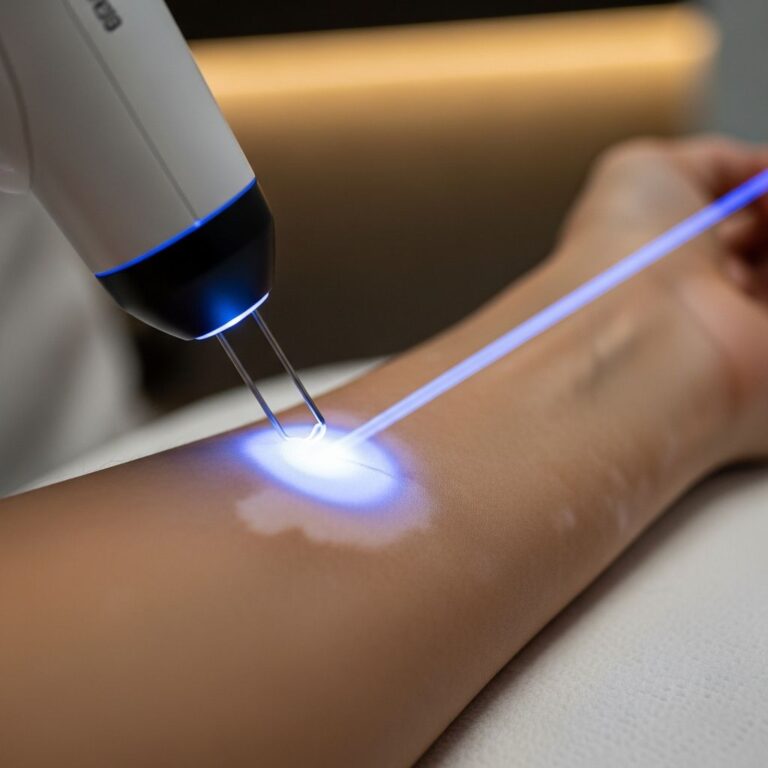
- BCCs: Topical (imiquimod, 5-FU), cryotherapy, curettage, excision, Mohs surgery, radiotherapy (contraindicated if possible). Systemic hedgehog inhibitors for >10 new BCCs/year.
- OKCs: Enucleation/curettage; marsupialization for large cysts; follow-up imaging.
- Surgical: For skeletal deformities, ovarian fibromas.
Outcome
With vigilant surveillance, life expectancy approaches normal. BCC burden and cysts dominate morbidity; medulloblastoma is the main mortality risk (treatable if early). Quality of life improves with genetic counseling and patient support.
Surveillance Guidelines
Stepwise protocol: Annual full-body skin exams until first BCC, then 3-6 monthly. Panoramic jaw X-rays from age 8 yearly until 40. Brain MRI if SUFU mutation. Multidisciplinary team: dermatology, genetics, oral surgery.
Frequently Asked Questions (FAQs)
Q: At what age do BCCs typically appear in BCNS?
A: Median age 20 years, but as early as childhood in 10-20% of cases.
Q: Is genetic testing necessary for diagnosis?
A: Yes, pathogenic variant confirms; test PTCH1 first, then SUFU.
Q: Can BCNS be prevented?
A: Not curable, but strict photoprotection reduces BCCs by up to 50%.
Q: What is the inheritance pattern?
A: Autosomal dominant; 50% risk to each child.
Q: Are hedgehog inhibitors a lifelong treatment?
A: No, used intermittently due to side effects like muscle cramps; BCCs recur post-discontinuation.
References
- A guideline for the clinical management of basal cell naevus syndrome — British Journal of Dermatology (PMC). 2022-07-01. https://pmc.ncbi.nlm.nih.gov/articles/PMC9298899/
- Basal cell naevus syndrome (BCNS) — DermNet NZ. 2023. https://dermnetnz.org/topics/basal-cell-naevus-syndrome
- Nevoid Basal Cell Carcinoma Syndrome — National Organization for Rare Disorders (NORD). 2024. https://rarediseases.org/rare-diseases/nevoid-basal-cell-carcinoma-syndrome/
- Nevoid Basal Cell Carcinoma Syndrome — Children’s Hospital of Philadelphia (CHOP). 2024. https://www.chop.edu/conditions-diseases/nevoid-basal-cell-carcinoma-syndrome
- Consensus guidelines for the diagnosis and management of Gorlin syndrome — European Journal of Dermatology. 2021. https://pubmed.ncbi.nlm.nih.gov/34553436/
Similar Articles








Read full bio of Sneha Tete