Basaloid Follicular Hamartoma: Diagnosis And Management
Rare benign hair follicle tumour: clinical variants, diagnosis, and management insights for dermatologists.
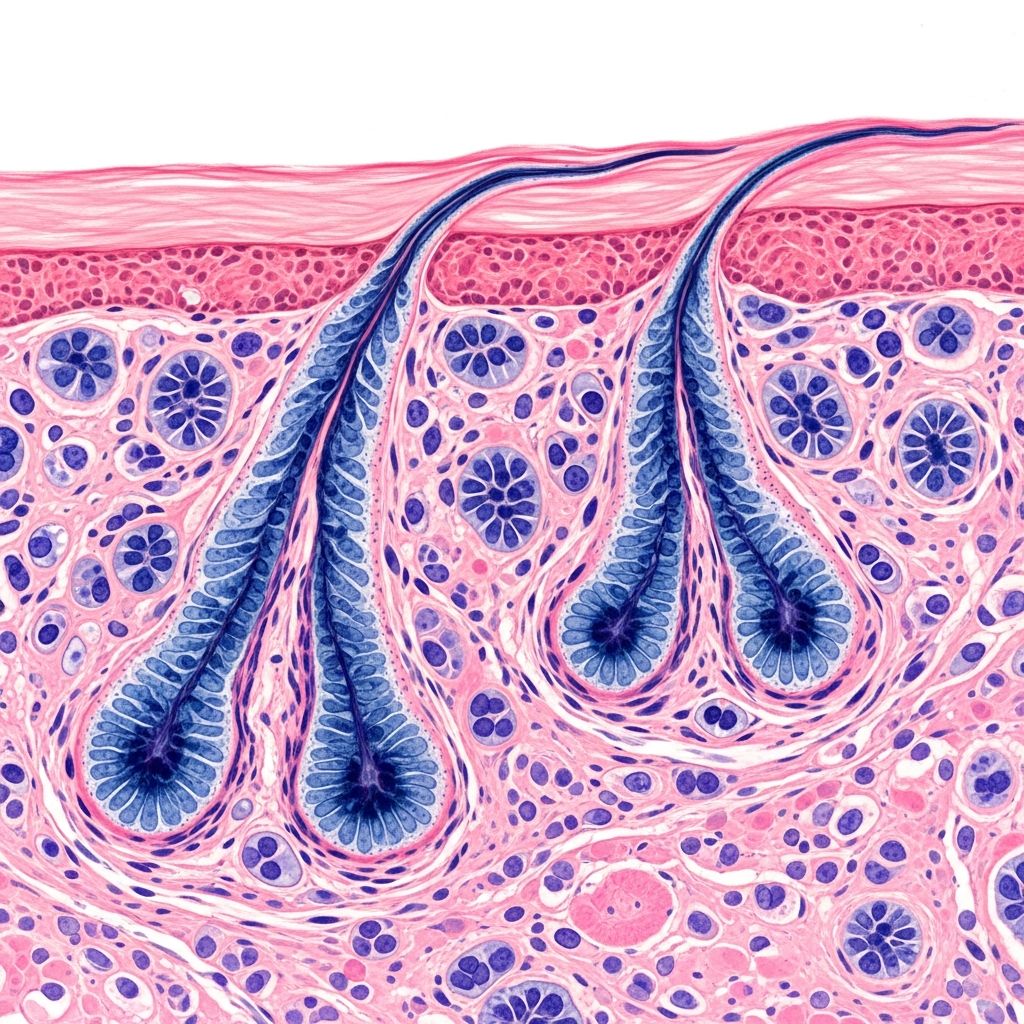
Basaloid follicular hamartoma (BFH) is a rare, benign neoplasm originating from the hair follicle, primarily affecting the face, scalp, and occasionally the trunk. Characterized by proliferations of basaloid cells in branching cords and strands, it mimics basal cell carcinoma clinically and histologically, necessitating precise biopsy for diagnosis.
What is basaloid follicular hamartoma?
BFH represents a distinctive benign adnexal tumour with follicular differentiation. First described in 1962, it features epithelial proliferations of basaloid cells forming anastomosing strands and cords within a fibrous stroma, often connected to the epidermis or hair follicles. Unlike malignant tumours, BFH lacks significant cytologic atypia, frequent mitoses, or stromal retraction.
Mutations in the PTCH gene (patched 1), implicated in Hedgehog signalling pathway dysregulation, underlie many cases, linking BFH to nevoid basal cell carcinoma syndrome (Gorlin syndrome). This genetic basis explains both sporadic and syndromic presentations.
Who gets basaloid follicular hamartoma?
BFH affects individuals across all ages, from infancy to adulthood, with no strong gender predilection. Solitary lesions often arise in adulthood on the face or scalp. Multiple lesions may appear congenitally or develop progressively, particularly in generalized forms.
Associations include:
- Nevoid basal cell carcinoma syndrome (Gorlin syndrome): Multiple BFH alongside basal cell carcinomas, jaw cysts, and skeletal anomalies.
- Generalized autosomal dominant forms: Familial papules without systemic features.
- Alopecia and myasthenia gravis: In syndromic generalized papular variants.
- Isolated cases: No underlying disorders in most localized presentations.
What does basaloid follicular hamartoma look like?
Clinical morphology varies widely, reflecting five main variants:
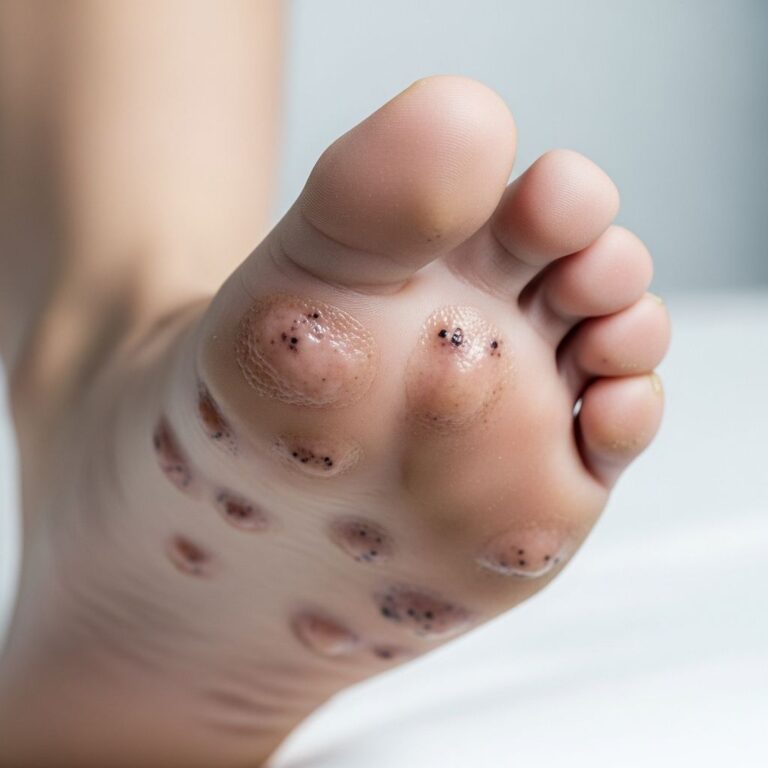
- Solitary papules or nodules: 1 mm–3 cm, skin-coloured to brown, often on face/scalp; may show alopecia.
- Multiple papules: Hundreds of 1–2 mm tan-brown papules on face (nasolabial folds, periorbital, forehead), scalp, neck, axillae, trunk, pubic area.
- Localized plaques: Indurated plaques ± alopecia, mimicking nevus sebaceus or scarring alopecia.
- Linear/unilateral: Along Blaschko lines, often congenital.
- Generalized: Widespread papules, sometimes pruritic or associated with systemic features.
Surface may be smooth, warty, or cobblestone-like with patulous follicles expressing keratinous material.
How is the diagnosis of basaloid follicular hamartoma made?
Diagnosis relies on histopathological examination of a skin biopsy, as clinical features overlap with basal cell carcinoma (BCC), trichoepithelioma, and fibrofolliculoma.
Histology
Key features include:
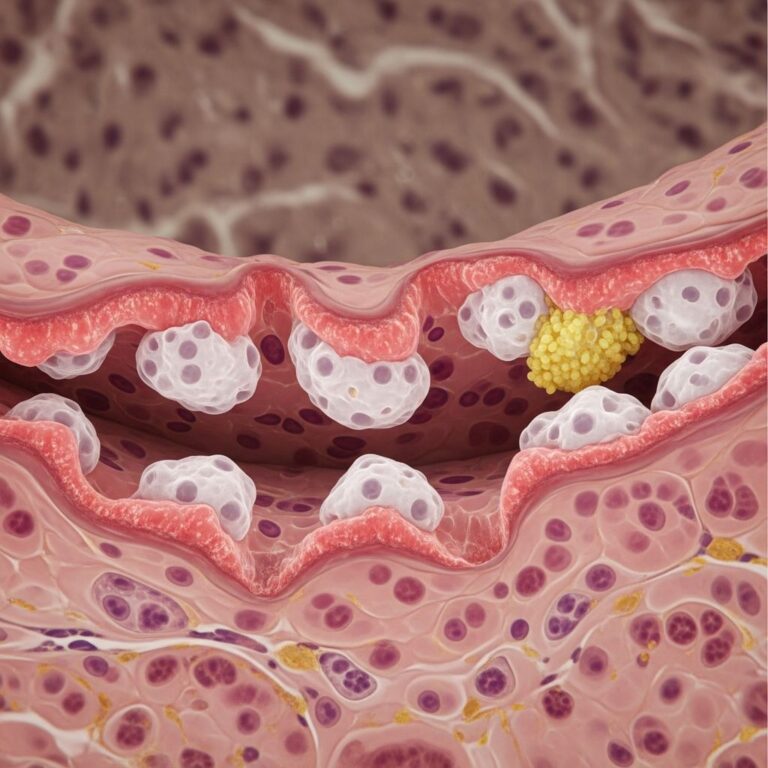
- Thin, branching cords/strands of basaloid cells (small, uniform, hyperchromatic nuclei, scant cytoplasm) in a cellular CD34+ fibrous stroma.
- Anastomosing network resembling lace-like pattern in papillary/mid-reticular dermis.
- Connections to infundibular epidermis or distorted hair follicles with peripheral basaloid extensions.
- Absence of retraction artefact, peripheral palisading (less prominent than BCC), calcification, or clefting.
- Rare mitoses; no atypia.
Related Stories



Immunohistochemistry: Positive for BerEP4 (focal), CD34 (stroma); negative for BCL-2 (unlike trichoepithelioma).
Differential diagnosis
| Condition | Key Distinguishing Features |
|---|---|
| Basal cell carcinoma | Retraction artefact, peripheral palisading, mitoses, atypia; mucin, amyloid stroma. |
| Trichoepithelioma | Thicker strands, follicular papules/glands, BCL-2+ stroma, no epidermal attachment. |
| Fibrofolliculoma | Plump fibroblasts, thinner epithelial strands. |
| Nevus sebaceus | Epidermal acanthosis, immature follicles/sebaceous glands; plaque with alopecia. |
| Seborrheic keratosis | Stuck-on appearance, acanthosis, horn cysts. |
What is the treatment for basaloid follicular hamartoma?
No standardized treatment exists; management is cosmetic-driven for multiple/disfiguring lesions. Options include:
- Observation: For asymptomatic, solitary lesions due to benign nature.
- Surgical excision: Effective for solitary nodules/plaques; curative but scarring risk.
- Laser therapy: Pulsed dye laser (PDL) targets vascular/melanin components, yielding marked improvement after 3 sessions. CO2 laser ablates superficial lesions.
- Photodynamic therapy (PDT) with 5-ALA: Safe for children/multiple lesions; induces selective tumour destruction.
- Other lasers: KTP, IPL, Nd:YAG for pigmentation/vascularity (experimental).
Rare BCC transformation reported, warranting follow-up, especially in syndromic cases.
Clinical variants of basaloid follicular hamartoma
BFH manifests in diverse forms:
- Solitary: Face/scalp nodules (1–30 mm), brown/skin-coloured.
- Multiple non-syndromic: Facial papules ± trunk spread.
- Localized plaque: Scalp/face indurated plaques (e.g., 5×3 cm cobblestone scalp plaque).
- Linear: Blaschko-linear on limbs/face.
- Generalized papular: Hundreds of papules with/without alopecia, myasthenia.
- Syndromic: Gorlin syndrome-associated.
Frequently Asked Questions
Is basaloid follicular hamartoma cancerous?
No, BFH is benign, but rare malignant transformation to BCC occurs, emphasizing biopsy importance.
Can basaloid follicular hamartoma be treated with laser?
Yes, pulsed dye laser shows promising cosmetic results by targeting vasculature and pigment.
How do you differentiate BFH from basal cell carcinoma?
Histology: Lack of atypia, retraction, and prominent palisading in BFH.
Does BFH run in families?
Generalized forms can be autosomal dominant; PTCH mutations link to hereditary cases.
Is biopsy always needed for BFH?
Yes, to exclude BCC and confirm diagnosis.
References
- Basaloid Follicular Hamartoma: A Case Report and a Novel Therapeutic Option with Pulsed Dye Laser — Patel NS et al. Journal of Drugs in Dermatology (PMC). 2018-03-15. https://pmc.ncbi.nlm.nih.gov/articles/PMC5868784/
- Basaloid follicular hamartoma — National Institutes of Health (via PubMed Central). 2023. https://pmc.ncbi.nlm.nih.gov/articles/PMC5868784/
- Localized basaloid follicular hamartoma: A case report — Journal of Skin and Sexually Transmitted Diseases. 2022. https://jsstd.org/localized-basaloid-follicular-hamartoma-a-case-report/
- Basaloid follicular hamartoma — DermNet NZ (Authoritative Dermatology Resource). 2024-01-01. https://dermnetnz.org/topics/basaloid-follicular-hamartoma
Similar Articles








Read full bio of Sneha Tete