Protecting Vision in Baseball: Essential Safety Measures
Learn why eye protection is critical in baseball and how to prevent serious injuries.
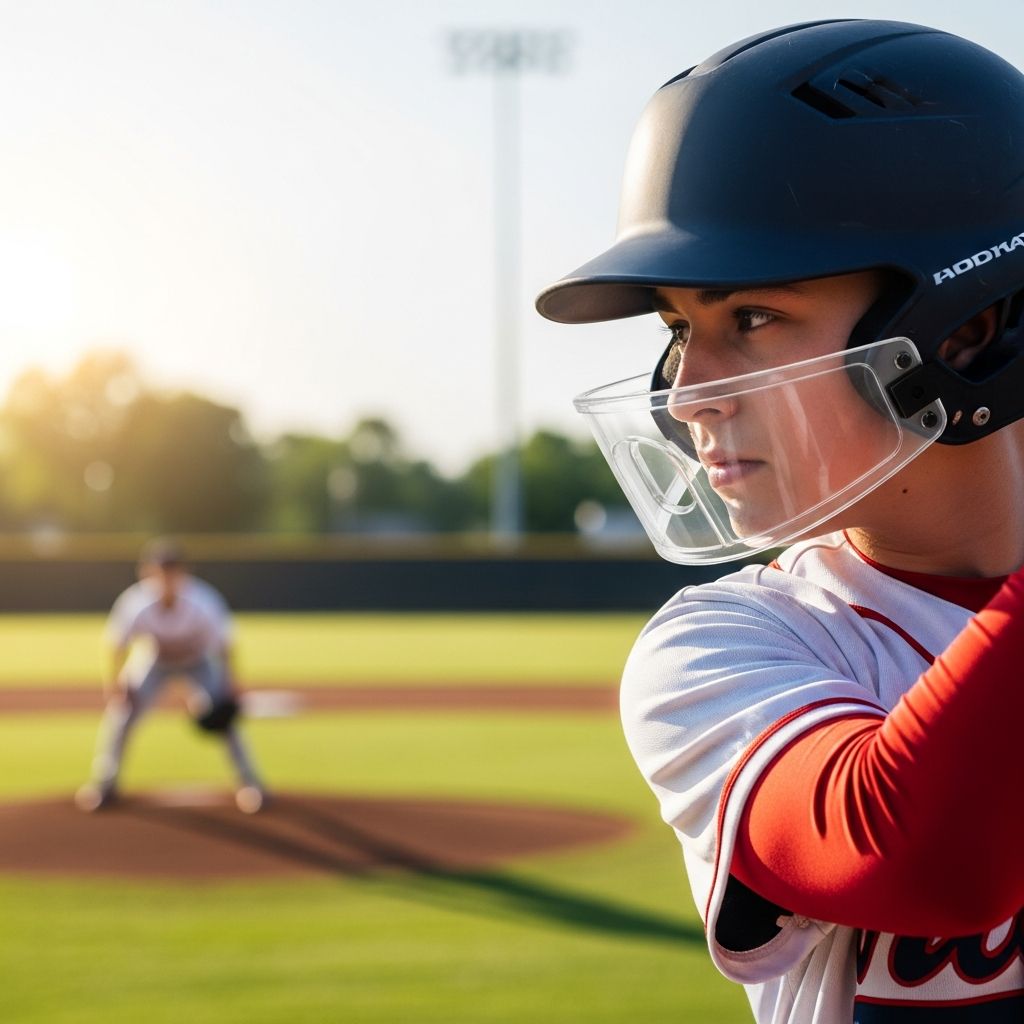
Every year, thousands of athletes sustain preventable eye injuries during sports activities, with baseball standing out as one of the most significant culprits for young players. The American Academy of Ophthalmology and sports medicine organizations worldwide have documented that approximately 43,300 sports-related eye injuries were treated in the United States in 2024, representing a substantial 33 percent increase from the previous year. Among children aged 5 to 14 years, baseball remains the leading cause of sports-related eye injuries, surpassing other popular recreational activities. Despite decades of research demonstrating the effectiveness of protective eyewear, many athletes, coaches, and parents remain unaware of the risks or the simple solutions available to prevent blindness and permanent vision loss.
The concerning reality is that most of these injuries are entirely avoidable. Medical research consistently shows that up to 90 percent of sports-related eye injuries can be prevented through the use of appropriate protective equipment. Yet protective eyewear remains underutilized in youth baseball, leaving countless young athletes vulnerable to injuries that could have lifelong consequences. Understanding the specific dangers present in baseball, the mechanics of ocular trauma, and the standards governing protective equipment is essential for parents, coaches, and young players themselves.
The Scope of the Problem in Youth Baseball
Baseball’s prominence as a source of eye injury stems from several factors unique to the sport. Approximately 5 million children and adolescents participate in baseball annually in the United States, creating a large population at risk. The dynamic nature of the game—with players batting, running the bases, fielding, and operating in close quarters—creates multiple opportunities for eye trauma.
The statistics reveal the magnitude of the issue with striking clarity. During a typical baseball game, teams should expect approximately 2.3 ball and player impacts per game, with 7.3 percent of these impacts causing major or extreme discomfort. Ball impacts alone accounted for 88,700 of the estimated 162,000 youth baseball-related injuries treated in emergency departments in one documented year. When considering that eye injuries are the leading cause of blindness in children, and that many serious ocular injuries among kids aged 11 to 14 occur during sports participation, the urgency of implementing preventive measures becomes undeniable.
What makes baseball particularly hazardous compared to other sports is the combination of impact force and the unpredictability of play. A batted baseball poses three and a half times greater risk of causing eye damage than a pitched ball, yet most players do not wear protective eyewear designed specifically for batting and base-running situations. This discrepancy between risk level and actual protective behavior highlights a critical gap in safety awareness and implementation.
Understanding Baseball Impact Forces and Eye Injury Mechanics
To appreciate why eye protection is non-negotiable in baseball, it is important to understand the biomechanics of impact injuries. Researchers have conducted extensive testing to measure the forces generated when baseballs of varying hardness levels strike the eye and surrounding orbital structures.
Testing has revealed that baseballs generate significant impact forces regardless of their hardness. In controlled experiments, when a standard major league baseball struck the eye at impact velocities typical in youth baseball, peak orbital forces exceeded 3,000 Newtons, with onset rates demonstrating rapid force application that the human eye’s protective mechanisms cannot withstand. In one documented case, an eye impacted by a regulation baseball at 55 miles per hour sustained a rupture extending from the limbus to the optic nerve, resulting in nearly total loss of intraocular contents. Such injuries represent the severe end of the spectrum but illustrate the catastrophic potential of unprotected eye impacts in baseball.
Related Stories



The orbital cavity, which houses and protects the eyeball, can only withstand a limited amount of force before structural failure occurs. When a baseball strikes the eye with sufficient velocity and force concentration, the eye can rupture, the orbital bone can fracture, and the delicate internal structures responsible for vision can suffer irreparable damage. The younger the athlete, the more vulnerable the developing eye structures are to such trauma.
Baseball Hardness and Its Impact on Injury Risk
One important consideration in baseball safety involves the hardness of the ball itself. Researchers have investigated whether softer baseballs could reduce injury risk while maintaining the integrity and enjoyment of the game. The findings have important implications for youth baseball programs.
Studies comparing baseballs of different hardnesses found that softer baseballs do generate lower peak orbital forces and slower force onset rates compared to regulation major league baseballs. However, the relationship between ball hardness and eye injury risk is more complex than simply choosing a softer ball. While the very softest baseballs (approximately 10 percent of major league hardness) did intrude more significantly into the orbit, baseballs that are 15 to 20 percent of major league hardness did not increase potential for eye injury compared to regulation balls.
Importantly, research has demonstrated that children younger than 14 years old cannot differentiate between baseballs that are 15 percent of major league hardness or harder, meaning they feel and behave similarly to regulation baseballs from a playing perspective. This finding is significant because it suggests that using moderately softer baseballs in youth leagues could potentially reduce injuries from other causes—such as commotio cordis (sudden cardiac death) and head injuries—without increasing eye injury risk. Additionally, softer baseballs cause less pain on impact, which may increase young players’ willingness to continue playing despite minor contact injuries.
However, the research consensus is clear: regardless of ball hardness, eye protection remains essential because all baseballs, even the softest ones studied, impart sufficient energy to cause severe eye injury if the eye is unprotected.
ASTM Standards: The Foundation of Protective Equipment
When selecting protective eyewear for baseball, understanding the relevant safety standards is crucial. The American Society of Testing and Materials (ASTM) has established specific standards for sports eye protection that define minimum requirements for impact resistance and optical quality.
The primary standards relevant to baseball are:
- ASTM F910: This standard applies to eye and face protectors for batters and base runners. It specifies impact resistance requirements, optical properties, and design features to protect against ball impacts and collisions.
- ASTM F803: This standard governs eye protection for fielders and other players not directly facing pitched or batted balls. The requirements differ slightly from F910 but maintain rigorous impact resistance standards.
Protective eyewear meeting these standards is typically constructed from polycarbonate, a highly impact-resistant plastic material that can withstand the forces generated by a baseball traveling at significant velocity. Polycarbonate lenses are now available in both prescription and non-prescription formats, making proper eye protection accessible to athletes with any vision prescription needs.
Despite the availability of ASTM F910-compliant equipment for more than a decade, adoption rates remain disappointingly low in youth baseball. Many athletes and families are simply unaware that such standards exist or that they can effectively prevent serious eye injuries. Others may underestimate the risk or view protective equipment as unnecessary, uncomfortable, or cosmetically unappealing.
Types of Baseball Eye Protection
Several styles of protective eyewear are available to baseball players, each with specific applications and advantages:
| Protection Type | Primary Users | Key Features | ASTM Standard |
|---|---|---|---|
| Face masks attached to batting helmets | Batters, base runners | Full facial coverage, attached securely to helmet | F910 |
| Sports goggles | All field positions | Polycarbonate lenses, adjustable frames, wide field of vision | F910 or F803 |
| Protective eyeglasses | Fielders, non-batting players | Impact-resistant lenses in sports frames | F803 |
| Combination helmet-shield systems | Catchers, batters | Integrated protection with helmet, maximal coverage | F910 |
The choice between these options depends on the player’s position, the specific risks they face, and personal comfort preferences. Batters and base runners face the highest risk and should wear equipment meeting F910 standards, ideally integrated with their batting helmet for comprehensive protection. Fielders should wear eyewear meeting F803 standards, though many athletes choose to wear F910-compliant equipment across all positions for maximum consistency and protection.
Barriers to Protective Eyewear Adoption
Despite clear evidence of risk and available solutions, protective eyewear remains underutilized in youth baseball. Several barriers contribute to this gap between knowledge and action:
- Lack of awareness: Many parents and coaches simply do not know that eye injuries are a significant risk in baseball or that effective prevention methods exist.
- Perceived discomfort: Some athletes report that protective eyewear feels uncomfortable, interferes with their vision, or causes fogging issues, though modern equipment has largely addressed these concerns.
- Aesthetic concerns: Young athletes may worry about appearance or social perception when wearing protective equipment, especially if peers do not use it.
- Misconceptions about necessity: The false belief that serious eye injuries “won’t happen to me” leads many families to underestimate personal risk.
- Cost considerations: While protective eyewear is relatively affordable, some families may view it as an additional expense when budgeting for sports participation.
- Lack of mandates: Unlike some racquet sports that require protective eyewear, many youth baseball organizations do not mandate protective equipment, leaving the decision to families.
Overcoming these barriers requires a multifaceted approach involving education, normalization of protective equipment use, and in some cases, organizational mandates requiring protection.
Strategies for Prevention and Risk Reduction
Medical professionals, coaches, and sports organizations have identified several effective strategies for reducing eye injury risk in baseball:
Education and Awareness
Healthcare providers should educate patients and families about the risk of eye injuries in baseball and the confirmed benefits of protective equipment. Many families lack this critical information and make decisions about protection based on incomplete knowledge. Coaches and youth sports organizations should similarly prioritize education about eye injury prevention.
Normalization of Equipment Use
When protective eyewear becomes normalized within a team or league—meaning most or all players use it—social barriers to adoption diminish significantly. Athletes are more willing to wear equipment when their peers do the same. Individual coaches and parents can emphasize both the short-term benefits (such as improved performance from reduced anxiety about injury) and long-term benefits (preservation of vision for life) to encourage adoption among young players.
Organizational Requirements
School boards and athletic clubs can require all children competing in tournaments and league play to wear eye protection meeting ASTM standards. Such mandates have proven effective in other sports and can substantially increase protection rates in baseball.
Equipment Accessibility
Making protective equipment readily available—whether through team equipment programs, rental options, or organizational purchasing—removes financial and logistical barriers to protection.
Early Career Intervention
Research suggests that reaching athletes at the beginning of their sporting careers has the most significant long-term impact on safety behaviors. Introducing protective equipment use during youth baseball experiences can establish habits that persist throughout an athlete’s career.
The Role of Healthcare Providers
Ophthalmologists, optometrists, and other healthcare providers are positioned to play a vital role in baseball eye safety. The medical community can educate patients about risks, recommend appropriate protective equipment, and advocate for systemic changes in youth sports organizations. By consistently counseling athletes and families about eye injury prevention, healthcare providers can influence thousands of individuals and contribute to a culture that prioritizes vision protection in baseball and other sports.
Furthermore, healthcare providers can advocate for policy changes at the organizational and community levels, encouraging schools and youth leagues to adopt protective eyewear requirements similar to those already in place for helmets in baseball.
Frequently Asked Questions
Can protective eyewear interfere with baseball performance?
Modern sports eyewear is designed specifically for athletic performance and should not impair vision or movement. In fact, many athletes report improved performance because they feel less anxious about eye injuries and can focus more completely on the game.
Is protective eyewear available for athletes who wear glasses?
Yes. ASTM F910 and F803-compliant eyewear is available in prescription formats, allowing athletes with vision correction needs to maintain proper sight while protecting their eyes.
Do all baseballs pose equal injury risk?
While softer baseballs generate slightly lower impact forces, all baseballs can cause severe eye injury if the eye is unprotected. The key to prevention is protective eyewear, not relying on ball hardness alone.
At what age should children begin wearing protective eyewear?
Any child participating in baseball should wear appropriate protective equipment. This should begin as early as youth leagues start and continue throughout the athlete’s baseball career.
What is the difference between ASTM F910 and F803 standards?
F910 applies to batters and base runners who face direct impact risks, while F803 applies to fielders and other positions. F910 generally requires more comprehensive facial coverage.
Conclusion: Prioritizing Vision for a Lifetime
Baseball provides tremendous value for youth development, promoting physical activity, teamwork, and healthy recreation. However, this value is only realized when players can enjoy the sport safely. Eye injuries represent a genuine threat in baseball—one that is well-documented, quantifiable, and preventable.
The evidence is unequivocal: protective eyewear meeting ASTM F910 or F803 standards, combined with organized education efforts and systemic support, can prevent the vast majority of eye injuries in baseball. Every athlete, parent, coach, and healthcare provider involved in youth baseball has a role in ensuring that protective equipment becomes the norm rather than the exception. By taking action today, we can ensure that young baseball players protect their vision and maintain healthy eyesight for a lifetime.
References
- Sports related ocular injuries — PMC/NIH. 2013. https://pmc.ncbi.nlm.nih.gov/articles/PMC3862938/
- Baseball Hardness as a Risk Factor for Eye Injuries — JAMA Ophthalmology. 2000. https://jamanetwork.com/journals/jamaophthalmology/fullarticle/411614
- Prevent Blindness Declares September as Sports Eye Safety Month — Prevent Blindness. 2025. https://preventblindness.org/sports-eye-safety-month-2025/
- Eye Safety At-a-Glance — The Vision Council. Accessed 2025. https://thevisioncouncil.org/
- Sport-related ocular trauma in Vancouver, British Columbia — British Columbia Medical Journal. 2013. https://bcmj.org/articles/sport-related-ocular-trauma-vancouver-british-columbia-not-usual-suspects
Similar Articles








Read full bio of Sneha Tete