Basophils: Function, Normal Range & What High Levels Mean
Understanding basophils: Exploring their role in immune function and what abnormal levels indicate.
What Are Basophils?
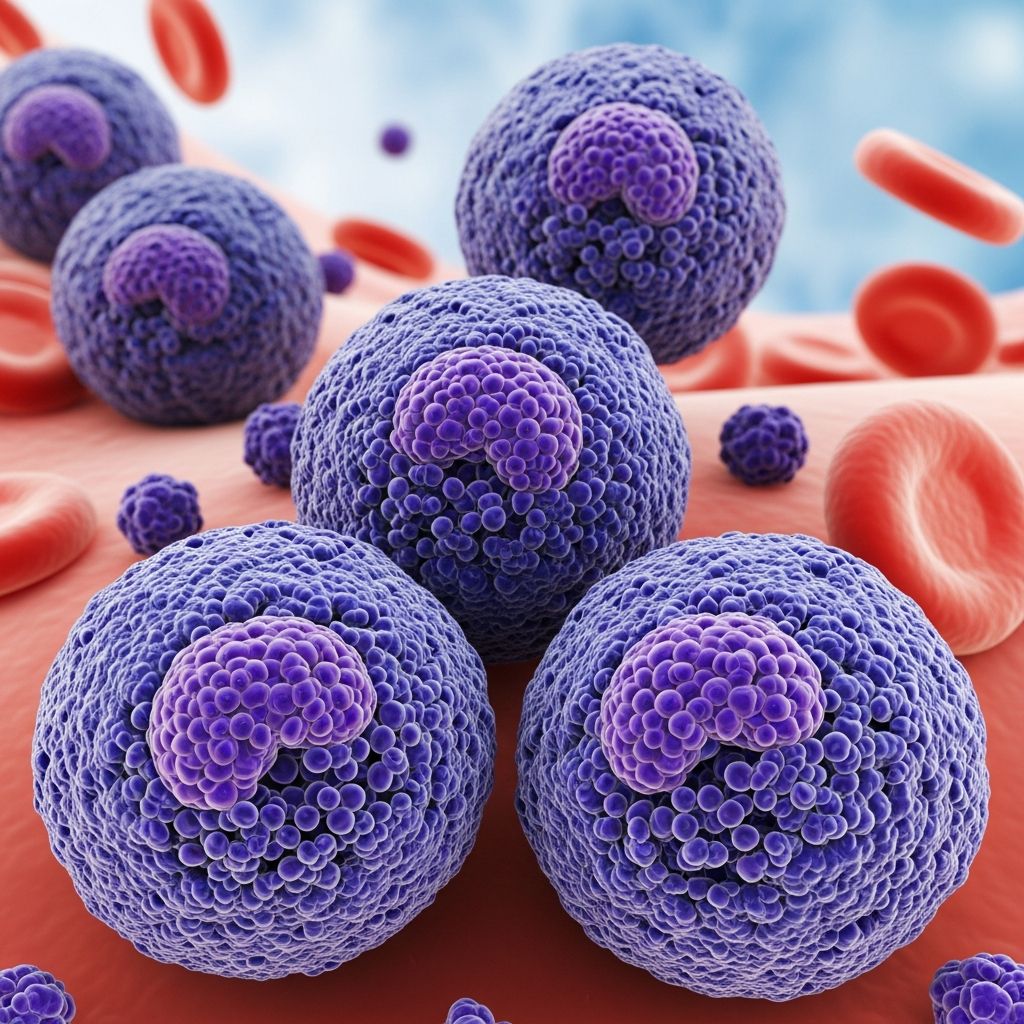
Basophils are a type of white blood cell that plays a crucial role in your immune system’s defense mechanisms. These cells are among the least abundant white blood cells in your circulation, comprising approximately 0.5% of your total blood cells under normal conditions. Despite their small numbers, basophils are essential contributors to your body’s immune response and allergic reactions.
These specialized cells are generated from granulocyte-monocyte progenitors in the bone marrow and circulate throughout your bloodstream as fully mature cells. Basophils have a relatively short lifespan, typically ranging from one to two days, meaning your body constantly produces new basophils to maintain adequate levels.
Key Functions of Basophils
Basophils serve several important functions in maintaining your overall health and protecting your body from various threats. Understanding these functions helps explain why these cells are so vital to your immune system.
Allergic Response Regulation
One of the primary functions of basophils is to mediate allergic reactions. When your body encounters an external allergen, basophils release histamine, a chemical messenger that triggers the characteristic symptoms of allergies. This release of histamine causes familiar allergic responses such as coughing, sneezing, a runny nose, and itching. While these symptoms can be uncomfortable, they represent your body’s attempt to neutralize perceived threats.
Blood Clotting Prevention
Basophils contain heparin, a naturally occurring blood-thinning substance that helps prevent excessive blood clotting. This anticoagulant property is essential for maintaining proper blood flow and preventing dangerous blood clots that could lead to serious cardiovascular complications.
Immunoglobulin E Production
Basophils play a role in generating immunoglobulins E (IgE), antibodies that are particularly important in allergic and parasitic immune responses. These antibodies help your body identify and respond to specific allergens and pathogens.
Infection Response
While the exact mechanisms are still being researched, basophils respond to inflammatory signals and rapidly expand in the bone marrow when your body detects infection or threat. They can be mobilized to various tissues including the blood, spleen, lung, and liver to support your body’s defensive efforts.
Normal Basophil Range and Measurement
Healthcare providers measure basophil levels through a blood test called a complete blood count (CBC). Understanding what constitutes a normal basophil count helps you interpret your test results and recognize when levels may be abnormal.
What Counts as Normal?
The normal basophil count typically falls within a specific range that varies slightly depending on your laboratory and testing methods. Generally, normal basophil counts are measured as either a percentage of total white blood cells or as an absolute count. Your healthcare provider will compare your results against their laboratory’s reference ranges to determine if your levels are normal.
Complete Blood Count with Differential
To get accurate basophil measurements, your provider may order a CBC with differential. This specialized test provides detailed information about how many basophils and other white blood cells you have in your blood. This test uses the same blood sample as a standard CBC, making it a convenient way to get comprehensive information about your white blood cell populations.
Related Stories



Understanding High Basophil Counts (Basophilia)
When your body produces too many basophils, a condition called basophilia develops. High basophil counts can indicate various underlying health conditions and warrant further medical investigation to determine the cause.
Symptoms Associated with Elevated Basophils
It’s important to note that basophilia itself doesn’t cause symptoms. Instead, symptoms arise from the underlying condition causing the elevated basophil count. The specific symptoms you experience depend entirely on what’s causing your basophilia. For this reason, if you notice unexplained changes in your body, it’s important to have a healthcare provider examine you to identify the underlying cause.
Common Causes of High Basophil Counts
Several conditions and situations can lead to elevated basophil levels. Understanding these causes helps explain why your healthcare provider may order additional tests when high basophils are detected.
Infection-Related Causes
Your body may increase basophil production when battling persistent infections. Basophils mobilize as part of your immune system’s response to combat infectious agents. This elevation is often temporary and typically resolves once the infection is controlled.
Allergic Conditions
Allergies and allergic reactions commonly trigger elevated basophil counts as your immune system ramps up its allergic response machinery. Chronic allergic conditions may result in persistently elevated basophil levels.
Cancer and Blood Disorders
Serious conditions like chronic myeloid leukemia (CML) and other blood cancers can cause significant basophilia. In CML, basophilia is common and may be associated with poorer prognosis, particularly when basophil concentration reaches certain threshold levels. Research indicates that basophil concentration at diagnosis correlates with diverse outcomes in newly-diagnosed persons with CML receiving tyrosine kinase inhibitor therapy.
Autoimmune Diseases
Certain autoimmune conditions can trigger elevated basophil counts as your immune system becomes overactive. These conditions require specific medical management to control immune system activity.
Chronic Inflammatory Conditions
Long-term inflammatory conditions can lead to sustained basophilia as your body maintains an elevated state of immune readiness.
How Basophilia is Diagnosed
Diagnosing basophilia typically begins with blood testing and continues with additional evaluation to identify the underlying cause.
Initial Blood Testing
Healthcare providers typically diagnose basophilia by taking samples of your blood to perform a complete blood count (CBC). This test shows the number and condition of your white blood cells, red blood cells, and platelets. The results will reveal whether your basophil count is elevated compared to normal ranges.
Differential Testing
When basophils are found to be elevated, your provider may perform a CBC with differential to get more detailed information. This test specifically measures the percentage and absolute count of basophils relative to other white blood cell types.
Additional Diagnostic Procedures
Since basophilia is more of a sign that something else is occurring rather than a diagnosis itself, your provider will likely perform additional tests to identify the underlying cause. These may include:
– Physical examination to check for signs of infection or other abnormalities
– Bone marrow biopsy if blood cancer is suspected
– Allergy testing if allergic conditions are suspected
– Imaging studies such as X-rays or ultrasounds
– Specialized blood tests to look for specific infections or autoimmune markers
Treatment Approaches for Elevated Basophils
Healthcare providers treat basophilia by addressing the medical condition that’s causing it rather than treating the elevated basophil count directly. Treatment varies significantly depending on the underlying diagnosis.
Treatment for Temporary Causes
If your healthcare provider is confident your high basophils are a sign of a temporary reaction, you may not need immediate treatment. Instead, your provider may perform another CBC later to confirm your levels have returned to normal as the underlying trigger is resolved.
Treatment for Chronic Conditions
Treatment for long-term conditions like blood cancer involves more complex management strategies. Your provider will explain your specific options based on your diagnosis. For example, patients with CML typically receive tyrosine kinase inhibitor therapy to control the disease and normalize blood cell counts.
Common Treatment Strategies
– Antibiotics or antiviral medications for infections
– Antihistamines and corticosteroids for allergic conditions
– Chemotherapy or targeted therapy for blood cancers
– Immunosuppressive medications for autoimmune diseases
– Allergen avoidance for allergic conditions
Prevention and Risk Reduction
While you cannot prevent all causes of basophilia, you can take steps to reduce your risk of developing conditions that cause elevated basophil counts. The most important preventive measures include:
– Taking steps to steer clear of known allergens
– Reducing your risk of getting sick through proper hygiene and vaccination
– Maintaining regular medical check-ups
– Reporting unusual symptoms to your healthcare provider promptly
The best approach is to see a healthcare provider as soon as possible if you’re experiencing unusual symptoms or if your blood test shows elevated basophil levels. Early detection and diagnosis of underlying conditions lead to better outcomes.
When to Seek Medical Attention
You should contact your healthcare provider if you experience unexplained symptoms or if elevated basophil levels are flagged on your blood test. Additionally, ask your provider if you should be concerned about elevated basophil levels and what follow-up testing may be necessary.
Frequently Asked Questions
Q: What is the normal basophil count?
A: Normal basophil counts typically comprise approximately 0.5% of circulating blood cells, though exact ranges vary by laboratory. Your healthcare provider will compare your results against their laboratory’s specific reference ranges to determine if your count is normal.
Q: Can basophilia cause symptoms?
A: Basophilia itself doesn’t cause symptoms. Instead, you experience symptoms related to the underlying condition causing the elevated basophil count. For example, if an infection is causing basophilia, you may experience infection-related symptoms.
Q: How is basophilia treated?
A: Treatment depends on the underlying cause of basophilia. Your healthcare provider will address the specific condition responsible for the elevated basophil count rather than treating the basophils directly.
Q: What does it mean if I have high basophils?
A: High basophils may indicate an infection, allergic reaction, chronic medical condition like cancer, or autoimmune disease. Your healthcare provider will perform additional testing to identify the underlying cause.
Q: Is basophilia serious?
A: Basophilia itself is not a diagnosis but rather a sign of an underlying condition. Some causes are serious (like leukemia), while others are temporary (like acute infections). Your healthcare provider will determine the seriousness based on the underlying cause.
Q: How long does it take for basophil levels to return to normal?
A: The timeline depends on the underlying cause. For temporary causes like acute infections or allergic reactions, basophil levels may normalize within days to weeks. For chronic conditions, normalization may take longer and may depend on successful treatment of the underlying disease.
References
- Blood Basophil Concentration at Diagnosis Correlates with Diverse Outcomes in Newly-Diagnosed Persons with CML Receiving TKI-Therapy — American Society of Hematology. 2023. https://ashpublications.org/blood/article/142/Supplement%201/6374/506198
- Basophilia: Symptoms, Causes & Meaning — Cleveland Clinic. 2024. https://my.clevelandclinic.org/health/diseases/22099-basophilia
- Understanding the Roles of Basophils: Breaking Dawn — National Center for Biotechnology Information (NIH). 2012. https://pmc.ncbi.nlm.nih.gov/articles/PMC3311041/
- White Blood Cells: Types, Function & Normal Ranges — Cleveland Clinic. 2024. https://my.clevelandclinic.org/health/body/21871-white-blood-cells
- Complete Blood Count (CBC): What It Is & Normal Ranges — Cleveland Clinic. 2024. https://my.clevelandclinic.org/health/diagnostics/4053-complete-blood-count
- More Efficient Techniques in the Basophil Detection — Immunostep. 2022. https://immunostep.com/2022/08/19/more-efficient-techniques-in-the-basophil-detection/
Similar Articles








Read full bio of Sneha Tete