Bathwater PUVA: Phototherapy Treatment for Skin Disorders
Comprehensive guide to bathwater PUVA phototherapy for psoriasis, eczema, and inflammatory skin conditions.
What is Bathwater PUVA?
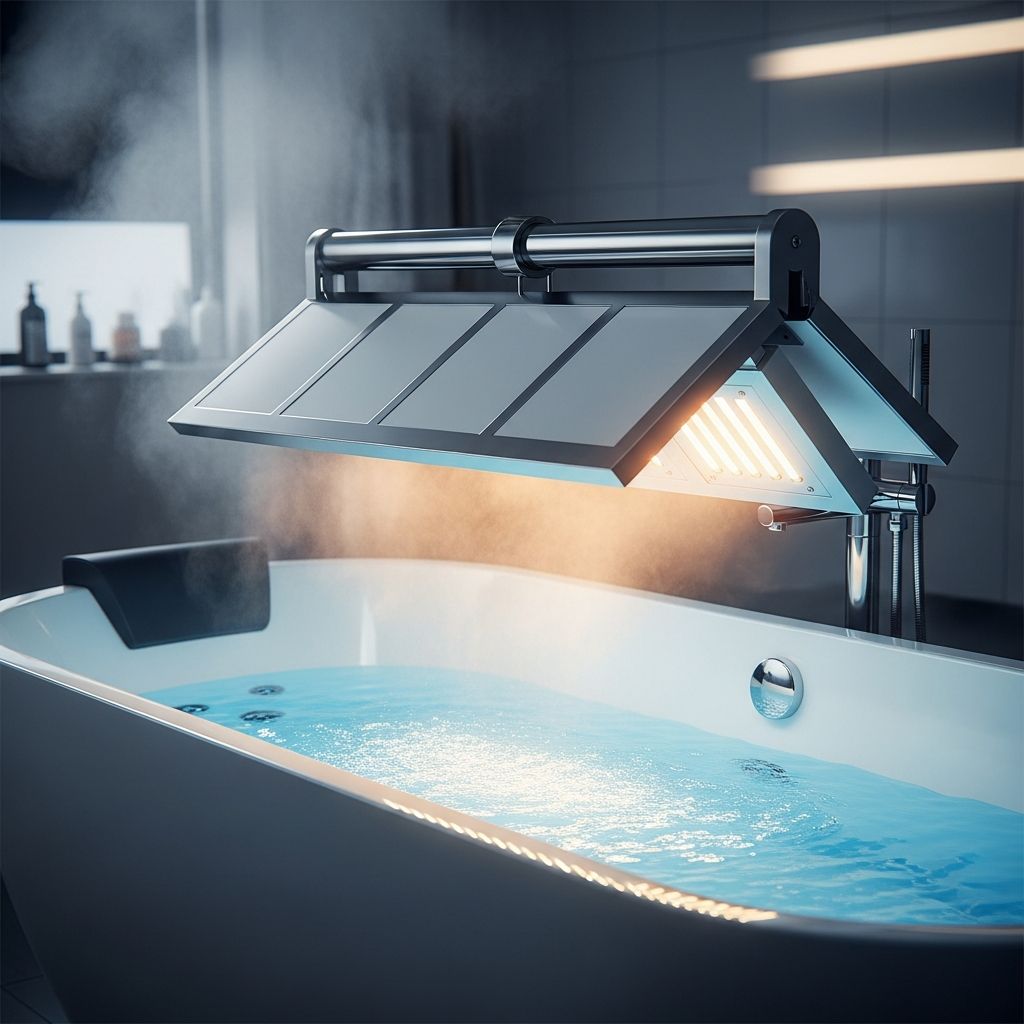
Bathwater PUVA, also called bath-water or balneo-photochemotherapy, is a specialized treatment for inflammatory skin diseases utilizing topical photochemotherapy principles.2 This therapeutic approach combines psoralen compounds dissolved in water with controlled ultraviolet A (UVA) light exposure. Unlike systemic PUVA therapy, which requires oral administration of psoralen medications, bathwater PUVA delivers psoralens directly to affected skin through immersion in a dilute solution.2
The treatment represents an important advancement in dermatological phototherapy because it provides selective photosensitization with significantly shorter duration compared to traditional oral PUVA methods.1 By avoiding systemic absorption through the gastrointestinal tract, bathwater PUVA eliminates typical variations in therapeutic effectiveness caused by individual differences in how patients absorb psoralen medications.1
How Bathwater PUVA Works
Bathwater PUVA functions by combining chemical photosensitization with controlled light therapy. The treatment involves dissolving psoralen derivatives—typically methoxsalen or trimethoxypsoralen—in a warm-water bath at a standard concentration of 0.5 mg/L or approximately 3 mg/L in dilute solution.2 The patient immerses the affected area in this psoralen solution for a specific duration, usually 15 to 30 minutes, allowing the medication to penetrate the skin.4
During the soaking period, patients should maintain movement in the bath to ensure even distribution and consistent skin sensitization throughout the treated area.4 The psoralen solution makes the skin temporarily photosensitive to UVA radiation. After the soaking period concludes, the sensitized skin is exposed to controlled UVA light from specialized fluorescent lamps emitting wavelengths between 320-400 nm.1
The phototherapy staff carefully measure lamp output and calculate individualized UVA doses based on several factors including lamp power, number of lamps, patient skin type, and prior exposure history.2 Treatment duration varies considerably, ranging from less than one minute to thirty minutes or longer depending on these parameters.2
Types of Bathwater PUVA Administration
Bathwater PUVA can be administered in two primary formats, each suited to different treatment needs:
- Whole-body bathwater PUVA: The patient soaks in a full bathtub containing psoralen solution, then stands in a whole-body cabinet containing 6-foot fluorescent tubes emitting UVA radiation. This approach treats extensive skin disease but requires specialized facilities and is less widely available due to expense, inconvenience, and operational complexity.2
- Localized bathwater PUVA: The hands or feet are soaked in a bowl or bucket of psoralen solution and subsequently exposed to UVA from 2-foot bulbs in a dedicated hand-foot box. This more common approach is typically prescribed for psoriasis or eczema affecting the hands and feet.2
Clinical Applications and Conditions Treated
Bathwater PUVA is prescribed to treat various inflammatory skin disorders, with primary indications including psoriasis and eczema. The treatment has demonstrated particular effectiveness for inflammatory dermatoses that involve accessible body areas. Clinical research has established bathwater PUVA as a valuable therapeutic option for patients who are either ineligible for or declining systemic treatments.7
Research demonstrates that bathwater PUVA combined with UVA exposure produces superior clinical outcomes compared to alternative phototherapy approaches. In a comprehensive multisite randomized controlled trial involving 1,241 patients with stable psoriasis vulgaris, bathwater PUVA demonstrated the highest median Psoriasis Area and Severity Index (PASI) reduction of 84%, compared to saltwater UV-B phototherapy at 76% reduction, tap-water UV-B at 62% reduction, and UV-B alone at 44% reduction.1
Related Stories



Treatment Efficacy and Success Rates
Clinical evidence supports bathwater PUVA as an effective treatment option for chronic inflammatory skin conditions. Approximately 60 to 80% of patients with psoriasis achieve good therapeutic results within 20 to 40 treatments.2 Success rates for eczema treatment are somewhat lower than those observed with psoriasis, though bathwater PUVA remains a viable option for patients with severe or refractory hand and foot eczema.
The treatment protocol typically involves sessions administered four times weekly over a maximum period of eight weeks, with dose adjustments made according to individual response and clinical findings.1 Remission is defined as a reduction of PASI score to less than 3.1 The phototherapy staff adjust UVA doses throughout treatment—maintaining the same dose or reducing it if the condition clears, maximum tolerable dose is reached, or bothersome side effects develop.2
Treatment Procedure and Patient Experience
Patients receiving bathwater PUVA treatment should follow specific preparation and procedural guidelines to optimize outcomes. Before treatment initiation, phototherapy staff conduct phototesting to establish individual minimal phototoxic dose (MPD)—defined as the UVA dose producing just-detectable erythema with sharp borders within 72 hours.1
During each treatment session, patients immerse the affected area in warm water containing dissolved psoralen for approximately 15 to 30 minutes. When dissolving methoxsalen for bath treatment, patients should dissolve 50 mg of methoxsalen in a measuring cup filled with hot water to create an aquamarine-colored solution, which is then added to a pre-filled bathtub containing 100 liters of warm water.3 Continuous gentle movement prevents uneven solution distribution and ensures complete skin sensitization.
After the soaking period concludes, typically within 20 minutes, patients proceed to UVA irradiation in either a whole-body cabinet or hand-foot box, depending on treatment type.1 Initial UV exposure duration may be only a few seconds at the first treatment session, with gradual increases to a maximum of approximately 15 minutes as treatment progresses.4
Expected Results and Skin Response
Patients should anticipate specific skin responses during and after bathwater PUVA treatment. Treated areas typically appear mildly pink immediately following each session, with this coloration potentially persisting for several days and occasionally accompanied by temporary prickling or itching sensations.2 The skin often becomes dry during treatment courses, necessitating frequent application of moisturizing products to maintain skin barrier function and comfort.
Tanning commonly occurs during bathwater PUVA therapy and is most prominent in individuals with darker skin types.2 These expected responses represent normal phototherapy reactions rather than adverse effects, though patients should monitor for signs of excessive reaction as discussed below.
Safety Profile and Adverse Effects
Bathwater PUVA demonstrates a favorable safety profile compared to systemic oral PUVA therapy. The topical delivery mechanism avoids systemic absorption and associated risks, while providing selective and shorter photosensitization duration that results in significantly lower cumulative UVA exposure.1 Retrospective analysis from Scandinavian studies demonstrated that bathwater PUVA with trimethoxypsoralen carries only low risk of long-term carcinogenicity.1
During treatment, some patients may experience localized adverse effects including erythema of varying grades. In clinical trials, reversible erythema of grades IV or V occurred across all treatment groups, though rates were comparable across different phototherapy modalities.1 Seven patients developed localized edema and four developed blisters during comprehensive treatment trials.1 All adverse effects of this nature proved reversible with appropriate management.
Long-term safety considerations remain partially undefined. While 200 or more treatments with whole-body oral PUVA have been associated with skin cancer, cataracts, and skin aging including freckles, wrinkles, and increased dryness, the specific long-term risks of bathwater PUVA remain unknown.2 However, the lower cumulative UVA exposure and topical delivery mechanism suggest bathwater PUVA likely carries lower long-term risk than systemic alternatives.
Drug Interactions and Contraindications
Bathwater PUVA should be avoided in patients taking certain immunosuppressive medications including azathioprine and ciclosporin, as these drugs may increase the risk of skin cancer when combined with phototherapy.2 Specific topical preparations must also be avoided on treated areas, as certain products compromise treatment efficacy or increase adverse reaction risk.
Patients should not apply sunscreens or calcipotriol to skin scheduled for bathwater PUVA treatment, as these substances reduce therapeutic effectiveness.2 Cosmetics and perfumes should be avoided on treated areas because they are phototoxic and may induce severe photochemical burns when exposed to UVA radiation.2
Combination Therapy Options
Bathwater PUVA may be administered concurrently with other skin condition treatments to enhance overall therapeutic outcomes. Patients can continue using topical preparations such as corticosteroid creams for eczema management alongside bathwater PUVA therapy.2 Systemic oral medications including prednisone, acitretin, and methotrexate may also be used simultaneously with bathwater PUVA without contraindication, provided careful monitoring occurs and appropriate medication adjustments are made as needed.2
Advantages Over Alternative Phototherapy Methods
Bathwater PUVA offers several distinct advantages over alternative phototherapy approaches. Compared to systemic oral PUVA, bathwater PUVA eliminates variability in psoralen absorption related to individual gastrointestinal differences, ensuring more consistent and predictable therapeutic response.1 The topical delivery mechanism reduces or eliminates systemic adverse effects associated with oral psoralen administration, improving overall treatment tolerability.
In recent years, bathwater PUVA has increasingly replaced oral PUVA in Germany and other European countries, reflecting growing clinical recognition of its superior safety-efficacy profile.1 The treatment represents an excellent option for patients with localized disease, particularly affecting hands and feet, where whole-body systemic treatment would provide unnecessary systemic exposure.
Frequency Asked Questions
Q: How often are bathwater PUVA treatments typically administered?
A: Bathwater PUVA is typically administered four times weekly over a maximum treatment period of eight weeks, with approximately 20 to 40 treatments needed for most patients to achieve good therapeutic results.
Q: What concentration of psoralen is used in bathwater PUVA?
A: Standard bathwater PUVA uses psoralen at a concentration of 0.5 mg/L or approximately 3 mg/L in dilute solution. For preparation, 50 mg of methoxsalen is dissolved in hot water to create an aquamarine solution, then added to 100 liters of warm bathwater.
Q: Is bathwater PUVA effective for eczema treatment?
A: Yes, bathwater PUVA is used to treat eczema, particularly hand and foot eczema. However, success rates for eczema are somewhat lower than those achieved with psoriasis treatment.
Q: Can bathwater PUVA be combined with other treatments?
A: Yes, bathwater PUVA may be used concurrently with topical creams such as corticosteroids and systemic medications including prednisone, acitretin, and methotrexate, though careful monitoring is essential.
Q: What is the main advantage of bathwater PUVA over oral PUVA?
A: Bathwater PUVA avoids systemic adverse effects by delivering psoralens topically, eliminates variations in therapeutic response due to gastrointestinal absorption differences, and results in significantly lower cumulative UVA exposure.
Q: Are there any medications that should not be combined with bathwater PUVA?
A: Bathwater PUVA should be avoided with immunosuppressive medications such as azathioprine and ciclosporin, as these may increase skin cancer risk. Additionally, sunscreens, calcipotriol, cosmetics, and perfumes should not be applied to treated skin areas.
Q: How long does each bathwater PUVA treatment session last?
A: Treatment duration varies based on lamp power, number of lamps, skin type, and prior exposure. Initial sessions may last only a few seconds, gradually increasing to a maximum of approximately 15 minutes.
Q: What should patients expect after bathwater PUVA treatment?
A: Treated areas typically appear mildly pink for several days and may be accompanied by prickling or itching. Skin dryness is common, requiring frequent moisturizer application. Tanning usually occurs, particularly in darker skin types.
Conclusion
Bathwater PUVA represents a valuable and increasingly popular phototherapy option for patients with inflammatory skin conditions, particularly psoriasis and eczema affecting localized areas such as the hands and feet. Its topical delivery mechanism, superior efficacy compared to alternative phototherapy approaches, favorable safety profile, and lower cumulative UVA exposure make it an attractive alternative to systemic oral PUVA therapy. With proper technique, dose adjustment, and patient compliance, bathwater PUVA achieves therapeutic remission in 60 to 80% of psoriasis patients within 20 to 40 treatments. Patients considering this treatment should consult with their dermatologist to determine appropriateness for their specific condition and discuss potential benefits and risks.
References
- Bath PUVA and Saltwater Baths Followed by UV-B Phototherapy as Treatment for Psoriasis — JAMA Dermatology. 2025. https://jamanetwork.com/journals/jamadermatology/fullarticle/412850
- Bathwater PUVA – DermNet — DermNet New Zealand. 2025. https://dermnetnz.org/topics/bathwater-puva
- The Patient’s Guide to Psoriasis Treatment. Part 2: PUVA Phototherapy — PubMed Central, National Center for Biotechnology Information. 2016. https://pmc.ncbi.nlm.nih.gov/articles/PMC4972736/
- Bath PUVA Treatment Guidelines — Ashford and St Peter’s Hospital NHS Trust. 2022. https://ashfordstpeters.info/images/leaflets/dermatology/DE37-Bath-PUVA-Treatment-Nov-2022.pdf
- Bath-PUVA Still Represents a Valuable Treatment Option for Psoriasis — Wiley Online Library. 2024. https://onlinelibrary.wiley.com/doi/10.1111/phpp.12846
Similar Articles








Read full bio of medha deb