Garlic: 9 Proven Health Benefits Backed By Research
Discover the science-backed health benefits of garlic, from boosting immunity to supporting heart health and beyond.
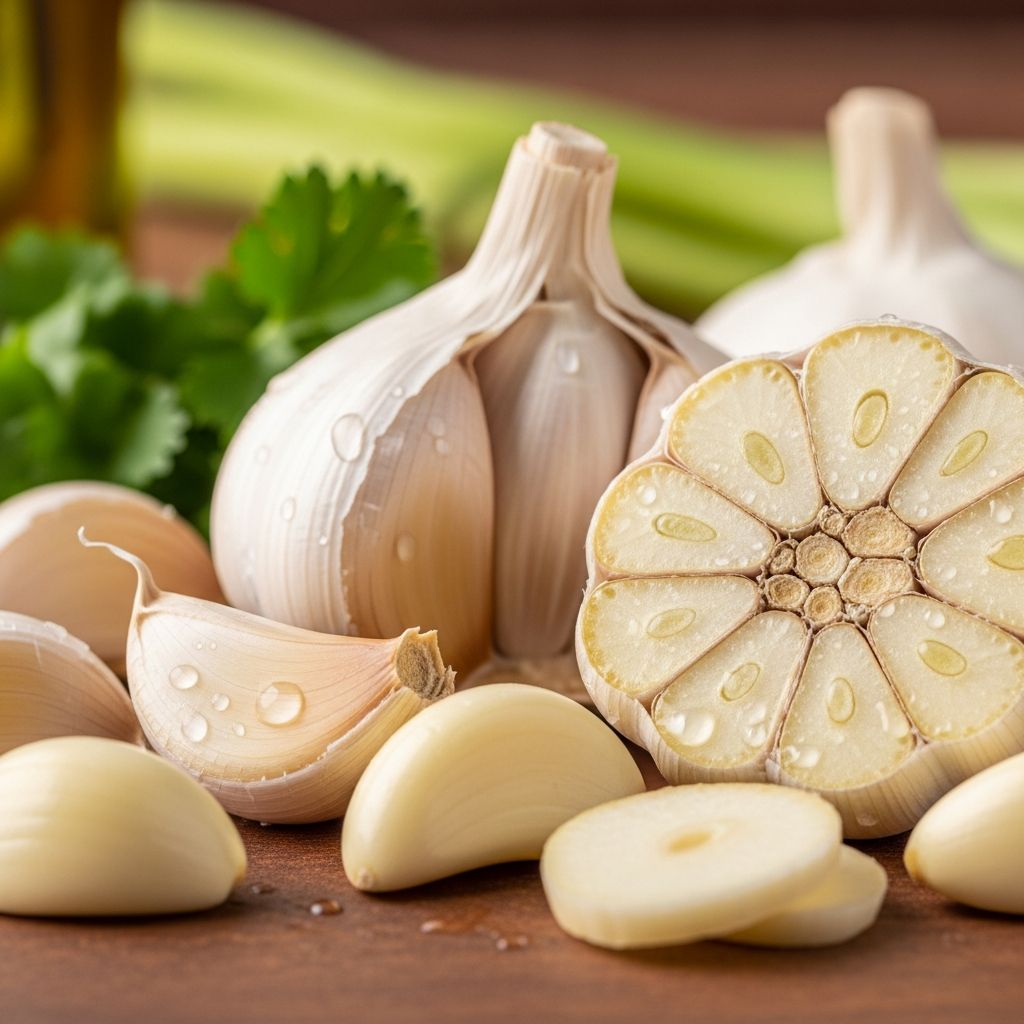
Garlic (Allium sativum) has been used for centuries in traditional medicine for its potent therapeutic properties. Modern science confirms many of these benefits, primarily due to sulfur-containing compounds like allicin, which form when garlic is chopped or crushed. These compounds contribute to garlic’s distinctive aroma and its effects on immunity, heart health, and inflammation. This article synthesizes research from clinical trials and meta-analyses to outline garlic’s key benefits, safe usage, and nutritional profile.
Garlic 101: Nutrition Facts and Key Compounds
A single clove of garlic (about 3 grams) provides roughly 4 calories, 0.2g protein, 0.9g carbohydrates, and trace amounts of fiber, vitamins B6 and C, manganese, and selenium. Its powerhouse status comes from organosulfur compounds: allicin (antimicrobial), alliin, S-allyl cysteine (SAC, in aged garlic extract or AGE), and diallyl disulfide. Raw garlic maximizes allicin, while cooking or aging reduces pungency but preserves SAC for antioxidant effects. Studies show 1-2 cloves daily (3-6g) or supplements equivalent to 600-1200mg fresh garlic suffice for benefits without side effects in most people.
1. Contains Compounds With Potent Medicinal Properties
Garlic’s medicinal prowess stems from over 400 bioactive compounds, especially organosulfurs formed via alliinase enzyme activation upon crushing. Allicin exhibits antibacterial, antiviral, antifungal, and anticancer activities in lab studies. Historical use by Hippocrates for infections aligns with modern evidence: garlic outperforms some antibiotics against resistant bacteria like MRSA. A review highlights its broad-spectrum antimicrobial action, making it valuable for respiratory and gut infections.
2. Highly Nutritious but Low in Calories
Despite low calories, garlic packs essential micronutrients: 23% DV vitamin B6, 6% DV vitamin C, 5% DV selenium, and 1% DV manganese per ounce (28g). These support metabolism, immunity, thyroid function, and bone health. Its density makes it ideal for flavoring without adding significant calories, aiding weight management.
3. Can Help Protect Against Illness, Including the Common Cold
Garlic bolsters immunity via AGE supplementation. A 2016 trial showed 3 months of AGE reduced cold incidence by 63% and symptom days by 70% versus placebo during flu season. Compounds enhance immune cell proliferation and inhibit viral entry/replication. Meta-analyses confirm fewer colds and shorter duration with garlic intake.
- Reduces cold severity and work/school absences.
- Antiviral effects against flu and other pathogens.
4. Active Compounds Can Reduce Blood Pressure
Hypertension affects 1 in 3 adults; garlic lowers it comparably to drugs. A 2020 meta-analysis of 12 trials found garlic supplements reduced systolic BP by 8-10 mmHg and diastolic by 5-6 mmHg in hypertensives, cutting cardiovascular risk 16-40%. Mechanisms include hydrogen sulfide production for vessel relaxation and ACE inhibition. Doses of 600-900mg garlic powder daily for 12+ weeks yield results.
5. Improves Cholesterol Levels, Which May Lower Heart Disease Risk
Garlic targets dyslipidemia: a 2018 review showed reductions in total cholesterol (11-17mg/dL), LDL (9-15mg/dL), and triglycerides (6-27mg/dL), with HDL preservation. Meta-analyses confirm benefits in hypercholesterolemia, especially >2 months use. In metabolic syndrome, 100mg raw crushed garlic twice daily for 4 weeks improved lipid profiles and glucose. Organosulfurs modulate ABC transporters for cholesterol efflux.
6. Contains Antioxidants That May Help Prevent Alzheimer’s Disease and Dementia
Oxidative stress drives neurodegeneration; garlic’s antioxidants (SAC, alliin) neutralize free radicals. 2016 research links garlic to lower dementia risk via reduced oxidative damage. Animal studies show allicin protects neurons; human trials needed. AGE improves cognition in Alzheimer’s patients by enhancing cerebral blood flow.
Related Stories



7. May Help You Live Longer
Garlic’s multi-target effects—antioxidant, anti-inflammatory, cardioprotective—promote longevity. Population studies in garlic-heavy diets (e.g., Mediterranean) correlate with lower all-cause mortality. It reduces age-related diseases: CVD by 40%, cancer risk, via pathways like Nrf2 activation for cellular repair.
8. Boosts Athletic Performance (Possibly)
Ancient Olympians used garlic for stamina. Rodent studies show improved exercise capacity via lactate reduction and endurance. Human evidence is preliminary but promising: garlic enhances VO2 max and recovery. More RCTs required.
9. Highly Effective at Detoxifying the Body
Sulfur compounds chelate heavy metals. A 2012 trial in lead-exposed workers found garlic (1.2g/day) cut blood lead 19%—better than D-penicillamine—reducing toxicity symptoms like hypertension. Protects liver/kidneys from cadmium/mercury.
Other Potential Benefits
- Bone Health: Reduces postmenopausal oxidative stress and knee osteoarthritis pain; 2g fresh garlic equivalent daily lowers osteoporosis markers.
- Cancer Prevention: Allyl sulfides induce apoptosis in colon, prostate cancers; meta-analyses show 30% risk reduction.
- Anti-Inflammatory: Lowers CRP, IL-6, TNF-α in trials; 400mg GE twice daily aids dialysis patients.
- Diabetes Control: Improves fasting glucose, HbA1c, lipids via antioxidant effects.
Easy Ways to Incorporate Garlic Into Your Diet
- Crush/mince 1-2 cloves for salads/sauces (let sit 10min for allicin).
- Roast whole bulbs for spreads.
- Add to soups, stir-fries, dressings.
- Try black/aged garlic for milder flavor.
- Supplements: 600-1200mg standardized extract.
| Form | Allicin Content | Best For |
|---|---|---|
| Raw Crushed | High | Immunity, acute benefits |
| Cooked | Low | Daily flavor, heart health |
| AGE Powder | SAC High | Antioxidants, BP |
Side Effects & Dosage
Safe at culinary doses; high supplemental (5g+/day) may cause garlic breath, GI upset, bleeding risk (inhibits platelets). Avoid pre-surgery or with blood thinners. Dosage: 2-5g fresh or 600-1200mg extract daily. Pregnant/breastfeeding: up to 4g safe.
Frequently Asked Questions (FAQs)
Is garlic good for you?
Yes, garlic provides proven benefits for immunity, heart health, and antioxidants when consumed regularly.
Can garlic help lower blood pressure?
Clinical trials show garlic reduces systolic/diastolic pressure by 5-10 mmHg in hypertensives.
Does garlic boost the immune system?
AGE supplements cut cold risk by 63% and severity in studies.
Is garlic anti-inflammatory?
Meta-analyses confirm reductions in CRP, TNF-α, IL-6.
How much garlic should I eat daily?
1-2 cloves (3-6g) or equivalent supplements for benefits.
Does cooking destroy garlic’s benefits?
Cooking lowers allicin but retains SAC and other antioxidants.
References
- Potential Health Benefit of Garlic Based on Human Intervention Studies — Arreola R. et al. PMC (NIH). 2020-07-15. https://pmc.ncbi.nlm.nih.gov/articles/PMC7402177/
- 11 Proven Health Benefits of Garlic — Healthline (Medically reviewed by Jared Meacham, PhD., RD). 2025-05-06. https://www.healthline.com/nutrition/11-proven-health-benefits-of-garlic
- Garlic Lowers Blood Pressure in Hypertensive Subjects — Ried K. et al. PubMed (BMC Cardiovasc Disord). 2020. https://pubmed.ncbi.nlm.nih.gov/31888573/
- Effects of Garlic on Blood Lipids — Zeng T. et al. PubMed (J Nutr). 2018. https://pubmed.ncbi.nlm.nih.gov/29378009/
- Aged Garlic Extract and Immunity — Nantz MP. et al. PubMed (J Nutr). 2016. https://pubmed.ncbi.nlm.nih.gov/26715020/
- Garlic for Heavy Metal Detoxification — Kianoush S. et al. PubMed (Drug Chem Toxicol). 2012. https://pubmed.ncbi.nlm.nih.gov/22701025/
Similar Articles








Read full bio of Sneha Tete