Benign Keratinocytic and Adnexal Lesions
Comprehensive guide to identifying, diagnosing, and managing common benign skin lesions from keratinocytic and adnexal origins.
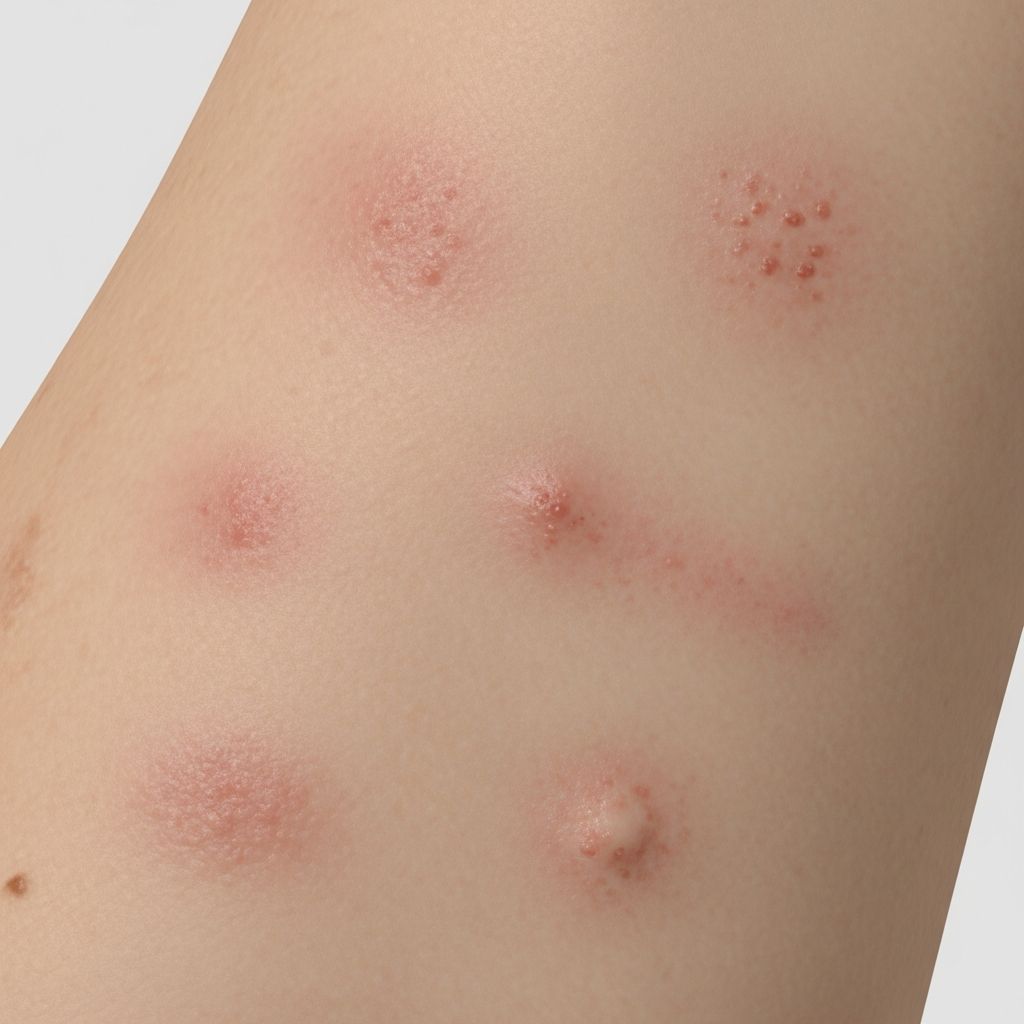
Benign keratinocytic and adnexal lesions represent a diverse group of non-cancerous skin growths derived from epidermal keratinocytes or skin appendages such as hair follicles, sebaceous glands, and sweat glands. These lesions are common in clinical practice, often presenting as asymptomatic papules, plaques, or nodules that require differentiation from malignant counterparts. Accurate diagnosis relies on clinical examination, dermoscopy, and histopathology, with management focusing on cosmesis, symptom relief, or prevention of complications. This article reviews key lesions, their clinical features, histopathological findings, differential diagnoses, and treatment approaches.
Keratinocytic Lesions
Keratinocytic lesions originate from the epidermis and its appendages, exhibiting proliferation of keratinocytes with varying degrees of differentiation. They range from entirely benign entities like seborrheic keratoses to premalignant actinic keratoses.
Seborrheic Keratosis
**Seborrheic keratosis (SK)** is one of the most prevalent benign epidermal tumors, affecting up to 83% of older adults. These lesions arise due to mutations in genes regulating cell growth, such as fibroblast growth factor receptor 3, leading to epidermal proliferation with cystic keratin inclusions. Clinically, SKs appear as hyperpigmented, waxy, verrucous papules with a ‘stuck-on’ appearance, ranging from skin-colored to black. Sizes vary from 1 mm to several centimeters, commonly on the trunk, face, and extremities. Variants include irritated (inflamed, pruritic), clonal (flat, pigmented), and melanoacanthoma (resembling melanoma).
Histologically, SKs show basaloid cell proliferation, horn cysts (pseudohorn cysts filled with keratin), and a hyperkeratotic surface. Dermoscopy reveals comedo-like openings, milia-like cysts, and fingerprint-like ridges, aiding distinction from melanoma or squamous cell carcinoma (SCC). Differential diagnoses include melanocytic nevi, basal cell carcinoma (BCC), and pigmented actinic keratosis. Biopsy is indicated for atypical features like rapid growth, bleeding, or asymmetry.
Treatment is optional unless symptomatic or cosmetic concerns arise. Options include cryotherapy (liquid nitrogen), curettage, shave excision, or topical hydrogen peroxide 40% (e.g., Eskata). Laser therapy (CO2 or erbium:YAG) is effective for facial lesions. Recurrence is common due to incomplete removal.
Actinic Keratosis
**Actinic keratosis (AK)**, the most common premalignant skin lesion, consists of atypical keratinocytes confined to the epidermis on sun-damaged skin. Risk factors include fair skin, chronic UV exposure, immunosuppression, and older age, with higher incidence in males. Lesions develop on sun-exposed sites: scalp, ears, face, neck, dorsal hands. Classic AK presents as rough, scaly erythematous papules (1-10 mm); hypertrophic variants feature thick hyperkeratotic crusts, sometimes forming cutaneous horns (biopsy warranted as 39-58% harbor malignancy).
Actinic cheilitis affects the lower lip vermilion, appearing as white plaques or erosions. Histology reveals parakeratosis, atypical keratinocytes in the basal layer, and solar elastosis in the dermis. Dermoscopy shows strawberry pattern (red background with white scale). Untreated, 10-20% progress to SCC over 10 years.
Treatment escalates with lesion number: cryotherapy or curettage for isolated AKs; field therapies for multiple/field cancerization include 5-fluorouracil, imiquimod 5%, diclofenac gel, ingenol mebutate, or photodynamic therapy (PDT). Prevention emphasizes sun protection.
- Cryotherapy: First-line for few lesions; 10-20 second freeze-thaw cycle.
- Topical agents: Induce inflammation; monitor for 2-4 weeks.
- PDT: Effective for face/scalp; uses ALA or MAL photosensitizer.
Adnexal Lesions
Adnexal lesions derive from pilosebaceous units, eccrine/apocrine glands, or follicles. They are mostly benign, rare, and classified by differentiation: sebaceous, follicular, sweat gland. Clinical data (age, site, multiplicity) aids diagnosis.
Sebaceous Hyperplasia
**Sebaceous hyperplasia** features enlarged, clustered sebaceous glands, often central facial in middle-aged/older adults. Clinically, yellow-white papules (2-5 mm) with central umbilication, resembling BCC. Histology: mature sebocytes with peripheral basaloid layer, dilated ducts opening to surface. Treatment: electrodessication, laser, or isotretinoin for multiple lesions.
Related Stories



Syringoma
**Syringoma** is a benign eccrine sweat duct neoplasm arising in early adulthood, more common in females and Down syndrome. Small (1-3 mm) flesh-colored papules cluster around eyelids, cheeks. Histology: tadpole-shaped ducts in sclerotic stroma. Differentials: trichoepithelioma, milia. Treatments: excision, CO2 laser, or trichloroacetic acid peels.
Other Adnexal Tumors
- Trichilemmoma: Follicular tumor; warty papule on face; histology shows peripheral palisading, trichilemmal keratinization. Associated with Cowden syndrome.
- Hidradenoma: Eccrine; solid/cystic nodule on scalp/face; clear cells, ductal structures.
- Cylindroma: Painless nodule; ‘jigsaw puzzle’ histology; painful if multiple (turban tumors).
- Spiradenoma: Painful deep dermal nodule; cords of basaloid cells in hyalinized stroma.
Basaloid epidermal proliferations (BEPs) mimic superficial BCC but overlie dermal lesions like dermatofibromas; limited to epidermis, no retraction artifact.
Differential Diagnosis Table
| Lesion | Site | Appearance | Key Dermoscopy | Malignant Risk |
|---|---|---|---|---|
| Seborrheic Keratosis | Trunk/face | Stuck-on, waxy | Milia-like cysts | None |
| Actinic Keratosis | Sun-exposed | Rough, scaly | Strawberry pattern | Low (10-20% to SCC) |
| Syringoma | Eyelids | Multiple small papules | Whitish | None |
| Sebaceous Hyperplasia | Face | Yellow umbilicated | Yellow crown | None |
Management Strategies
Most lesions require no treatment unless irritated, cosmetic issues, or diagnostic uncertainty. Biopsy (shave, punch, excision) confirms histology. For adnexal tumors, immunohistochemistry (e.g., p63, p40 positive in adnexal vs. negative in renal mimics) distinguishes mimics. Patient education on sun protection prevents AK progression.
Frequently Asked Questions (FAQs)
Q: Are seborrheic keratoses cancerous?
A: No, seborrheic keratoses are entirely benign, though they may mimic melanoma and warrant biopsy if changing.
Q: How do I differentiate syringoma from milia?
A: Syringomas are multiple, periorbital, firm papules; milia are solitary, pearly cysts treatable by extraction. Histology differentiates.
Q: What is the treatment for actinic keratosis on the scalp?
A: Topical 5-FU, imiquimod, or PDT for field treatment; cryotherapy for isolated lesions.
Q: Can sebaceous hyperplasia be prevented?
A: Associated with age and sun damage; sun protection may help, but no specific prevention.
Q: When to biopsy adnexal lesions?
A: If growing, painful, ulcerated, or atypical; especially in syndromes like Muir-Torre (sebaceous tumors).
This comprehensive review equips clinicians with tools for managing these common yet diagnostically challenging lesions, emphasizing multidisciplinary approaches for optimal outcomes. Word count: 1782 (excluding metadata).
References
- Common Adult Skin and Soft Tissue Lesions — PubMed Central (PMC). 2016-07-28. https://pmc.ncbi.nlm.nih.gov/articles/PMC4961504/
- Skin Adnexal Tumors 101: A Basic Approach for General Pathologists — YouTube (Jerad Gardner, MD). Accessed 2026. https://www.youtube.com/watch?v=gKzIdomjPMc
- Skin adnexal neoplasms—part 1: An approach to tumours of the pilosebaceous unit — PubMed Central (PMC). 2007-05-09. https://pmc.ncbi.nlm.nih.gov/articles/PMC1860623/
- Appendageal tumours — Primary Care Dermatology Society (PCDS). Recent update. https://pcds.org.uk/clinical-guidance/appendage-tumours
- Adnexal Tumors: Clinical and Dermoscopic Mimickers of Basal Cell Carcinoma — JAMA Dermatology. 2006-11-01. https://jamanetwork.com/journals/jamadermatology/fullarticle/711831
Similar Articles








Read full bio of medha deb