Benign Ovarian Cysts: Causes, Symptoms & Treatment
Understanding benign ovarian cysts: symptoms, diagnosis, and effective management options.
Understanding Benign Ovarian Cysts
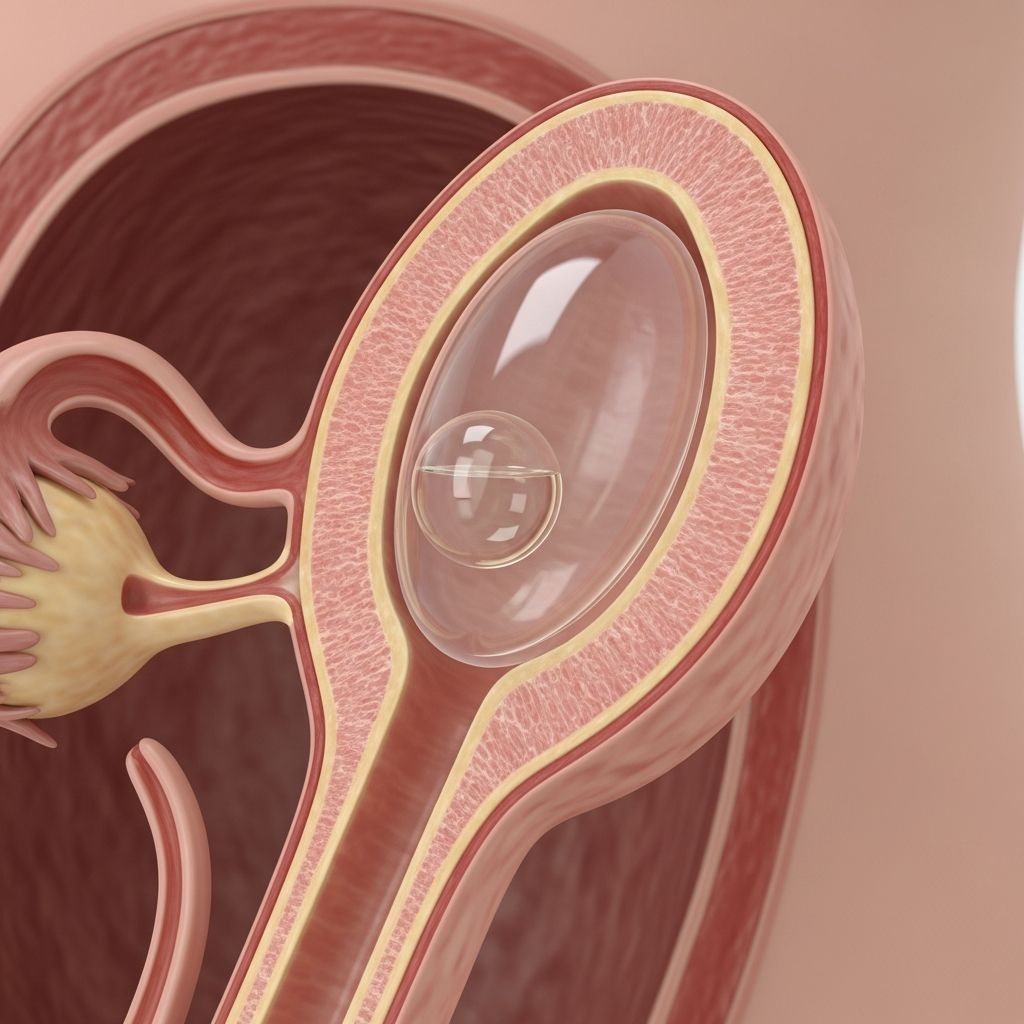
Benign ovarian cysts are fluid-filled sacs that develop on or within the ovaries. These cysts are extremely common in women of reproductive age and are typically noncancerous growths that pose minimal health risks. Most benign ovarian cysts develop as part of the normal menstrual cycle and often resolve on their own without requiring intervention. Understanding the nature of these cysts, their causes, and appropriate management strategies is essential for informed healthcare decisions.
What Are Benign Ovarian Cysts?
A benign ovarian cyst is defined as a fluid-filled sac in the ovarian tissue that is determined to be noncancerous through medical evaluation. These cysts vary significantly in their characteristics, including size, composition, and origin. Some cysts contain clear fluid, while others may contain more complex material. The key distinction of benign cysts is their lack of malignant potential and their generally favorable prognosis.
Medical professionals classify ovarian cysts as either unilocular (single-chambered) or multilocular (multiple chambers). Simple cysts, which represent a subset of unilocular cysts, contain only fluid without internal echoes or wall irregularities when visualized on ultrasound. Recent research demonstrates that simple cysts have a negligible association with ovarian cancer, with risk estimates of approximately 0.1% to 0.2%, making them essentially equivalent to the general population risk.
Types of Benign Ovarian Cysts
Several distinct types of benign ovarian cysts exist, each with different characteristics and formation mechanisms:
Functional Cysts
Functional cysts, also called physiologic cysts, develop as a normal part of the menstrual cycle. These include follicular cysts that form when the follicle fails to rupture and release an egg, and corpus luteum cysts that develop after ovulation. Functional cysts typically resolve within two to three months without treatment and are most common in premenopausal women.
Dermoid Cysts
Dermoid cysts, or mature cystic teratomas, are benign neoplastic growths that contain tissues derived from different germ layers. These cysts may include elements such as hair, teeth, skin, or fat. While benign, dermoid cysts do not typically resolve spontaneously and may require surgical removal if they enlarge or cause symptoms.
Cystadenomas
Cystadenomas are benign tumors that develop from the epithelial lining of the ovary. Serous cystadenomas and mucinous cystadenomas are the most common types. These cysts generally grow slowly and have no malignant potential, though they may require monitoring or removal depending on their size and symptoms.
Endometriomas
Endometriomas develop when endometrial tissue grows on the ovaries, typically associated with endometriosis. These cysts contain old blood and appear as chocolate-colored masses on imaging. They are benign but may cause pain and can affect fertility.
Causes and Risk Factors
The development of benign ovarian cysts involves various factors related to hormonal and reproductive physiology. Understanding these causes helps explain why cysts are common and generally benign:
Related Stories



Hormonal Factors: Functional cysts directly result from hormonal fluctuations during the menstrual cycle. Elevated gonadotropin levels can increase cyst formation risk. Tamoxifen therapy, used in breast cancer treatment, is associated with increased ovarian cyst formation.
Age-Related Factors: Premenopausal women experience higher rates of functional cyst formation due to active ovulation. However, cysts can occur in postmenopausal women as well, though the underlying mechanisms may differ.
Reproductive History: Early menarche, pregnancy, and conditions such as polycystic ovary syndrome (PCOS) increase the likelihood of cyst development. Women with a history of infertility or endometriosis face elevated risk.
Lifestyle Factors: Smoking has been associated with increased ovarian cyst formation, suggesting environmental and chemical influences on cyst development.
Symptoms and Clinical Presentation
Many women with benign ovarian cysts experience no symptoms and discover them incidentally during imaging performed for other reasons. However, depending on cyst size, location, and type, some women may experience:
Common Symptoms:
- Pelvic pain or discomfort, particularly on one side
- Bloating and abdominal distension
- Early satiety (feeling full quickly when eating)
- Pressure sensation in the lower abdomen or pelvis
- Dyspareunia (pain during sexual intercourse)
Acute Symptoms: If a cyst ruptures or becomes twisted (ovarian torsion), women may experience sudden, severe pain, nausea, and vomiting requiring immediate medical attention.
Diagnosis and Imaging
Accurate diagnosis of benign ovarian cysts relies primarily on imaging studies that characterize cyst morphology and assess malignancy risk. The diagnostic approach typically follows a structured algorithm:
Transvaginal Ultrasonography
Transvaginal ultrasonography is the gold standard imaging modality for evaluating ovarian cysts. This technique provides high-resolution images of ovarian structures, allowing precise characterization of cyst features including size, internal echoes, wall thickness, and septations. The ultrasound assessment determines whether a cyst is simple (fluid-filled with no internal echoes) or complex (containing solid components or internal debris).
Morphology Index and Risk Assessment
Ultrasonography can provide a morphology index score that is useful in determining the likelihood of malignancy. This scoring system incorporates features such as cyst size, number of locules, thickness of septations, and presence of solid components to stratify malignancy risk.
Additional Imaging Studies
When ultrasonographic findings are indeterminate or when complex cysts require further evaluation, additional imaging modalities may be employed. Magnetic resonance imaging (MRI) provides excellent soft tissue characterization and can differentiate between various benign cyst types, including distinguishing functional cysts from dermoid cysts and cystadenomas based on their signal intensity characteristics. Computed tomography (CT) imaging may be used in specific clinical scenarios, particularly when evaluating acute symptoms or assessing for complications.
Biomarker Testing
Serum cancer antigen (CA)-125 measurement may be considered in selected cases, though elevated levels alone do not indicate malignancy. Asymptomatic postmenopausal women with simple unilocular ovarian cysts less than 10 centimeters in diameter and CA-125 levels below 35 U/mL can typically be managed conservatively.
Management and Treatment Approaches
Management of benign ovarian cysts depends on multiple factors including cyst morphology, size, symptomatology, and patient age. The approach ranges from conservative observation to surgical intervention:
Conservative Management
Most benign ovarian cysts, particularly functional cysts in premenopausal women, do not require treatment beyond monitoring. Simple cysts less than or equal to 1 centimeter can be explicitly described as normal findings, and larger simple cysts have been shown to have negligible malignancy risk regardless of size. Conservative management includes serial ultrasonography at appropriate intervals to monitor for stability or resolution.
Medical Management
Oral contraceptives do not hasten or influence regression of benign ovarian cysts, despite their traditional use for this purpose. However, hormonal contraceptives may reduce the formation of new functional cysts by suppressing ovulation. Pain management with nonsteroidal anti-inflammatory drugs provides symptomatic relief for women experiencing discomfort.
Surgical Management
Surgical intervention becomes appropriate in specific circumstances: when cysts cause significant symptoms, when imaging characteristics suggest possible malignancy, when cysts enlarge despite conservative management, or when infertility is a concern. Minimally invasive laparoscopic cystectomy preserves ovarian tissue and maintains fertility potential in women of reproductive age. Open surgical approaches may be necessary for large cysts or when ovarian conservation is not feasible.
Follow-Up and Surveillance Recommendations
Recent consensus guidelines recommend individualized follow-up based on cyst characteristics and patient factors. Simple adnexal cysts identified on ultrasound have a negligible association with ovarian cancer, and evidence indicates that simple cysts should be considered normal findings and do not require surveillance in most cases.
For premenopausal women with simple functional cysts, follow-up ultrasound in three months is reasonable to confirm resolution or stability. Postmenopausal women with simple cysts less than 10 centimeters typically do not require follow-up imaging beyond a single confirmatory study.
Complex cysts warrant more careful evaluation and may require closer surveillance or referral to gynecologic oncology specialists. When guidelines by the American College of Obstetricians and Gynecologists suggest referral based on imaging findings, consultation with a gynecologic oncologist ensures appropriate risk stratification and management decisions.
When to Seek Medical Attention
While benign ovarian cysts are generally not dangerous, certain symptoms warrant prompt medical evaluation. Women should contact their healthcare provider if they experience sudden, severe pelvic pain, persistent abdominal bloating, unexplained weight loss, or changes in menstrual patterns. Additionally, if an imaging study identifies an ovarian mass, professional assessment is necessary to characterize the lesion and determine appropriate management.
Frequently Asked Questions
Q: Can benign ovarian cysts turn into cancer?
A: No, simple benign ovarian cysts have a negligible association with ovarian cancer. Recent large studies show the cancer risk is approximately 0.1% to 0.2%, similar to the general population risk. Simple cysts are now considered normal findings and do not represent precursors to malignancy.
Q: Do I need treatment for a benign ovarian cyst?
A: Most benign ovarian cysts do not require treatment. Functional cysts typically resolve within two to three months without intervention. Treatment is primarily recommended if cysts cause bothersome symptoms, enlarge significantly over time, or imaging characteristics suggest possible complexity requiring closer evaluation.
Q: Will oral contraceptives help my ovarian cyst go away?
A: No, oral contraceptives do not hasten the regression of existing benign ovarian cysts. However, they may prevent the formation of new functional cysts by suppressing ovulation. They can be used for symptom management if pelvic pain is associated with the cyst.
Q: How often do I need follow-up imaging for a simple ovarian cyst?
A: For premenopausal women with simple functional cysts, a follow-up ultrasound in three months is typically recommended to confirm resolution. Postmenopausal women with simple cysts usually require only an initial confirmatory study. Simple cysts of any size do not require surveillance for malignancy.
Q: What symptoms would indicate I need urgent care for my ovarian cyst?
A: Seek immediate medical attention if you experience sudden, severe pelvic pain, persistent nausea and vomiting, fever, or signs of shock. These symptoms may indicate cyst rupture or ovarian torsion, which require emergency evaluation.
Q: Can benign ovarian cysts affect my fertility?
A: Most benign cysts do not affect fertility. However, certain types like endometriomas may impact fertility and benefit from removal. If you have concerns about fertility and ovarian cysts, discussion with your healthcare provider is recommended.
Q: What is the difference between a simple and complex cyst?
A: A simple cyst contains only fluid with no internal echoes or wall irregularities on ultrasound. A complex cyst contains solid components, internal debris, or multiple chambers. While most complex cysts are also benign, they may warrant closer follow-up or additional imaging evaluation.
References
- Simple Adnexal Cysts: SRU Consensus Conference Update on the Follow-up and Reporting of Imaging-Detected Adnexal Cysts — Radiology Society of North America. 2019-11-01. https://pubs.rsna.org/doi/pdf/10.1148/radiol.2019191354
- Ovarian Cysts – Symptoms, Diagnosis and Treatment — BMJ Best Practice. 2024. https://bestpractice.bmj.com/topics/en-us/660
- Performance of Ovarian Cyst Fluid Fine-Needle Aspiration Cytology — Cancer Cytopathology, Wiley Online Library. 2019. https://acsjournals.onlinelibrary.wiley.com/doi/full/10.1002/cncy.21911
- Ovarian Cyst vs. Ovarian Cancer: Differences on MRI Scans — Johns Hopkins Medicine. 2024. https://www.hopkinsmedicine.org/health/conditions-and-diseases/benign-ovarian-cysts
- Fertility-Enhancing Ovarian Cystectomy — Johns Hopkins University Research. 2024. https://pure.johnshopkins.edu/en/publications/fertility-enhancing-ovarian-cystectomy/
Similar Articles








Read full bio of medha deb