Benign Prostatic Hyperplasia: Symptoms & Treatment Options
Understanding BPH: causes, symptoms, and effective treatment strategies for men.
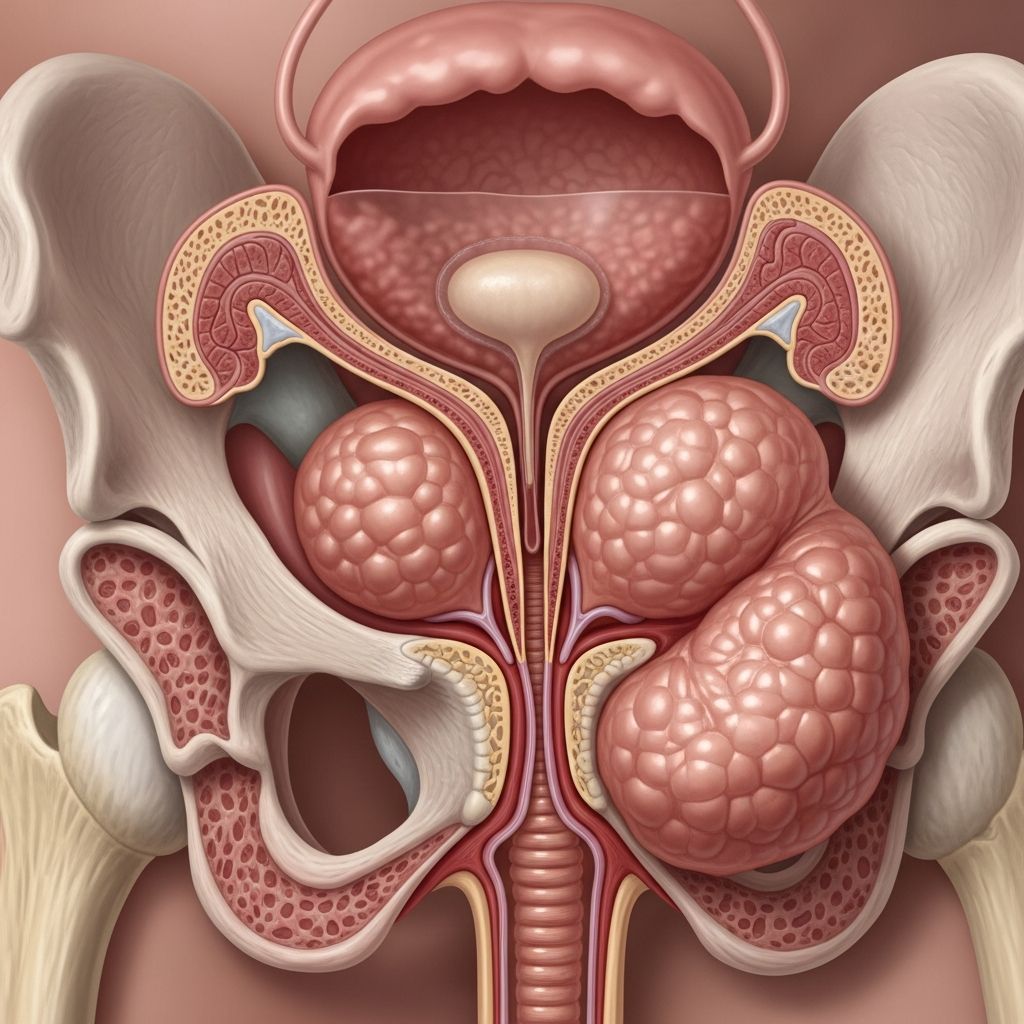
What Is Benign Prostatic Hyperplasia?
Benign prostatic hyperplasia (BPH), also known as benign prostate enlargement, is a condition characterized by the enlargement of the prostate gland in men. The condition causes your prostate to increase in size, which is the most common prostate problem affecting men as they age. In fact, BPH is a very common condition that affects males worldwide, with BPH usually developing around the age of 55. As men get older, the risk of developing BPH increases significantly, and research shows that this condition affects almost all men to some degree as they age.
Benign prostatic hyperplasia is a histologic diagnosis that describes the proliferation of glandular epithelial tissue and smooth muscle within the transition zone of the prostate, which surrounds the proximal urethra. This overgrowth of prostate tissue leads to compression of the urethra and can result in various urinary symptoms that negatively impact quality of life.
Understanding the Mechanisms of BPH
Symptoms of benign prostatic hyperplasia arise through two distinct mechanisms that work together to create urinary difficulties. Understanding these mechanisms helps explain why men experience the symptoms they do and how treatment options are designed to address them.
Static Mechanism
The static mechanism refers to the physical compression of the urethra caused by hyperplastic prostatic tissue. As the prostate grows, it takes up more space within the pelvis and begins to compress the urethra, which is the tube through which urine passes from the bladder. This compression acts like a partially blocked pipe, making it more difficult for urine to flow freely from the body.
Dynamic Mechanism
The dynamic mechanism involves increased adrenergic nervous system activity and increased prostatic smooth muscle tone. This means that the muscles in the prostate become more reactive and contract more forcefully, further contributing to urethral obstruction and urinary difficulties. The dynamic component explains why some men’s symptoms can fluctuate and why certain medications that relax smooth muscle can be particularly effective.
Common Symptoms of BPH
Benign prostatic hyperplasia can cause a variety of symptoms related to lower urinary tract function. These symptoms typically develop gradually and may worsen over time if left untreated. Common symptoms include:
- Difficulty initiating urination or weak urine stream
- Sudden, persistent urge to urinate
- Frequent urination, particularly at night (nocturia)
- Incomplete emptying of the bladder
- Dribbling after urination
- Urinary urgency and frequency
- Straining during urination
While these symptoms are not typically life-threatening, they can significantly detract from a patient’s quality of life, affecting sleep patterns, daily activities, and overall well-being.
Diagnosis of Benign Prostatic Hyperplasia
Primary care physicians are uniquely positioned to screen for benign prostatic hyperplasia and lower urinary tract symptoms, to perform the initial diagnostic workup, and to start medical therapy in uncomplicated cases. Proper diagnosis involves several assessment methods and tools.
Symptom Assessment
The International Prostate Symptom Score (IPSS) is the primary tool used to evaluate BPH symptoms and their severity. This standardized scoring system helps healthcare providers understand the extent to which symptoms are affecting a patient’s quality of life and helps guide treatment decisions.
Related Stories



Physical Examination and Testing
Physicians may perform a digital rectal examination to assess the size and consistency of the prostate. Patients referred for urologic evaluation may require additional tests for diagnosis and to guide management, including uroflowmetry to measure urine flow rate and post-void residual volume assessment to determine how much urine remains in the bladder after urination.
Prostate-Specific Antigen Testing
Prostate-specific antigen (PSA) testing can be useful in BPH evaluation. PSA levels correlate with prostate volume and subsequent growth, and the risks of developing acute urinary retention or needing surgical intervention rise with increasing PSA levels. Men with BPH and elevated PSA are at higher risk with watchful waiting and may be better served with medical therapy.
Treatment Options for BPH
The goal of treatment is not only to alleviate bothersome symptoms but also to prevent disease progression and disease-related complications. Several effective treatment approaches are available, ranging from conservative management to surgical interventions.
Watchful Waiting
Watchful waiting is an appropriate initial approach for patients with mild to moderate symptoms that cause minimal bother. This approach involves monitoring symptoms through regular appointments without initiating treatment. However, regular follow-up is important to ensure symptoms do not progress. Studies show that in the watchful-waiting group, 36% of men eventually crossed over to surgery, with those having more bothersome symptoms at enrollment being at higher risk of progressing to surgery.
Medical Therapy
Patients with severe or bothersome symptoms should be offered pharmacotherapy, not only to improve symptoms but also to reduce the risk of disease progression. Several effective, minimally invasive medical treatments are available to alleviate symptoms and delay disease progression. Common medications include:
- Alpha-blockers: These medications relax smooth muscle in the prostate and bladder neck, improving urine flow and reducing urinary symptoms associated with the dynamic mechanism of BPH.
- 5-Alpha Reductase Inhibitors: These medications work by reducing the size of the prostate gland itself by blocking the conversion of testosterone to dihydrotestosterone, a hormone that promotes prostate growth.
- Combination Therapy: In some cases, combining an alpha-blocker with a 5-alpha reductase inhibitor may provide enhanced symptom relief.
Effective medical therapy is available but remains underutilized in the primary care setting. Many patients benefit significantly from proper medication management and can avoid or delay the need for surgical intervention.
Minimally Invasive Surgical Procedures
For patients whose symptoms do not respond to medical therapy or who prefer a definitive treatment, several minimally invasive surgical options are available. These procedures have advanced significantly in recent years and now include innovative approaches beyond traditional surgery.
Modern Surgical Approaches
Minimally invasive surgical treatments have shown promise in terms of efficacy and patient comfort, causing less tissue damage and can be done in outpatient settings. Advanced options include laser procedures, robotic surgery, and office-based interventions that provide excellent outcomes with reduced recovery times compared to traditional open surgery.
Single-Port Robotic Surgery Innovation
Recent advancements in surgical technique have introduced single-port transvesical simple prostatectomy (SP TVSP), a novel approach that represents the evolution of robotic surgical capabilities in BPH management. Research from Cleveland Clinic’s Glickman Urological & Kidney Institute demonstrates that this technique offers significant advantages.
In studies evaluating this procedure, all operations were performed without complication, and 95% of patients did not require opioid analgesics after discharge. Patient outcomes at nine-month follow-up showed generally good functional and quality of life results, with median IPSS scores of 4 and quality of life scores of 0, indicating excellent symptom relief.
The advantages of the single-port robotic approach include sparing the peritoneal cavity, minimum bladder dissection, and good visualization of the prostate. Additionally, improvements such as reduced postoperative time with a Foley catheter have been noted compared to traditional multiport robotic approaches.
Surgical Outcomes and Efficacy
Surgical therapies for BPH provide excellent one-year outcomes, including a mean 70% reduction in IPSS scores and a mean 12 mL/sec improvement in peak urinary flow rate. Men who do not improve with medical therapy and who demonstrate specific clinical findings warrant urologic evaluation for potential surgical intervention.
The American Urological Association guidelines list specific indications for patients with BPH to undergo procedures or surgeries, including urinary retention, recurrent urinary tract infections, bladder stones, obstructive uropathy, and prostate-related hematuria.
Disease Progression and Long-Term Outcomes
Understanding the natural history of BPH helps guide treatment decisions. In longitudinal studies of men with BPH and mild symptoms (IPSS less than 8), the risk of progression to moderate or severe symptoms was 31% at four years. Peak urinary flow rate decreases at a mean rate of 2.1% per year, with faster decline in older men who had lower peak flow at baseline.
The outlook for people with BPH is very good overall. While BPH does not have a cure, treatments can help alleviate symptoms effectively. Mild symptoms may not require treatment, while medications, surgery, and minimally invasive treatments can effectively treat more severe cases.
Risk Reduction and Prevention
The best ways to reduce your risk of developing BPH are to make lifestyle changes that improve your prostate and heart health and take supplements. These preventive measures may help slow the progression of BPH in men who are at risk or have mild symptoms.
Role of Primary Care Physicians
Primary care physicians are uniquely positioned to screen for BPH, conduct a timely diagnostic workup, and, if indicated, initiate medical therapy. Early identification and appropriate management in the primary care setting can help prevent disease progression and reduce the burden on specialty care. Patients whose symptoms do not improve with medical therapy, whose symptoms progress, or who simply are interested in surgery should be referred for urologic evaluation.
Frequently Asked Questions
Q: At what age does BPH typically develop?
A: Benign prostatic hyperplasia usually develops around the age of 55, though it can affect men at earlier ages. The condition becomes increasingly common with advancing age, and BPH can affect almost all men to some degree as they age.
Q: Is BPH life-threatening?
A: While BPH is rarely life-threatening, it can significantly detract from a patient’s quality of life by causing bothersome urinary symptoms. However, appropriate treatment can effectively manage symptoms and prevent complications.
Q: Can BPH be cured?
A: BPH does not have a cure, but treatments can effectively alleviate your symptoms. Mild symptoms may not require treatment, while medications, surgery, and minimally invasive treatments can treat more severe cases.
Q: What medications are used to treat BPH?
A: Several effective medical treatments are available, including alpha-blockers that relax smooth muscle in the prostate and 5-alpha reductase inhibitors that reduce prostate size. Your healthcare provider can determine which medication is best for your specific situation.
Q: When is surgery recommended for BPH?
A: Surgery is typically recommended when symptoms do not respond to medical therapy, or when specific complications develop such as urinary retention, recurrent urinary tract infections, bladder stones, or prostate-related hematuria. Patients whose symptoms significantly affect quality of life may also choose surgical intervention.
Q: What is watchful waiting?
A: Watchful waiting is an approach appropriate for patients with mild to moderate symptoms that cause minimal bother. It involves monitoring symptoms through regular appointments without initiating treatment, allowing healthcare providers to detect any progression.
Q: What are the benefits of minimally invasive procedures?
A: Minimally invasive procedures for BPH cause less tissue damage, can often be performed in outpatient settings, result in faster recovery times, and typically cause less postoperative pain compared to traditional open surgery.
References
- New Surgical Technique To Treat Benign Prostatic Hyperplasia Shows Promising Results — Cleveland Clinic. 2024. https://consultqd.clevelandclinic.org/new-surgical-technique-to-treat-benign-prostatic-hyperplasia-shows-promising-results
- Benign Prostatic Hyperplasia: Evaluation and Medical Management — Cleveland Clinic Journal of Medicine, 84(1). 2017. https://www.ccjm.org/content/84/1/53
- Benign Prostatic Hyperplasia: Evaluation and Medical Management in Primary Care — Cleveland Clinic. 2024. https://consultqd.clevelandclinic.org/benign-prostatic-hyperplasia-evaluation-and-medical-management-in-primary-care
- Benign Prostatic Hyperplasia (BPH): Symptoms & Treatment — Cleveland Clinic. 2024. https://my.clevelandclinic.org/health/diseases/9100-benign-prostatic-hyperplasia
- Better Options for Treating Benign Prostatic Hyperplasia — Cleveland Clinic. 2024. https://consultqd.clevelandclinic.org/better-options-for-treating-benign-prostatic-hyperplasia
- Medical Management of Benign Prostatic Hyperplasia — Cleveland Clinic. 2024. https://consultqd.clevelandclinic.org/medical-management-of-benign-prostatic-hyperplasia
- Benign Prostatic Hyperplasia: Alternatives to Transurethral Resection — Cleveland Clinic. 2024. https://consultqd.clevelandclinic.org/benign-prostatic-hyperplasia-alternatives-to-transurethral-resection
Similar Articles








Read full bio of Sneha Tete