24 Best Core Exercises to Build Strength & Stability
Master 24 essential core exercises for maximum strength, stability, and muscle definition.
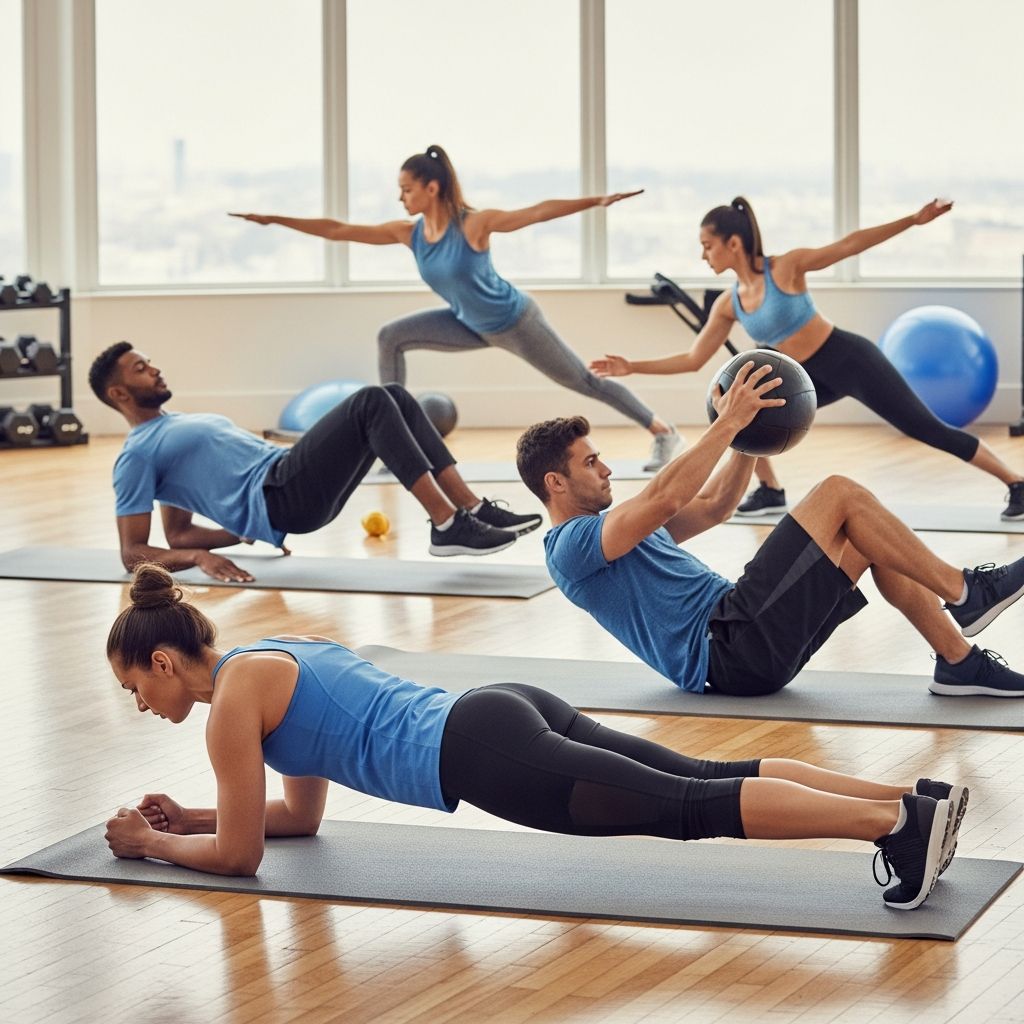
Building a strong core is essential for overall fitness, athletic performance, and daily functional movement. Unlike many fitness goals focused solely on aesthetics, core training emphasizes genuine strength, stability, and injury prevention. This comprehensive guide explores the 24 best core exercises that will help you develop a rock-solid foundation while building impressive abdominal muscles.
Why Core Training Matters
Your core encompasses far more than just your abdominal muscles. It includes your rectus abdominis, obliques, transverse abdominis, erector spinae, and multifidus muscles. A strong core improves your posture, reduces lower back pain, enhances athletic performance, and provides the foundation for virtually every movement your body makes. Whether you’re lifting weights, running, or performing daily activities, your core is working to stabilize and support you.
Beginner Core Exercises
1. Plank
The plank is the foundational core exercise everyone should master. This movement forces your entire core to work together to support your body weight, making it an ideal starting point for core training.
How to Perform: Get into a press-up position but rest on your forearms rather than your hands. Ensure your back remains straight and tense your abs and glutes throughout the movement. Hold this position without allowing your hips to sag. Start with 20-30 second holds and progress to longer durations as your strength improves.
Why It Works: The plank activates your entire core stabilizer system. By forcing you to support your body weight on your forearms and toes, it builds isometric strength and teaches proper core bracing—a fundamental skill for all core training.
2. High-Tension Plank
For those ready to intensify their plank training, the high-tension plank adds challenge and deeper activation. This variation demands greater muscle engagement and builds substantial core endurance.
How to Perform: Lie face-down on the ground and lift your upper body onto your forearms. Hold this position for 10 seconds, focusing on maximum tension throughout your core. Perform 3 to 4 sets of these 10-second holds to build impressive core strength.
3. Modified Plank
If you’re new to exercise or returning from injury, the modified plank provides an excellent entry point into core training without overwhelming your muscles.
How to Perform: Instead of balancing on your forearms and toes, perform the plank while resting on your forearms and knees. This reduces the load on your core while maintaining proper form and activation patterns. Progress to the full plank once you’ve built sufficient strength.
Rectus Abdominis Exercises
4. Abdominal Crunch
The traditional crunch remains an effective exercise for targeting your rectus abdominis—the muscle responsible for that coveted six-pack appearance.
How to Perform: Lie on your back and place your feet on a wall so your knees are at 90-degree angles. Cross your arms on your chest and raise your head and shoulders off the floor. Hold this contracted position for five seconds before returning to the starting position. Perform 3 to 4 sets of 10 repetitions.
Related Stories



5. Levitation Crunch
The levitation crunch isolates your upper abdominals with serious contraction while minimizing stress on your neck and lower back.
How to Perform: Position yourself similarly to a standard crunch, but focus on curling your pelvis into a posterior pelvic tilt. Drive the movement with your abs rather than your hip flexors. Keep your entire body stable with no sagging hips or arching back. This isolation creates intense upper ab activation with each repetition.
6. Leg Lifts
Leg lifts provide excellent lower abdominal activation and challenge your core’s ability to control heavy resistance.
How to Perform: Lie on your back with your legs outstretched and arms to your side. Lift your legs from the hips, hold for 10 seconds, and release. Perform 10 to 12 lifts per set. Keep your lower back pressed against the floor throughout to maintain proper form.
7. Dragon Flag
The dragon flag is an advanced movement that engages far more than just your abs. This powerful exercise recruits your upper body, hip flexors, glutes, and lower back simultaneously.
How to Perform: Lie back and hold the bench behind your head. Bend your knees and kick your legs up towards the ceiling, bringing your backside and back off the bench. Slowly move your body back down to the starting position before repeating. This full-body integration makes the dragon flag perfect for building comprehensive core strength.
Oblique Exercises
8. Side Plank
The side plank is the gold standard for oblique training, developing lateral core strength essential for stability and rotational power.
How to Perform: Lie on your side with your legs straight. Lift your body and rest it on your forearm, forming a straight line from head to feet. Hold this position for 30 seconds. Perform 3 to 4 sets on each side. For added challenge, lift your top arm toward the ceiling during the hold.
9. Side Plank (Thread the Needle)
This dynamic variation adds rotational strength and stability to the traditional side plank while keeping your obliques firing throughout the movement.
How to Perform: Begin in a side plank position with your body in a straight line. Rotate your torso toward the floor and bring your top arm under your body in a threading motion. Rotate back to straighten your arm and return to the starting position. Perform 8 to 12 repetitions on each side for maximum oblique engagement.
10. Russian Twists
Russian twists build rotational power and oblique control by requiring you to move weight across your body while maintaining core stability.
How to Perform: Sit on the floor with your knees bent and feet lifted slightly off the ground. Hold a weight or medicine ball at chest height. Rotate your torso from side to side, touching the weight to the ground beside your hip with each rotation. Control the movement throughout to maintain continuous core engagement.
11. Medicine Ball Twists
Similar to Russian twists but performed with a medicine ball, this exercise builds rotational power while developing explosive core strength.
How to Perform: Stand with your feet shoulder-width apart and hold a medicine ball at chest height. Rotate your torso to one side, moving the ball across your body. Perform 3 sets of 20 repetitions (10 per side) to thoroughly exhaust your obliques.
12. Landmine Rotation
The landmine rotation is a rotational powerhouse that builds strength and stability while engaging your hips and shoulders for comprehensive functional strength.
How to Perform: Anchor one end of a barbell into a landmine attachment or corner. Hold the other end with both hands at chest height. Rotate the bar from side to side in a controlled manner, engaging your entire core throughout the movement. This exercise teaches your core to generate explosive power while improving rotational stability—key for athletic performance.
13. Segmental Rotation
This floor-based rotation exercise targets your multifidus and erector spinae while developing controlled rotational strength.
How to Perform: Lie on your back and bend your knees so they point toward the ceiling. With your back continuing to touch the ground, lower your knees to one side and hold for 10 seconds. Lift your knees back up and lower them to the other side, holding for another 10 seconds. Perform 3 to 4 sets of 20 total repetitions.
Advanced Dynamic Movements
14. Hollow Rocks
Hollow rocks are brutally effective for building core endurance and stability. This gymnastics-based movement keeps your core under constant tension, exactly what you need for total core development.
How to Perform: Lie on your back and achieve a hollow body position—legs straight, arms overhead, and your entire body in a slight curve away from the floor. Rock gently back and forth, maintaining this hollow position throughout. Your core remains tensioned continuously, building exceptional strength and stability.
15. Sliding Ab Tuck
The sliding ab tuck adds dynamic movement that targets your entire core, especially the lower abs, while testing your ability to maintain stability during motion.
How to Perform: Start in a plank position with your feet on a sliding surface (socks on a slick floor work perfectly). While keeping your core tight and stable, slide your knees toward your chest. Extend your legs back to the starting position. Perform multiple repetitions to build lower ab strength and endurance.
16. Flutter Kicks
Flutter kicks provide sustained lower abdominal activation through continuous leg movement while maintaining core tension.
How to Perform: Lie on your back with your legs extended and arms at your sides. Lift your legs slightly off the ground and alternate kicking them up and down in a fluttering motion. Maintain continuous movement for 30 to 60 seconds per set to build serious lower ab endurance.
17. Heel Touches
This exercise combines abdominal work with oblique engagement for comprehensive core activation.
How to Perform: Lie on your back with your knees bent and feet flat on the floor. Raise your head and shoulders slightly off the ground. Reach your right hand toward your right heel, then alternate to your left hand toward your left heel. Perform 3 sets of 20 total touches (10 per side).
Lower Back & Posterior Chain Exercises
18. Superman Hold
The superman hold is essentially the anti-plank, targeting all the muscle groups that front planks overlook. It’s a perfect addition to any comprehensive core routine.
How to Perform: Lie flat on the floor on your stomach with your arms extended in front of you. Raise most of yourself off the ground—your arms, head, upper torso, and thighs through to your feet. Hold this position for 10 seconds and release. Perform 10 to 12 repetitions per set. This exercise focuses on your lower back, glutes, lats, and deltoids.
19. Segmental Superman
A more advanced variation of the superman, this movement adds greater challenge and activation to posterior chain muscles.
How to Perform: Lie on your stomach with your legs outstretched and your arms above your head in an extended position. Simultaneously lift your legs and arms off the ground, creating maximum extension through your entire posterior chain. Hold for 10 seconds before releasing. Perform 10 to 12 lifts per set.
Integrated & Anti-Rotation Exercises
20. Pallof Press
Every solid core workout needs anti-rotation exercises, and the Pallof Press stands as one of the best. It forces your core to stabilize and resist twisting, building deep strength that transfers to every other lift.
How to Perform: Stand perpendicular to a cable machine set at chest height. Hold the handle with both hands at your chest. Press the handle straight out in front of you, resisting the machine’s attempt to rotate your body. Maintain a stable position throughout before bringing the handle back to your chest. Perform 3 sets of 12 repetitions per side.
21. Bird Dog
The bird dog exercise develops stability and coordination while building strength across multiple core muscles simultaneously.
How to Perform: Start on your hands and knees with your back straight. Simultaneously extend your right arm forward and left leg backward, creating a straight line from fingertip to toe. Hold for a moment, then return to starting position. Alternate sides and perform 3 sets of 12 repetitions per side.
22. Single-Leg Bridge
Building on traditional bridge work, the single-leg variation adds significant challenge and develops unilateral core strength.
How to Perform: Lie on your back with your knees bent and feet flat. Lift one leg and extend it toward the ceiling. Press through your remaining foot to lift your hips high, creating a straight line from knee to shoulder. Hold for 10 seconds before lowering. Perform 10 to 12 repetitions per side.
23. Lying Leg Raise
This challenging movement develops lower abdominal strength and requires significant core control to maintain proper form.
How to Perform: Lie on your back with your legs extended straight out in front of you, separated as if forming the outer legs of a ‘W’ shape. Engage your core and lift your legs straight up. Lower them halfway down while keeping everything tight, then bring them back up. Lower all the way down to the opposite side of the ‘W,’ keeping a straight line throughout. Reverse the movement to return to the starting position.
24. Trunk Rotation
This final exercise provides rotational strength and flexibility, rounding out a comprehensive core training program.
How to Perform: Stand with your feet shoulder-width apart and hold a weight or medicine ball at chest height. Rotate your torso to one side, bringing the weight across your body. Return to center and rotate to the opposite side. Perform controlled, deliberate rotations to build rotational core strength and stability.
Programming Your Core Training
Frequency and Duration
A solid 10 to 15 minutes of focused core work, combined with compound movements like squats and deadlifts that already engage your core, is more than enough. The key is training smart rather than spending endless time on your abs. Quality matters far more than quantity when it comes to effective core training.
Exercise Selection Strategy
When programming core exercises, focus on moves that hit your abs, obliques, and deep stabilizers. Exercises like planks, landmine rotations, and hollow rocks provide the strength and definition you’re after. The key is combining smart training with proper nutrition—do that and you’ll see those abs pop in no time.
Progressive Overload
Your core responds to progressive overload just like any other muscle group. Start with simpler variations and progress to more challenging exercises as your strength improves. Add resistance, increase duration, or perform more advanced movement variations to continue driving adaptation and progress.
The Essential Core Exercise Trinity
If you need to prioritize, focus on these three heavy-hitting core exercises that provide maximum benefit: The Landmine Rotation builds rotational power and functional strength while engaging your entire core. The Hollow Rocks develop endurance and stability through constant tension. The Sliding Ab Tuck targets lower abs and tests your core’s ability to maintain stability during dynamic movement. These three exercises represent the most efficient core training approach.
Frequently Asked Questions
Q: How often should I train my core?
A: You can train your core 3 to 5 days per week. Since core exercises are relatively low-impact compared to heavy lifting, they recover quickly and can be performed frequently. Include core training on both lifting and non-lifting days for maximum development.
Q: Do I need equipment for core training?
A: No. Many of the most effective core exercises require no equipment whatsoever. Planks, crunches, leg raises, and hollow rocks all use only your body weight. However, equipment like medicine balls, dumbbells, cables, and landmines can add variety and progressive overload to your training.
Q: Will core exercises give me a six-pack?
A: Core exercises build and strengthen your abdominal muscles, but visible abs require low body fat. You must combine core training with proper nutrition and overall fat loss through caloric deficit. Train your core to build strength and muscle, then diet to reveal those abs.
Q: Which exercise is best for lower abs specifically?
A: Lower abdominal-focused exercises include leg lifts, lying leg raises, and the sliding ab tuck. These movements emphasize the lower portion of your rectus abdominis. Include multiple lower ab exercises in your routine for balanced development.
Q: Can beginners do advanced exercises like dragon flags?
A: Beginners should master fundamental exercises like planks before attempting advanced movements like dragon flags. Build a solid foundation with basic exercises first, then progress to more challenging variations as your strength improves and you develop proper movement patterns.
Q: How long does it take to see core strength improvements?
A: Most people notice improved core strength within 2 to 3 weeks of consistent training. Visible muscle development typically takes 8 to 12 weeks, depending on your starting point, training consistency, and nutrition.
Conclusion
Building a strong, stable, and defined core requires strategic exercise selection, progressive training, and consistent effort. The 24 exercises outlined in this guide provide options for every fitness level, from absolute beginners to advanced athletes. Start with foundational movements like planks, progress through intermediate exercises like side planks and russian twists, and eventually incorporate advanced movements like hollow rocks and landmine rotations. Remember that effective core training combines smart exercise selection with proper nutrition and overall fat loss. Dedicate 10 to 15 minutes of focused work regularly, and you’ll develop the strength, stability, and appearance you’re seeking.
References
- 24 Best Core Exercises to Build Strength & Stability — Men’s Health UK. 2021. https://www.menshealth.com/uk/fitness/a34037742/best-core-exercises/
- Core Workouts: Best Exercises for Muscle and Strength — Athlean-X Learning Center. 2024. https://learn.athleanx.com/articles/abs-for-men/core-workouts
- Best Exercises for Men’s Core — WebMD. 2023. https://www.webmd.com/fitness-exercise/best-exercises-men-core
- Best Core Exercises: Top Moves, from Beginner to Advanced — Healthline. 2023. https://www.healthline.com/health/best-core-exercises
- Exercises to improve your core strength — Mayo Clinic. 2024. https://www.mayoclinic.org/healthy-lifestyle/fitness/in-depth/core-strength/art-20546851
- 8 of the best core-building exercises for men — Trainwell. 2024. https://www.trainwell.net/blog/best-core-exercises-for-men
Similar Articles








Read full bio of Sneha Tete