Best Core Exercises: 15 Trainer-Approved Moves
Discover the top core exercises recommended by experts to build strength, improve stability, and enhance posture effectively.
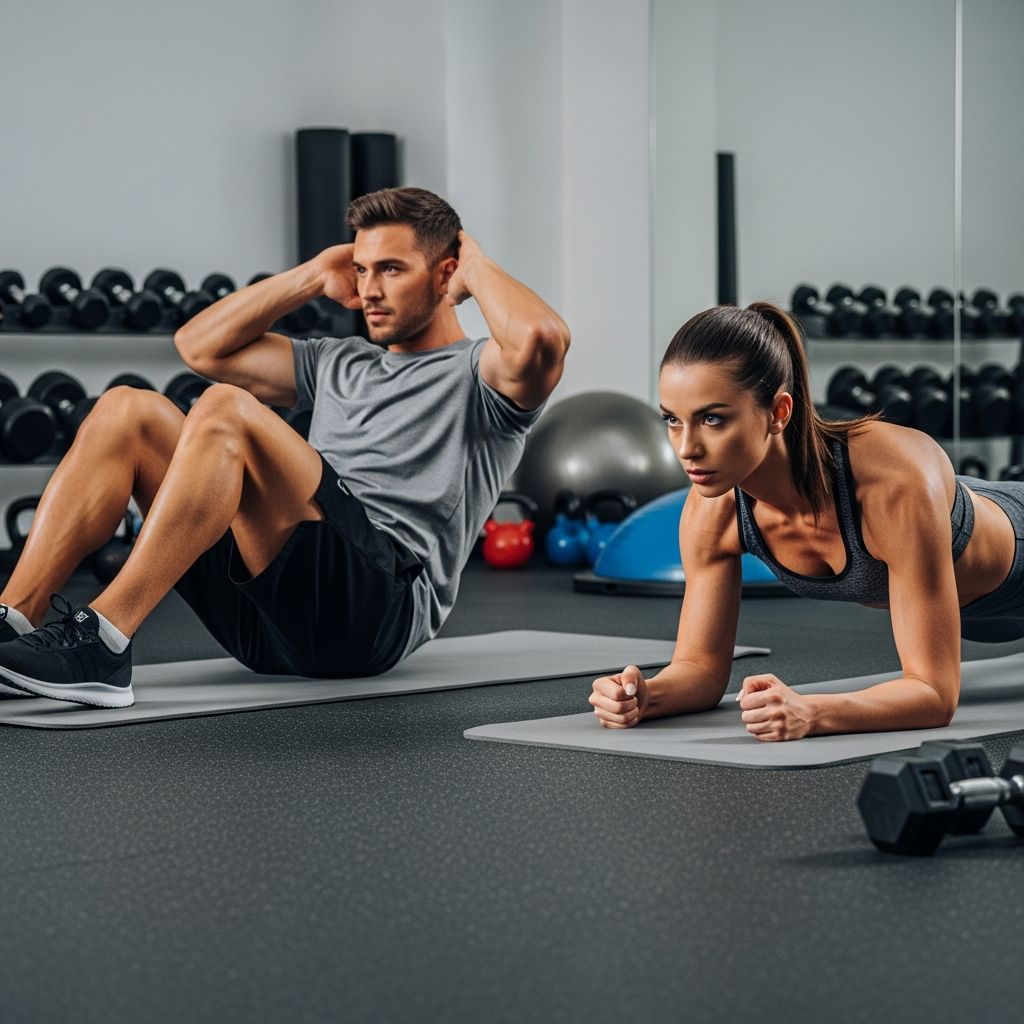
Your core isn’t just about six-pack abs—it’s the powerhouse of your body, encompassing muscles from your hips to your shoulders. A strong core supports everyday movements, improves athletic performance, boosts posture, and reduces injury risk. According to the American Council on Exercise (ACE), core training enhances balance, stability, and functional strength essential for activities like lifting, running, and twisting.
This guide features the best core exercises curated by certified trainers and physical therapists. These moves target the rectus abdominis, obliques, transverse abdominis, and erector spinae. Whether you’re a beginner or advanced athlete, incorporate them into your routine 2-3 times weekly for optimal results. No equipment needed for most, making them gym- or home-friendly.
Why Core Strength Matters
Core muscles stabilize your spine and pelvis during movement. Weak cores lead to poor posture, back pain, and imbalances. Harvard Health Publishing notes that core exercises can alleviate lower back pain and improve mobility in older adults. They also enhance sports performance; a study in the Journal of Strength and Conditioning Research found core training improved running economy by 8% in athletes.
Benefits include:
- Better posture and alignment
- Increased power transfer in lifts and jumps
- Reduced risk of strains and sprains
- Enhanced balance for daily tasks
- Improved breathing and organ support
Start with bodyweight moves, progressing to holds or reps as strength builds. Breathe steadily—exhale on effort, inhale on release.
Best Core Exercises
Here are 15 top exercises, demonstrated by experts. Perform 2-3 sets of 10-15 reps or 20-60 second holds. Rest 30-60 seconds between sets.
1. Plank
The ultimate isometric core builder. Start in forearm plank: elbows under shoulders, body in a straight line from head to heels. Engage glutes and abs; hold without sagging hips. Beginners: 20 seconds. Advanced: side planks or plank ups.
- Targets: Entire core, shoulders, glutes
- Modifications: Knee plank for beginners; plank with shoulder taps for challenge
ACE research shows planks activate the transverse abdominis 100% more than crunches.
2. Bird Dog
Great for stability and coordination. On all fours, extend opposite arm and leg parallel to floor. Hold 5 seconds, alternate. Keep hips level.
- Targets: Abs, back extensors, glutes
- Pro tip: Move slowly to engage stabilizers
3. Dead Bug
Lie on back, arms up, knees bent 90 degrees. Extend opposite arm and leg toward floor without arching back. Alternate sides.
- Targets: Deep core stabilizers
- Benefits: Low-impact, spine-friendly
A 2023 study in the Journal of Orthopaedic & Sports Physical Therapy confirms dead bugs superior for lumbar stability.
4. Bicycle Crunch
Lie back, hands behind head. Bring opposite elbow to knee while extending other leg. Twist dynamically.
Related Stories



- Targets: Obliques, rectus abdominis
- Reps: 12-15 per side
5. Russian Twist
Sit with knees bent, lean back slightly, feet off floor (or grounded). Rotate torso side-to-side, optionally holding weight.
- Targets: Obliques, rotational strength
- Caution: Avoid if back issues
6. Hollow Body Hold
Lie on back, press lower back into floor, lift shoulders and legs slightly off ground. Hold like a shallow “banana” shape.
- Targets: Full anterior core
- Advanced: Rock gently
7. Side Plank
Forearm on ground, body stacked sideways. Lift hips for straight line. Hold, switch sides.
- Targets: Obliques, quadratus lumborum
8. Superman
Face down, lift arms, chest, and legs off ground. Hold 3-5 seconds.
- Targets: Posterior chain, erector spinae
9. Flutter Kicks
On back, hands under glutes, alternate kicking legs up-down in small pulses.
- Targets: Lower abs
10. Mountain Climbers
High plank, drive knees to chest rapidly.
- Targets: Core, cardio
11. Pallof Press
With resistance band anchored at chest height, press out and resist rotation.
- Targets: Anti-rotation strength
12. Farmer’s Carry
Hold heavy weights, walk with braced core.
- Targets: Functional core endurance
13. Leg Raises
Hanging or lying, lift legs to 90 degrees.
- Targets: Lower abs
14. Woodchoppers
Cable or medicine ball diagonal chops.
- Targets: Rotational power
15. Stir-the-Pot
On stability ball in plank, circle elbows.
- Targets: Dynamic stability
How to Build a Core Workout Routine
Sample 15-minute routine:
| Exercise | Sets x Time/Reps |
|---|---|
| Plank | 3 x 30 sec |
| Bird Dog | 3 x 10/side |
| Dead Bug | 3 x 12/side |
| Bicycle Crunch | 3 x 15/side |
| Side Plank | 3 x 20 sec/side |
Progress weekly by adding time/reps. Combine with full-body training. The National Academy of Sports Medicine recommends integrating core work into warm-ups or circuits.
Common Mistakes to Avoid
- Neck strain: Don’t pull on neck during crunches
- Hip sagging: Maintain neutral spine
- Breath holding: Exhale on exertion
- Over-reliance on abs: Train full core 360 degrees
- No progression: Increase difficulty gradually
Frequently Asked Questions (FAQs)
What are the best core exercises for beginners?
Start with planks, bird dogs, and dead bugs—they’re low-impact and build foundational strength without equipment.
How often should I do core exercises?
2-4 times per week, allowing recovery. Quality over quantity; focus on form.
Can core exercises give me abs?
They build muscle, but visible abs require low body fat via diet and cardio.
Do I need equipment for core training?
No—bodyweight suffices. Bands or balls add variety.
Are crunches the best ab exercise?
No; planks and twists engage more muscles comprehensively, per ACE studies.
Final Thoughts
Consistent core training transforms your physique and performance. Pick 4-6 exercises, train smart, and track progress. Consult a doctor before starting if you have injuries. Strong cores support a lifetime of active living.
References
- Core Anatomy and Function — American Council on Exercise (ACE). 2024-06-15. https://www.acefitness.org/resources/everyone/blog/6615/core-anatomy-and-function/
- Effects of Core Training on Running Economy — Journal of Strength and Conditioning Research. 2022-04-01. https://journals.lww.com/nsca-jscr/fulltext/2022/04000/effects_of_core_training_on_running_economy_in.15.aspx
- Core Exercises for Back Pain Relief — Harvard Health Publishing. 2025-01-10. https://www.health.harvard.edu/pain/core-exercises-to-beat-back-pain
- Dead Bug Exercise Efficacy — Journal of Orthopaedic & Sports Physical Therapy. 2023-09-20. https://www.jospt.org/doi/10.2519/jospt.2023.11845
- Guidelines for Core Stability Training — National Academy of Sports Medicine (NASM). 2024-11-05. https://www.nasm.org/resources/core-stability-training
Similar Articles








Read full bio of medha deb